8/ @jerggutmann, @ka_met_sza & @DrStefanVoigt, "Can New Constitutions Tighten the Reins?" New constitutions improve constitutional compliance, but only durably in democracies. In nondemocracies, any improvement is small and short-lived.
https://t.co/wrQkzO8HVt
IV-PPML-HDFE. We are happy to introduce an instrumental-variable Poisson pseudo-maximum likelihood estimator with high-dimensional fixed effects. We also provide a robust and user-friendly ‘ivppmlhdfe’ package for Stata and Julia.
More details here 👇
https://t.co/3rXLVQMxbJ
@KaiGehring1@schnellenbachj@OrdoliberalBG@StefanKooths The more interesting and relevant question is whether AI makes hybrid systems more feasible compared to pure market economies. This links to Daron's argument about elite interest in having control over markets for their private benefit.
@KaiGehring1@schnellenbachj@OrdoliberalBG@StefanKooths I think AI could help a lot with quantification and aggregation, but what you call collection remains unresolved. If without market exchange AI has no data to quantify and aggregate, it does not help with the fundamental problem.
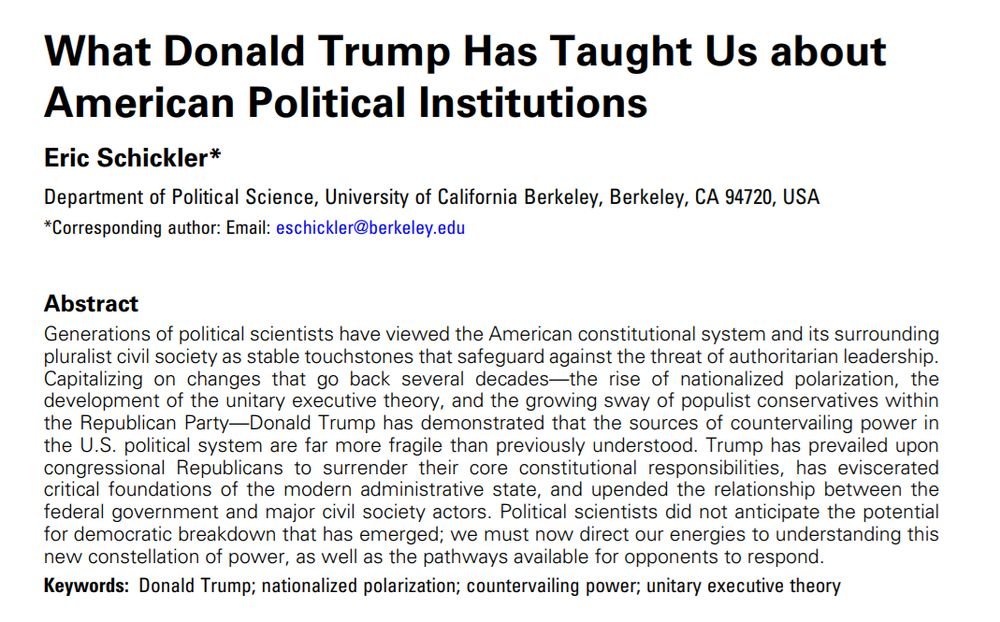
The Eric Schickler essay in Larry Bartel's symposium on "What Trump Has Taught Us About Political Science" is one of the most insightful pieces I've read in 2025.
US Constitution & institutions turned out to be weak, and we have to rethink conventional wisdom.
@majdzadehr & @jerggutmann, co-authors in The Lancet, discuss with @ShabnamvonHein how #sanctions on #Iran worsen access to vital medicines & strain the health system. They call for enforceable humanitarian exemptions and better monitoring
https://t.co/Jm7ODwm4NM
How much do political leaders themselves matter for international politics?
At a @UniLeiden lecture on 19 Nov, @jerggutmann (@unihh) explores if countries ruled by political leaders with more similar backgrounds are less likely to sanction each other.
https://t.co/1u9LULlBBw
The next IIEA webinar is scheduled for 12 November at 17:00 CET.
@majdzadehr and @jerggutmann will talk about #Sanctions and their effects on #health and #conflict.
Register to join here: https://t.co/WnsMO2DZPk
1/5
Our new correspondence in @TheLancet is a warning. The reimposition of UN sanctions on Iran threatens a public health crisis, and the international community is unprepared. We argue for a new approach.
https://t.co/0d6PukQAVV
#Iran#Sanctions#GlobalHealth
Currently in FirstView: In “An Expert-Sourced Measure of Judicial Ideology,” @KevinLynnCope develops a dynamic method for estimating the ideology of federal judges. The Jurist-Derived Judicial Ideology Score (JuDJIS) is based on over 20,000 evaluations by a sample of jurists.
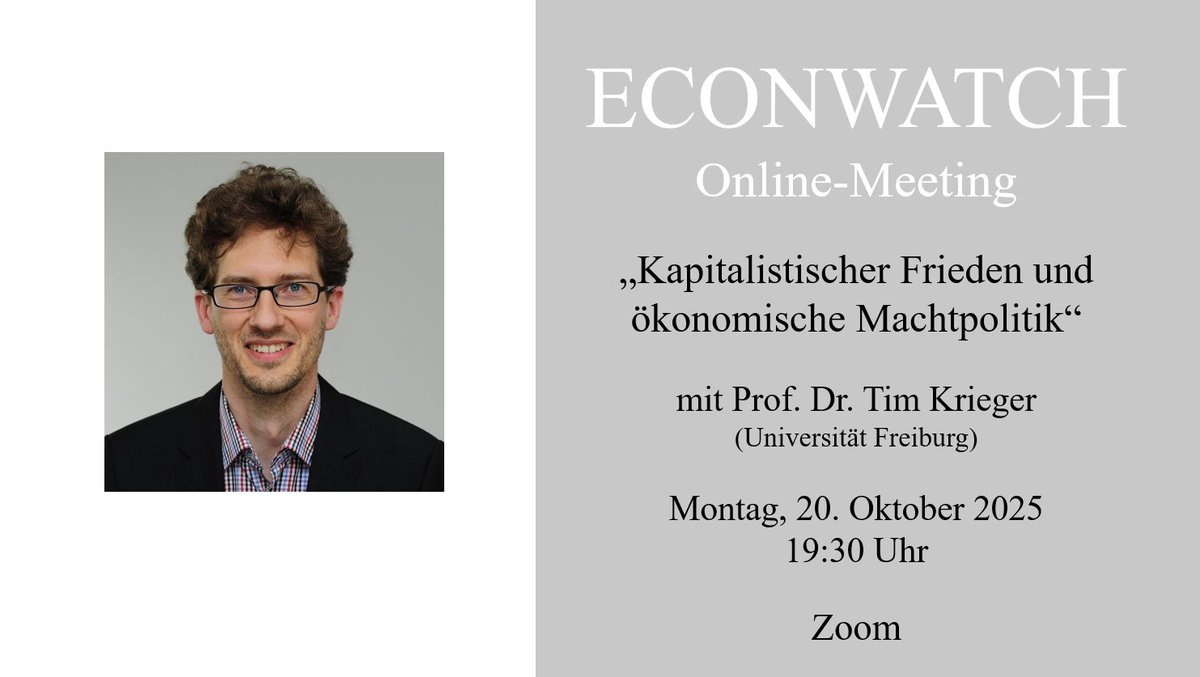
📢 Einladung: ECONWATCH-Online-Meeting am 20. Oktober, 19:30 Uhr
Thema: „Kapitalistischer Frieden und ökonomische Machtpolitik“ mit @TimKriegerFR (Uni Freiburg).
👉 Anmeldung bis 16.10. an [email protected]
Finally, @TimSchnelle has contributed one of the very few studies on effects of constitutional compliance, asking whether noncompliance accelerates constitutional change. https://t.co/HW5cvZXCoC 6/6
Our special issue on the economics of constitutional compliance just appeared in Constitutional Political Economy. @ka_met_sza and I have written a short introduction that links the different contributions. https://t.co/0g6V1o9elX 1/6
@LewkowiczJacek, @ka_met_sza, and Jan Fałkowski have studied whether governments in more polarized societies comply less with their country's constitution. https://t.co/s3tWrYE8Ge 5/6