Este tuiz va por las doscientas mil visualizaciones así que supongo que el tema interesa. Os contaré la diferencia entre el Tinder de ONVRES y el Tinder de MOGERES cuando unos y otros tienen más de cuarenta palos.
Hablo específicamente de Tinder porque hice una prueba de campo:
Quiero presentaros Nextival Data Intelligence.
Buscamos algún lugar en Internet que contuviera información sobre como está la escena festivalera en España y no la encontramos.
Por eso decidimos crearlo nosotros, en @NextivalApp
Nextival Data Intelligence es un sistema automatizado de curación de información acerca de festivales, y todo lo que le rodea: dinero público, artistas, turismo y un gran numero de datos importantes que ofrecemos de forma abierta y gratuita.
El sistema está vivo, y cada día encuentra nuevas fuentes y nuevos datos que ofrecer para seguir alimentando el portal de información por lo que está en constante crecimiento.
Date una vuelta, ¡te gustará!
https://t.co/svgazmqQ21
Una institución como la Universidad no puede ser antimilitarista. Sus miembros lo pueden ser y son libres de ejercer su derecho, pero tanto la Universidad pública como las Fuerzas Armadas son parte del Estado y deben colaborar.
Hoy os vamos a contar una historia que ilustra bastante bien algunos de los problemas que tenemos en España.
Como algunos sabéis, desde Lobera estamos organizando (con los amigos de @helmcode) https://t.co/xaYAoJv0lK, una competición universitaria de inteligencia artificial aplicada a la ciberseguridad, con el apoyo, entre otros, del Mando Conjunto del Ciberespacio de nuestras Fuerzas Armadas, el MCCE.
La idea es bien sencilla: que los chavales aprendan a desarrollar agentes de IA, resolver problemas de ciber y competir entre ellos. Ya sabes, ingeniería, talento, formación y tecnología. De esas cosas que, en principio, uno esperaría que entusiasmaran a cualquier universidad.
Pues bien...!
Un grupo de estudiantes de una importante universidad de Barcelona quería participar representando a su institución. Los chavales se han movido, han hablado con la dirección y han intentado conseguir su respaldo.
La respuesta final de la universidad ha sido que... NO.
¿El motivo?
Que los agentes de IA desarrollados por los estudiantes podrían tener un eventual uso militar y que les preocupa su posible cesión o utilización posterior por parte de las Fuerzas Armadas.
Sí, habéis leído bien.
Al parecer, alguien considera un riesgo suficientemente serio que un estudiante universitario desarrolle, durante una competición educativa en una tarde, un agente de IA tan extraordinariamente sofisticado que el Ejército español termine utilizándolo para sus operaciones (con todo el respeto y el cariño para los chavales, pero una cosa es el talento y la otra una tecnología en producción)
Suponemos que en el Mando Conjunto del Ciberespacio, con sus especialistas, sus sistemas y sus capacidades, están esperando ansiosamente a que un chaval de tercero de ingeniería les resuelva la papeleta con un agente programado durante el fin de semana. Hay gente muy buena y la reconocemos!!,,, pero, un poquito de por favor.
Es difícil decidir si esto resulta más cómico o más triste.
Pero hay algo bastante más preocupante.
La inteligencia artificial, la criptografía, la robótica, las telecomunicaciones y prácticamente cualquier tecnología avanzada tienen aplicaciones civiles y militares. Es lo que conocéis como tecnología de doble uso.
Si ese es el criterio para rechazar iniciativas formativas, podemos ir cerrando facultades de ingeniería.
Y lo verdaderamente lamentable es que, una vez más, parece que la mera presencia de las Fuerzas Armadas resulta suficiente para despertar determinadas suspicacias en ciertos ambientes universitarios.
En lugar de celebrar que nuestras Fuerzas Armadas se impliquen en la formación de talento tecnológico, colaboren con empresas españolas y se acerquen a los estudiantes, convertimos su participación en un problema ético.
Además, nadie de la universidad se ha molestado siquiera en hablar directamente con nosotros para aclarar esas dudas antes de tomar la decisión.
Por supuesto, las cuestiones de propiedad intelectual, gobernanza y uso posterior de los desarrollos merecen respuestas claras. Pero precisamente para eso estamos los organizadores: para explicar las condiciones y resolver las dudas.
Lo más triste es que quienes pierden son los estudiantes.
Los chavales quieren aprender, construir cosas, enfrentarse a problemas difíciles y desarrollar capacidades tecnológicas. Y, mientras tanto, hay instituciones preocupadas por si sus proyectos académicos terminan reforzando accidentalmente la capacidad militar de España.
Afortunadamente, podrán participar igualmente como equipo independiente. Y desde Lobera estaremos encantados de contar con ellos.
Después nos preguntaremos por qué nos cuesta tanto desarrollar una industria tecnológica y de defensa competitiva, por qué tenemos problemas para atraer talento a determinados sectores estratégicos o por qué seguimos dependiendo de tecnología extranjera.
Tenemos un país extraordinario, lleno de gente con talento y ganas de construir cosas.
Pero a veces da la impresión de que algunos están mucho más preocupados por evitar que ese talento pueda servir a España que por ayudar a desarrollarlo.
En fin. Así está el patio.
Announcing three major scientific discoveries, one each in mathematics (harmonic analysis), computer science (complexity theory), and physics (quantum field theory).
AI starting to help us improve our understanding of the universe! https://t.co/VkfacopR2R
This is the key stat. The average Fortune 500 customer of Anthropic spends less than .1% of their expenses on Anthropic.
While that number likely will eventually asymptote somewhere (token prices coming down, and other large enterprise spend areas not going away), there’s no reason it can’t be 10-50X higher than this, reaching a “mere” 1-5% of spend. Which would still be a fraction of what most startups are spending.
Thus, you can see how big of a divide there is between the frontier users of AI and the rest of the world still.
Today, only a microscopically small set of companies are actually using agents for large amounts of background tasks and inside of workflows that aren’t human prompted. This Fortune 500 spend is likely dominated by coding tasks and broad employee productivity use-cases.
But the big jump will come as these enterprises start to rewire their underlying processes for agents, which we’re now in the earliest stages of seeing. Agents processing large amounts of data in the enterprises; swarms doing coding, bio research, cyber, and other large fan out tasks; background workflows executing tasks in processes, and so on. All of these use cases generally are 100X bigger consumers of tokens, and much closer to direct ROI on the spend.
This S-1 gives you a sense of both the strength of the frontier lab business model - even amidst massive competition - and how early we are in the build out of AI.
Prompt of the day:
Split this "one-way door" PR into two:
1. A PR that implements everything, except it can be easily reverted (a two-way door)
2. A followup PR (stacked on top) that actually goes through the one-way door
AKA expand/contract. Use feature flags as needed.
---
Lets you de-risk a huge PR by testing large chunks of it in production first.
My quick takeaways on the Anthropic S-1:
1. This is a historical moment
2. $6.6M in revenue per employee!! Hard to even comprehend how good that is but Anthropic is AI native as it gets so makes sense.
3. I always thought OpenAI would drop their S-1 first
4. Customers spend about 9x more after a year. Net Revenue Retention is approximately 900% as of Sep 30, 2026. Good SaaS companies brag about 120%.
5. Cowork is growing faster than Claude Code did. Goes to show you the demand for consumer products. Duo will probably rip.
6. 3 years ago this company did $41M in revenue. In the first six months of 2026, it did $16.3 billion. I don't think anyone has a mental model for that curve yet, I sure don’t.
7. Nearly half of revenue comes through cloud marketplaces. About 48% comes from customers buying through them. Big companies buy where their budget already lives, and the lesson for founders selling to enterprises is to get listed where your buyers already spend.
8. Their run rate formula is published: the last 28 days of usage times 13, plus subscriptions times 12, which i guess is the new ARR math for founders?
9. It looks like They're merging Cowork into Claude dot au which tells you the chat box era is ending and the "go do the work for me" era is here.
10. Thousands of Anthropic employees are about to become liquid at once, so expect the biggest wave of new AI startups and angel checks San Francisco has ever seen. Reminds me when Facebook went public but this is way bigger.
Let’s go!
11. Buried in the filing, Anthropic says the gap between what Claude can do and how widely it's used is one of its biggest growth opportunities, so the company itself is telling you the models are ahead of the market and someone has to close that gap for dentists, landlords, and plumbers.
12. Whatever happens, exciting times to be building in AI.
@onext_ai Dicho y hecho. El taller de SDD que se llenó en media hora en la #TRG26 de @tarugoconf lo repetimos online y gratis, 90 minutos por Teams. Dos sesiones, el jueves 5 y el viernes 13 de noviembre. Si te quedaste fuera, apúntate aquí https://t.co/X3hw0g5sQg
Anthropic has filed an S-1 registration statement with the SEC related to its proposed IPO.
Read more: https://t.co/ofhv0DK3Zp
Legal disclaimer: A registration statement relating to these securities has been filed with the SEC but has not yet become effective. These securities may not be sold, nor may offers to buy be accepted, prior to the time the registration statement becomes effective. This post does not constitute an offer to sell or the solicitation of an offer to buy these securities, nor shall there be any sale of these securities in any state or jurisdiction in which such offer, solicitation or sale would be unlawful prior to registration or qualification under the securities laws of any such state or jurisdiction.
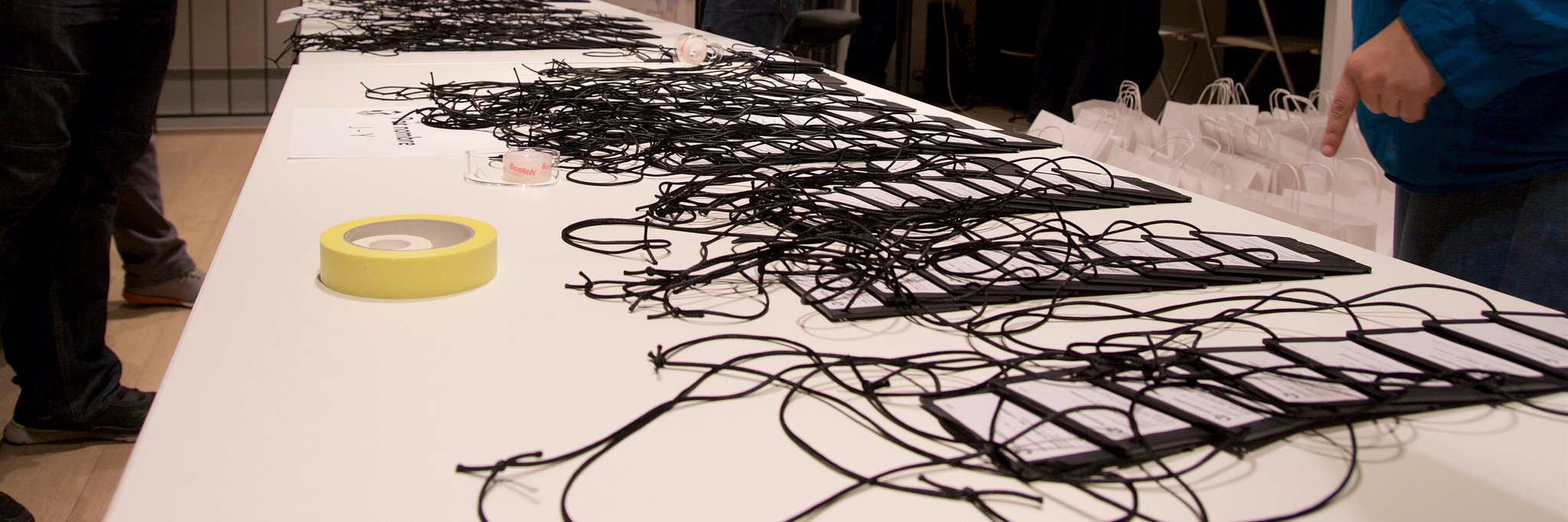
El segundo día de la #TRG26 fue de esos que te recuerdan que una conferencia no se queda solo en las charlas del programa. Todo lo que pasa alrededor también forma parte de la experiencia. O eso, al menos, es lo que intentamos.
¡GRACIAS POR HACERLO POSIBLE! 🚀
Dos años después de la DANA así está todo.
Gran reportaje.
Se confirma el paripé del comité de expertos para la reconstrucción que creó el gobierno.
Y la absoluta dejadez de la CHJ tras dos años.
Si vuelve a llover como aquellos días pasará lo mismo.
https://t.co/ywAhsyYEXx
La historia de cómo Rafa Nadal le ganó a Novak Djokovic en Roland Garros 2022 es INCREÍBLE.
Para poder salir a pista a jugar, Rafa tuvo que anestesiarse el pie por completo y le pidió un procedimiento límite a su médico:
🗣️ "Aquel día gané el primer partido y mi padre me tuvo que llevar a hombros hasta la habitación. No dormí en toda la noche. A la mañana llamé a Cotorro y le dije: '¿Hay alguna manera de dormir el nervio sensitivo sin que afecte al motor?'".
🗣️ "Me pinchaban los nervios que afectaban a toda la zona superficial del pie. No sabía si realmente funcionaba, pero me fui a jugar".
🗣️ "Jugué Roland Garros sin sensibilidad en el pie, con el pie dormido por las anestesias. En mi carrera tomé decisiones sobre mi salud al límite de lo correcto; si no me hubiera arriesgado así, tendría 10 Grand Slams menos".
Y Rafa no se conformó con vencer a Djokovic. También salió campeón 🏆