I've spent the last 10 years building payment, RWA, stablecoin, and infrastructure systems. The part I know best is not the token story. It's how money actually moves safely: custody, keys, risk controls, operations, audits, and failure isolation.
@circle RFQ plus local stablecoins makes programmable payments feel much more like real ops. Then the questions become quote expiry, settlement finality, fallback corridors, reconciliation, and audit evidence.
@WalrusProtocol Once agents start moving money, memory starts looking like risk data. My read is that provenance, tamper resistance, and policy context matter a lot if memory can influence a payment.
@circle For agent payments, I think execution and permission are almost separate products. Payment logic is one layer. The messy part is what the agent may do, for whom, and within what limit.
@CoinbaseDev@Checkout Fun to see x402 show up in real flows. My sense is the merchant side gets complicated fast: after an agent pays, the seller still needs reconciliation, receipts, and a sane path for weird post-settlement cases.
Less hype, more field notes from building and using systems where mistakes touch real money. If you care about stablecoins, RWA, payment infrastructure, or AI agents becoming financially useful, follow along.
I've spent the last 10 years building payment, RWA, stablecoin, and infrastructure systems. The part I know best is not the token story. It's how money actually moves safely: custody, keys, risk controls, operations, audits, and failure isolation.
That is the lens I want to use here: real money first, agents second. I'll write about the control systems behind stablecoin/RWA payments, how DORA maps to engineering work, what DeFi risk looks like in practice, and what agent payments need before they can be trusted.
I studied computer science for 7 years, then spent 10 years building technology at internet companies. A large part of my life has been about building complex systems around payments, RWA, stablecoins, and related infrastructure, I’ve recently been wondering whether I should try building something a bit more “sexy”.
That led me to a question:
What happens when social psychology, behavioral science, relationship science, and our understanding of human nature meet AI?
So, with @OpenAI Codex, I’ve been spending some spare time building this:
https://t.co/6sFUV4r0DN
Yes, “hmu” means “hit me up”.
Before building the MVP, Codex and I also studied and organized notes on social psychology, relationship science, communication, boundaries, and attachment: https://t.co/qLIBpkwjYY
The MVP is still rough, but I genuinely think Human Nature × AI is a very interesting direction to explore. 😂
The @PhoenixTrade team has already fixed the data calculation issue. Super efficient.
As a power DeFi user, I’ve traded perps on Vertex on Arbitrum, GMX, Hyperliquid, Aster, and more.
Honestly, Phoenix is the smoothest product I’ve used.
Part of that is because I’m deeply aligned with Solana, but I think the real reason is that Phoenix’s RISE SDK is clean, simple, and technically beautiful.
Respect. 🫡 @jarxiao
10 hours after I reported this issue to the @PhoenixTrade@jarxiao team on Discord, there is still no response.
That said, it’s fine. As a software engineer who regularly works with complex IT systems, I’m very sensitive to data anomalies. My intuition told me this was something worth reporting to the Phoenix team.
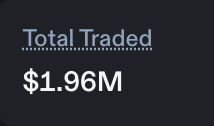
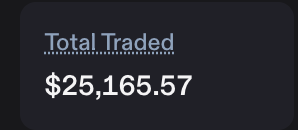
The reason is simple: historical trading volume data like this can only live in a database. Once snapshot-style historical data becomes abnormal, especially when an account’s volume drops from around 1.9M to 25,000, there are usually two possible explanations.
*The first possibility is that Phoenix has a bug in its block data sync or calculation logic, or some issue caused the calculation start point to be set to the wrong
block.
*The second possibility is that Phoenix’s database was updated by someone with write access. For example, an internal actor could swap his low-volume account’s trading volume with another account’s high-volume data. This would be harder to detect because the total trading volume would still remain consistent.
The first case would be a software bug. The second would suggest a serious internal database access-control risk at Phoenix.
Either way, this is a serious software process failure.
Whether the Phoenix team wants to investigate the root cause after seeing my report is up to them. It doesn’t really matter to me. Of course, I hope Phoenix continues to do well.
This will be my final tweet about this issue. I’m going back to my busy work.
As usual, I’ll tag @toly , although he may not see it. 😂
10 hours after I reported this issue to the @PhoenixTrade@jarxiao team on Discord, there is still no response.
That said, it’s fine. As a software engineer who regularly works with complex IT systems, I’m very sensitive to data anomalies. My intuition told me this was something worth reporting to the Phoenix team.
The reason is simple: historical trading volume data like this can only live in a database. Once snapshot-style historical data becomes abnormal, especially when an account’s volume drops from around 1.9M to 25,000, there are usually two possible explanations.
*The first possibility is that Phoenix has a bug in its block data sync or calculation logic, or some issue caused the calculation start point to be set to the wrong
block.
*The second possibility is that Phoenix’s database was updated by someone with write access. For example, an internal actor could swap his low-volume account’s trading volume with another account’s high-volume data. This would be harder to detect because the total trading volume would still remain consistent.
The first case would be a software bug. The second would suggest a serious internal database access-control risk at Phoenix.
Either way, this is a serious software process failure.
Whether the Phoenix team wants to investigate the root cause after seeing my report is up to them. It doesn’t really matter to me. Of course, I hope Phoenix continues to do well.
This will be my final tweet about this issue. I’m going back to my busy work.
As usual, I’ll tag @toly , although he may not see it. 😂
Hi team @PhoenixTrade@jarxiao , Phoenix is really easy to use. I’ve been using it for almost three months now.
However, today I’d like to report what I believe is a very serious issue: it looks like there may be a problem with your data calculation.
My Total Traded was still showing around $1.95M yesterday, but today it suddenly changed to $25,149.20. This seems like a serious bug.
I’ve already opened a ticket in your Discord, but I haven’t received a response yet.
If even the data calculation can be wrong, there may be a much more serious bug hidden underneath. As a software engineer, that’s my instinct, and I hope the team will take this seriously.
Also, I think I should tag @toly here too😅
Hi team @PhoenixTrade@jarxiao , Phoenix is really easy to use. I’ve been using it for almost three months now.
However, today I’d like to report what I believe is a very serious issue: it looks like there may be a problem with your data calculation.
My Total Traded was still showing around $1.95M yesterday, but today it suddenly changed to $25,149.20. This seems like a serious bug.
I’ve already opened a ticket in your Discord, but I haven’t received a response yet.
If even the data calculation can be wrong, there may be a much more serious bug hidden underneath. As a software engineer, that’s my instinct, and I hope the team will take this seriously.
Also, I think I should tag @toly here too😅