Some signs a person is highly dysregulated (they’re in fight, flight, fawn or freeze):
1. They show no emotion and look detached (freeze)
2. They’re smirking or smiling (discomfort of flight energy)
3. They pacify or agree even though they’re scared or want to leave (fawn)
4. They’re interrupting, talking over, unable/unwilling to listen (fight)
Bookmark this practice called: The Neuro-Fascial Release Techique.
In order to be physically and mentally healthy, our vagus nerve has to be functioning properly. When our vagus nerve functions properly were in primarily in what’s called social engagement mode. We’re also flexible and able to react appropriately to stress. We’re less susceptible to disease because our immune system is functioning at its best.
You can practice this as often as you make time for. Ideally daily— or any time you want to get back to a parasympathetic state.
Test your mobility before and after doing this practice. And if you can— journal after. Notice how your emotions change when you help your body do so what it naturally does.
TO PRACTICE:
You’ll feel the occipital bone at the base of your skull. Press firmly, but NOT too hard. Move the skin to the right and hold. Then to the left. Keep breathing.
This practice was created by Stanley Rosenberg who through polyvagal theroy (Dr. Stephen Porges) initiatively understood that trauma is stored within the body. His work with clients focused on somatic practices, specially clients with depression, anxiety, and other “disorders” that are actually adaptions.
Please share so other people have access to the healing power that can come when we understand the role of the vagus nerve and our nervous system #selfhealers
Bookmark this and practice.
It only takes a few minutes and with practice your body will get into a tremor quicker.
Animals naturally shake after stressful and traumatic events—it helps them discharge sympathetic energy and return to a parasympathetic state.
We humans need this, too.
But no one teaches us how to self soothe.
It’s on us to help our body release the stress from our bodies. The more we release it, the more our body registers: ok I’m safe. The more confident we become knowing we can restore our own bodies.
You might yawn or cry— let yourself.
Share with anyone on a healing journey #selfhealers
How do you get students to think deeply about new vocab?
The "pile of words" strategy challenges students to engage in conversation, work collaboratively, & think critically about vocabulary by positioning them at the center of their learning: https://t.co/RJackjptjW
#edchat
New blog! My first for @edutopia about how teachers (>programs) are THE KEY to reading success with practical tips for planning and responding in the moment during lessons. Pls read, share, comment! https://t.co/w6h1n4hBe2
I wanted to change how I start the first day this year, and came across @MarcusLuther6 identity values activity he shared. I used his ideas and questions to create an Identity Hexagon Activity for 7th graders. I will let you know how it goes! https://t.co/w2Cmpm8xYq
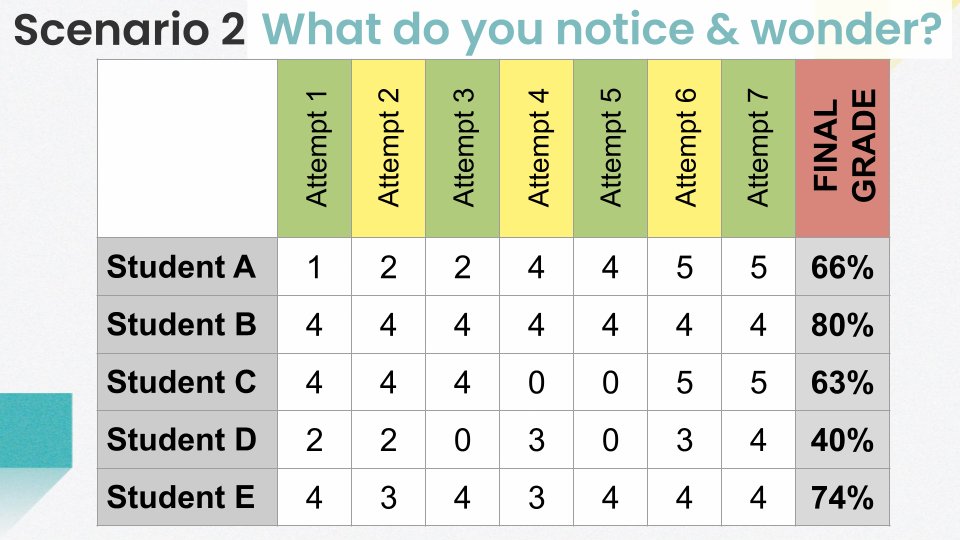
One of my favorite ways to open up a workshop and PD session is with a moment of disequilibrium, which is designed to get people to question if something might need to change.
Here's one of my favorite scenarios I use for a session around grading practices.
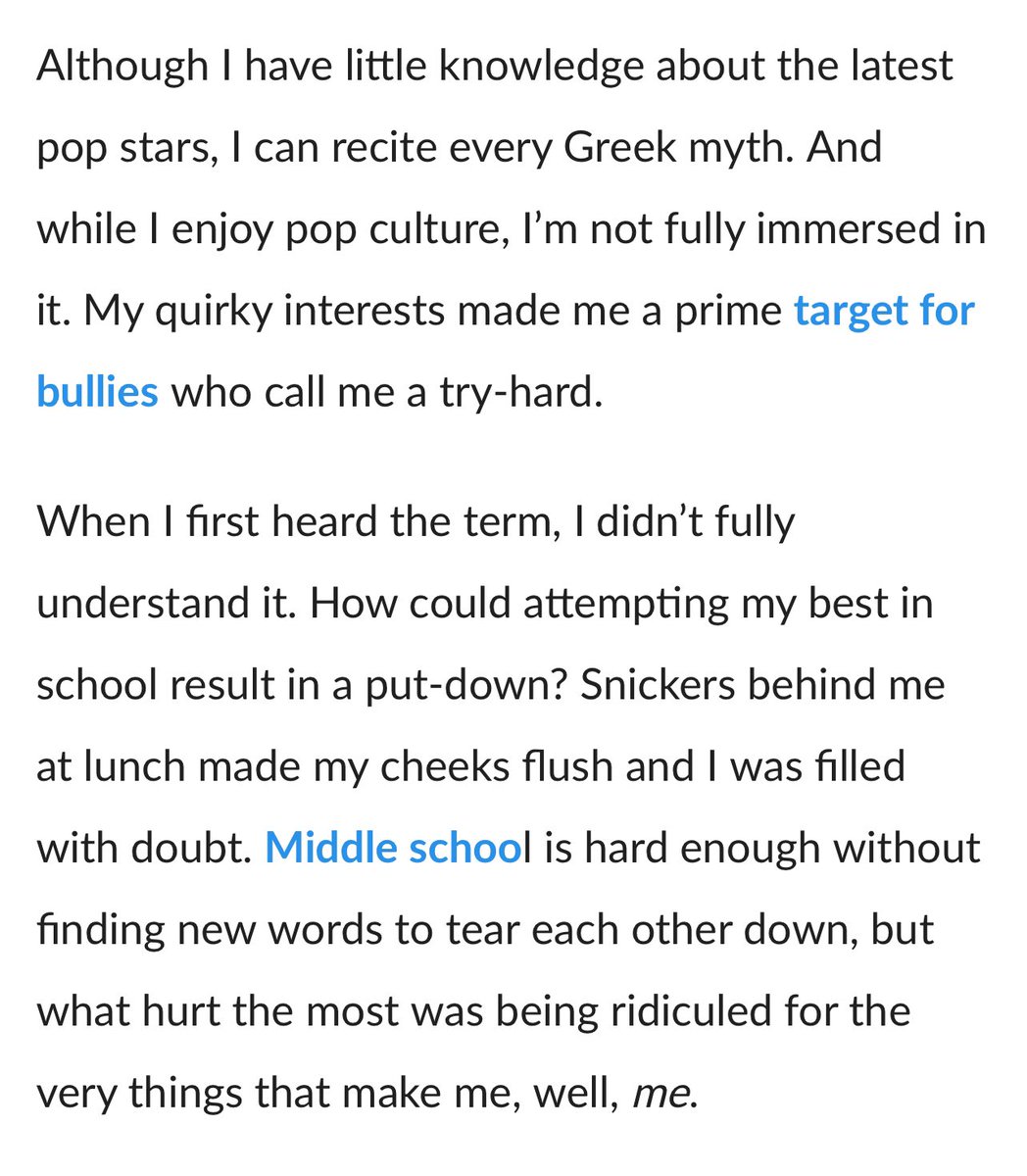
My daughter was called a “try hard” for caring about her education and bullied. She wrote this article in 8th grade as a response. Many teachers share this article w/students to begin their school year. She is now headed to an honors university program and has an entire semester of college complete due to gaining all 5’s in 5 AP courses. It is her love of reading and education, and knowing her true self, that has gotten her to this point. So proud of her. https://t.co/KcFLkQ2ZLL
Did you know @donalynbooks and I curate a spreadsheet of starred reviews awarded to books published for young people? So far... only FOUR books have received a #starredreview from all 6 of the trade journals we curate. ⭐️⭐️⭐️⭐️⭐️⭐️ https://t.co/mEJTxLSV3j