@rkhkimx tells you about the early mornings, but every evening we're like two ships passing in the night (except we live in the same house)
there's something special about living in a house full of ridiculously smart people, constantly learning from each other, pushing each other, and getting better together. that's what it means to hone
proud to call him my roomie (iykyk). couldn't ask for a better partner in owning the outcome 🫡
engines hone engines.
early mornings, i see roomie @jess_liu_ at the dining table repeating over and over again...
"own the outcome, set the standard, win with class, commit to the racing line"
i once asked her why, and she yelled
'WAKE UP. BE AN ENGINE.'
i stumbled away dazed. but i understood.
you should too @hone.
What if every organization could access the operational leverage of a world-class internal engineering team, without having to build and maintain one for every function?
At Ramp, I saw firsthand how much leverage exceptional internal engineering teams can create. But that model has an important constraint: engineering talent is scarce, and its opportunity cost is enormous.
Every company building its own internal AI platform is probably not the Pareto-efficient equilibrium in the long run.
Companies have always faced a tradeoff: invest in internal infrastructure that improves operational efficiency, or invest in the core product, where returns can compound into durable competitive advantage.
Ideally, you do both. But not every company has the resources to do so, and even those that do need to consider where the marginal return on engineering effort is highest.
AI has the potential to fundamentally shift that production frontier.
What if the people closest to the problems, the domain experts who understand the business best — could directly shape, deploy, and improve the systems that solve them, without being bottlenecked by engineering capacity?
That's what we're building with Engines at Hone: AI that learns an organization's context, coordinates across people and systems, and continuously works toward measurable business outcomes.
The opportunity isn't just automating workflows. It's changing how organizations allocate scarce technical talent, while empowering the people who understand the problems to own their solutions.
Let engineers compound competitive advantage in the core product. Let domain experts drive the systems that improve how the business operates.
Making this possible requires a rare combination of frontier research, engineering, and deep operational expertise. That's what makes the team we're building at Hone so exciting.
We're hiring. Come build with us. DM me or learn more at https://t.co/VVFWFGT1RL
Today Hone launches Engines: AI that owns business outcomes.
Chatbots give answers. Agents do tasks. Engines deliver outcomes, and we hold them responsible for creating real value, measured in actual dollars instead of tokens or vibes.
You point it at a business metric, and the Engine figures out the rest. It onboards itself, builds the necessary agents, skills, and memories, collaborates with the right people, and gets better with experience.
From AI leaders to global enterprises, our customers have already used Engines to:
• Uncover millions in procurement savings
• Optimize product funnels
• Manage credit risk
• Increase qualified pipeline in new territories
• Accelerate implementations and improve account management
To scale this impact across the economy, we’ve raised a $60M seed led by Benchmark and Index with participation from Elad Gil, Hanabi, Definition, Diffusion, Lux, SV Angel, and Align.
AI’s raw capabilities are far ahead of the value it creates in the real world, and Engines will help close the gap.
Here’s how they work…
When life gives you codex and free will
Of course you make yourself a massive LED Jumbotron in the office to monitor everyone who progresses through your puzzle
I’ve spent my career between two worlds: the complexity of large enterprises at McKinsey, and the frontier of applied AI at Ramp.
What I’ve learned: the hardest, most important problems don’t respect the boundaries between research, engineering, and product.
Neither should the people solving them.
DM me if that sounds like you.
Announcing Hone
Intelligence has become abundant. Yet the world looks remarkably similar to how it did five years ago. With every model release, the gap between what frontier AI can do and the economic value derived from it widens.
Closing the gap requires re-organizing work around organizational outcomes, not individual tasks. Hone builds AI that creates, orchestrates, and improves agents and software continuously to own organizational outcomes over weeks and months.
We are ex-founders and early core contributors to Cognition, Mercor, Ramp, and OpenAI. We obsess over real-world value, not theoretical benchmarks.
Our core beliefs on closing the gap in the thread below.
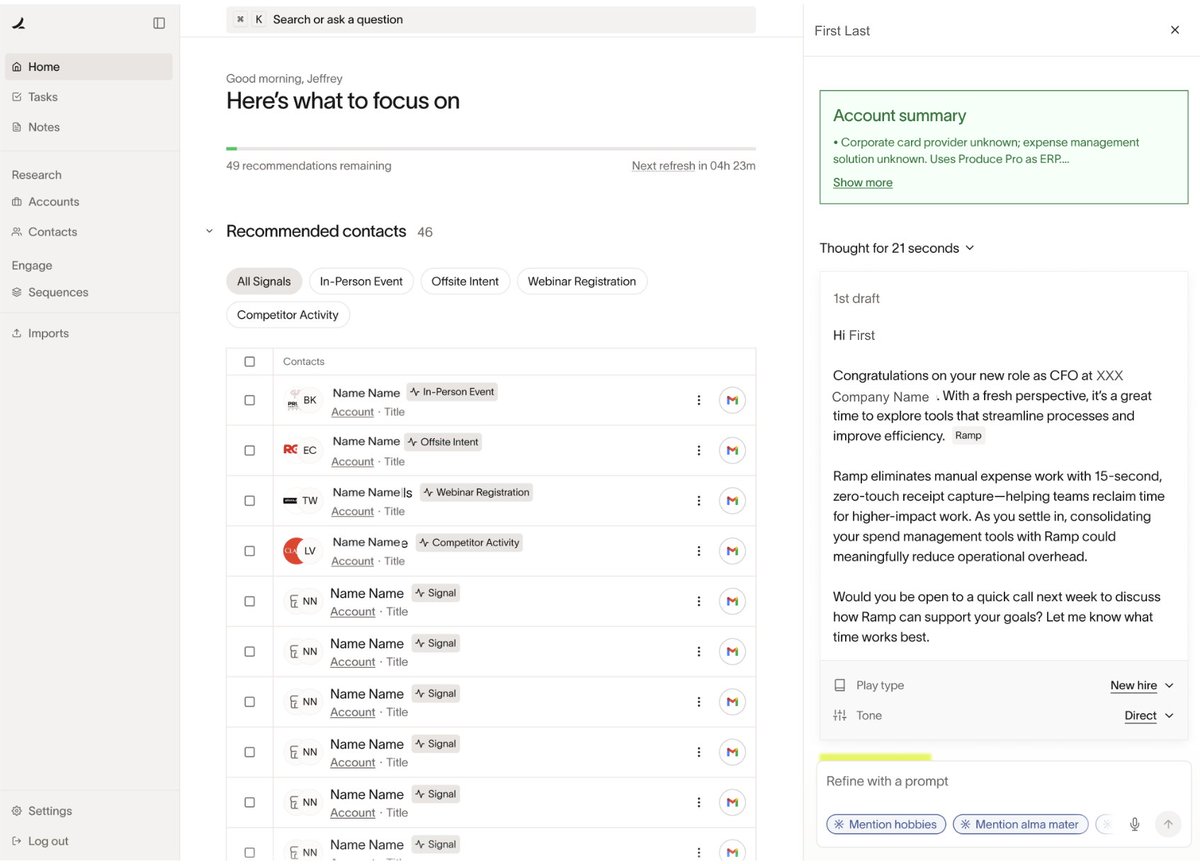
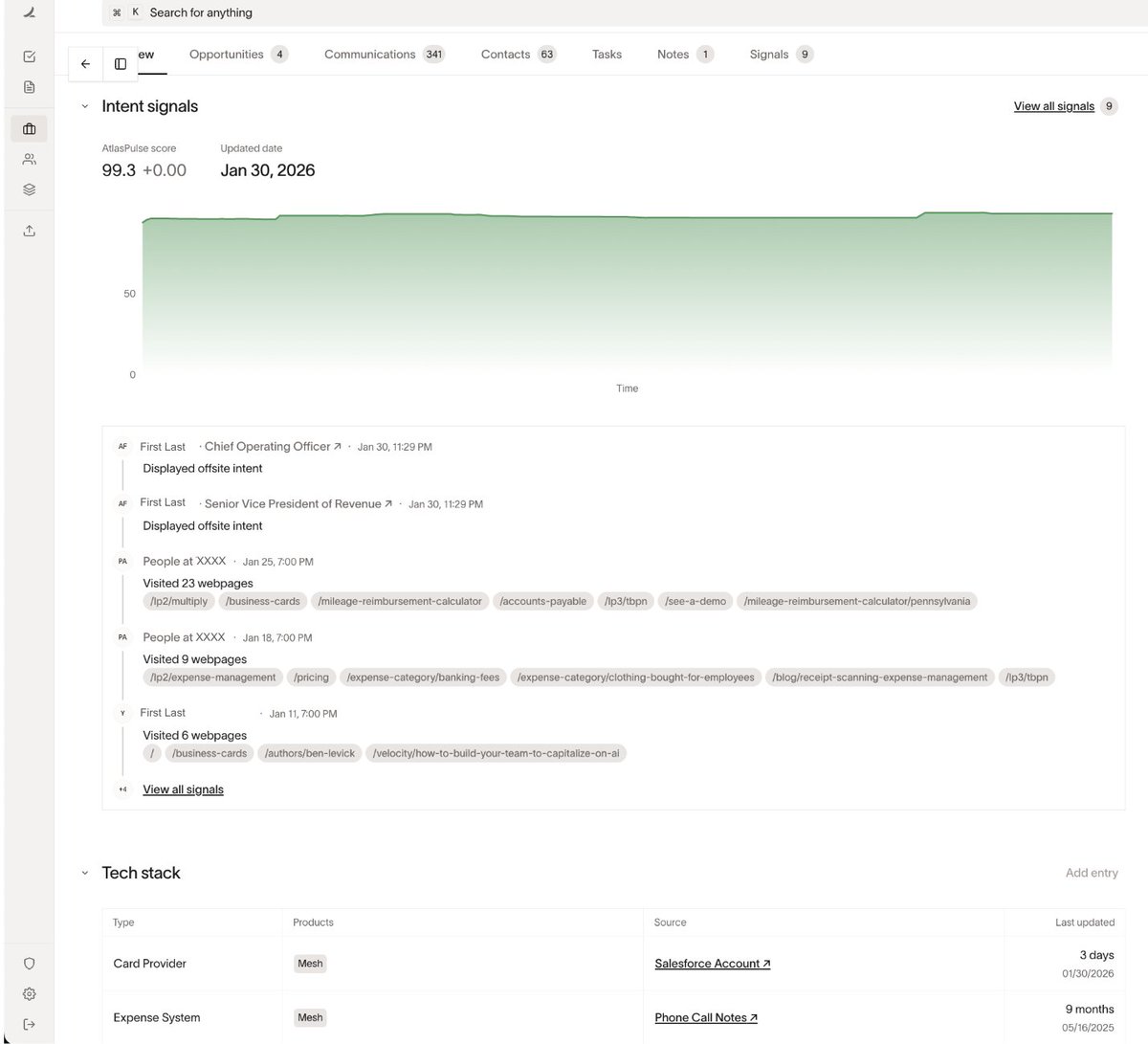
we've been quietly building our own 0 -> 1 revenue stack internally at @tryramp - Ramp Revenue.
our team’s mandate is simple - help our sales team win, drive more pipeline, and build the most efficient gtm org in the world.
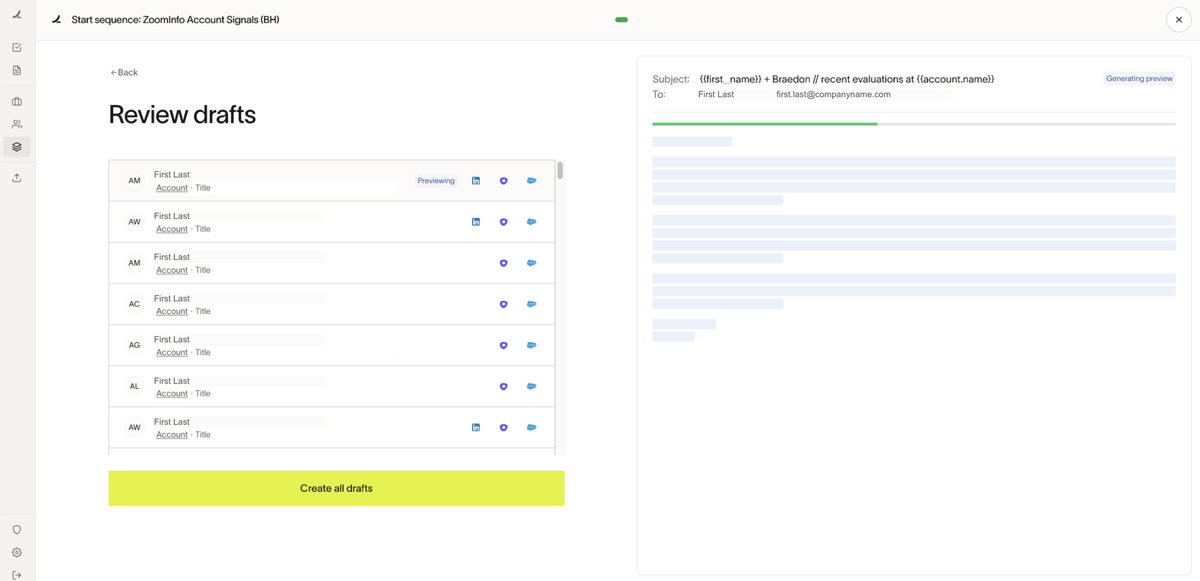
it's powered by our customer data platform (processes millions of records of internal, external, and crm data daily) + unified action layer with agents embedded directly in their workflows.
This means that sellers at Ramp don’t have to worry about switching between dozens of systems just to figure out who they should reach out to or what they should say.
>80% of sales workflows are now powered by Ramp Revenue. Sharing a small preview of what we've been building