New #EmpiricalResearch#Quantitative#OpenAccess article “The Relationship Between Individual Social Responsibility and the Public's Intention to Act Violently Toward Nurses—A Cross-Sectional Study” by authors Efrat David, Mor Lifshitz #OpenAccessWeek2024 https://t.co/c1mrBUhOmn
People from the most deprived areas are much more likely to say they are waiting for planned care, young black people have longer waits in emergency departments, & women waiting for gynaecological care are on a vastly increased waiting list, analysis shows
https://t.co/VYUYdMnlbB
"A clear vision does not equal a clear path". Thank you to Dr. Samra Zafar for telling your story at Mental Health Morning. An extremely inspiring story & human being. Tears, laughter, and moments of reflection. Just wow. #WeAreStJoes#MentalHealthMatters@StJoesHamilton
When you set aside snap judgments and explore where feedback is coming from and where it’s going, you enter into a rich conversation. https://t.co/CZZBu1YTy0
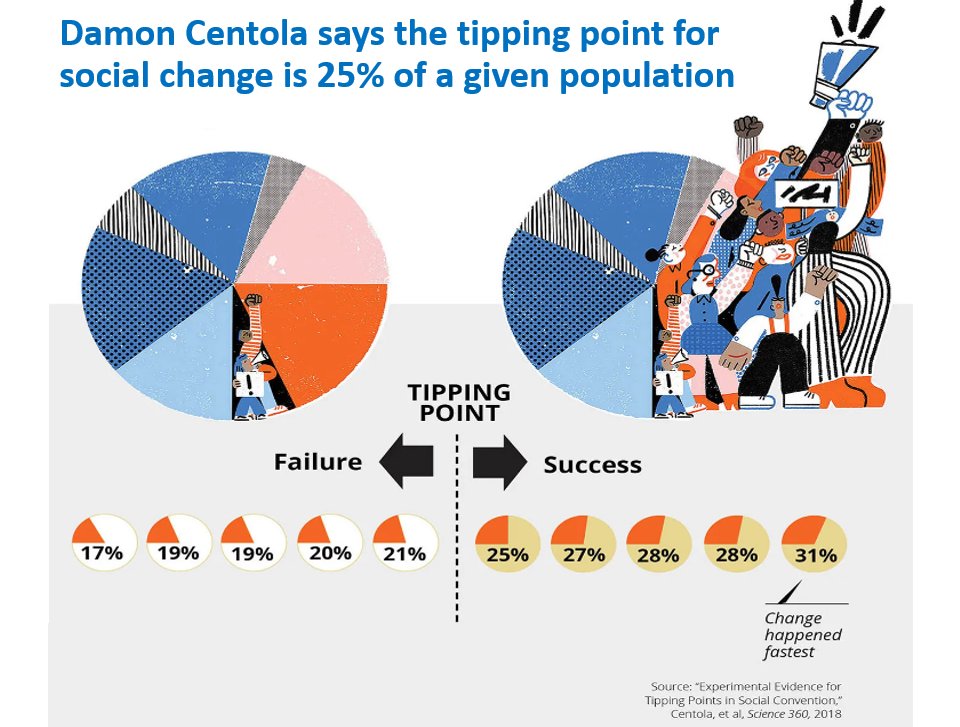
How many people does it take to change an organisation, system or culture? In his book "Change, How to Make Big Things Happen", @DamonCentola shows how change became inevitable when 25% of the people were on the side of making the shift - a “committed minority group” driving the change. But how do we get to 25%? Three strategies:
1) Use "non violent" change processes: where people can come into the change, make it their own, be part of a co-creative process & see/feel their stamp on the change.
2) Adopt the "Active, Sustained 3.5% Rule": a much smaller group actively engaged at the heart of the change, sustained over time.
3) Adopt the "Law of One Person and One Step": where we don’t need to train everybody, but instead, coach a small group of people to create a non-violent resistance to the old ways of working & bring new ways in.
https://t.co/N9UfEooWgw. By @dastillman
📻Thanks to @AM900CHML@rickzamperin for having our very own Emergency Department RN Rafal Tomczuk on the show today to chat all things @bayracerun and how funds raised will support the Emergency Department at St. Joe’s. Learn more: https://t.co/NeEoRPSguG
One of the things we often get wrong in health & care improvement is prioritising performance improvement (process-technical aspects) over the emotional experience of participants. We need to make consideration of emotional factors one of our highest priorities in change initiatives. This includes:
1) how we make connections with values, through emotions, to engage people in change &
2) appreciating emotions & related cognitions & behaviours surrounding events during change.
See: https://t.co/cpQsfsNVds Via @StevenHCady. Graphic: @gapingvoid
Pushing yourself to your limits will only leave you exhausted. Work hard, but also take the time to recharge — there will be more benefits than you realize. https://t.co/Sn18N7Li8o
Nurse leaders are vital in establishing a culture of patient safety and providing an environment where nurses feel supported following a medical error. @tweetAONL @anccoffical @NurMgt_online https://t.co/t0OSjMj10i
How to get more done in less time:
1. Clarify actual expectations
2. Re-use previous material
3. Develop templates and checklists
4. Make it a conversation
5. Timebox your work https://t.co/pFsKmj14aX
Hamilton’s Race for Hamilton’s Hospital. 🏅🏃♀️🏃✨ The @bayracerun returns March 24 to celebrate their 130th anniversary. Don’t miss your chance to take part in this year’s race featuring a new route and a new home. Walk, run and raise funds for St. Joe’s: https://t.co/Nebb72fUHx
Just show up. You don't have to always get it right or be a perfect person.
You DO have to be willing to show up to your uncomfortable feeling and say,"You're here. I'm here. Let's talk."
As change agents, it is our daily mission to challenge the status quo. Making a clear case for change, backed by data, can help but status quo challenging is far more of an emotional & political process than a logical/rational one. It takes courage but it's more about skill. Ten ways to build that skill:
1) Anticipate the opportunity
2) Ask for permission
3) Begin with inquiry, not advocacy
4) Model emotional intelligence
5) Demonstrate a grasp of the past
6) Be transparent about potential unintended consequences
7) Bring credibility
8) Know your boss
9) Frame dissent as exploration
10) Use data
https://t.co/jijdtDjpMj By @timothyrclark.
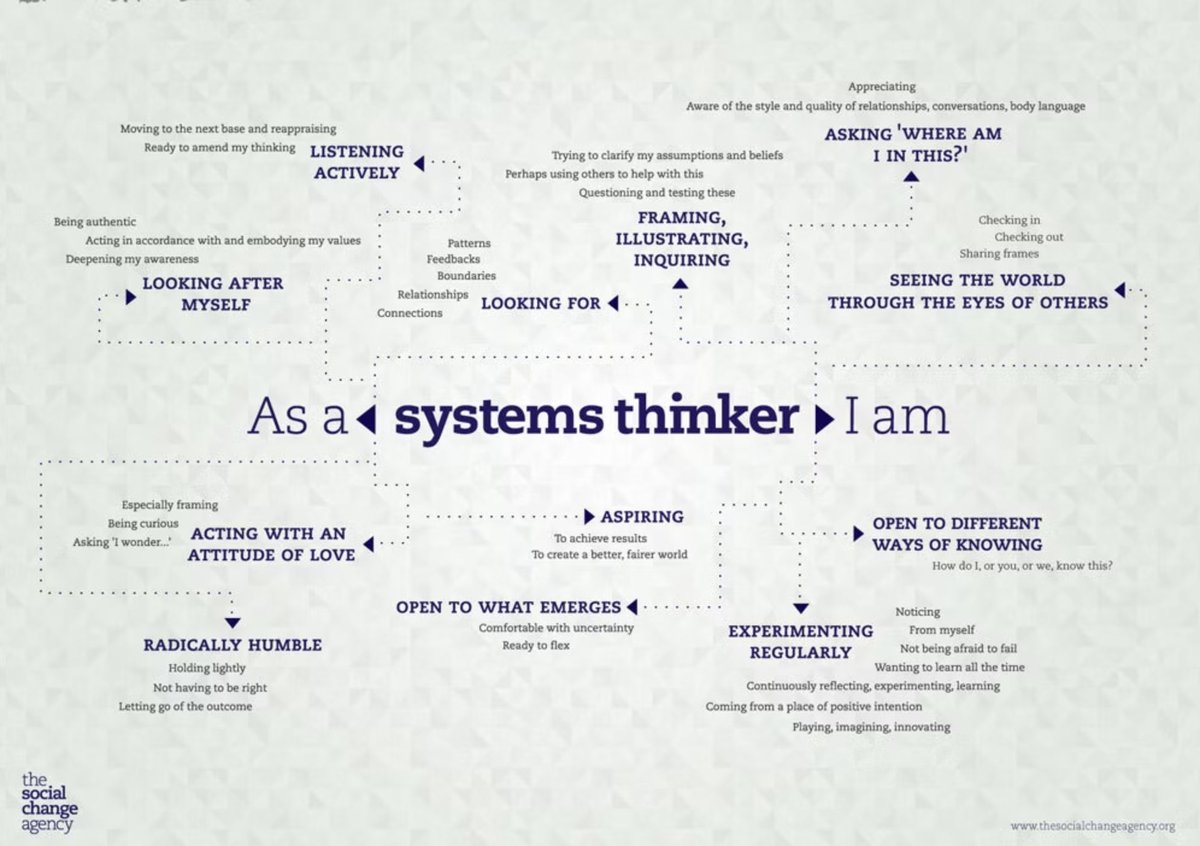
In today's event, we will look at methods used by organizations for systems change. In this article, Anna Birney outline some of the "systemic practices" for systems change: https://t.co/8TFKPkahlU
You can find today's event here: https://t.co/iePhA2hKD9