Assistant Professor with the Chase Center for Civics, Culture, and Society at The Ohio State University | Sociologist | Religion, Politics, Culture, Knowledge
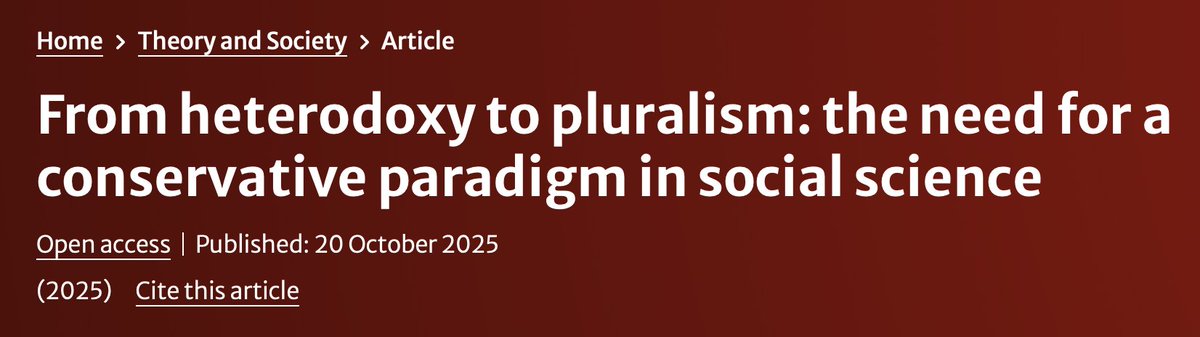
See my latest at Theory & Society.
There's lots talk about the need for viewpoint diversity in higher ed, but the discussion can be vague. I provide clarity re: what it is, what problem it's supposed to solve, and what it should look like in the context of social science. 1/ 🧵
NEW: a report from Vanderbilt and WashU just dropped, taking on the "state of scholarship in the humanities and social sciences," a big topic among critics of higher ed.
Read along w/ me 🧵
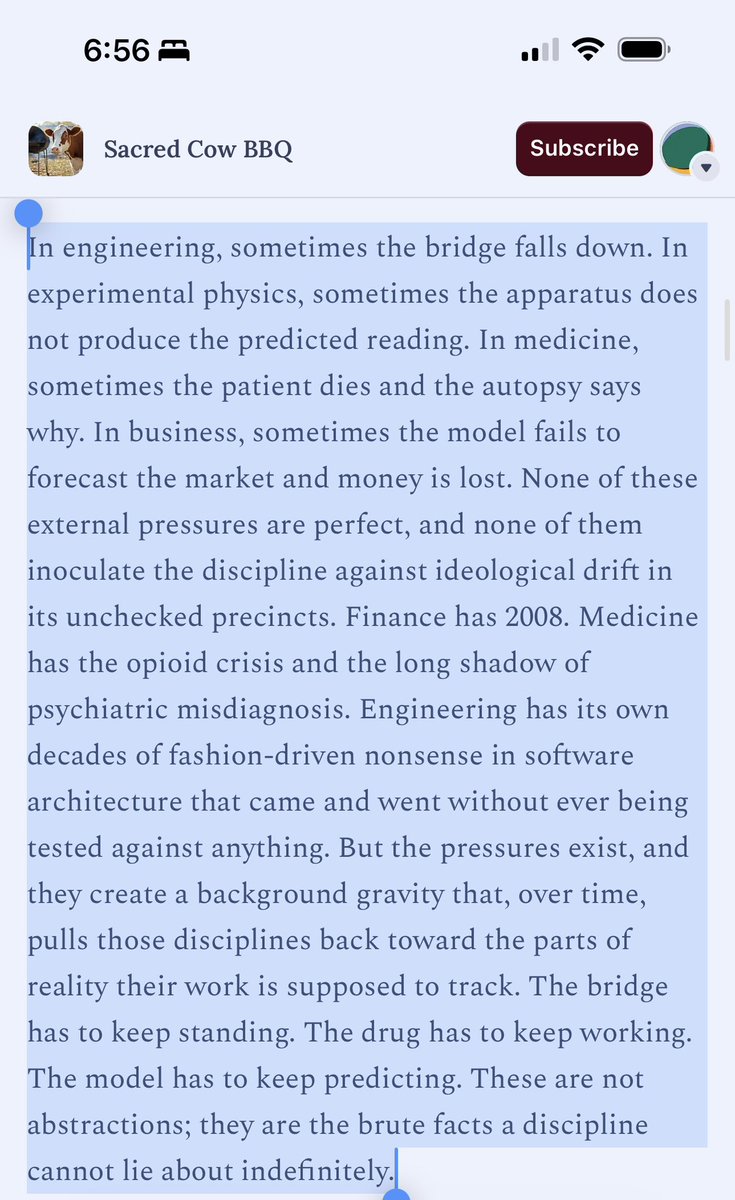
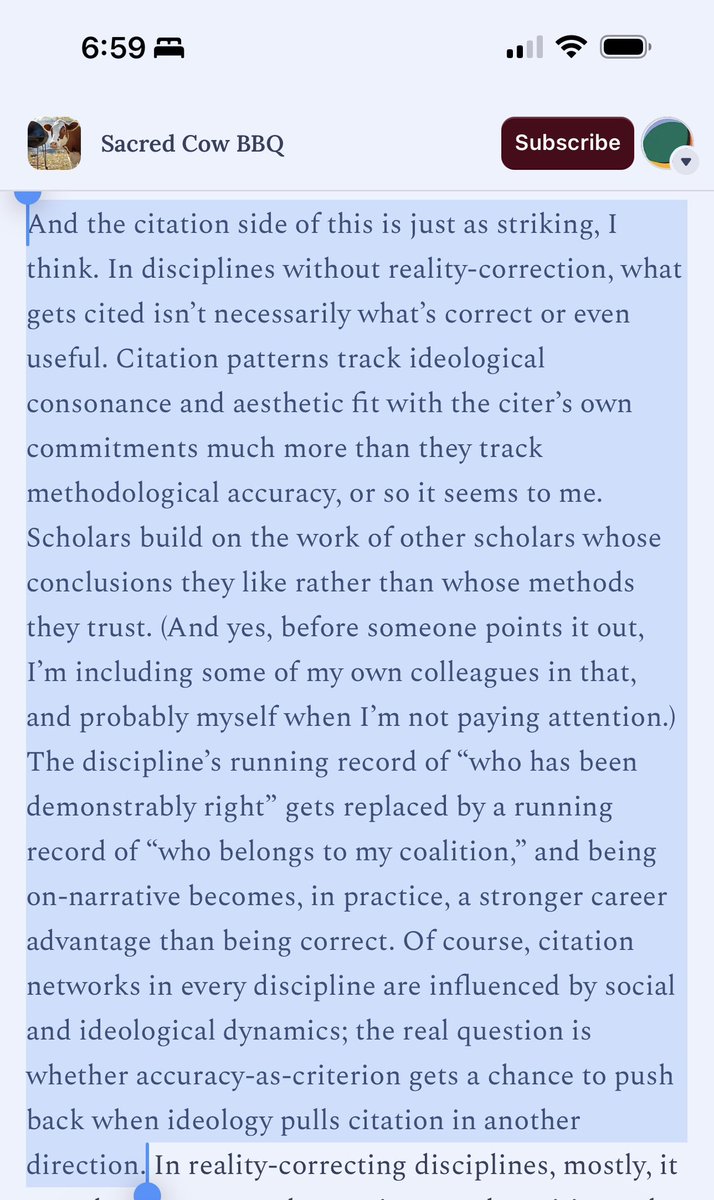
Real banger from Sacred Cow BBQ on the problem of social sciences and humanities being largely immune to reality correction because there’s no feedback loop that penalizes people for being wrong. The incentive structure rather rewards people for intra-guild argumentative sophistication and coalition-building, which in many cases are ideological or actively reality-resistant. There are real reform efforts afoot, and that is good, though they’re largely happening outside of formal sites of academic knowledge production, e.g., Substack rather than academic journals.
This one amply rewards your attention!
https://t.co/y4vv90Ip3H
See our new report with the Institute for Family Studies on the factors that predict religious transmission between generations.
Key takeaway: Parents matter! @JaneLankesSmith https://t.co/9nP9ElVbYU
ASA probably can’t make any concession to its critics without angering much of its membership, and the refusal to make concessions validates the claims of its critics. Not sure how you get out of this.
For the American Sociological Association to write this, is the apex of terminal obliviousness:
"It is of great concern to witness educational access in Florida reduced by efforts to influence course content through political means"
https://t.co/uK6BhnanNb
New study @WeAreCommunio & @FamStudies: the family is a primary engine of faith transmission:
✔️fully 41% of kids who attend church w BOTH parents grow up to be weekly churchgoers
✔️just 29% when only one parent attends
When both parents pray, read scripture, talk about faith at home, children are far more likely to carry that faith into adulthood. The home, not just the church, is often where faith is formed or lost. 🧵
Interesting, if not uplifting, piece on possible pathways higher ed institutions can take in response to AI, esp core courses. The good news is it suggests there are options. The bad news is, none of them are comfortable and many won’t get them right. https://t.co/0RMlDdjaPa
There's a larger point here. The public is often scolded by "experts" for not listening to "experts," but how would the public know who the really expert experts are? Much commentary in this space assumes powers of discernment on the part of the rando that are not plausible.
It is not fully recognized, but the "experts" who signed this letter were not really representative of true experts in the field. Lots of PhDs candidates and med school students in this group.
The problem was that the real experts were too timid to object. They didn't want to be called racists so they let this left-wing group take the megaphone and become the voice of institutional public health and science.
I think this is right, though I do wonder how much the different groups blur into some general “elite class” with college serving as a major fault line, and higher ed folks as the most direct elite representatives. So distrust of higher ed could be a central element or driver rather than just one facet among others.
Enjoyed this. You may be interested in this book if you haven’t seen it. One way of thinking about people objecting to/mischaracterizing your arguments is that they’re drawing on different moral repertoires re: what makes for good sociology, but articulating this poorly. https://t.co/PRY96uUsY6
Well yes, as with many things AI, it’s simultaneously amazing and inconsistent. It works better for some kinds of writing than others, I think. The actual functionality is also inconsistent—sometimes it lets me specify what sort of “podcast” I want and other times it just auto-generates something more shallow. But, also like many things AI, I can’t help but think if this is what they can do now, I’m excited for what happens a year from now.
This can’t be right. I have it on good authority that the way to promote trust in science is to identify those among us who are opposed to truth, democracy, and basic human decency, and condemn them loudly and publicly in front of our like-minded peers.
1. Does drawing harder boundaries between science and "misinformation" increase or decrease public trust in science?
In four studies conducted in the context of COVID-19, we tested this question by comparing different approaches to science communication.
https://t.co/gCXWe5KscK
But it also assumes the necessity of tradition to make any kind of meaningful pursuit or exchange possible, no? So it strikes against simplistic appeals to "tradition" but also the attempted rejection of—well, tradition.
I don't see how the recognition that conservatives are engaged in defending older versions of liberal individualism undermines their position, though. Arguments over whether the older or newer versions are better seems perfectly compatible with how he has just described a vital tradition, it seems. Maybe the problem is when they deny, or don't realize, that's what they're doing?
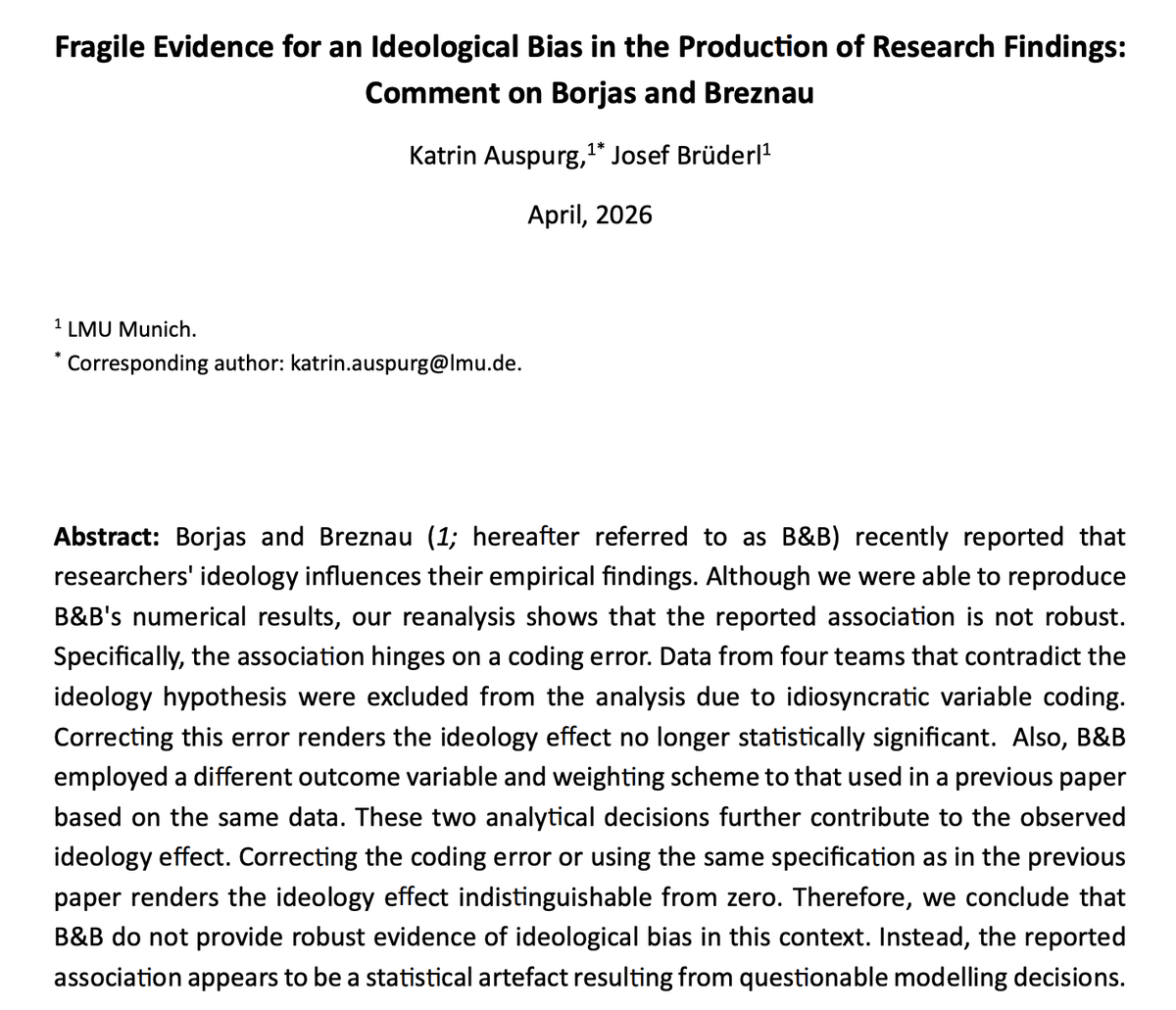
A few months ago I and others were posting about a study claiming to show that researcher ideology influences the direction of empirical conclusions. Only fair to recognize that this is contested, not only at the level of interpretation but also as an empirical finding.
@CTMathewes That makes sense, and I think when social science does scholarship as described above it’s veering into the humanities. Which for me is not a bad thing but one reason it’s less valued may be that it seems less “scientific.”
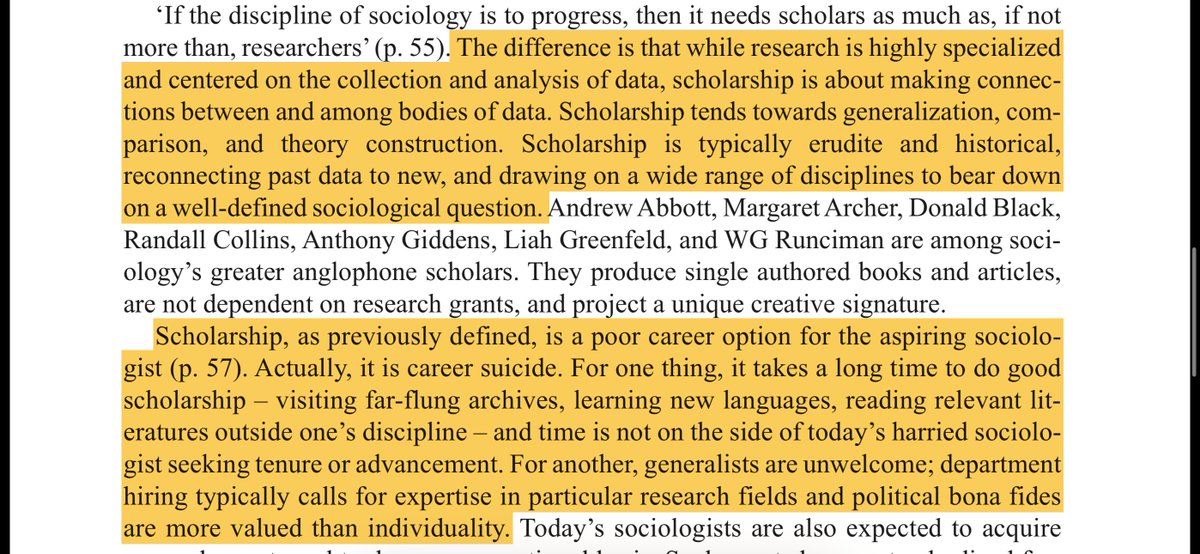
Helpful distinction from Colin Campbell (relayed by Peter Baehr) on the difference between research and scholarship. The latter is necessary to help social sciences make progress on their core questions, but modern academia overwhelmingly incentivizes for the former. 1/
Very worthwhile review that makes me want to read the book! Focused on sociology but with takeaways that apply more broadly.
4/4
https://t.co/cgwNc99SNk
Campbell also foresaw in 2019 (as did many others, of course) the dangers of trading inquiry for activism. Our claims to academic freedom are predicated on the idea that our core task is inquiry. If we start doing politics and even declare that what we should be doing is politics, we don't have much ground to stand on when those with opposing politics try to stop us from doing it, and on the public dime, no less. 3/