Senior Climate Change and Development Economist @CA_Latest looking into the socioeconomic impacts of extreme climatic events and adaptation. ᜉᜒᜎᜒᜉᜒᜈ. UP Iska.
Some say what Europe considers as heatwave is like a normal day in the tropics. I'm from the Philippines, and let me tell you - the feeling of a European heatwave is so different. It's very dry and the sun is painful on the skin. Also, air-conditioning is not common.
As a heatwave sweeps Europe, a new study shows climate change will widen Europe’s income gap further.
In a 1.5°C world, heatwaves and drought could reduce average household incomes by around 7.5% across Europe and up to 27% in a 2.7°C world. https://t.co/ARzurnKSWs
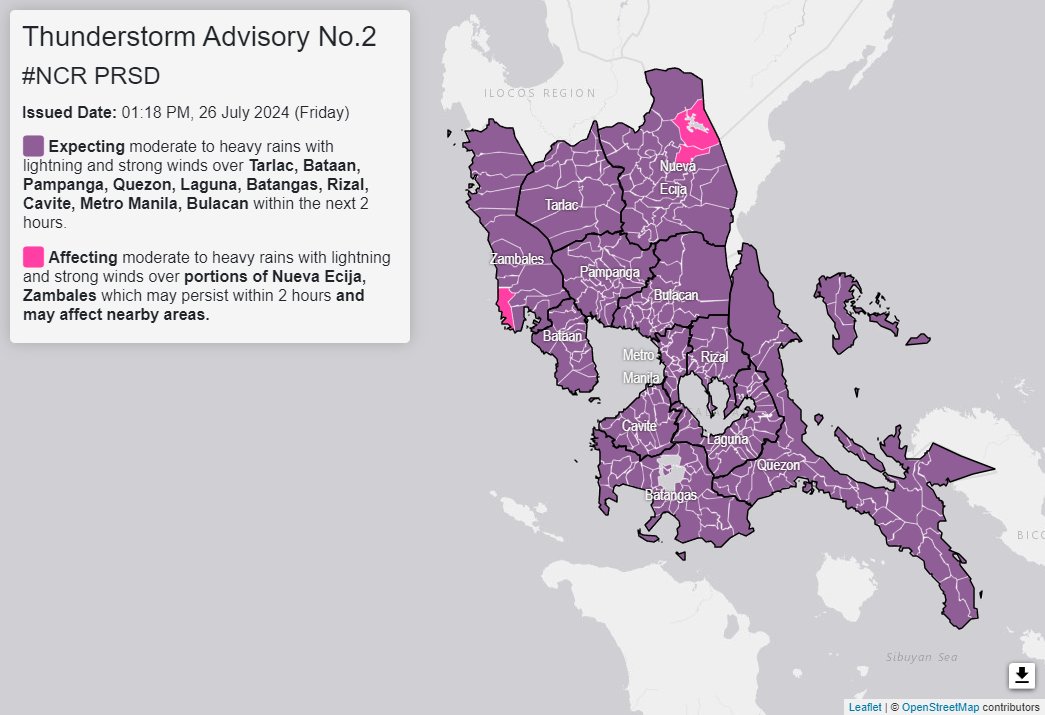
Thunderstorm Advisory No. 2 #NCR_PRSD
Issued at: 1:18 PM, 26 July 2024(Friday)
Moderate to heavy rainshowers with lightning and strong winds are expected over Tarlac, Bataan, Pampanga, Quezon, Laguna, Batangas, Rizal, Cavite, Metro Manila and Bulacan within the next 2 hours.
The above conditions are being experienced in Nueva Ecija(Pantabangan, Rizal) and Zambales(San Antonio) which may persist within 2 hours and may affect nearby areas.
All are advised to take precautionary measures against the impacts associated with these hazards which include flash floods and landslides.
Keep monitoring for updates.
The impacts of typhoons in the Philippines doesn't end when the typhoon exits the country. After effects such as diseases from dirty flood water, loss of livelihoods from both strong winds and heavy rain; and lack of resources to recover make each storm's effect persistent.
Coupled with other factors such as blockages in waterways (e.g. trash), and elevation of areas (i.e. low lying areas receive heavy rainfall and runoff from neighbouring areas), high levels of flooding is expected.
Heavy rainfall furing storms in the Ph causes more household impacts than wind damages according to our study. The capacity of drainage systems are exceeded by the sheer amount of rainfall alone in a very short time.
https://t.co/OKJJWLXXRz
#CarinaPH#TyphoonGaemi
In a visit to flood-hit Mauban, Quezon, President Ferdinand Marcos Jr. stressed the need to prepare for the next flood. He pushed for a nationwide flood control plan that considered the impact of climate change and the flow of water.
Marcos points out that floods don't care about boundaries of towns, cities, provinces: We have to figure out, bakit nagbago yan. Saan nanggaling, saan dumaan. Anong gagawin natin para harangin yan.
Marcos on pushing for national flood control plan: Ang tubig hindi nangingilala ng boundary. It all has to be a big plan. Hindi pwedeng it will cross three, four, five regions. Hindi pwedeng isang bayan lang dito, isang bayan lang dun. | @JMAurelioINQ /PDI
This paper is a product of 30 years of first-hand storm and flooding experience, and a few years of intensive research. I am grateful to both my co-authors for their valuable contributions!
NEW STUDY: climate change-fueled tropical cyclones have already reduced Filipino household incomes by 7% - from @jessieruthGS, Charlotte Plinke and @togeig.
In some provinces such as Surigao del Norte, Maguindanao, Batangas and Cavite it’s more than 20%.
https://t.co/WhcqWmmtK3
NEW: our latest report ahead of the @G7 Climate, Energy and Environment Ministerial looks at 'what good looks like' for G7 action on climate.
We've come up with (a handy) 7 recommendations for G7 economies 🧵
https://t.co/SuoFcIkhbv
🔔The first ACCREU #PolicyBrief has been published!
👀 It synthesizes current info on the economic costs of #climatechange in EU & the costs/benefits of adaptation, and identifies research areas to explore with stakeholders at the first ACCREU workshop.
➡️ https://t.co/D2vX6uYhB0
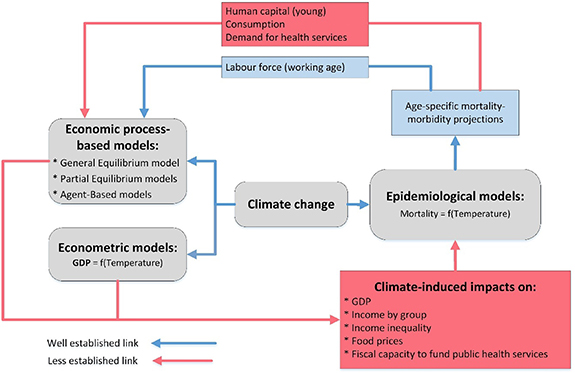
Neglecting inequality and adaptation dynamics of different household groups by solely using GDP to capture vulnerability may then lead to biased climate impact assessments.
Environmental disease and economic modelling should move away from using GDP as a proxy for economic vulnerability, argues this new perspective piece from Anton Orlov, @jessieruthGS, @KrAunan, @JanaSillmann, @AGasparrini75, @malmistry1977.
https://t.co/ixgur2U2q7
Interesting perspectives on energy generation, climate change, and development priorities in Ghana. The podcast episode is actually not just on nuclear energy, but also strategies of a developing country to fund green transition.
We have written this paper under the @COACCH_EU project, and we are thankful to @regstud for recognising our efforts! Climate change knows no administrative boundaries, and even when you think you are safe, you get spillover effects from economic ties. @CA_Latest#climatechange
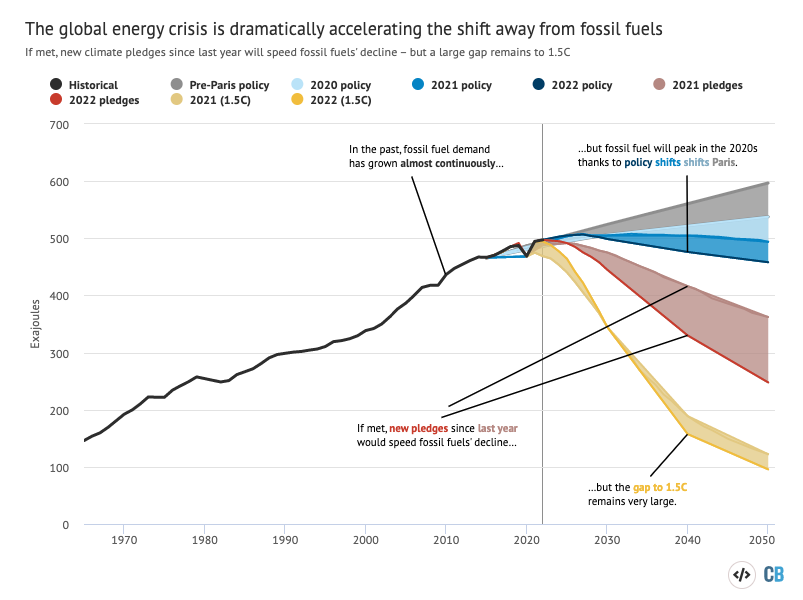
We're still way off track for 1.5C
But at #COP27 let's not lose sight of the massive progress we've made since Paris in 2015
Pre-Paris Agreement we were heading for 3.5C+ of warming
Now it's 2.5C…
…or 1.7C if all pledges are met
https://t.co/gpUB1h2pku
@PJACaytonPhD Hi Peter, there is scientific basis for her statement. While rice is the preferred staple, it is highly vulnerable to storms and droughts. What she is advocating is adaptation to worsening climates by adjusting planting schedules and crop diversification. https://t.co/XTbZbCJkqY
Progress on climate adaptation so far has been too little, too slow. UNEP’s 2022 #AdaptationGap Report highlights the urgency to develop national adaptation plans to help the most vulnerable communities cope with the accelerating impacts of #ClimateChange. https://t.co/yyBKAm0RZN
@johnjoecantos Salamat, pre! Nataon na ito rin ang current research ko kaya relate na relate ako. Not to mention the memories of driving through flood waters!
Just to put things into perspective - the typhoon in the Philippines over the weekend was signal #3 on local scale. That's not even category 1 of the Saffir-Simpson scale, and it has caused an equivalent of about 35 million Euros in damages. See what I mean with vulnerability?