Join us at #ClimateWeekNYC for Defending 1.5°C in an age of instability: Science, strategy and global solutions, with global leaders and climate scientists.
📅 Sept. 22, 3:30–5 p.m. EDT
📍 NYC in-person: register now
💻 Join via livestream on Sept. 22
https://t.co/lxZ2ukwAf1
One week away! Join us at #ClimateWeekNYC for “Defending 1.5°C in an age of instability.”
📅 Sept 22, 3:30–5 p.m. EDT
📍 NYC + livestream
See the speakers and details: https://t.co/lxZ2ukwAf1
NEW REPORT: Energy-sector methane emissions must fall 48–62% by 2030 to align with the Paris Agreement. Current policies deliver just 11%.
Governments must pair a rapid fossil fuel phaseout with binding methane targets + action on leaks, venting, flaring. https://t.co/D81vg3bvN0
Earlier this week, I spoke with @HimalSouthasian about the intensifying 2026 El Niño and what it could mean for #SouthAsia.
A weaker monsoon does not necessarily mean fewer floods, short periods of intense rainfall can still cause severe impacts.
Preparedness matters, but so does tackling the root cause: global emissions must fall deeply this decade.
Here is the news story
https://t.co/QOliL3eqZr @HimalSouthasian@CA_Latest
Dr.Robert Brecha🗣️, Senior Climate and Energy Advisor,
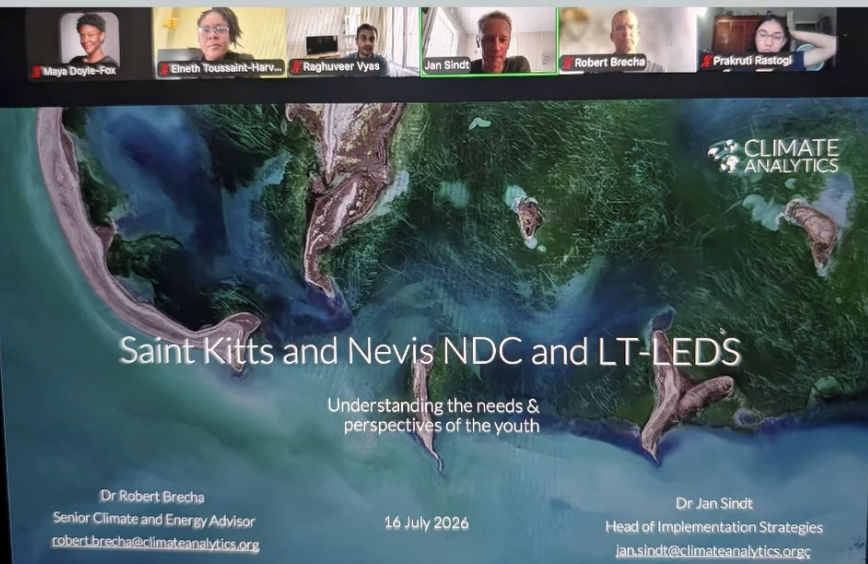
Implementation Strategies, @CA_Latest presenting at the 🇰🇳SKN Youth Engagement Workshop:
"Globally and in SKN, the move towards renewable energy is happening faster than anyone thought would be possible"
🇰🇳Saint Kitts and Nevis Youth Engagement Workshop has commenced!
Climate Analytics is aiming to gather input from youth reps on key needs and priorities across crucial sectors like:
👉Energy
👉Transport
👉Waste
🇧🇷Brazil’s overall CAT rating of its #ClimateAction has worsened from “Insufficient” to “Highly Insufficient.” Continued expansion of oil and fossil gas production, directly contradicts both Brazil’s climate leadership ambitions. New country summary: https://t.co/FBvfFU37Hv
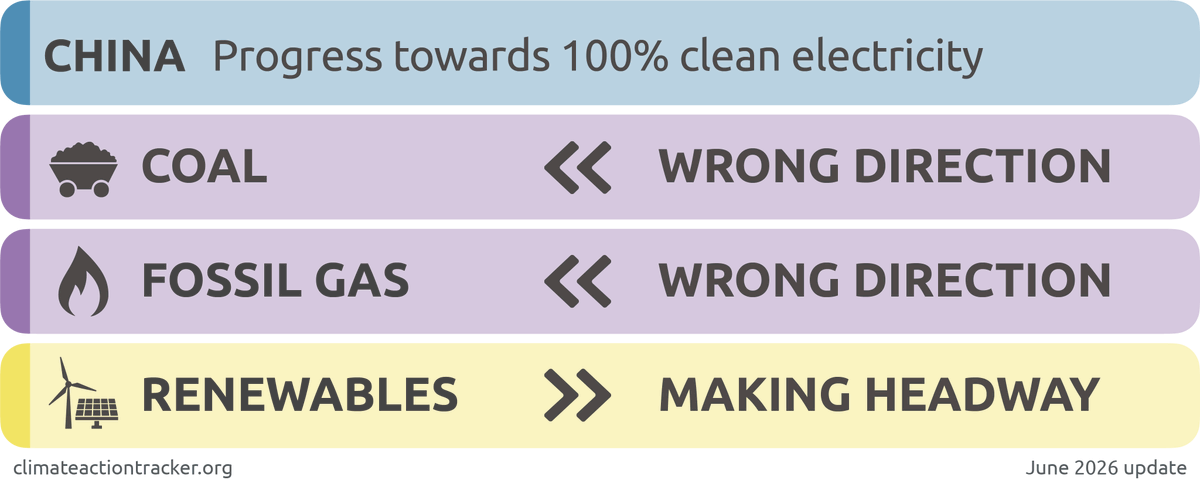
For the 1st time, #China is structurally cutting emissions across power, transport, & heavy industry. But major challenges remain: a coal-chemical boom and 291 GW of planned coal capacity keep China off a 1.5°C pathway. Our rating: Highly insufficient🔴 https://t.co/rN0oXEUi7f
As a heatwave sweeps Europe, a new study shows climate change will widen Europe’s income gap further.
In a 1.5°C world, heatwaves and drought could reduce average household incomes by around 7.5% across Europe and up to 27% in a 2.7°C world. https://t.co/ARzurnKSWs
This week, CA presented new evidence on what’s needed in a transition away from fossil fuels to align with the science of 1.5ºC. @BillHareClimate: “If countries followed the assessment of Highest Possible Ambition, then we could halt warming within the next 25 years.”
This provides critical evidence for the Santa Marta process on transitioning away from fossil fuels. Climate Analytics is ready to support any country in developing fossil phase-out roadmaps.
Look out for more work from us on fossil fuel production coming in the Autumn!
NEW analysis: to peak warming at 1.7ºC & get back to significantly below 1.5°C by 2100, global fossil fuel use must peak now, fall 20% by 2030, halve by 2035 & reach real zero by 2070.
🪨 coal phased out globally by 2050
🔥 gas by 2060
🛢️ oil by 2070
https://t.co/78sMioihds
We show illustrative fossil phase-out scenarios for 15 countries.
1️⃣ High-income countries lead the way, phasing out fossils by 2050
2️⃣ Middle-income countries follow but with slower action out to 2030
3️⃣ Low-income countries peak fossil demand in 2030 & phase out by 2070
Today, Climate Analytics presents new evidence on what is needed for a transition away from fossil fuels that aligns with the science. Join the press conference via webcast or in person in Bonn at #SB64.
https://t.co/hKuR7Lisg5
📢 Climate Action Tracker launches its new #Article6 Assessment series: the results so far are sobering.
🔗Read more about it here: https://t.co/j7vQzhWRt2
🌐 Stay tuned for more detailed country assessments!
#ClimateAction#CarbonMarkets#ClimatePolicy
1/ The US–Israel war on Iran has once again put #EnergySecurity at the centre of geopolitical tensions. It is the third major shock to the global energy system this decade, exposing the vulnerabilities of fossil fuel-dependent economies.
New op-ed from @BillHareClimate: an exclusive focus on implementing countries’ existing commitments in climate negotiations, rather than also looking at increasing ambition, is dangerously wrong.
https://t.co/nxNmMFDNV5
1/ The 1.5°C national pathway explorer generates the evidence stakeholders need to act. In last week’s webinar, we heard from users of the tool about how it can support advocacy, decision-making, and the implementation of strategies to achieve a 1.5°C-compatible pathway.