There is no commitment in the #NDC to phase out #FossilFuels, and the Nigerian economy is still heavily reliant on oil and fossil gas exports. Click here to read more about Nigeria’s 2035 NDC target: https://t.co/xkvwQl8h6i
Nigeria submitted its 2035 NDC in September 2025: it is 1.5°C aligned, representing a high level of ambition. However, Nigeria's current policies are projected to significantly increase emissions, which conflicts with the new targets.
Again, India chooses a more polluting, expensive solution to its heat-related electricity crisis: more fossil fuels. It'd be better off putting this cash into renewables & grid stabilisation instead of fuelling the #climate crisis bringing the heatwaves.
https://t.co/dbwKqxyckN
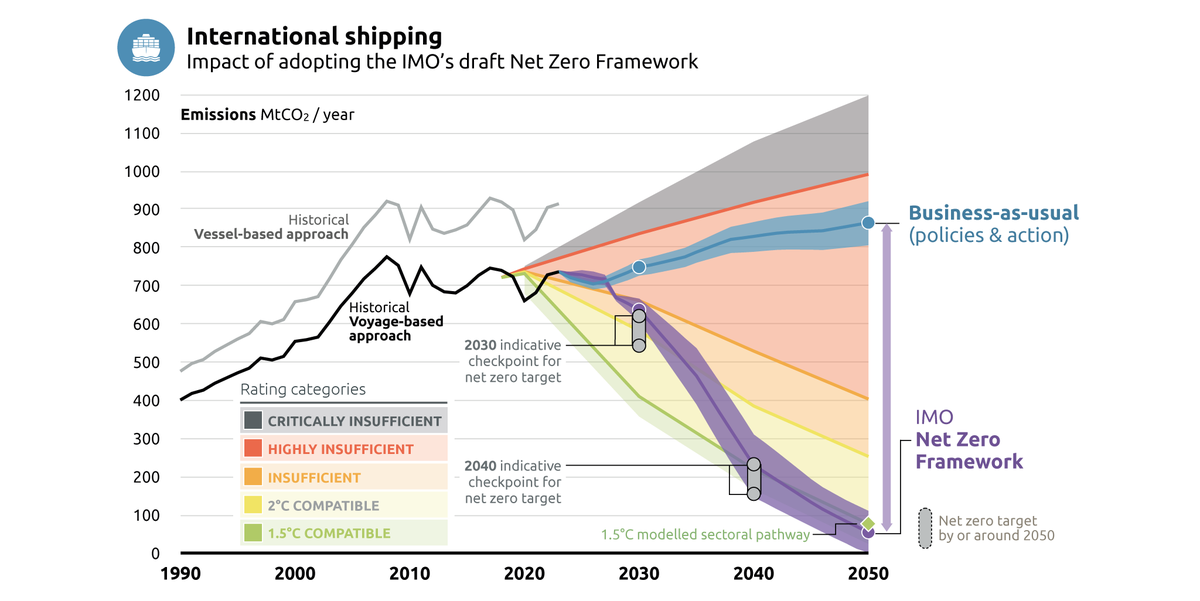
Last month, the International Maritime Organization (@IMOHQ) held its Environment Committee meeting, where member states agreed to preserve the Net-Zero Framework (NZF) as the central basis for negotiations on decarbonizing #InternationalShipping.
Reducing emissions from shipping will not be easy, but continued cooperation represents progress. As @michael_petroni, CAT Analyst, explains: “While not perfect, in its current form the Net-Zero Framework is the IMO’s most ambitious emissions reductions mechanism to date.”
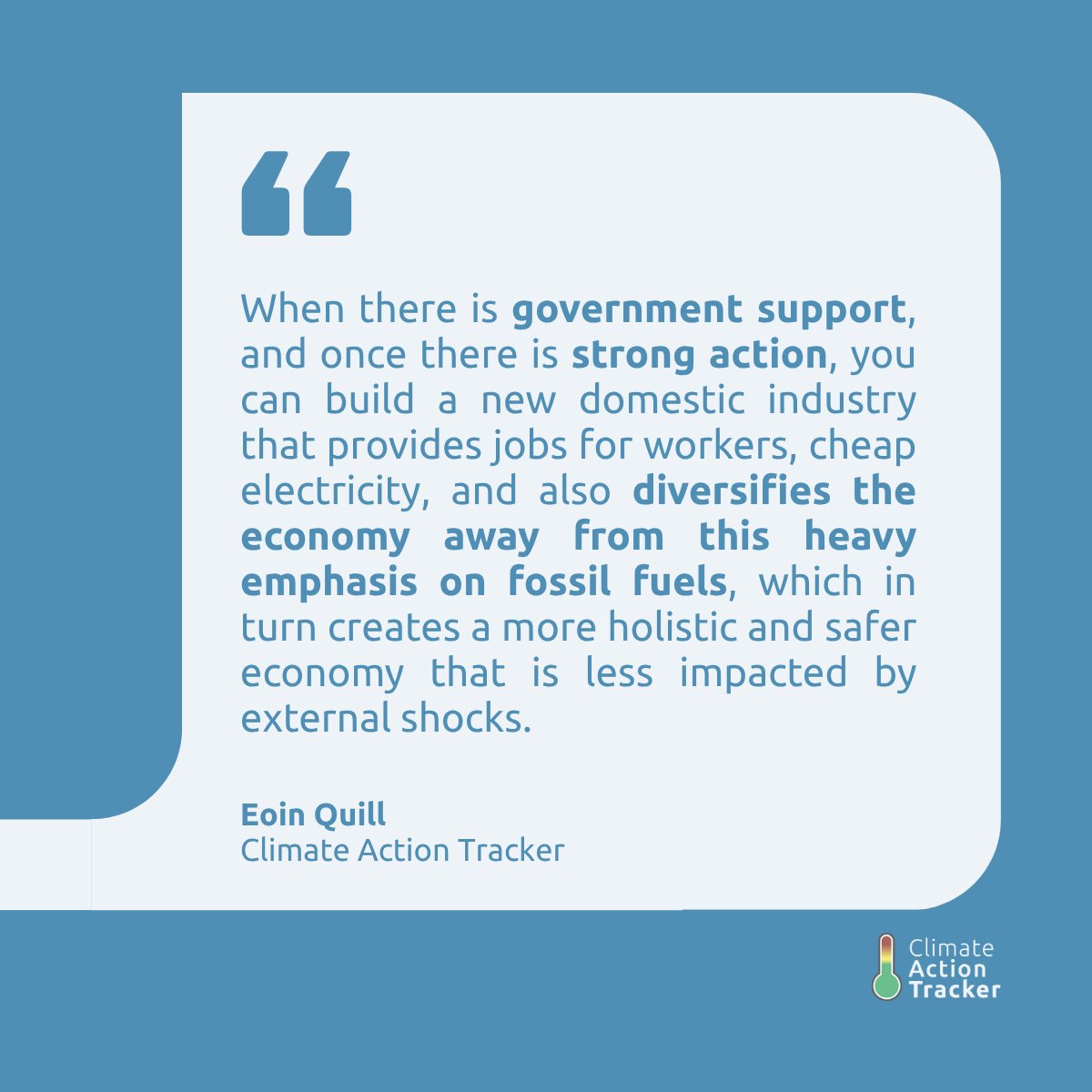
How are war and #climatechange reshaping Russia’s energy landscape? In the podcast “Energy Evolution” by S&P Global, CAT researcher Eoin Quill puts Russia’s greenhouse gas emissions into a global context.
🎧 Listen to the full episode here: https://t.co/UBW99Jp9hm
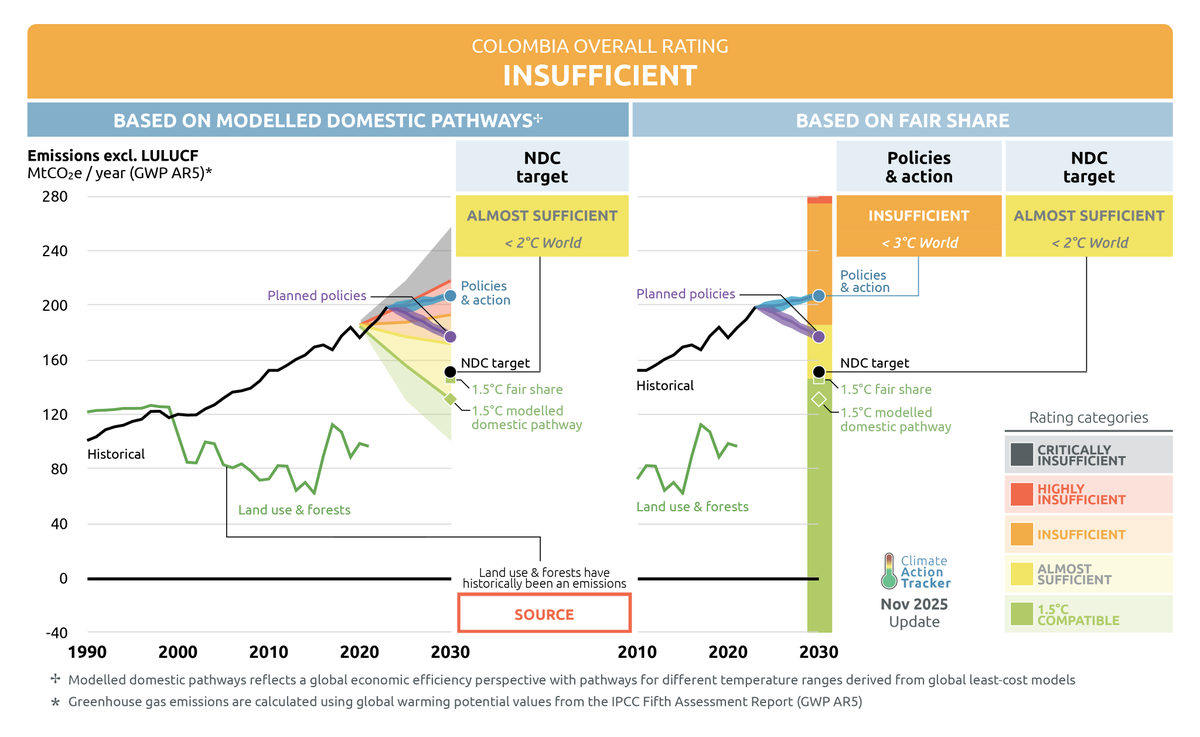
The revised NDC also acknowledges that the central challenge for Colombia is not the level of ambition but implementation. Our assessment confirms: current and planned policies are insufficient to meet either its 2030 or 2035 targets. 2035 NDC tab: https://t.co/Mjryn2j0nP
Colombia’s 2035 #ClimateTarget sends mixed signals on ambition. While the country has reaffirmed its 2030 commitment & introduced a slightly lower emissions target for 2035, the bigger picture is concerning: progress is not keeping pace with what’s needed for a 1.5°C pathway.
Colombia would need to reduce its emissions to 111 MtCO₂e, or by at least 44% below 2023 levels by 2035 (excl. LULUCF). The gap between Colombia’s NDC target and its 1.5°C compatible modelled domestic pathways has actually grown, from 12% for 2030 to 28% for 2035.
To align itself with a 1.5°C trajectory, Viet Nam could:
🔹Reduce dependence on fossil fuels in near term.
🔹Avoid relying on fossil gas as a “transition fuel”.
🔹More emphasis on industrial decarbonisation.
Full country analysis here: https://t.co/FdHCBJN1Sb
UN Climate Week 3 (CW3) is wrapping up & we are highlighting progress countries in the region are making on #ClimateAction. Today’s spotlight: Viet Nam. Despite lacking ambition in climate targets, momentum is building for deeper #RenewableEnergy integration & a coal phase-out.
Amid the ongoing energy crisis, Viet Nam has felt the strain of rising fuel prices and supply disruptions and leaning towards more coal. These challenges highlight the need for a comprehensive strategy to reduce fossil fuel dependency and transition to renewable energy.
Who’s transitioning away from fossil fuels – and who’s doubling down? Ahead of #TAFF, we look at attending countries: from standout renewable growth in Chile to continued fossil export reliance elsewhere.
Read the full analysis👉 https://t.co/TohDcEVTjW
Adoption of the NZF - or not - cld decide if shipping sector's emissions would be consistent w/ global temperature rise being held near 2°C - or allowed to drift toward 4°C under business-as-usual trajectory by 2050.
All eyes on Saudi Arabia & US who blocked its passage last year
ANALYSIS: Next week's @IMOhq meeting will discuss the Net Zero Framework that, if passed, wld be a major milestone in decarbonising intl shipping, introducing a global fuel emissions standard & a market-based mechanism to reduce the sector’s emissions.
🔗 https://t.co/qmL2bjxB7c
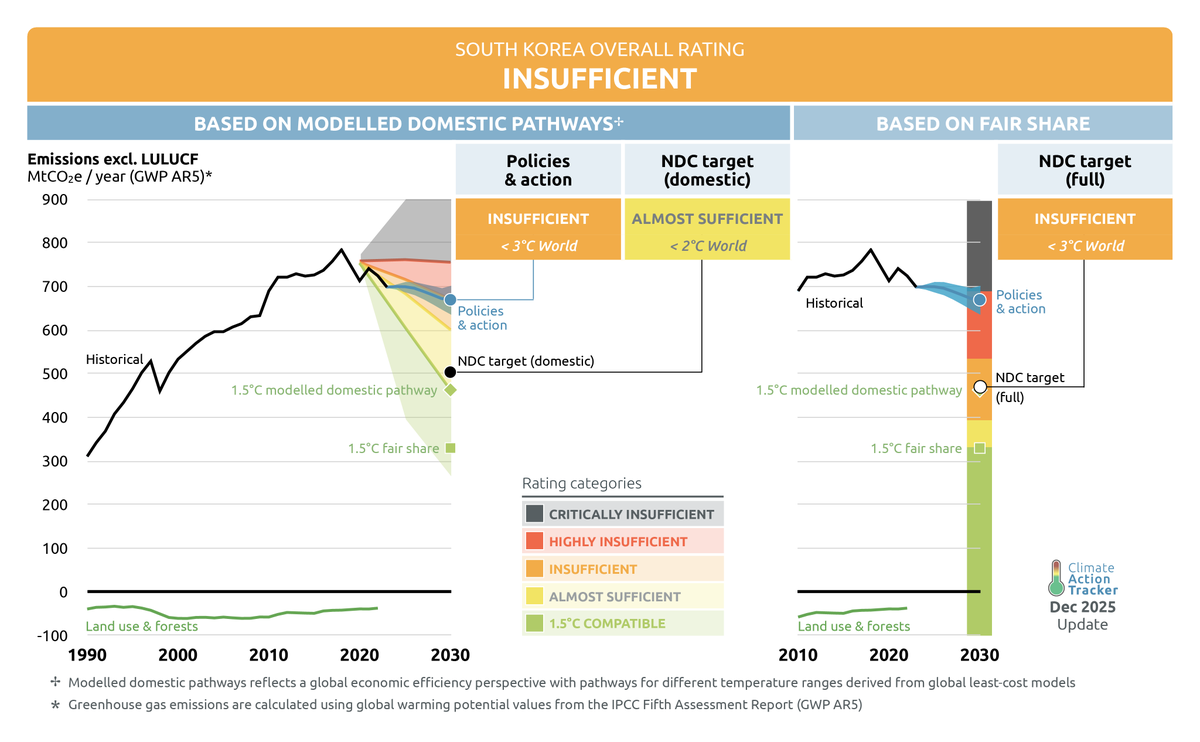
To align itself with a 1.5°C trajectory, South Korea could:
🔹Prioritise domestic emissions reductions.
🔹Strengthen the ambition and implementation of its NDC target.
🔹Accelerate the early retirement of coal power plants through public & private finance.
https://t.co/rsxFXvZMIV
UN Climate Week 3 (CW3) is well underway in Yeosu, South Korea, and we are highlighting the progress countries in the region are making on #ClimateAction. Today’s spotlight: South Korea 🇰🇷 Its climate policy continues to evolve with changes in political leadership.
Following President Lee Jae-myung’s election, the country committed to a 2040 coal phase-out, a notable step but still too slow for 1.5°C alignment & undermined by increased LNG use. Its 2035 NDC falls short of 1.5°C pathways and lacks clarity on the use of intl. carbon credits.