High Frequency Jet Ventilation Tutorial & forum
Pinned tweet links to updated versions of tweetorial, with your contributions
(updates at low-frequency)
How is that possible? 1. Air sacs (dead space) extend into the body cavity and into the wing and leg bones 2. Alternating ‘blockers’ ensure continuous (in-&exiratory) flow thru lung alveoli, without any residual volume
https://t.co/BdXCIIx1In
Our paper on why and how Transnasal Humidified Rapid-Insufflation Ventilatory Exchange (THRIVE) works was published in Anaesthesia. Cardiogenic Oscillations are key. Attached is a video of cardiogenic oscillations in action. https://t.co/GQJFlqTDEe
“A physiological study to determine the mechanism of carbon dioxide clearance during apnoea when using transnasal humidified rapid insufflation ventilatory exchange (THRIVE)”
Congratulations THRIVE group!
https://t.co/pVFxSTUzGi
@OxCPD
“A physiological study to determine the mechanism of carbon dioxide clearance during apnoea when using transnasal humidified rapid insufflation ventilatory exchange (THRIVE)”
Congratulations THRIVE group!
https://t.co/pVFxSTUzGi
@OxCPD
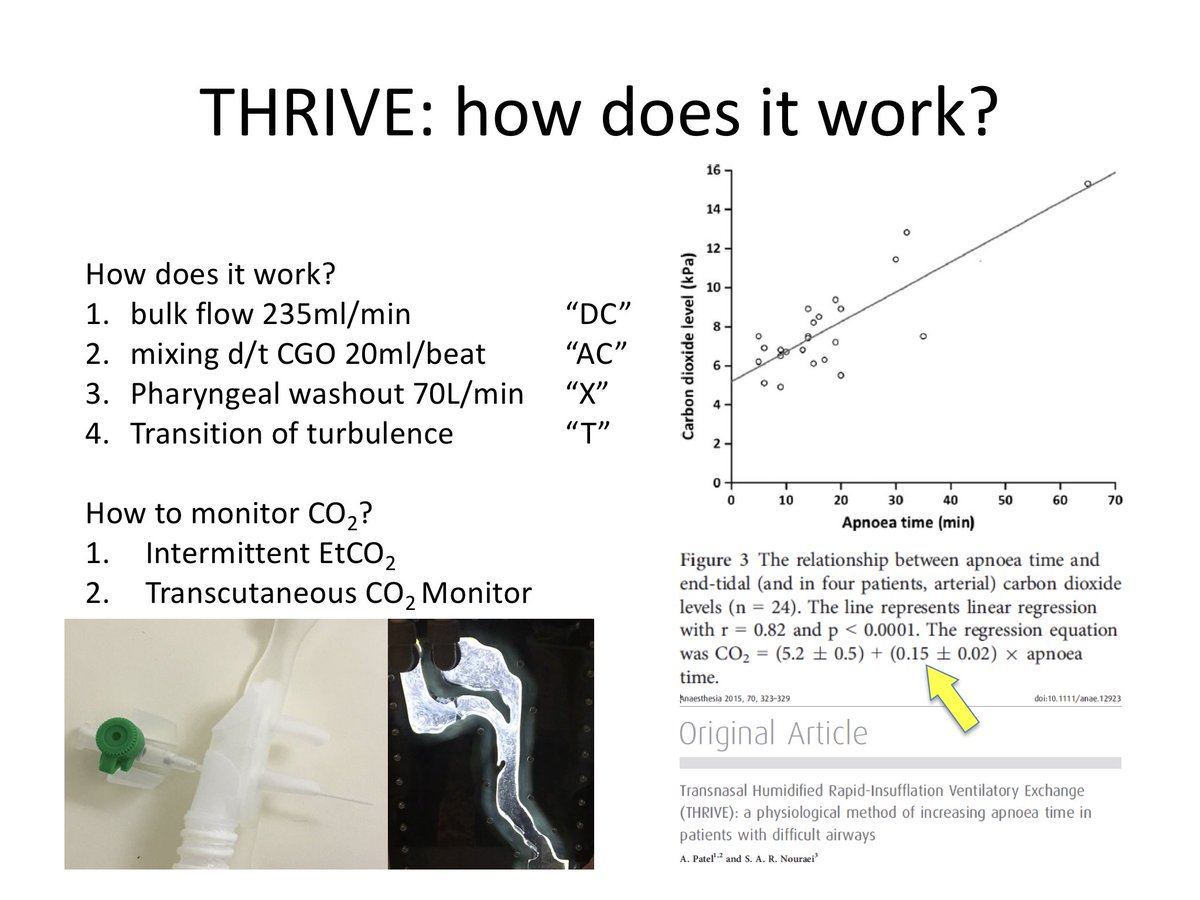
Ordinarily, PaCO2 rises by 0.5kPa/minute
During THRIVE, this is reduced to 0.15kPa/min - thus permitting prolonged apnoeic periods
How is this achieved?
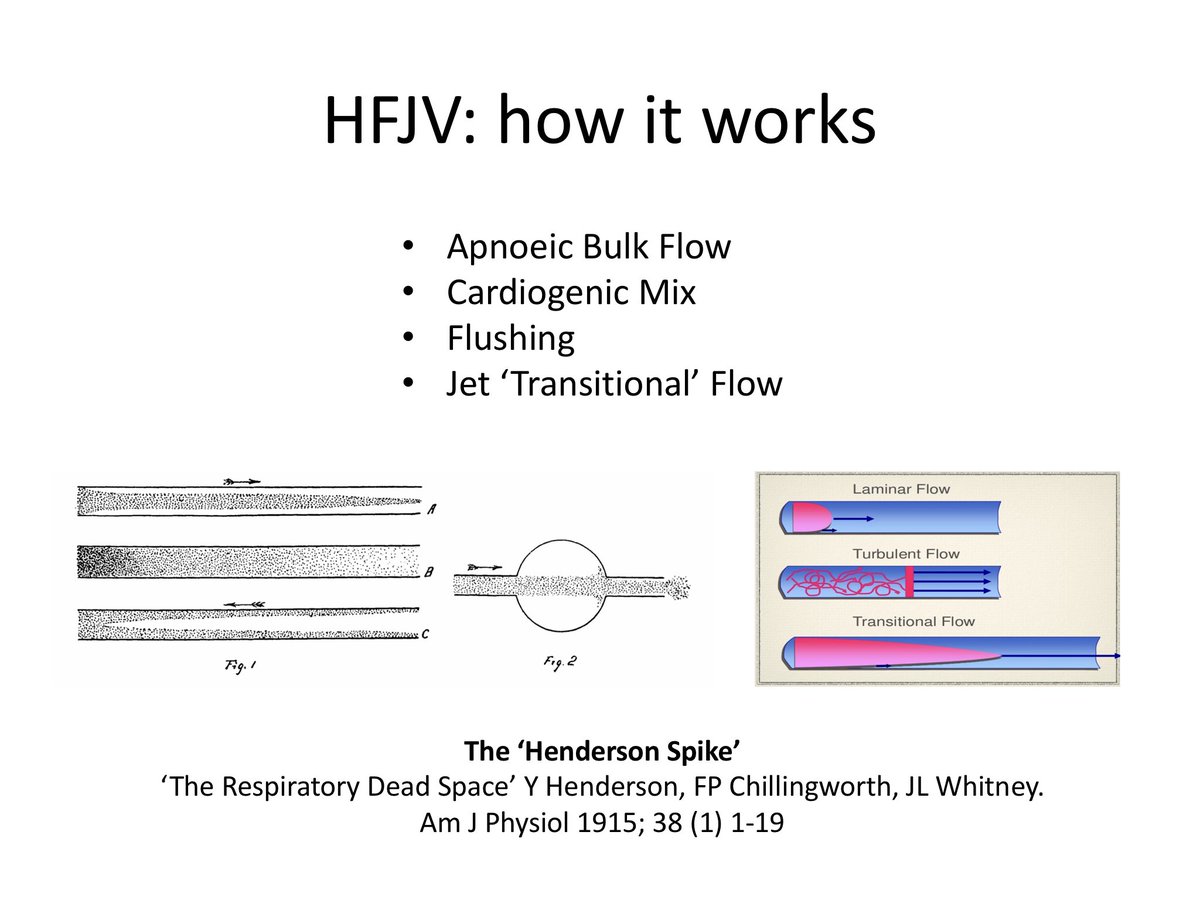
HFJV occurs in an ‘open airway’, so all of the following apply:
1. Apnoeic ‘bulk flow’
2. Cardiogenic oscillatory mixing of tracheal-pharyngeal gas
3. Flushing of tracheal gas (by JV)
4. Transitional Jet flow
With open airway and cardiogenic oscillation (intensity of which is proportional to hypercarbia), Jet Ventilation delivers tracheal flushing and a jet transitional flow
Beyond generation 17, airway gas moves by diffusion only
https://t.co/dt238K2ZCj