The biggest technology companies are all moving toward the same destination:
AI + Payments + Identity.
Because software that can:
understand,
verify,
and transact...
becomes far more powerful than software that can only generate text.
The next platform shift may come from the intersection of all three.
When people hear "tokenization," they think of digital assets.
But the bigger story is this:
What happens when stocks, bonds, real estate, and commodities become programmable?
Ownership changes.
Liquidity changes.
Markets themselves start to look different.
A few years ago, the advantage was knowing how to use software.
Today, the advantage is knowing how to work with AI.
A few years from now, the advantage may be knowing what problems are worth solving in the first place.
Tools change.
Judgment compounds.
People still call stablecoins a "crypto use case."
At this point, they're becoming financial infrastructure.
24/7 settlement.
Global transfers.
Programmable money.
Instant payments.
The most important thing about stablecoins may be that they make money behave like software.
The internet changed how we share information.
Blockchain is changing how we move value.
AI is changing how we create.
Put all three together, and you get something bigger:
An internet where software can create, decide, and transact on its own.
We're still in the early chapters.
An employee once told me,
"I wasn't looking for someone to solve my problem. I just wanted someone to listen."
That changed how I think about leadership.
As founders, our instinct is to fix everything.
But people aren't always looking for answers.
Sometimes they just want to know they're being heard.
Now, before giving advice, I ask more questions.
What's worrying you?
How can I help?
What do you think?
Leadership isn't about having every answer.
It's about creating an environment where people feel comfortable bringing you the problem in the first place.
#PeopleFirst #Leadership #FounderJourney #TeamCulture
Everyone talks about data localisation. But digital sovereignty is about far more than where data is stored.
Data is the cargo.
The real power lies in the rails that move and process it: AI infrastructure, cloud platforms, payment networks, digital identity systems, and blockchain settlement layers.
India's biggest digital successes, such as UPI, Aadhaar, DigiLocker, FASTag, and Account Aggregator, weren't built on localisation alone. They were built on owning and governing the infrastructure.
The same question now applies to AI, cloud computing, blockchain, and tokenization.
If the data resides locally but the underlying infrastructure is controlled elsewhere, how much sovereignty does a country truly have?
In the coming decade, digital sovereignty may be defined less by where data lives and more by who controls the systems behind it.
#DigitalSovereignty #AI #Blockchain #Tokenization #DataLocalisation #India #CloudComputing
India has officially launched UPI payments in Cambodia through a partnership between NPCI International and ACLEDA Bank.
Indian travelers can now make QR-code payments across Cambodia using apps like PhonePe, Google Pay, Paytm, and BHIM by scanning KHQR codes.
The rollout covers more than 4.5 million merchant locations across Cambodia and marks another major step in UPI’s global expansion.
#UPI #India #DigitalPayments #NPCI #Cambodia
The next major phase of crypto adoption may not look like people downloading trading apps.
It may look like businesses using blockchain infrastructure in the background without customers even realizing it.
When technology becomes invisible but deeply integrated into financial systems, adoption reaches a completely different scale.
The relationship between traditional finance and crypto is changing rapidly.
A few years ago, the narrative was:
“Banks vs crypto.”
Today it looks more like:
Banks exploring stablecoins.
Asset managers discussing tokenization.
Financial firms experimenting with onchain settlement systems.
Competition is slowly turning into integration.
What makes this shift interesting is how quietly it’s happening.
Most public conversations still focus on market volatility and token prices.
Meanwhile behind the scenes, companies are integrating blockchain rails into treasury systems, settlements, remittances, and enterprise payments.
The infrastructure layer is evolving much faster than public perception.
Stablecoins are becoming one of the most important parts of the digital asset industry.
Not because they are exciting.
But because they solve real financial problems.
Cross-border payments are still expensive and slow in many parts of the world.
Stablecoins offer:
24/7 transfers
Faster settlement
Lower transaction costs
Global accessibility
That is why banks, fintech firms, and payment companies are paying attention.
A few years ago, crypto adoption was measured by:
How many people were trading Bitcoin.
How many new wallets were created.
How many exchanges entered the market.
Now the conversation is shifting toward something much bigger:
Stablecoins, tokenized assets, blockchain settlement, and institutional infrastructure.
Crypto is slowly moving from speculation to financial utility.
If people become comfortable holding tokenized gold,
what stops the same shift from happening to:
Real estate
Treasuries
Private equity
Stocks
Tokenization may start with gold, but it probably does not end there.
The interesting part about tokenized gold is not the asset itself.
Gold is already trusted.
The bigger story is that blockchain infrastructure is now being used for assets the world already believes in.
That changes how people view Web3 entirely.
One of the biggest limitations of physical gold has always been friction.
Storage.
Transfers.
Verification.
Intermediaries.
Tokenization reduces that friction dramatically.
And that is why institutions are paying attention to real-world assets onchain.
Tokenized gold is not just “gold on blockchain.”
It changes how gold can be owned, moved, traded, and accessed.
Fractional ownership.
24/7 markets.
Instant settlement.
Global accessibility.
Traditional assets are slowly becoming internet-native.
Gold has survived every major financial era.
Paper money changed.
Banking systems evolved.
Markets modernized.
But gold remained relevant.
Now for the first time, gold itself is evolving through tokenization.
Earlier, I thought business growth meant saying “yes” to every opportunity.
Now I think growth is knowing when to ask better questions before saying yes.
One thing I learned the hard way:
Most stressful projects start with unclear expectations.
Not because people are bad.
Because nobody defined what success actually meant.
Every client wants something different:
speed,
communication,
partnership,
peace of mind,
ownership.
If you miss that early, even good work can feel disappointing.
Excitement closes deals.
Clarity keeps relationships alive.
#BusinessGrowth #Clarity #ClientRelationships
There was a time in India when crypto conversations felt underground.
“Isn’t Bitcoin banned?”
“Bank account block ho jayega.”
“Stay away from crypto.”
Now fast forward a few years.
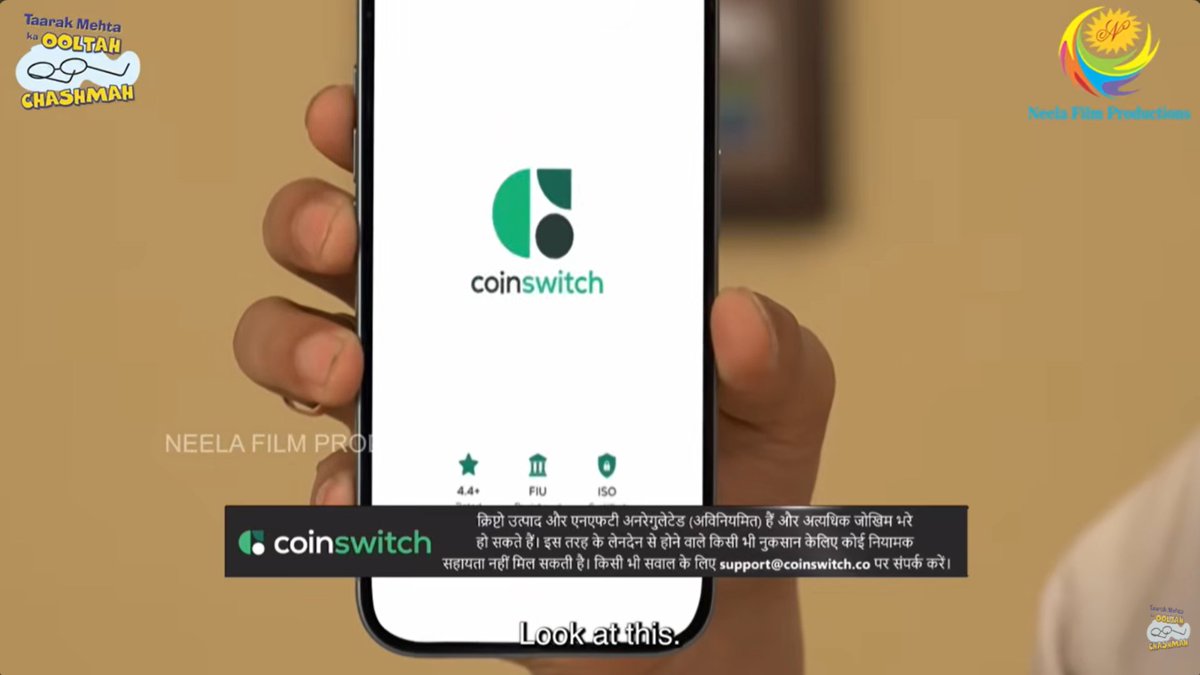
A mainstream family TV show like TMKOC casually mentioning CoinSwitch says a lot about how perception has changed.
Because adoption doesn’t begin when technology becomes perfect.
It begins when culture starts recognizing it.
Crypto in India has slowly moved from Telegram groups and Reddit threads to mainstream conversations in Indian households.
And honestly, that shift matters more than most people realize.
#CoinSwitch #TMKOC #India #Crypto #Bitcoin