Micron has plummeted 20.7% in the last three days. (Look carefully!) In the process, it gave back every bit of its gains of (checks notes) the last two weeks. And although the 20%-plus decline puts in a media-defined "bear market", it still sports a 174% year-to-date gain.
Turn your volume up for this one.
This is real audio from the S&P 500 futures pit at the CME during the Flash Crash of 2010. On May 6, 2010, markets were already having a rough day, down over 300 points on worries about the Greece debt crisis. Later, the bottom fell out. The Dow dropped another 600 points in about 5 minutes. Nearly 1,000 points gone on the day. About 9%, kaboom.
Then 20 minutes later, most of it came right back.
This clip never gets old.
Effective the close of business March 6th. CME issued new margin requirements on a host of products.
Margins INCREASED on: Crude oil spreads (LLS vs WTI, Mars vs WTI, Midland vs WTI), all freight routes (TD3C, TC20, TD22, etc. massive increases), Dutch TTF natural gas, JKM LNG futures, all propane contracts (Far East, Saudi Aramco, Conway, Mt. Belvieu), all fuel oil contracts (Singapore 380, European 3.5%), naphtha, gasoil, fertilizer contracts (urea FOB Middle East, urea FOB US Gulf, DAP, MAP, UAN).
Margins DECREASED on: Gold (COMEX 100oz, micro, e-mini dropped from 9% to 7%). Silver (all contracts dropped from 18% to 14%). Palladium (16% to 14%). Platinum (15% to 13%).
Notably ABSENT from the advisory: Outright WTI crude futures, the flagship contract, which they did NOT raise margins on. https://t.co/rkNwd6QfH7
After 60 years of watching markets I’ve found that the financial sector is traditionally the first sector to lead a new market move. Energy is traditionally the last.
DOLLAR SHORTS HIT 14-YEAR EXTREME
Dollar positioning turned the most negative in over 14 years in February, according to Bank of America’s latest FX and rates sentiment survey. Short bets against the dollar are now at their highest since January 2012, the earliest data point available.
Fund managers’ dollar exposure has dropped below last April’s lows. Concerns about the Federal Reserve’s independence eased after President Donald Trump nominated Kevin Warsh as Fed Chair, but this failed to lift dollar demand or improve sentiment toward U.S. assets.
Respondents cite further deterioration in the U.S. labor market as the key downside risk for the dollar.
GOLD $20,000 CALLS SURGE DESPITE RECORD SELLOFF
Deep out-of-the-money bullish bets on gold are building even after a historic correction.
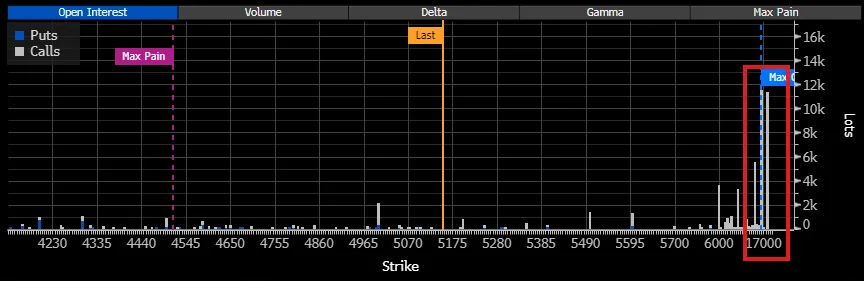
After COMEX gold futures briefly topped $5,600 an ounce in late January before suffering their largest one-day drop in decades, traders began accumulating December $15,000/$20,000 call spreads. The position has since grown to roughly 11,000 contracts, even with prices consolidating near $5,000.
Aakash Doshi of State Street Investment Management said the size of the trade is striking given its distance from current prices, likening it to a “cheap lottery ticket.” Gold has doubled since early 2024, fueled by speculative flows, geopolitical tensions, concerns about the Federal Reserve’s independence, and diversification away from currencies and sovereign bonds.
For the spread to expire in the money, prices would need to nearly triple by December. The structure limits upside but reduces upfront cost, allowing traders to exit on a sharp rally or hold to expiry if gold surpasses $15,000.
While spot prices remain far below those levels, the trades have lifted implied volatility for far-upside calls. Despite a recent easing in call skew, realized volatility remains elevated, leaving room for large price swings after January’s 11% plunge and October’s sharp correction to $4,000.