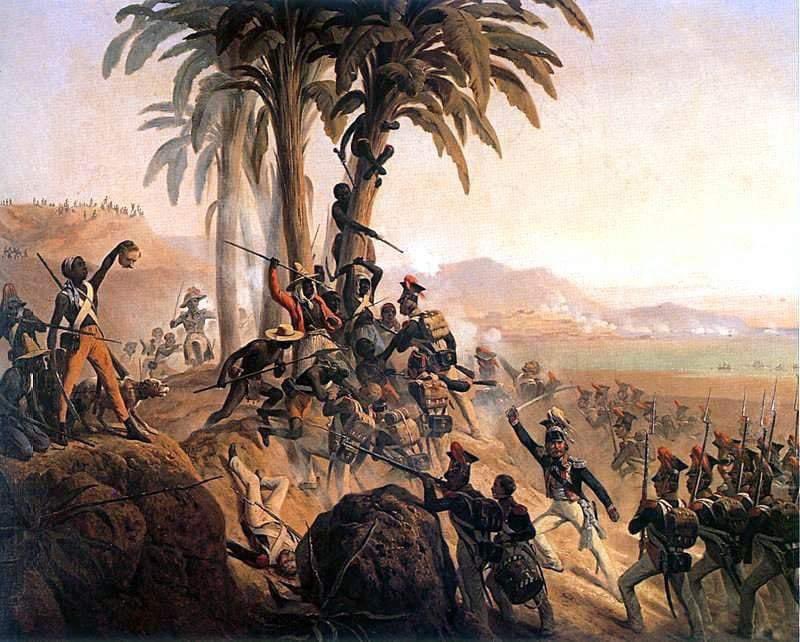
Haiti 🇭🇹 declared its independence from France, January 1, 1804.
In 1823 France 🇫🇷 made Haiti pay back 150 million Francs . It took an entire century for Haiti to finally be free. That’s 14 billion dollars in today’s money .
The United States 🇺🇸 worked to isolate a newly independent Haiti during the early 19th century and violently occupied the island nation for 19 years in the early 20th century. While the U.S. officially left Haiti in 1934, it continued to control Haiti's public finances until 1947, siphoning away around 40% of Haiti's national income to service debt repayments to the U.S. and France.
Much of this debt to France was the legacy of what the University of Virginia scholar Marlene Daut calls "the greatest heist in history": surrounded by French gunboats, a newly independent Haiti was forced to pay its slaveholders reparations. You read that correctly. It was the former slaves of Haiti, not the French slaveholders, who were forced to pay reparations. Haitians compensated their oppressors and their oppressors' descendants for the privilege of being free. It took Haiti more than a century to pay the reparation debts off.
Fighting continues to rage in Haiti between security forces and paramilitary forces calling for the resignation of unelected Prime Minister Ariel Henry.
Haitian American scholar Jemima Pierre explains what she calls Haiti's "crisis of imperialism.”
Haiti's unelected prime minister Ariel Henry says he will resign after months of unrest, with a transitional council to take over. Haitian American scholar Jemima Pierre says it's unlikely to end the crisis as long as the U.S. and others continue interfering in Haitian affairs.
It's great to see Ukraine's neighbors welcoming refugees with open arms. But it's worth taking a look at why refugees from Africa and the Middle East haven't received the same treatment.