Amazon $AMZN's AWS is still down.
Here are some of the sites affected:
Adobe Creative Cloud
Airtable
Amazon (incl. Alexa & Prime Video)
Apple Music
Asana
AT&T
Battlefield (EA)
Blink (Security)
Boost Mobile
Canva
ChatGPT
Chime
Coinbase
CollegeBoard
Dead By Daylight
Delta Air Lines
Duolingo
EA
Fanduel
Fetch
Fortnite (Epic Games services)
GoDaddy
Grubhub
HBO Max
Hinge
Hulu
IMDb
Instacart
Kik
League of Legends
Life360
Lyft
McDonald’s app
Microsoft (incl. 365, Outlook & Teams)
MyFitnessPal
Navy Federal Credit Union
Peloton
Pinterest
PlayStation Network
Pokémon Go
Rainbow Six Siege
Reddit
Ring
Robinhood
Roblox
Roku
ShipStation
Signal
Slack
Smartsheet
Snapchat
Square
Starbucks
Steam
Strava
T-Mobile
Tidal
Trello
Ubisoft Connect
United Airlines
Venmo
Verizon
VRChat
Wall Street Journal
Whatnot
Wordle
Xbox
Xero
Xfinity by Comcast
Zillow
Zoom
Ouch.
Millions of people are wearing health trackers like the Apple Watch, Fitbit, Oura, and WHOOP right now.
Health data has increased exponentially as a result.
But they also introduce new data privacy concerns...
Here's how healthcare data compliance has gotten a lot more complex 🧵
I don't buy into most of the AI hype but I think a mass "Her" scenario is unfortunately a fairly high probability: it wouldn't surprise me if a very big proportion of my children's generation have AI companions, maybe even embodied in humanoid robots at some point.
In fact that might be one of the single biggest threats AI poses: not these far-fetched terminator-like nightmares, but the irony of us getting extinct because we get "perfect" frictionless love, honeytrapping ourselves.
I present to you https://t.co/rEDyq6nJrY
The fruits of my vibe coding labor.
The impetus was receiving lots of recent requests for lists of machine shops. It's hard to overstate the value of a nearby machine shop partner you can trust. Many are difficult to find online and the directories tend to be "pay-to-play" or at least promote paid advertisers.
Quickly enter an address of zoom in to find your neighborhood machine shop, or click the button for us to email your 100 closest machine shops.
Let me know what you think! And please DM me if i'm missing your shop.
🚨 BREAKING:
SoftBank is making a $5.4B bet on industrial robotics by acquiring ABB Robotics.
The company announced it will acquire ABB Robotics (the robot division of ABB), abandoning ABB’s earlier plan to spin the unit off as a separate listing.
The deal is expected to close in mid-to-late 2026.
ABB Robotics employs now 7,000 people and generated $2.3B in sales last year (around 7% of ABB’s revenue), but has struggled with profitability amid subdued demand in Asia.
Under new CEO Morten Wierod, ABB chose divestment, focusing instead on electrification and automation.
For SoftBank, this is Masayoshi Son (@masason) latest push into robotics and AI after years of retrenchment.
The group already has stakes in Berkshire Grey and AutoStore, and the humanoid Pepper.
This is an important day for robotics and one of the largest acquisitions to date.
What are your thoughts? 👀
Everyone should read this. If you align “hard” with a political party you have turned off your brain and outsourced your thinking to others. Data is clear on both sides of aisle. Think for oneself.
Google just made a subtle but massive change
Last month, Google quietly removed the num=100 search parameter.
This means you can no longer view 100 results at once. The default max is now 10.
Why does this matter?
- Most LLMs (OpenAI, Perplexity, etc.) rely (directly or indirectly) on Google’s indexed results, alongside their own crawlers.
- Overnight, their access to the “long tail” of the internet was cut by 90%.
The fallout:
- According to Search Engine Land, 88% of sites saw a drop in impressions.
- Reddit, which often ranks in positions 11–100, saw its LLM citations plummet. Its stock dropped 15%.
For startups, this is brutal. Visibility just got harder. Reddit as part of AEO just changed entirely.
It’s no longer enough to build a great product you need to crack distribution first. Because if people can’t discover you, they’ll never get to evaluate you.
Most engineers seem to always neglect this reality, but a mediocre product with great distribution will always beat a great product with mediocre distribution.
As Peter Thiel says:
“Most businesses get zero distribution channels to work: poor sales rather than bad product is the most common cause of failure. If you can get just one distribution channel to work, you have a great business. If you try for several but don’t nail one, you’re finished.
Superior sales and distribution by itself can create a monopoly, even with no product differentiation. The converse is not true. No matter how strong your product — even if it easily fits into already established habits and anybody who tries it likes it immediately — you must still support it with a strong distribution plan."
Distribution > Product
(h/t Adarsh Appaiah on LinkedIn)
China is ahead on industrial robotics, and there's a lot of talk about catching up.
Let's also look look for areas we can leapfrog global competitors, not just keep pace.
Heavy plate processing is a critical sector where we can do just that. Here's how 🧵
Reindustrialization is the wrong starting point.
You don’t build supply chains out of nostalgia. You build them to meet overwhelming demand. Demand so large the old system can’t keep up. Everything else is downstream of that.
You can guide how that demand is met, shape the incentives, bridge cold starts, and de-risk strategic investments. That’s useful. That’s leverage.
But “we should make more stuff here” is a slogan, not a plan. The market won’t rearrange itself around less efficient production just because you wish it would. Capitalism is not irrational. No one is going to chose a worse option, I'm sorry, that's not the way the world works.
First create something with undeniable demand, strong enough to beat risk-adjusted returns elsewhere. Then guide the industrial response.
Am I just being smooth brained here? I did inhale a lot of coolant today while actually manufacturing stuff.
Who really has the biggest economy?
USA 🇺🇸 $29 trillion gdp
China 🇨🇳 $19 trillion gdp
India 🇮🇳 $4 trillion gdp
Instead of looking at GDP, let’s look at how many goods and services are made and sold in each country.
Cars 🚗
USA 🇺🇸 11 million cars made. 16 million sold
China 🇨🇳 31 million cars made. 23 million sold
India 🇮🇳 6 million cars made. 5 million sold.
Trucks 🛻
USA 🇺🇸 330k trucks made. 800k sold
China 🇨🇳 4 million trucks made. 3.3 million sold
India 🇮🇳 1 million trucks made. 250k sold
Housing 🏠
USA 🇺🇸 2.9 billion square feet
China 🇨🇳 5.8 billion square feet
India 🇮🇳 1 billion square feet
Airplanes ✈️
USA 🇺🇸 200 fighter jets made. Boeing made 348 commercial airliners.
China 🇨🇳 250 fighter jets made. COMAC made 12 commercial airliners.
India 🇮🇳 16 fighter jets made. 0 commercial airliners.
Boats 🛥️
USA 🇺🇸 5 commercial ships made.
China 🇨🇳 1800+ commercial ships made.
India 🇮🇳 0 commercial ships made.
Steel 🏙️🗼
USA 🇺🇸 79 million tons
China 🇨🇳 1005 million tons
India 🇮🇳 150 million tons
Beef 🥩
USA 🇺🇸 12.4 million tons
China 🇨🇳 7 million tons
India 🇮🇳 0 million tons (banned in Hinduism)
Rice 🍚
USA 🇺🇸 5.1 million tons produced. 3.2 million tons exported.
China 🇨🇳 207 million tons produced. 2.3 million tons exported.
India 🇮🇳 135 million tons produced. 20 million tons exported.
Soybeans🫛
USA 🇺🇸 120 million tons. 54 million exported.
China 🇨🇳 20 million tons. Additional 100 million imported.
India 🇮🇳 13 million tons. De minims imports and exports.
Video 📹
USA 🇺🇸 838 billion hours watched
China 🇨🇳 1,238 billion hours watched
India 🇮🇳 1,059 billion hours watched
Work 👨💻
USA 🇺🇸 672 billion hours worked
China 🇨🇳 3.372 billion hours worked
India 🇮🇳 3,350 billion hours worked
Surgeries 👨⚕️
USA 🇺🇸 92 million surgeries
China 🇨🇳 130 million surgeries
India 🇮🇳 60 million surgeries
Roads 🛣️
USA 🇺🇸 less than 20k km paved
China 🇨🇳 50k km paved
India 🇮🇳 587k km paved
Movie tickets 🎟️
USA 🇺🇸 762 million tickets sold
China 🇨🇳 1,010 million tickets sold
India 🇮🇳 940 million tickets sold
Phones 📱
USA 🇺🇸 0 phones made. 145 million sold
China 🇨🇳 700 million made. 431 million sold
India 🇮🇳 330 million made. 246 million sold
Batteries 🔋
USA 🇺🇸 80 GWh produced.
China 🇨🇳 1,170 GWh produced.
India 🇮🇳 <10 GWh produced.
Electricity ⚡️
USA 🇺🇸 4300 TWh produced, 4250 TWh consumed
China 🇨🇳 10,000 TWh produced, 9000 TWh consumed
India 🇮🇳 1,800 TWh produced, 2,000 consumed.
Airplane and Train Travel 🧳
USA 🇺🇸 876 million passengers by plane, 33 million by train
China 🇨🇳 741 million passengers by plane, 4300 million by train
India 🇮🇳 211 million passengers by plane, 8300 million by train
Oil 🛢️
USA 🇺🇸 21.7 million barrels/day produced. 19 consumed.
China 🇨🇳 4.2 million barrels/day produced. 16.6 consumed.
India 🇮🇳 0.72 millions barrels/day produced. 5.4 consumed.
China’s real economy is the largest by far and India’s comparable to that of the USA, which may not even be a top 3 in 10 years.
Here is what you actually needed to run to be accepted into the 2026 Boston Marathon.
MEN QUALIFYING TIMES + ACCEPTED TIMES
18–34 Age Group (BQ – 2:55:00) | Accepted Time: 2:50:26
35–39 Age Group (BQ – 3:00:00) | Accepted Time: 2:55:26
40–44 Age Group (BQ – 3:05:00) | Accepted Time: 3:00:26
45–49 Age Group (BQ – 3:15:00) | Accepted Time: 3:10:26
50–54 Age Group (BQ – 3:20:00) | Accepted Time: 3:15:26
55–59 Age Group (BQ – 3:30:00) | Accepted Time: 3:25:26
60–64 Age Group (BQ – 3:50:00) | Accepted Time: 3:45:26
65–69 Age Group (BQ – 4:05:00) | Accepted Time: 4:00:26
70–74 Age Group (BQ – 4:20:00) | Accepted Time: 4:15:26
75–79 Age Group (BQ – 4:35:00) | Accepted Time: 4:30:26
80 and over Age Group (BQ – 4:50:00) | Accepted Time: 4:45:26
WOMEN AND NON-BINARY ATHLETE QUALIFYING TIMES + ACCEPTED TIMES
18–34 Age Group (BQ – 3:25:00) | Accepted Time: 3:20:26
35–39 Age Group (BQ – 3:30:00) | Accepted Time: 3:25:26
40–44 Age Group (BQ – 3:35:00) | Accepted Time: 3:30:26
45–49 Age Group (BQ – 3:45:00) | Accepted Time: 3:40:26
50–54 Age Group (BQ – 3:50:00) | Accepted Time: 3:45:26
55–59 Age Group (BQ – 4:00:00) | Accepted Time: 3:55:26
60–64 Age Group (BQ – 4:20:00) | Accepted Time: 4:15:26
65–69 Age Group (BQ – 4:35:00) | Accepted Time: 4:30:26
70–74 Age Group (BQ – 4:50:00) | Accepted Time: 4:45:26
75–79 Age Group (BQ – 5:05:00) | Accepted Time: 5:00:26
80 and over Age Group (BQ – 5:20:00) | Accepted Time: 5:15:26
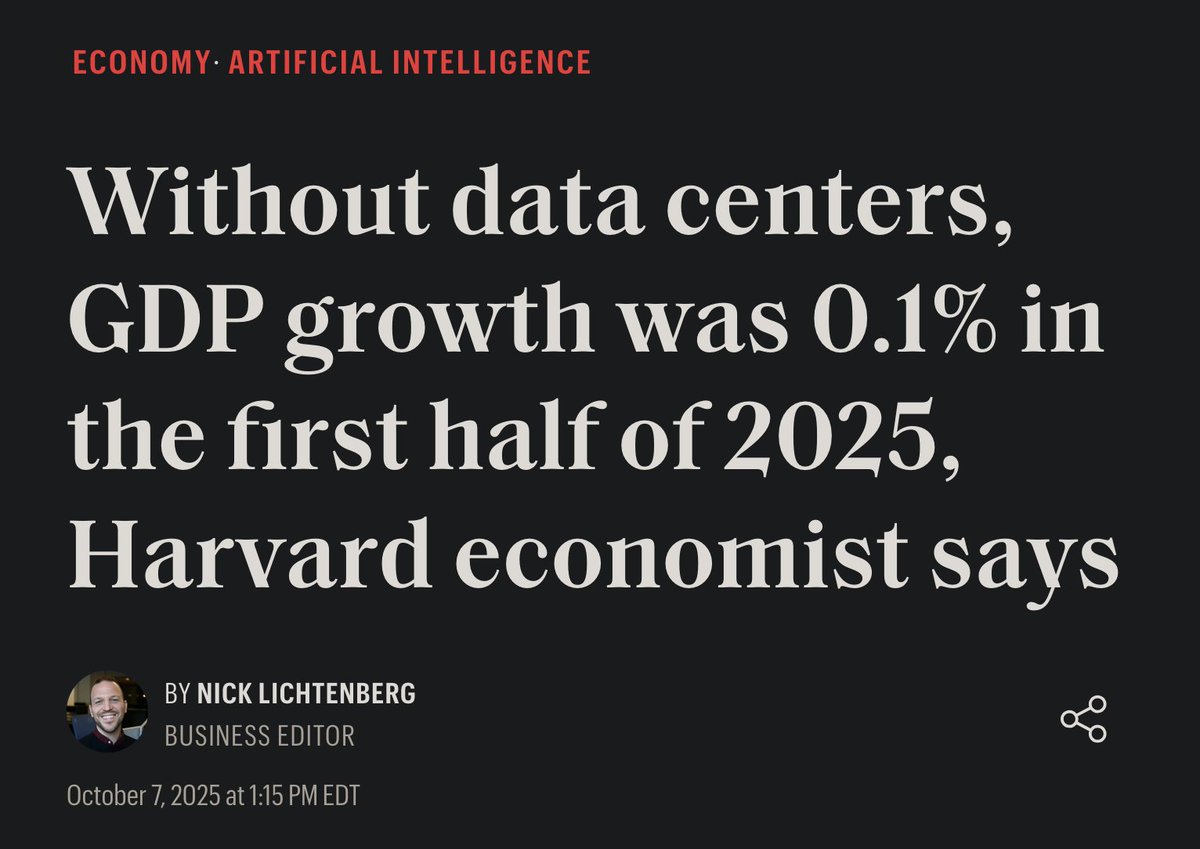
.@kylascan calls big tech's massive bets on AI data centers 'monumental projects of hope.'
If AI is a bubble that pops, Scanlon thinks the fallout will be worse than the dot com bubble.
"It's not like Pets dot com where it just disappears overnight. You have trillions of dollars in infrastructure that is gonna have to be reallocated."
w/ @AdmaniExplains
Just a reminder for everyone trying to call the top:
“Larry Page has said internally at Google many times, "I’m willing to go bankrupt rather than lose this race." Everybody is focused on ROl, but the people making the decisions are not”
-@GavinSBaker on ILTB
This is such an interesting point that Powell made yesterday that people missed. He said that "the tariffs are mostly being paid by the companies that sit between the exporter and the consumer... All of those companies and entities in the middle will tell you that they have every intention of passing that through [to the consumer] in time." What he was describing is the hidden squeeze happening in the supply chain. Importers, wholesalers, and retailers are paying higher costs upfront and hoping they can eventually raise prices enough to shift the burden.
The problem is that consumers are already tapped out. Household budgets are under pressure from rising debt, delinquencies, and wages that do not stretch far enough. Trying to pass along tariff costs in this environment would push demand even lower. Businesses know this, which is why many of them are absorbing the costs instead. But when they do that, their margins shrink, and it becomes harder to sustain operations without making cuts elsewhere.
When profitability gets pressured, management has few options. They cannot control tariffs, and they cannot force consumers to spend more. What they can control are expenses. That begins with slowing hiring and scaling back growth plans, then cutting hours and overtime. If conditions do not improve, the inevitable step becomes layoffs. We are already seeing the early signs of this play out. Companies in trade-exposed industries like manufacturing, shipping, and retail are quietly trimming staff. These are the first cracks, but history shows that once the cycle begins, it rarely stays contained. If tariffs remain in place and consumers stay weak, the ripple effects spread further into the labor market. This is the real chain reaction in my opinion, Powell was hinting at. Tariffs may look like a policy directed abroad, but the costs end up at home. They filter through supply chains, eat away at margins, and eventually show up in the form of job losses.