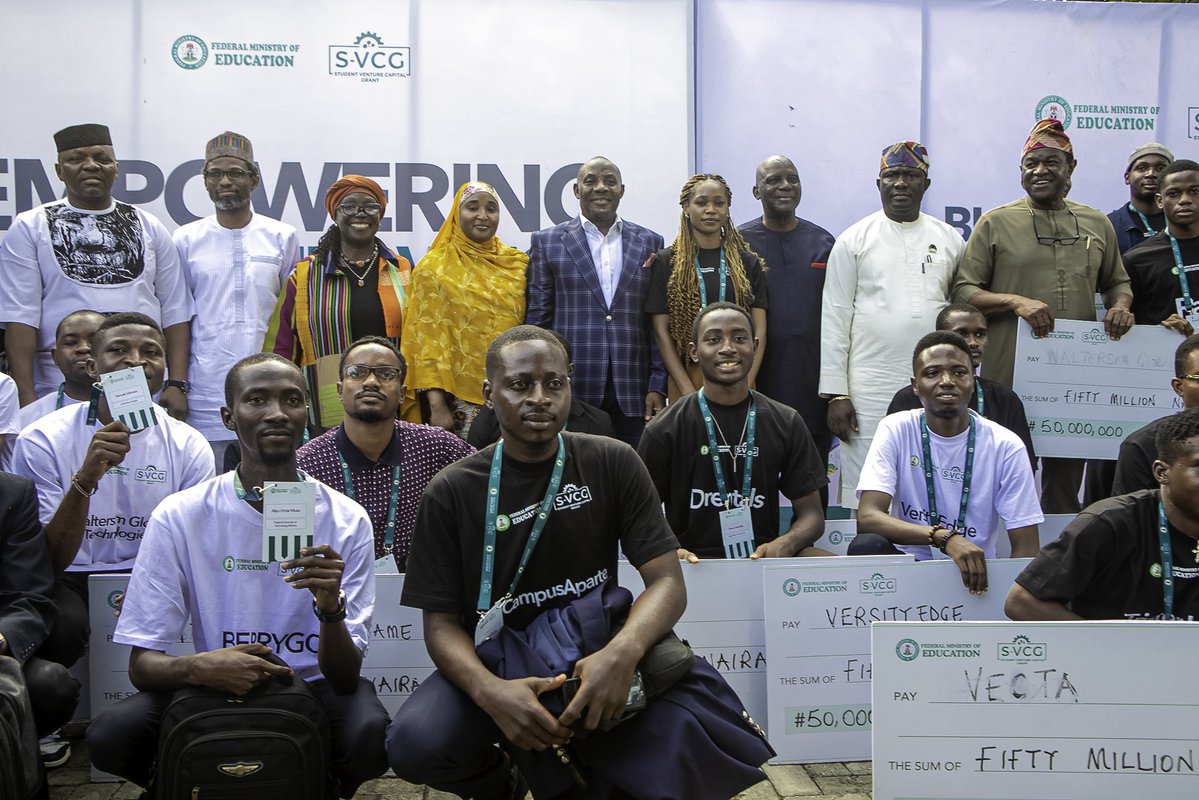
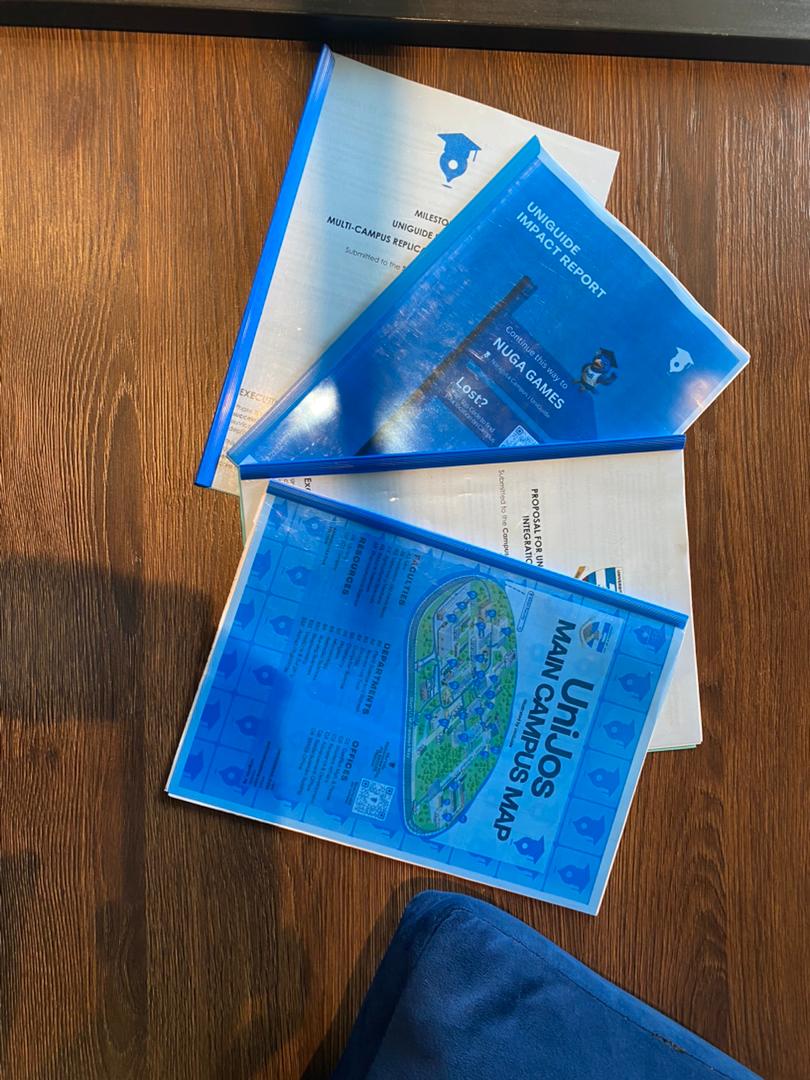
Two years in, Uniguide began with a belief: Nigerian university life shouldn't be so hard. To all who supported us, thank you for being part of our story.
UniGuide is proud to annouce that we were Funded with 50M from the #SVCG , we'd like to thank @NigEducation for this oppurtunity. Your campus companion is coming to your university soon 💙
In January 2015, Google and Fidelity wrote a combined $1 billion check for roughly 10% of SpaceX. The company was valued at $12 billion. Google’s portion: approximately $900 million for 7.4%.
At the time, SpaceX had just successfully landed a Falcon 9 first stage for the first time. Starlink was a PowerPoint presentation. Revenue was a rounding error compared to today.
Ten years later, SpaceX has become the most valuable private company on Earth.
The valuation trajectory tells the story:
2015: $12 billion
2020: $36 billion
2021: $100 billion
2022: $127 billion
2023: $180 billion
June 2024: $210 billion
Late 2024: $350 billion
2026 IPO target: $1.5 trillion
That $900 million investment from Google? At the $1.5 trillion IPO target, it would be worth approximately $111 billion.
A 123x return. From one check.
To put that in perspective: Adobe’s entire market cap is $144 billion. Google’s single 2015 investment in SpaceX would be worth more than 75% of one of the largest software companies on the planet.
But here’s where it gets interesting.
In Q1 2025, Alphabet reported $8 billion in unrealized gains from a “non-marketable equity security in a private company.” Bloomberg confirmed it was SpaceX. That $8 billion boost represented nearly 25% of Google’s entire net income for the quarter.
One investment. One quarter. Almost a quarter of their earnings.
And that was based on the $350 billion valuation from late 2024. If SpaceX hits the $1.5 trillion target, the paper gains from this single position could exceed $80 billion more.
The financial return alone would justify calling this one of the greatest venture investments ever made. But the financial return is actually the boring part.
Look at what SpaceX has become.
Starlink went from zero subscribers in 2020 to 1 million in 2022 to 4.6 million by end of 2024 to 8 million by November 2025. They’re doubling annually. Revenue hit $7.7 billion in 2024, up from $1.4 billion in 2022. Projections for 2025: $11.8 billion. Starlink now represents 58% of SpaceX’s total revenue and the majority of its profits.
SpaceX has reused a single Falcon 9 booster more than 20 times. They completed 134 Falcon-family launches in 2024. They’re on pace for 150+ in 2025. They now account for approximately 90% of the world’s payload mass delivered to orbit.
Read that again. One company. Ninety percent of global payload mass.
The reusability breakthrough is what made Starlink possible. You can’t launch 7,500+ satellites on expendable rockets. The math doesn’t work. But when you can reuse boosters 20 times and turn launches around in under 30 days, you can build an orbital internet constellation that would have been economically impossible for any other company on Earth.
And then there’s the government money.
SpaceX CEO Gwynne Shotwell said the company holds $22 billion in government contracts. Pentagon contracts alone total nearly $8 billion. The Space Force just awarded SpaceX $5.92 billion for satellite launches through 2029. The National Reconnaissance Office signed a classified $1.8 billion contract for Starshield, SpaceX’s militarized satellite network for intelligence and surveillance. The Pentagon plans to acquire more than 100 Starshield satellites for its future satcom architecture.
SpaceX is now the dominant launch provider for the U.S. military, the U.S. intelligence community, and NASA. They have more government contracts than most defense contractors, but they’re valued like a tech company because they actually are one.
Starlink isn’t just consumer internet anymore. It’s 75,000 vessels with maritime connectivity. 300 cruise ships. United, Air France, Hawaiian Airlines. Direct-to-cell service launching with T-Mobile. Military encrypted communications via Starshield. Ukraine’s battlefield connectivity runs on Starlink.
This used to be a rocket company. Now it’s a telecom company that happens to own the rockets.
Footage of my hard work on Nigeria's 🇳🇬first Indigenous turbojet engine being played in 'high places'.
I remember when we started, I remember how some people laughed & mocked us at the initial failures.
But see the results of RESILIENCE & VISION ✅🚀, no one is laughing anymore ⚡️
We did not come this far only to get this far, there's more to come ✊🏻
#Zedora
When it comes to choosing between reflecting on the past or looking ahead to the future, practical people always focus forward. The past is done; the future is where progress happens.
Happy Holidays, everyone! Whether you’re spending this time with family, friends, loved ones, or enjoying some well-deserved solo time, I hope it’s relaxing and recharging for you. Make the most of it!
We cant say enough how grateful we are for the team, building a scaling systems as fast as possible and taking it to market. Next year we’ll be bringing upgrades to already existing platforms and introducing new platforms that would change how reconnaissance is approached as well taking data intelligence to the next level. I’m truly excited for it mehn.
Entrepreneurship teaches you fast: progress isn’t linear, and setbacks are part of the blueprint. What separates the builders from the bystanders? The ability to pivot, adapt, and keep pushing, especially when no one’s watching.