Ariana Grande Confesses: "Leonardo DiCaprio Forced Me to Eat Children – Now I Have Kuru"
Ariana Grande has admitted she is "dying of kuru." In a harrowing conversation with Alicia Silverstone, Ariana named her killer - Leonardo DiCaprio, Hollywood's most protected predator and, according to Grande, a "kuru superspreader."
Grande claims she was tricked into eating child meat and drinking adrenochrome under the guise of creative ritual.
From a friend in Korea, about Korea’s push for a central bank digital currency:
“I would like to bring another deeply concerning development in South Korea to your attention.
Many people assume that South Korea's push toward a Central Bank Digital Currency (CBDC) is a recent initiative. However, this effort began several years ago.
In September 2021, People Power Party lawmaker Byung-soo Suh introduced legislation to amend the Bank of Korea Act to authorize the Bank of Korea to issue a Central Bank Digital Currency (CBDC).
According to the bill, South Korea should move beyond physical cash because paper currency and coins belong to the ‘analog era,’ arguing that the nation's currency should ultimately transition into digital form.
Original article:
https://t.co/jAgDVBrjDe
This demonstrates that support for CBDCs has existed across South Korea's political establishment for years rather than being limited to one administration.
Today, South Korea has gone far beyond academic research.
The Bank of Korea is currently conducting large-scale CBDC pilot programs with major commercial banks, retailers, and consumers. The government continues expanding the legal and technical framework necessary for wider implementation.
Bank of Korea CBDC Project:
https://t.co/Dm1RDhIK9Y
This development deserves serious international attention.
Although CBDCs are promoted as modernizing payment systems and improving financial efficiency, they also represent one of the greatest potential threats to financial freedom ever proposed by democratic governments.
Unlike physical cash, CBDCs can theoretically allow governments or central authorities to monitor every transaction, restrict purchases, freeze assets instantly, impose expiration dates on money, or program how and where citizens are allowed to spend their own funds.
Cash provides anonymity and personal freedom.
CBDCs replace that freedom with centralized oversight.
China has become the world's leading example of this model through its Digital Yuan (e-CNY).
The Chinese Communist Party has invested enormous resources into building a state-controlled digital currency capable of integrating financial transactions with broader systems of surveillance and governance.
For this reason, many critics around the world view China's CBDC as more than a payment system—it is seen as infrastructure for unprecedented state control.
Because of these concerns, opposition to CBDCs has grown worldwide.
Privacy advocates, economists, cybersecurity experts, civil liberty organizations, and lawmakers across numerous democratic countries have warned that CBDCs could fundamentally alter the relationship between citizens and the state.
Several countries have delayed, slowed, or reconsidered aspects of CBDC deployment due to unresolved concerns regarding privacy, cybersecurity, financial freedom, and government overreach.
Against this global backdrop, South Korea's continued acceleration toward CBDCs is deeply concerning.
What makes this even more alarming is the broader political environment.
At the very moment South Korea is expanding government authority over online speech, strengthening censorship mechanisms, and increasing state regulatory power over digital communications, it is simultaneously developing infrastructure that could eventually centralize control over the nation's monetary system.
These developments should not be viewed in isolation.
When expanded speech regulation and centralized digital finance advance together, many citizens naturally become concerned about the long-term implications for civil liberties.
Technology itself is not the problem.
The concern is whether future governments could exploit this infrastructure in ways that undermine financial privacy, individual autonomy, and democratic freedoms.
Once such infrastructure is fully established, the powers it creates may be difficult—or impossible—to reverse.
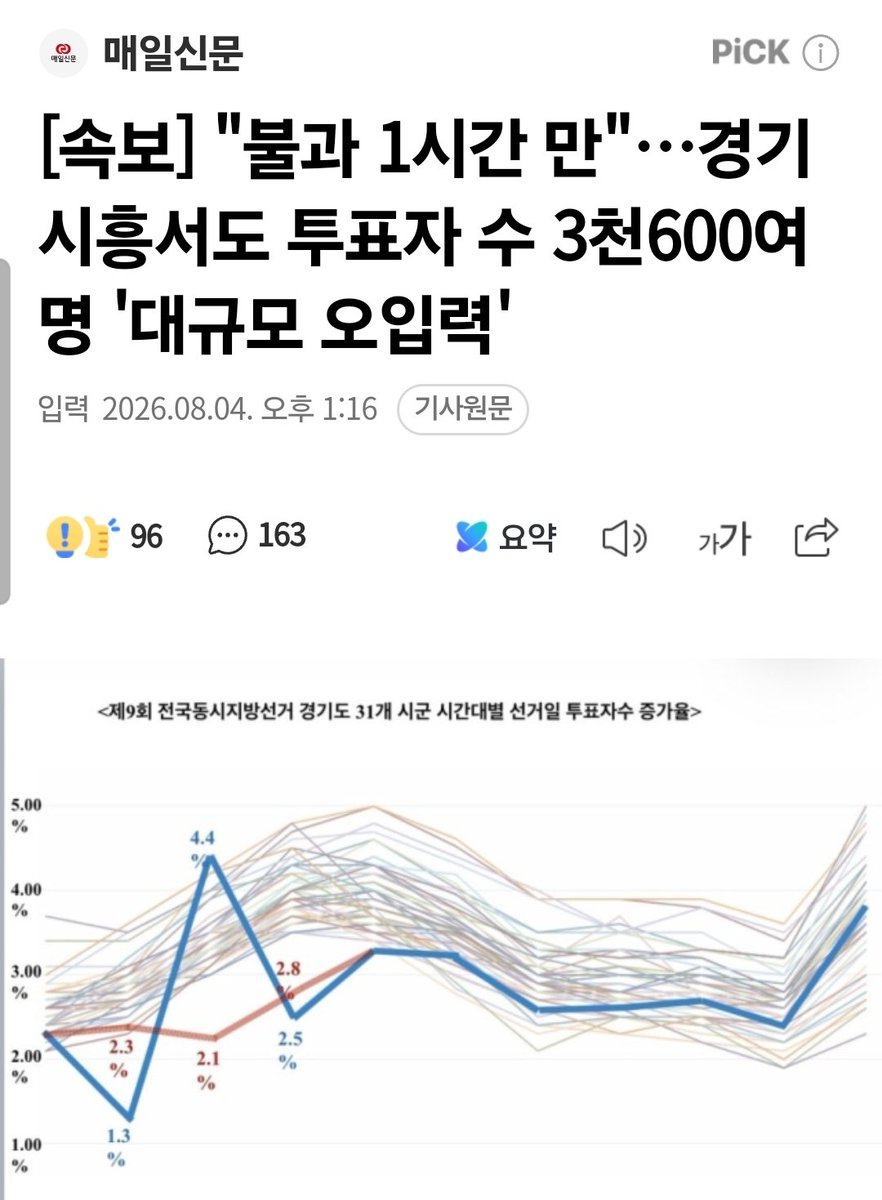
[펌] 김미영 "수개표니 수검표니 지금은 의미 없다"ㄷㄷㄷㄷㄷㄷ김미영 : 사전투표할때 투표율을 조금씩 올리고 나중에 올린 만큼 한꺼번에 계산에서 집어넣는 방식이라서 수개표 수검표는 의미없다..ㄷㄷㄷㄷㄷ결국 사전투표 명부와 투표지를 모두 모아서 대조해서 봐야한다..투표율을 그래서 고따구로 입력해놓는구나 이해가 확 되네 CBSKD..ㄷㄷㄷㄷㄷㄷㄷ
국내 거주 조선족들이 중국인 전용 PC방 까지 만들어서 조직적으로 여론조작.
국내 각 커뮤니티 및 SNS 에서 조직적으로 친중 여론조작 활동.
조선족들은 동포가 아니며, 철저하게 중국 정부에 충성하는 중국인들이다.
재외동포법 개정해서 조속히 추방해야 한다.
https://t.co/f5bWlqouRt