Let's set the record straight because @RobertKennedyJr’s post is inaccurate and misleading and he is making claims that have been debunked repeatedly by actual scientists and doctors.
Secretary Kennedy called me yesterday morning to ask whether Pennsylvania needed any additional support to respond to the measles outbreak. I told him I appreciated the call but that our Administration and the Pennsylvania Department of Health had all the resources we needed to respond, including existing support from professional staff at the CDC and HHS.
I told him what would be most helpful is if he would join me in encouraging people to get vaccinated and stop spreading misinformation. He then launched into a tirade — talking about fetal tissue and blaming the previous Administration for this problem. He even told me it would be better if we went back to “natural measles.”
Unfortunately at a time where I needed the top “health expert” in the nation to responsibly work with us to deal with this outbreak, he instead chose to go down a rabbit hole of conspiracy theories and false claims.
To his claim about fetal tissue, that has been thoroughly discredited time after time by real doctors and trusted medical institutions like CHOP. In fact, the American Academy of Pediatrics has an entire webpage devoted to this.
They write: “Vaccines do not contain fetal cells. Some vaccines involve growing viruses in human cell cultures originally developed from two aborted fetuses in the 1960s. These cell lines are still going, so no new aborted fetuses are ever needed. Purification processes filter the vaccine during production, and no fetal tissue remains.”
But my conversation with him proved what many of us already knew:
Secretary Kennedy’s actions to dismantle public health agencies and his language that undermines confidence in vetted medical guidance are contributing to these kinds of outbreaks.
Just a few years ago, Secretary Kennedy was in Lancaster downplaying the severity of measles and saying that the cure was “chicken soup and vitamin A.”
Before he held his current position, measles was virtually eliminated in the United States. As recently as 2024, there were only 285 cases of measles across the entire country over 12 months. This year, in just 8 months, there are nearly 400 cases of measles across 29 counties in Pennsylvania alone — and nearly 3,000 cases across the country.
In Pennsylvania, 70 people who have tested positive for measles have been hospitalized this year — and yesterday, our @PAHealthDept announced that two Pennsylvanians who tested positive for measles have died.
According to doctors and medical experts, the MMR vaccine is the best way to protect yourself, your kids, and your community against measles. But we have seen vaccination rates decline on RFK’s watch.
The correlation is clear: Secretary Kennedy has stoked confusion amongst parents and others — and the result has been less protection from measles and more cases.
As a dad, all I want is to protect our four kids. I know that’s how every parent feels. Parents have the right to make their own decisions about how to keep their kids safe and sort through the noise to figure out which information to trust.
So what I’d ask of every parent in Pennsylvania: take any information you get about vaccines and talk to a trusted health care provider about it before you make your decision.
The most important conversation that needs to take place now is one that should happen offline, in the real world, between parents, their trusted health care providers, and other medical experts.
New @UM_IHPI report shows that Michigan's #Medicaid expansion improved both health & finances. Good insights as the program (Healthy Michigan Plan) prepares to meet new challenges in the near future.
https://t.co/L3Qg1FjAbp
The interim final rule on Medicaid work requirements — the regulation that dictates how states must implement them in the next seven months — is out.
It includes some things that are likely a departure from how states thought they were implementing the policy, adding chaos.
Improving the health of our nation will require more than incremental change, it will require bold thinking, shared accountability and a renewed commitment to patient-centered care.
Ahead of Monday’s first convening of the government’s new Healthcare Advisory Committee, @sacjai and I outlined five ideas we believe can help reshape the future of U.S. health care in @FierceHealth.
1) Every sector of health care must take responsibility for its role in poor health outcomes
2) We must measure success not just by financial performance, but by improvements in health
3) Rebuilding public trust in science must be treated as a national imperative
4) Technology should strengthen, not replace, the human relationships at the heart of care
5) Primary care must be re-centered as the foundation of prevention, access and long-term health
True health care transformation will take collaboration across government, industry, physicians and communities. It also will require courage. And, if we are really serious about building a healthier future, primary care and trusted patient relationships must be at the center of the conversation.
https://t.co/GThnjwGcv7
Nominations are open for the AHW-funded @theNAMedicine Fellowship to Advance State Health Policy. This two-year, part-time fellowship supports early-career Wisconsin health scholars with hands-on NAM engagement and evidence-based health policy work. Deadline: June 1, 2026.
Nominate here: https://t.co/OqFicpyKyL
#Wisconsin #HealthPolicy #PublicHealth
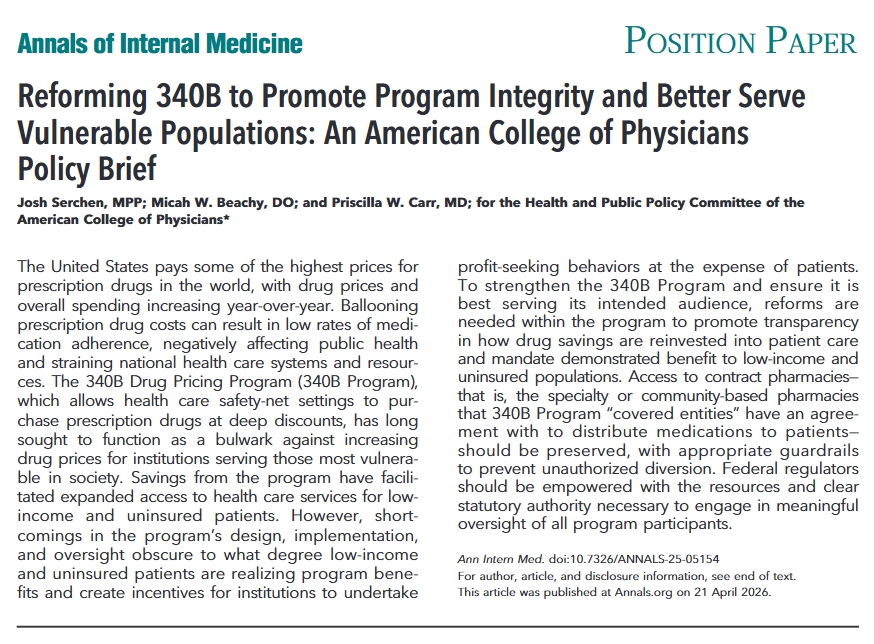
In a new position paper, @ACPIMPhysicians calls for reforms to ensure 340B savings are used to directly benefit medically underserved populations. The recommendations include stronger oversight, clearer accountability for participating organizations, and reinvestment of program benefits into patient care. Read the full text for free: https://t.co/EzOx6CXIvP
American health care is totally dysfunctional. And everyone knows it. But what people are willing to give up is *the* fundamental question of the U.S. health care system.
New from @ZekeEmanuel:
https://t.co/9LD9Rvr7wy
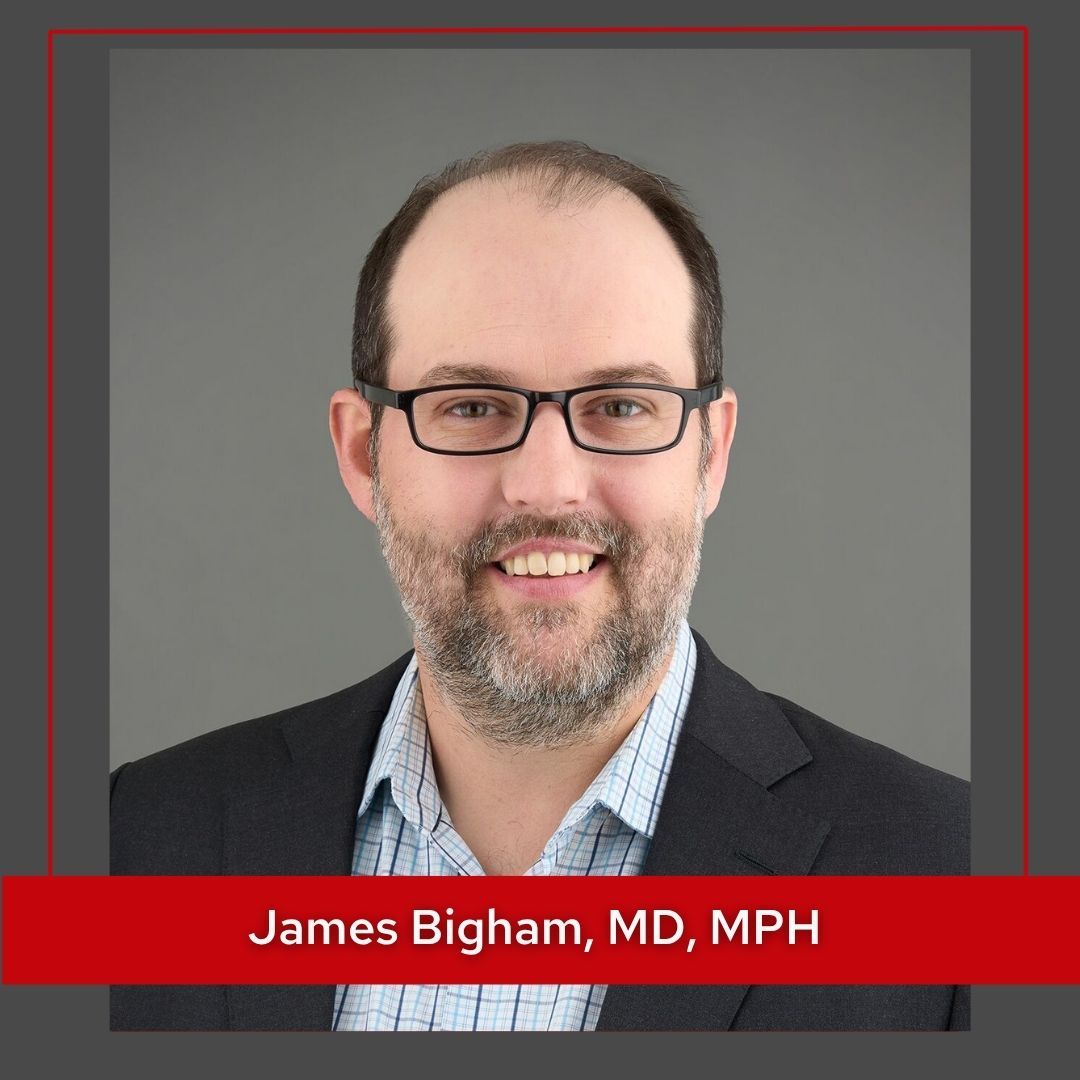
Safe firearm storage can be the difference between a temporary crisis and a fatal outcome, says Dr. James Bigham in a @MilwaukeeNNS article on gun violence intervention. Read it here: https://t.co/MboCZJ4vb5
How is the American health care system patched together? And why is it SO expensive? Find out in the first video of our new series with @HCTriage: https://t.co/ofTwY01lOb
Recognized by @usnews for excellence in primary care education, the University of Wisconsin School of Medicine and Public Health prepares students to improve health in communities across Wisconsin and beyond.
https://t.co/qpD03PGKSU
He Was an Insurance Executive. She’s a Doctor. They’re Divided. https://t.co/GI6bgubTTB via @NYTOpinion
A long conversation but a phenomenal one about the challenges of our American health system - the type of conversation the public needs to have to inform policy
Colorado faces tough Medicaid budget decisions as costs rise and revenues fall. A new issue brief from the Farley Center outlines 5 key challenges and policy actions for lawmakers. With 1 in 5 Coloradans on Medicaid, the stakes are high. https://t.co/j3fHMcUcQO
BREAKING: I just signed the bill to extend postpartum coverage for Wisconsin moms from a lousy 60 days to one full year after giving birth.
I promised I'd never stop fighting to make sure moms and babies had the postpartum care they need, and today, I delivered on that promise.
Federal Medicaid restrictions could strip coverage from 7.5 million Americans leading to more than a million missed cancer screenings and over 2,300 undetected cancers and hundreds of preventable deaths in just two years, according to researchers.
https://t.co/6wJt5NrzSP
At long last - so grateful to all that have persisted in making this possible and look forward to continuing the work to eliminate maternal health disparities https://t.co/HOir21TJrS
When healthcare feels overwhelming, look for one concrete thing you can do.
Right now, the Department of Education has opened a public comment period on a proposed rule that would remove nursing from the “professional degree” classification.
That sounds technical. It isn’t.
If this change goes through, nurses and advanced practice providers could lose access to certain federal loan programs that make advanced training financially possible. That affects who can afford to become a nurse practitioner. It affects who stays in the workforce. It affects access to care.
As a reconstructive microsurgeon, I cannot care for the volume of women I serve without the nurses and nurse practitioners on my team. They are not assistants. They are licensed, credentialed professionals practicing at the highest level of their training. They are the backbone of American healthcare.
If you care about access to safe, high quality care, this matters.
The public comment period is open and closes on March 2nd.
Here is how to leave a comment. It takes five minutes:
1. Go to https://t.co/hyJpnuZYJh
2. Type into search “reimagining and improving student education”
3. Click “Submit a Formal Comment”
4. Write a short statement. It can be simple. For example:
“I support recognizing nursing as a professional degree. Limiting access to federal loan programs will worsen workforce shortages and reduce access to care.”
5. Enter your information and click submit
You do not need to be a doctor or a nurse to comment. You just need to care.
Small actions matter. Words matter. Please take a few minutes to support recognizing nursing for what it is: a profession.
Primary care saves lives and lowers costs, new @thegrahamcenter study reaffirms. Patients with a primary care clinician have 54% lower health care spending for chronic disease. The data reinforce what family physicians see every day: continuity of care saves lives, improves outcomes and reduces costs. Health care policy must reflect the real value of primary care. Read the full report from the Graham Center, @MilbankFund and @PhysiciansFound here: https://t.co/SLkoGNGZ2F
#UWMadison is officially #2 among all public universities in the United States, according to @TIME. When you say Wisconsin, you've said it all! 👐
Read more: https://t.co/eXbWs3Mcyv
Colon cancer rates have been increasing in people under 50, becoming the leading cause of cancer death for this population. Dr. Bob Freidel joined @Fox6now to discuss screening and preventative measures: https://t.co/0SCbgwEkdQ