Volatility Is Not an Invitation to Gamble
When the market moves fast, many traders increase lot size.😤
Professionals do the opposite
they adapt, widen zones, reduce risk, and stay calculated.
Volatility rewards the disciplined.
It destroys the impulsive.
AI agents are starting to transact, coordinate, and execute on-chain.
But most infrastructure wasn’t designed for autonomous actors.
It was designed for humans clicking buttons.
0G_labs is building the modular stack for an agent-native internet — high-performance execution, programmable data layers, and infrastructure that doesn’t break when activity scales.
If AI is the new user, 0G is the chain it runs on.
—
Speed is exciting.
Memory is durable.
As governance expands and conversations move faster, context gets fragmented. Threads disappear. Rationale fades. Decisions become numbers without history.
permacastapp turns conversations into structured, permanent knowledge.
Not just archived.
Searchable. Traceable. Auditable.
Because systems that move fast still need to remember why.
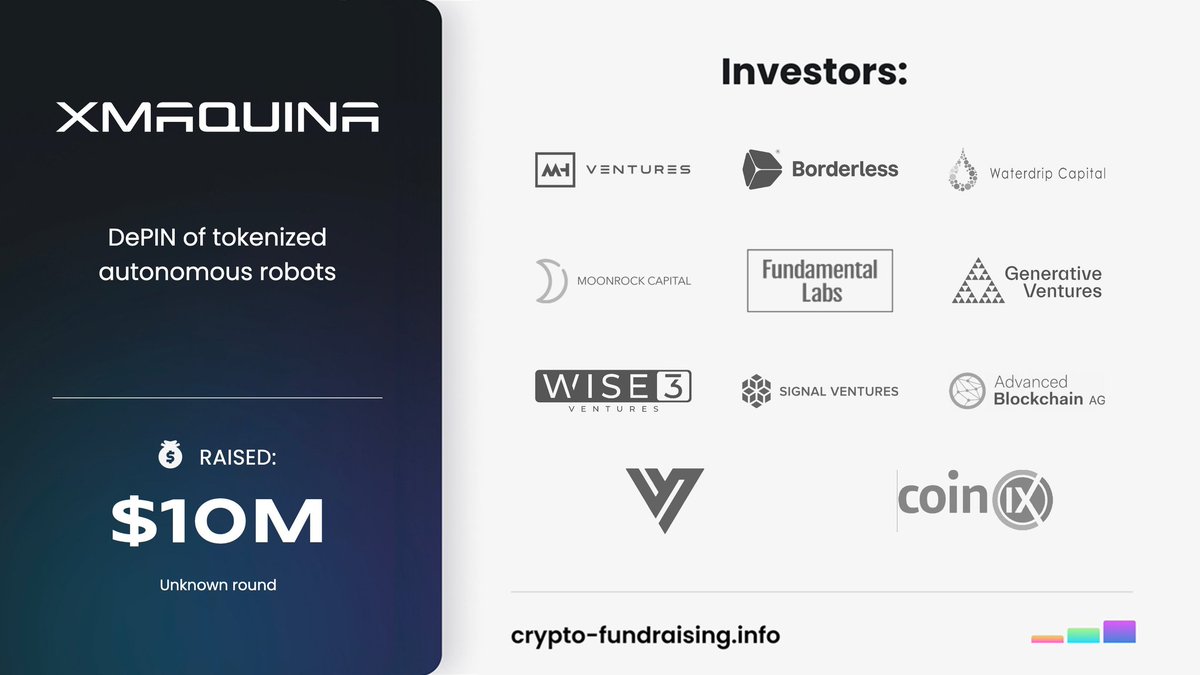
@xmaquina lets you own machines that create real value not just tokens. Capital becomes tool for clear strategy, not guesswork.
$DEUS aligns incentives and guides decisions. It brings scale and safer exposure.
Not just access to the machine economy but steady, protected growth
In a market often clouded by noise, failed narratives, and short-lived hype cycles, the emergence of systems like Permacast, 0G Labs, Xmaquina, and Dgrid AI signals something different something that feels like the light at the end of the tunnel for Web3.
What ties these projects together is not just innovation, but direction. Permacast is redefining media permanence through decentralized storage and censorship-resistant content layers, ensuring that information outlives platforms. 0G Labs is pushing the frontier of modular AI infrastructure, unlocking scalable data availability and verifiable compute for autonomous systems. @xmaquina is bridging the physical and digital by powering DePIN robotics networks, where machines are no longer isolated assets but participants in an open economic layer. Dgrid AI, on the other hand, is transforming distributed compute into an accessible resource, enabling communities to contribute to and benefit from AI-driven workloads. $DEUS
The deeper insight is this: Web3 is finally moving from abstraction to utility. These ecosystems are not chasing narratives; they are building coordination layers where data, machines, intelligence, and media converge into programmable economies. Keywords like decentralized AI, DePIN, modular infrastructure, verifiable compute, autonomous networks, and permissionless participation are no longer theoretical they are being implemented in real time.
This convergence represents a structural shift. Instead of fragmented innovation, we are seeing interoperable primitives emerge. Permacast secures the information layer, 0G Labs powers the intelligence layer, Xmaquina activates the physical layer, and Dgrid AI scales the compute layer. Together, they form a stack that begins to resemble a complete, self-sustaining digital economy.
That is the light at the end of the tunnel not just survival of Web3, but its maturation into something fundamentally more useful, more interconnected, and more real.
Strong systems adapt through safe change. @xmaquina tests at the edges, learns fast.
Guardrails guide variation not panic. Only what works scales.
$DEUS read patterns, coordinates direction, compounding progress while keeping the machine stable over time consistently.
@xmaquina
Memory and motion define how digital systems endure.
@permacastapp anchors media to permanent storage so content can’t vanish with platform changes.
@permacastapp also turns content into structured, referenceable assets that can be reused.
This is beautiful ❤️
I used @grok to explain why @idOS_network is very important in Web 3 to @elonmusk , @realDonaldTrump and @cz_binance .
All we need in web 3 is privacy.
We can't be exposing our details to everyone anymore.
Verify once, use everywhere!!!
@idOS_network
I don’t think people realize how much design shapes behavior 📜
If content can disappear
You post casually
If governance records fade
You vote emotionally
If treasury history isn’t easy to trace
You allocate loosely
Infrastructure sets the tone
That’s what makes @Permaweb_DAO interesting
It doesn’t just store data
It fixes data in place
Permanent storage through Arweave
Applications like Permacast
Governance archives that remain accessible
When records don’t expire
Behavior adjusts
You start thinking
Is this proposal clear enough
Is this allocation justified
Is this content something I want attached to my name long term
That subtle pressure increases quality
Crypto often rewards speed
But speed without consequence
Creates noise
Consequence creates discipline
And discipline creates maturity
I’m not saying permanence automatically makes ecosystems perfect
But it shifts incentives
From short term visibility
To long term coherence
And coherence is underrated
Because coherent systems are stable
Stable systems attract builders
Builders create depth
Depth compounds
That’s the quiet logic behind @Permaweb_DAO
Not louder
Just more structured around time
And time usually decides who lasts
Running inference on sophisticated AI models in decentralized settings has long been hampered by severe limitations: centralized providers deliver low-latency results but at steep prices and with opaque operations, while early decentralized networks suffer from sluggish performance, inconsistent availability, and inadequate throughput for demanding real-time queries. This divide leaves developers torn between accessibility and speed, often settling for suboptimal experiences—delayed responses in chat interfaces, stuttering image generation, or unreliable outputs—that erode user confidence and restrict the scope of innovative, on-chain AI applications. In a world craving instant, trustworthy intelligence, these constraints feel increasingly archaic.
@0G_labs introduces its decentralized compute engine, a marketplace that harnesses global GPU resources to deliver high-throughput inference with trustless execution and remarkable efficiency. By allowing anyone to contribute hardware and developers to request services on-demand, it slashes costs dramatically—often by 90% or more compared to traditional clouds—while supporting diverse workloads like large language model conversations, text-to-image creation, and speech transcription. The engine routes jobs intelligently to optimal nodes, settles payments via smart contracts, and returns cryptographically signed results, ensuring verifiability without intermediaries. This unlocks fluid, scalable AI integration into decentralized applications, transforming inference from a bottleneck into a seamless, permissionless capability.
What elevates this engine is its emphasis on cryptographic safeguards and performance parity with centralized systems: inference providers optimize for low latency through specialized hardware matching, while verifiable receipts—backed by signed outputs and occasional cross-checks—guarantee result integrity across the network. Integrated with the broader modular architecture, it leverages high-speed data pathways for rapid model access, enabling complex, multi-step inferences that handle massive parameter counts without compromise. This creates a fluid ecosystem where inference becomes economically inclusive, fostering experimentation in agentic systems, real-time analytics, and creative tools that demand both speed and decentralization.
If high-throughput inference could proliferate across a truly global, open network, how might that accelerate the rise of autonomous AI agents in everyday decentralized finance or gaming? Could verifiable, low-cost compute finally democratize access to frontier intelligence for builders in emerging markets? And as participation grows, will the balance of incentives sustain consistent performance, or might coordination among diverse nodes introduce subtle trade-offs in an otherwise liberating shift toward sovereign AI?
If you’re a builder 📜
Choosing infrastructure is a serious decision
You’re not just picking tech
You’re picking what your project depends on
Most of Web3 infrastructure optimizes for speed
Throughput
Liquidity
Fewer optimize for longevity
That’s where @Permaweb_DAO stands out
The focus isn’t “how fast can we grow”
It’s “will this still exist years from now”
Permanent storage on Arweave
Applications like Permacast
Governance records that don’t rely on one frontend
That’s not a marketing choice
That’s an architectural stance
Because once you anchor data permanently
You’re committing to continuity
As a builder
That changes your roadmap
You design features knowing the underlying data won’t vanish
You think about governance knowing proposals stay archived
You build identity layers knowing history persists
It creates a different development culture
Less disposable
More durable
Crypto often rewards fast experiments
But durable infrastructure
Attracts serious builders
And serious builders
Create ecosystems that survive cycles
I’m not claiming permanence guarantees dominance
But I understand why a team would choose it
Because if you’re building for five years
Not five months
Durability stops being optional
That’s the part about @Permaweb_DAO that feels intentional
It’s not chasing speed
It’s anchoring time
And time usually decides which foundations matter
Long term Web3 infrastructure is built by stacking complementary strengths that reinforce sustainable expansion. Execution capacity sparks innovation, adaptive intelligence sharpens it and governance ensures it endures. 0G Labs, Dgrid AI & PermawebDAO each represent a layer in that structural progression.
0G Labs concentrates on advancing decentralized AI with scalable data availability and performence optimized execution layers. As AI applications demand heavier computetion and lower latency, networks must maintain consestent throughput and modular design. By reinforcing this technical base 0G Labs enables developers to build for real world scale rather than short lived experimentation.
Dgrid AI strengthens the intelligence coordination layer through distributed learning systems that adjust across evolving environments. Decentralized ecosystems are fluid, with shifting data streams and network conditions. Adaptive, coordinated intelligence ensures systems remain resilient and stable, supporting reliable AI deployment across Web3 infrastructure.
PermawebDAO anchors the permanence and governance dimension by prioritizing durable data preservation and decentralized stewardship. When records stay immutable, accessible and comunity governed, trust compounds over time. Continuity across cycles reinforces transparency and strengthens collective confidence.
Aligned together 0G Labs, Dgrid AI and PermawebDAO demonstrate how scalable infrastructure, adaptive intelligence and enduring governance can integrate into a cohesive framework. When these pillars reinforce one another, decentralized ecosystems gain the durability required for sustainable long term growth.
0G_labs • permacastapp • dgrid_ai
Most people chase narratives.
Few build the layer narratives depend on.
That’s the separation.
And that’s why @Permaweb_DAO feels different.
Think about it.
Trends rotate.
Tokens pump.
Communities migrate.
But permanence?
That compounds.
The quiet advantage of infrastructure-first ecosystems is simple:
They don’t need to reinvent themselves every quarter.
They refine.
They strengthen.
They extend.
When an ecosystem focuses on:
• Durable governance
• Long-term contributor alignment
• Preserving context
• Reducing coordination friction
It stops reacting to the market.
It starts shaping it.
Aura in Web3 isn’t about volume.
It’s about gravity.
Gravity pulls builders in without force.
It makes participation feel inevitable.
@Permaweb_DAO is building gravity.
Slowly. Intentionally. Structurally.
And gravity doesn’t spike.
It accumulates.
The loudest ecosystems often burn brightest and fade fastest.
The most aligned ones?
They become foundational.
Watch the shift.
Infrastructure > hype.
Alignment > noise.
Durability > moments.
That’s how aura compounds.
After all the wait, the debates, and everyone wondering if Rally Beta would ever live up to the hype… it just dropped and instantly changes Web3 marketing.
Projects can now run multi-asset campaigns paying creators in Rally Points, native tokens, AND stablecoins at the same time. On top of that, the upgraded quality-first scoring engine and smart filters finally reward real original, high-effort content while shutting down lazy copy-paste and farming posts.
No more locked-in reward systems. Creators get actual capital for genuine results, which means real alignment, stronger incentives, and way more serious campaigns. This is the quality layer the space has been missing. Super hyped @RallyOnChain
NEXT CYCLE NARRATIVES ARE FORMING AND FEW ARE PAYING ATTENTION
dango preparing a system where the point program drives real user behavior while clob introduces a more advanced trading environment. When incentives and liquidity tools come together, ecosystems tend to accelerate fast. dango looks ready to transition from early adoption into a high activity network.
0G_labs approaching AI from the infrastructure side by enabling decentralized compute layers that can support large scale intelligent applications. Instead of chasing hype, the focus on foundational tech could place 0G_labs at the center of the AI powered internet.
dgrid_ai exploring how decentralized networks can coordinate AI resources without relying on centralized control. If successful, this direction opens the door for community owned intelligence systems and autonomous digital economies. dgrid_ai aiming for a future that feels closer than people think.
Every project talks about decentralization 📜
Few talk about durability
Durability is boring
It’s not a feature you can screenshot
It’s not a metric that trends
It’s what’s left
After the noise fades
That’s why @Permaweb_DAO keeps pulling my attention
Permanent storage isn’t exciting
Until you imagine losing everything
Old governance threads
Treasury breakdowns
Creator media
Technical reasoning
If those disappear
Communities shrink intellectually
When they stay
Communities compound
That’s the difference
Permacast is a small but clear example
Creators upload once
And their work isn’t dependent on a company surviving
That doesn’t guarantee success
But it removes fragility
And fragility is everywhere in crypto
Speed creates headlines
Durability creates institutions
Institutions outlive cycles
I’m not saying permanence is perfect
It introduces responsibility
It increases consequence
But systems that remember
Usually evolve
Systems that forget
Usually repeat
That’s why the direction @Permaweb_DAO is taking
Feels less like a trend
And more like groundwork
And groundwork rarely trends
It just supports everything built on top
Every network eventually confronts the same paradox: growth increases value, but growth also increases strain. The difference between collapse and stability lies in whether the strain is anticipated.
The coordinated architecture across OG Labs, DGrid, Dango, and PermawebDAO reads like an answer to that paradox.
@0G_labs reinforces the infrastructural skeleton. Scalability improvements and interoperability enhancements expand the system’s load-bearing capacity. Instead of reacting to congestion, it designs for throughput from the start. Strong foundations don’t eliminate volatility; they prevent volatility from cascading.
DGrid addresses computational intensity. As decentralized ecosystems incorporate AI-driven models, automated market logic, and data-heavy execution paths, processing demand becomes nonlinear. Distributed compute spreads that intensity across nodes, strengthening both performance and resilience.
@dango operates where economic gravity is strongest. On-chain trading compresses time and capital into tight execution windows. Latency, slippage, and liquidity fragmentation immediately surface structural weaknesses. When infrastructure and compute layers are optimized, execution becomes more predictable under pressure.
PermawebDAO anchors governance and permanence. Decentralized systems require transparent coordination and preserved historical state. Permanent storage maintains institutional memory, while governance structures align incentives as participation scales.
When these layers evolve together, strain becomes manageable rather than destabilizing. Infrastructure absorbs throughput pressure. Compute absorbs processing spikes. Execution absorbs market volatility. Governance absorbs coordination complexity.
Complex systems survive not because they avoid stress, but because they distribute it intelligently. And intelligent distribution is what turns expansion from a risk into a reinforcing cycle of growth.
I just applied for the RentaSwap Beta.
Here is something people misunderstand about Beta testing:
It is not about “trying features early.”
It’s about stress-testing infrastructure before the public does.
When you test a swap engine, you don’t just click buttons.
You evaluate: • Execution speed under real conditions
• Slippage behavior and price accuracy
• Routing efficiency
• Bridge latency and reliability
• UI friction during multi-step flows
• Edge cases most users won’t think about
Good Beta testers don’t give vague feedback like “works fine.”
They document: – What happened
– What was expected
– Where friction occurred
– How it can be improved
If RentaSwap is becoming the liquidity core of the ecosystem, then precision during this phase matters.
Infrastructure isn’t proven by announcements.
It’s proven by execution under pressure.
That is what Beta is really for. 🚀
Spots are limited.
Application form: https://t.co/oDhC5upLJu
Make sure you are following @RentaNetwork for more official information
Infrastructure is built quietly... Then it scales loudly.
I like seeing new ideas in crypto space.
0G_labs is building a strong base for AI on blockchain.
They are working on fast data and storage so developers can build better apps.
The vision is clear and the team keeps building.
🎙️ EPISODE THIRTY-TWO: THE IRREVERSIBLE SHIFT
#permacastapp × #dgrid_ai
When Infrastructure Changes the Direction of the Internet
Most technological shifts are incremental.
Faster speeds.
Better interfaces.
Smarter algorithms.
But some shifts are structural.
They don’t improve the old model.
They replace it.
Episode Thirty-Two explores one of those moments:
When permanence and alignment stop being optional — and become expected.
Permacast anchors podcasts permanently onto Arweave’s permaweb through SmartWeave contracts. This transforms media from platform-dependent streams into immutable digital artifacts.
Content no longer asks permission to exist.
It persists beyond companies.
Beyond apps.
Beyond market cycles.
That alone alters expectations.
But permanence without aligned governance could still drift toward hidden control.
Dgrid_AI embeds stake-based participation directly into intelligence and coordination. Influence requires contribution. Governance is transparent. Misalignment carries economic consequence.
Power no longer hides behind policy.
It operates within constraint.
When these two systems operate together, something irreversible begins to form:
Participants experience permanence.
They experience transparency.
They experience accountability.
And once experienced, fragility feels unacceptable.
In traditional systems:
Content can vanish overnight.
Rules can change quietly.
Algorithms can shift without explanation.
Users adapt — because they have no alternative.
In permanence-aligned systems:
Memory is fixed.
Governance is visible.
Intelligence is accountable.
The baseline changes.
Creators begin expecting durability.
Communities begin expecting transparency.
Developers begin expecting open infrastructure.
What starts as innovation becomes standard.
Episode Thirty-Two is about that tipping point.
When enough permanent archives exist.
When enough aligned governance operates.
When enough participants experience non-fragile systems.
The direction of the internet shifts.
Permacast ensures the knowledge layer is irreversible.
Dgrid_AI ensures the coordination layer is constrained and aligned.
Together, they don’t just build alternatives.
They redefine expectations.
Not temporary by default.
Permanent by default.
Not opaque by default.
Transparent by default.
Not extractive by default.
Aligned by default.
This is The Irreversible Shift.
And once infrastructure changes expectations,
the old model cannot quietly return.