It's very tempting to slide into an autonomous and self-sufficient lifestyle, so I've trained myself to start each day with three prayers. Reciting these before I even get out of bed reminds me of my need for community:
1. "Jesus, I'm a person in desperate need of help today."
2. "God, in your grace, send your helpers my way."
3. "Spirit, give me the humility to receive the help when it comes."
Nick Saban's nine quotes to Congress in NIL testimony will make you LOL.
Starting with this: 'Congress does not need to micromanage college sports.'
Um, Coach, did you miss the memo on why you're here? Good grief.
https://t.co/oBDACLnseH
Walk into most Sunday services today and count the mouths moving. Fewer people are singing than you'd think, and most of the reasons why are completely fixable. https://t.co/xcWRenuD2t
Being biologically female means having a body that is observably organised to produce large gametes (eggs), as opposed to a body organised to produce small gametes (sperm). A woman is female whether her eggs have been fertilised or not. A man can never be female.
The main reason we go to church is for God to serve us.
+We go hungry ; he feeds us his Word.
+We go dirtied by sin; he cleanses us by the blood of Christ.
+We go thirsting for hope; he gives it to us in the gospel.
+We go shrinking from shame; our Father tells us once more that we are his beloved children.
Yes, we respond to God with prayer and praise. But the primary reason we go to church is for God to do what God does best: gift us, feed us, serve us in Christ.
We have the technology to watch babies move around in their mother’s womb, we know they respond to pain, we know they recognize their mother’s voice.
If you are still denying the humanity of preborn children, you are willfully ignorant.
1. The probability calculation is built on the observed evidence. The minimal cell created by scientists requires 493 genes and over 500,000 base pairs of information. There is no functional cell with less than that. To claim evolution gradually built a cell through cumulative selection is an unobserved speculative assumption which directly contradicts all observed evidence. So no - the math is not based on an assumption at all. It's based on what we actually observe. It is you who is basing your response on an assumption.
2. Proteins are literally all or nothing. They require a full, precise sequence of amino acids, in the correct order, to achieve a proper fold, and thus function. They have no function until they have a full sequence. They cannot be built step by step gradually - they have no selective advantage until they're complete. And your point about different sequences performing similar functions betrays an ignorance of the topic - the odds are describing the a functional fold in total sequence space. A single fold might have similar homologs - but we're talking about the difference between entire folds here. Different families of proteins. Even evolutionists admit they're not related.
3. See number 1. Look up the J. Craig Center JCVI-syn3.0 Cell research. Scientists tried to create a minimal cell. It failed. Your belief that "early cells" were simpler contradicts the science.
4. It takes highly specific conditions which cannot be found in nature to bias chirality, and even then, it's only slightly biased. No natural process is capable of pure homochiral selection. Even one single racemic AA can destroy a protein. 100% homochirality does not exist in nature.
5. This is just assuming your view is true. Not an argument.
6. Improbability absolutely is evidence of Design. If the odds are impossible if something happening by natural causes, we must look to other options.
Complexity alone does not imply a designer - it's the type of complexity. Specified, functional complexity.
And why would must a designer be more complex than the design? That's a silly assumption with no basis.
The only plausible explanation for Life is Design. Nothing else makes sense.
October 9, 1974.
Oskar Schindler collapsed on a street in West Germany.
When authorities searched his apartment, they found almost nothing:
unpaid bills, old letters, and money sent from Israel.
For the last years of his life, the Jews he saved during the Holocaust were paying his rent and buying his food.
Because Oskar Schindler died broke.
And he was broke for one reason:
he spent his fortune saving people.
The strange part is that Schindler didn’t start as a hero.
He was a Nazi Party member.
A war profiteer.
A heavy drinker.
A serial adulterer.
In 1939, when Germany invaded Poland, Schindler saw opportunity.
He took over a Jewish-owned factory in Kraków and got rich producing enamelware for the German military using cheap Jewish labor.
At first, survival wasn’t the goal.
Profit was.
Then he witnessed the liquidation of the Kraków Ghetto in 1943.
He watched SS troops shoot civilians in the streets.
Children ripped from parents.
People hunted like animals.
Something changed in him after that.
Schindler began using his factory differently.
He bribed Nazi officers constantly — with cash, alcohol, jewelry, anything they wanted — to keep his Jewish workers alive.
He built a subcamp at his factory where conditions were far safer than the concentration camps nearby.
He smuggled food.
Bought medicine on the black market.
Protected workers from deportation.
Every bribe cost money.
He kept paying anyway.
Then came 1944.
The Nazis started emptying camps and sending prisoners to Auschwitz.
Schindler knew his workers would be killed if they stayed behind.
So he made “the list.”
1,200 names.
Men.
Women.
Children.
The elderly.
He claimed they were all essential workers needed for the war effort.
It was a lie.
But it saved 1,200 lives.
When one train carrying the women was accidentally sent to Auschwitz, Schindler personally traveled there and bribed officials until they were released.
By the end of the war, he had burned through his entire fortune.
Everything was gone.
After Germany collapsed, Schindler failed at almost every business he tried.
Argentina failed.
Farming failed.
A cement company failed.
Eventually he ended up alone, bankrupt, and forgotten in a small apartment in Frankfurt.
Except by the people he saved.
The “Schindlerjuden” supported him for the rest of his life.
They mailed him money every month.
Paid his bills.
Kept him alive.
And when he died in 1974, they buried him in Jerusalem.
Not because he was perfect.
He wasn’t.
He began as a profiteer inside one of history’s worst regimes.
But at some point, Oskar Schindler made a choice:
keep the money,
or save people.
He chose people.
And 1,200 descendants are alive today because he did.
Many pastors carry a pressure unlike anything else in history. The temptation to compare, to innovate, to keep up, to launch a podcast, to preach at a certain level, to grow the church, and to produce visible results are just a few. So many begin to feel like failures, questioning whether the ordinary means of grace can really accomplish what today’s demands require.
Christ never called pastors to be celebrities, brands, or ministry entrepreneurs. He called them to be faithful shepherds. The Word preached, the sacraments administered, prayer offered, and people loved may seem ordinary in a world obsessed with metrics and platforms, but God has always delighted to work through what appears weak and unimpressive.
The pressure to produce what only God can give is crushing. Results belong to Him. We plant, water, but God gives the growth (1 Cor 3:6). Pray for pastors today!
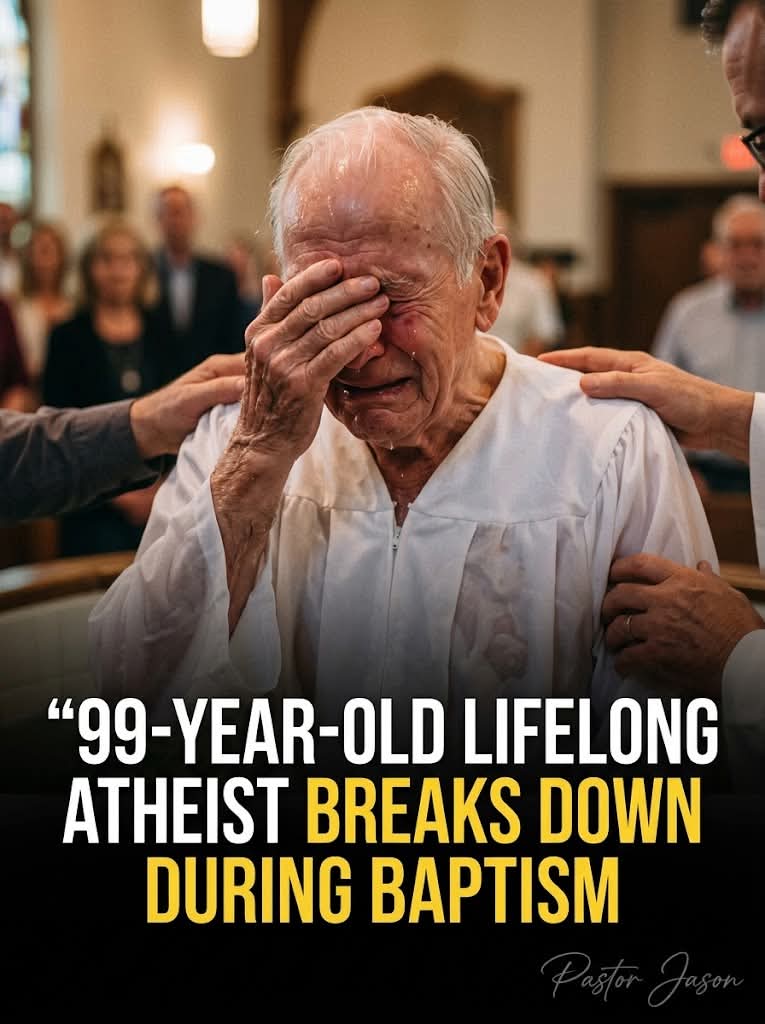
A 99-year-old man recently became baptized during a church service after spending most of his life identifying as an atheist. Emotional and supported by others around him, he publicly declared his faith through full immersion baptism. The moment led many people to reflect on spiritual change and faith later in life.
President Trump was indicted for "pressuring" Georgia Sec. of State Brad Raffensperger to investigate election integrity in his state.
5 years later, Georgia admits they ILLEGALLY certified 315,000 ballots in the 2020 election, handing Biden a "win" by 11,779 votes.
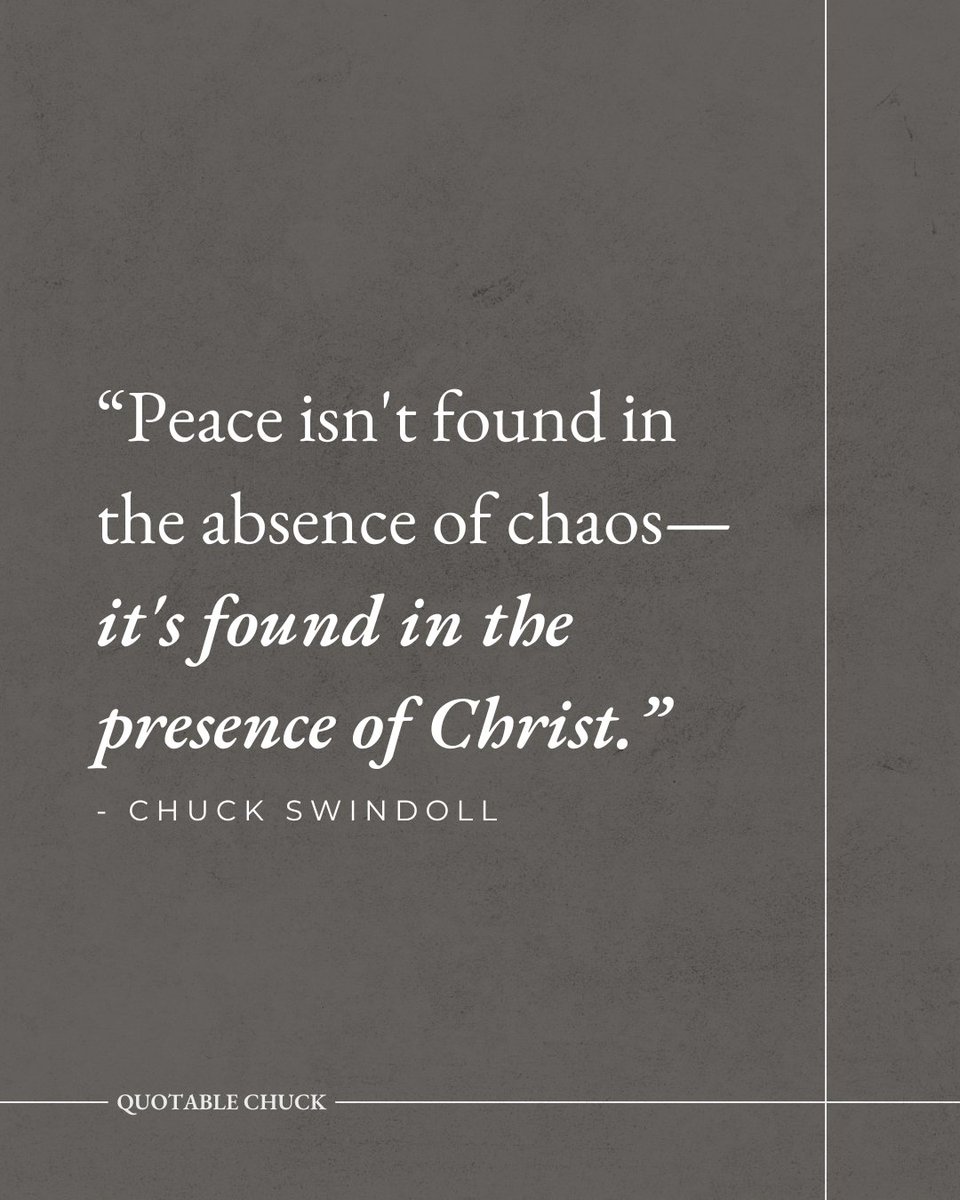
We keep waiting for the storm to pass before we can finally exhale. When the deadline lifts, when the diagnosis clears, when the relationship mends — then we'll have peace.
But peace was never meant to be the reward at the end of calm. It's the gift offered right in the middle of the noise. Christ doesn't promise to remove every chaotic circumstance. He promises something better — His steady presence in the eye of the storm.
What if peace isn't waiting on the other side of your hardest day, but already with you in it?
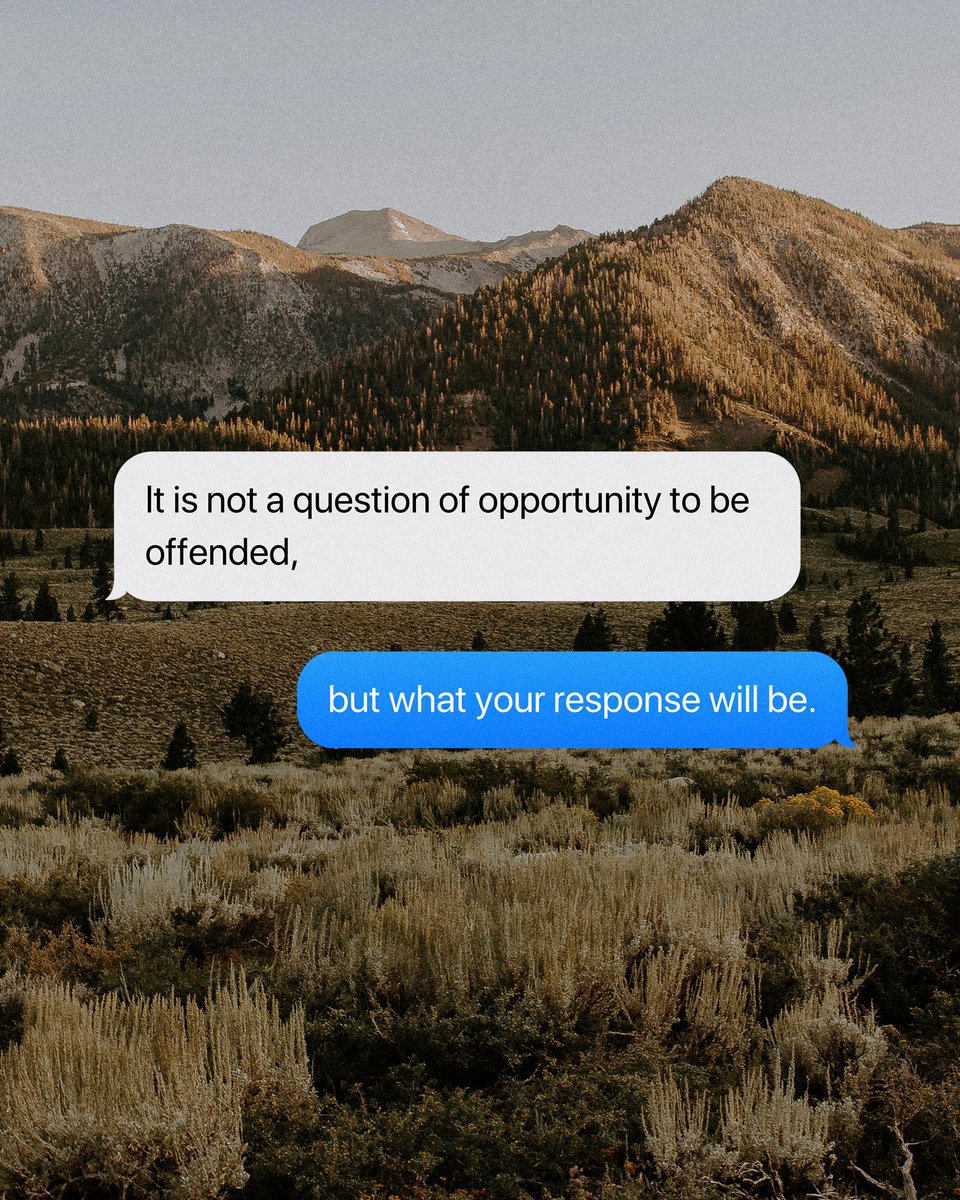
Offense is inevitable. Every one of us will have opportunities to be hurt, misunderstood, betrayed, or disappointed
The real question is not whether the opportunity will come, but how we will respond when it does.
Offense only becomes a trap when we hold onto it. But forgiveness keeps our hearts soft, free, and able to hear God clearly.
I talk more about this in The Bait of Satan. Get your copy here: https://t.co/6NXqe0hsE8
The core message of the gospel is a fresh start. Sinners, who have deliberately rebelled against their Creator, have been offered a new beginning, purchased by the blood of Jesus on the Cross.