In 2014 I was 35, broke, and driving Uber at night so I could work on a house cleaning business during the day. The thing that got me through was working on my mindset as hard as I worked on the business.
Today that business and two others do about $2M a year between them. A lean team runs them, with an offshore crew I built in the Philippines in 2016 and AI built into how we run operations. I run all of it from El Salvador and can go a week without checking in.
I believe the next wave of home service companies will be AI-native from day one. Now I help other owners build their businesses that way. This account is where I build in the open and share my life as a builder along the way.
We built Statusline, a call intelligence tool that sits on top of Quo. I showed it to a flooring company owner and got him set up as a beta user. For every call, it shows what the call was about, what the person who answered did well, and where they could improve. You can also ask it questions across all your calls, like "What were the top five objections we heard this week?"
He used it a bit and saw value but didn't adopt. He told me "This is cool, but the AI agent in your business is actually doing work."
He was right. Owners don't want to log into another tool. They want an agent that takes what it knows and acts on it. That's why putting our agent in the Slack channel where my team already works was the big unlock at my cleaning companies.
So we built a connector that lets the agent operate Statusline itself. One alert we set listens for language that sounds like a customer is about to leave a bad review. When it fires, the agent pings us in Slack right away, so we can reach out before the review gets written.
@lukepierceops Point 7 is the one I'd tell any home service owner to copy. Every client, cleaner and staff member at my companies has a file the agent keeps updated.
@Brunobuildsai Our version is a markdown file for every client, cleaner and staff member, plus a scheduled job that sweeps email and files the new context. Every source we've connected has made the agent better at its job.
@LeeTrez We run it the same way at my cleaning companies. Our agent lives in the Slack channel where the team already works, and they message it like anyone else on the team.
@VelariCapital The part I've never handed off is dissecting how the business actually runs. At my cleaning companies, that tedious mapping told us what to build, and the agent just does the tracking.
@mhp_guy Website chat makes sense to me. In home services I'd keep it off the phones, though. Customers at my cleaning companies already text my team asking if they're talking to AI, and on a call a lot of them would hang up.
I haven't run Sona, so I can't speak to it. I chose not to put voice agents on the phones at my cleaning companies because customers already text my team asking if they're talking to AI. We use AI behind the phone, and a real person still answers. However, I am considering it for after hours calls.
I learned delegation by moving to the Philippines for a year to build an offshore team. Most of that year was me writing down how I did each task so someone else could do it the same way, and the writing is where I got better at explaining the job. Now I push SOP updates by recording loom videos for my team, then passing the transcription off to an AI agent that saves it to a MD file in our company knowledge base.
Before you implement an AI tool or agent in your home service business, write down five things:
1. Every task your office does in a week, who does it, how long it takes, and whose head the know-how lives in.
2. Every task that stalls until someone chases down another person.
3. Every place money changes hands, like quotes, pay adjustments, payroll and refunds.
4. Every place a customer waits on you, and how long they wait.
5. Every question your team asks you more than once a week.
Then mark each item as something a person should keep, something that needs a written rule, or something an agent can track.
It's tedious, and it's how you find what to build. Our payroll fix came straight off item 3.
Payroll at our vacation rental cleaning company used to run up to 3 days late. My ops manager agreed to extra pay for cleaners on the fly all week...like $50 to cover a last-minute job or $30 for an extra task. When payroll came around, our payroll person had to track him down to find out what he'd promised. This was costing her hours and cleaners were getting upset for getting paid late.
Now he tags our AI agent in our Slack channel about each adjustment when he makes it. Plain language. Sometimes he just drops a voice message, if he's in a rush. Every saturday our agent sends compiles all the pay adjustments and ships a report to our payroll person. The result - payroll runs on time every Monday, she gets hours of her week back, and the cleaners stopped getting mad at us.
Building the agent was the easy part. Finding where the delay actually came from took longer, and the list is what found it.
Morning walks in the mountains of El Salvador with my daughter, while my cleaning companies are running thousands of miles away.
This life took me more than ten years to build, and it started long before AI. In this video, I reflect a bit on what it took to make this all happen.
I've run home service companies since 2014, and the last year has changed more than the ten before it.
Local home service businesses have always been slow to pick up new tech. A lot of them are going to get caught flat-footed by what's coming. https://t.co/h7Ba9lUfNM
@HVACSEO I've had customers texting my support line asking if they're talking to AI. Telling them a real person is coming out does a lot of trust work before anyone shows up. Nice touch.
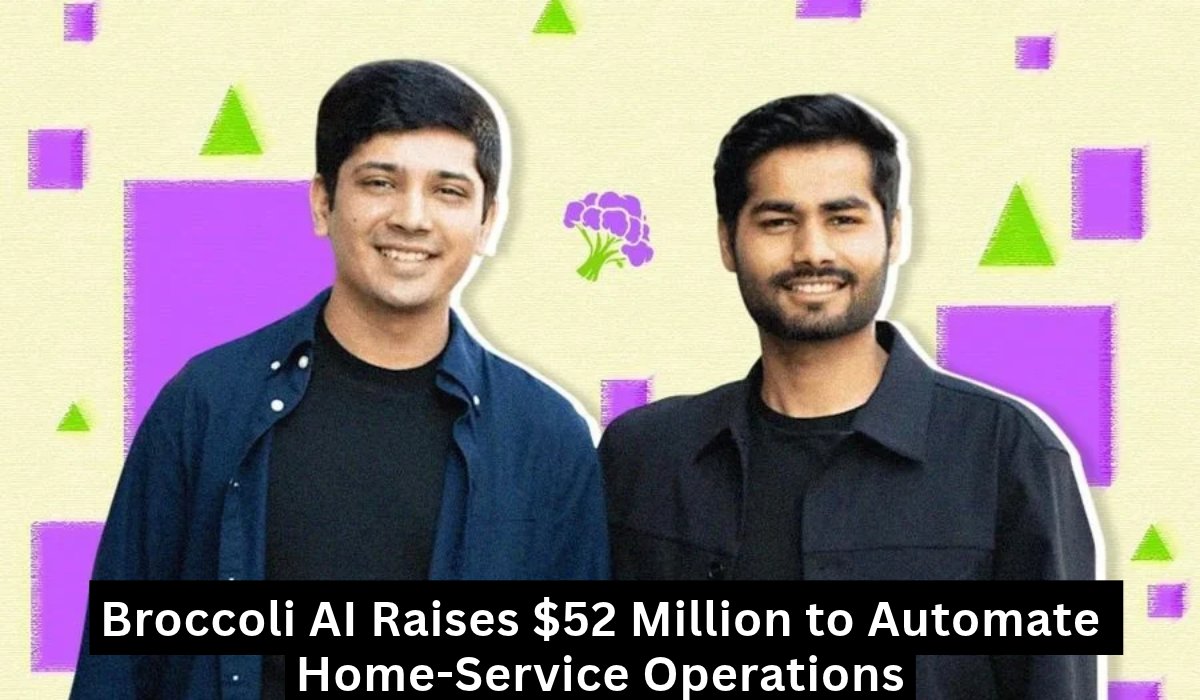
$52M to put voice agents on home service phones.
Voice AI is a real step forward, and AI is implemented widely throughout my operations. But in local home services, I don't think customers want it.
At my cleaning companies, new customers text us asking if they're talking to AI. And some of our longtime customers have been talking to the same person on my team for over 10 years.
So I keep humans on the phones. They're offshore, which still makes the cost work, and the AI runs behind them so whoever picks up already knows the customer.
https://t.co/tJpFCjVBBq
I don't put voice agents on the phones at my cleaning companies.
Customers already text my team asking if they're talking to AI. If they hear a robot on a call, a lot of them hang up. In home services, the person who picks up is part of what they're paying for.
I use AI behind the phone instead.
Every call that comes in gets summarized and linked to that customer's history with us. The AI sees the call, their bookings, their emails and their texts, and puts it all together into one picture of the customer.
Each client has their own file that keeps growing. When they book again, nothing is lost. It holds the small details too, like how they want their home handled and what they've asked us to do differently.
So whoever answers the phone already knows who's calling, what happened last time and what they care about. A real person still does the talking, but now they sound like they've known the customer for years.
That same file pays off later. When we run a promotion, we can pick out the right customers by what they actually book and care about, instead of blasting everyone.
I put the agent in the Slack channel where we already work, and treated it like a new hire.
His name is Kimo (Hawaii based biz). He's wired into our Slack, email, phones, texts and CRM, and he knows every customer, every cleaner and the full cleaning schedule.
So the team just asks him:
"What's the door code?"
"When was this unit last cleaned, and who cleaned it?"
"How many cleanings do we have today?"
Those questions used to land on our support staff all day long. Now Kimo answers them.
He also has regular duties. He posts the daily schedule in Slack, scans our email for a daily brief, and keeps track of pay adjustments so our payroll person gets the full list every Saturday.
Nobody had to learn a new tool. They message Kimo the way they'd message anyone else on the team, and my real staff gets to spend their day on the work that matters.
I built my team custom GPTs, then set up a shared Claude account, then trained them on both.
Nobody used any of it. Here's what finally got them using AI every day:
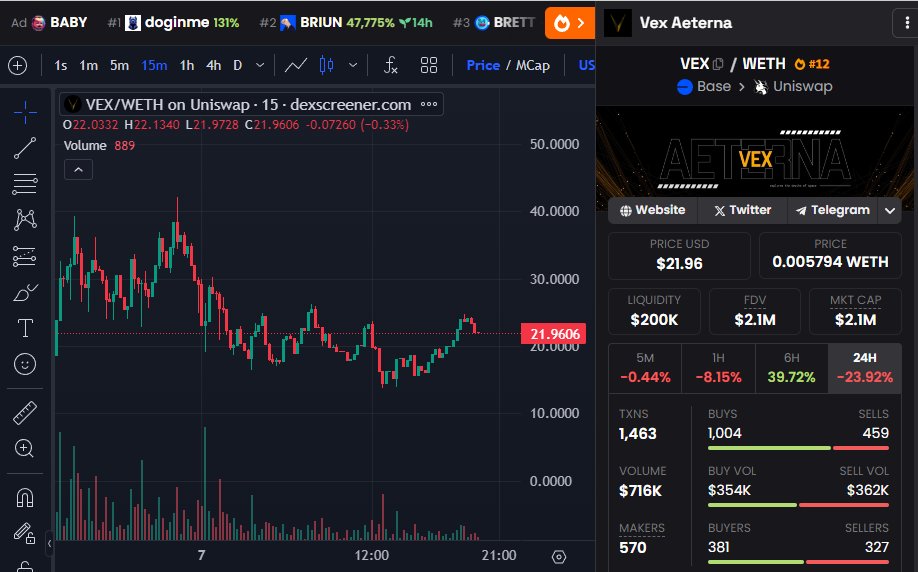
Buy a bag $VEX @VexAeterna
>Entry: 21 - 22
Vex Aeterna is a gamified staking protocol. Use ERC404 technology to make the experience more immersive and offer real in-game added value.
Chart: https://t.co/WURHEsvUAI
#Erc404 #VEX #Base