She was only a teenager when men began arguing over who would own her. Not because she had committed a crime, but because the world she had been born into was disappearing around her.
As the Armenian genocide swept across the Ottoman Empire during the First World War, Aurora Mardiganian watched neighbors disappear and family members murdered. Then she was taken captive and forced into sexual slavery. She was passed from one captor to another before ending up inside a harem, where young women were treated as possessions. Stories circulated about girls who disappeared after refusing advances. Aurora never stopped looking for a chance to escape.
Against extraordinary odds, she found one. Her journey took her across deserts, through refugee camps, and eventually to New York City in 1917. Many survivors tried to bury memories like hers. Aurora chose a different path. She believed the world needed to know what had happened.
She wrote a memoir titled *Ravished Armenia*. Then she portrayed herself in the silent film adaptation. She reenacted some of the worst moments of her own life in front of a camera, hoping strangers might finally believe what so many people would rather ignore.
The film shocked audiences, raised money for Armenian relief efforts, and became one of the earliest attempts to document genocide through cinema. Much of the film was eventually lost, and over the decades Aurora’s name faded.
She lived until 1994. Her story remains a reminder that history is not always preserved by those who hold power. Sometimes it survives because one person refuses to let the truth disappear along with the people who tried to silence it.
“To argue with a man who has renounced the use and authority of reason, and whose philosophy consists in holding humanity in contempt, is like administering medicine to the dead.”
— Thomas Paine
November 23, 1942. A British merchant ship is crossing the South Atlantic when a German U-boat puts two torpedoes into her.
She sinks in about two minutes.
One man survives. He spends the next 133 days alone on an eight foot wooden raft in the middle of the ocean.
His name was Poon Lim. He was 24 years old, from Hainan Island in China, working as a steward on the SS Benlomond. He couldn't swim well. He wasn't a sailor in the military sense. He served food.
When the torpedoes hit, he grabbed a life jacket and jumped overboard before the boilers exploded. He floated in the water for hours before he spotted an empty life raft and pulled himself onto it.
On board were some tins of biscuits, a jug of water, chocolate, sugar, a flashlight, and a few flares.
He rationed it carefully. A few sips of water. A couple of biscuits a day. He tied himself to the raft with a rope so he wouldn't be washed off in a storm. He swam laps around it every day to keep his strength up.
Then the food ran out.
So he improvised. He pulled the wire out of the flashlight and bent it into a fish hook. He unraveled rope from the raft for a fishing line. He used biscuit crumbs for bait at first, then the fish he caught.
He caught rainwater in the canvas of his life jacket. He dried fish on a line strung across the raft.
When a storm ruined his fish and fouled his water, he caught a seabird by hiding under a pile of seaweed and grabbing it when it landed.
At one point he hooked a shark. It was small, but it fought back hard. He beat it off the raft with a water jug, then ate it and drank its blood when he had no fresh water left.
And the worst part? People saw him.
A freighter passed close enough for him to see the crew. It sailed away. American patrol planes flew over and dropped a marker, but a storm moved in and they never found him again. He even reported seeing a German U-boat. It ignored him too.
He kept going anyway. He tracked the days by tying knots in a rope. After a while he stopped counting and started tracking moons.
On April 5, 1943, Brazilian fishermen spotted him near the coast of Brazil. He had drifted all the way across the Atlantic.
He had been at sea for 133 days.
He'd lost about 20 pounds. Within days he was walking on his own.
King George VI awarded him the British Empire Medal. The Royal Navy studied how he survived and added his techniques to its survival manuals.
After the war he moved to the United States, where he lived in Brooklyn until he died in 1991.
When someone told him nobody had ever survived that long alone at sea, he answered with one line.
"I hope no one will ever have to break that record."
Encore une fois, Elon Musk avait raison. Et les scientifiques vont se prendre une vraie blessure narcissique.
Il y a deux mois, j'ai dîné avec un professeur de physique quantique à Normale Sup, l'une des meilleures écoles de France.
Il se présente avec cette phrase :
"Je suis le seul prof pas gauchiste dans un marécage de profs gauchistes décroissantistes."
Ses collègues sont tous anti-IA. La raison ? Ça consomme de l'eau.
Le mec est passionnant. On part très loin : l'espace, le temps, la conscience. Des discussions complètement perchées.
Et à un moment, il me lâche :
"Tu sais, depuis les années 70, aucun sujet vraiment sérieux en physique n'est financé."
Je lui demande ce qui est financé, alors.
"Des cathédrales théoriques. Magnifiques. Qui ne servent quasiment à rien."
Je lui demande pourquoi.
"Après tout ce qui s'est passé avec le nucléaire, le monde académique s'est imposé un principe de précaution. Il a peur de trouver des choses réellement profondes."
Relisez cette phrase.
La science a peur de trouver.
C'est exactement ce que décrit François Chollet aujourd'hui : la théorie des cordes, c'est ce qui arrive quand une intelligence est coupée du réel. Elle hallucine. Elle construit des cathédrales. Elon a répondu avec un seul emoji : 🎯
Ce n'est pas un accident. C'est une capture.
Je parle souvent de Gramsci. Son idée centrale : on ne prend pas le pouvoir par la force, on prend les institutions. Universités, médias, culture. Et une fois qu'on les tient, on décide de ce qui est pensable.
La recherche n'y a pas échappé. On finance ce qui est publiable, consensuel, sans risque. On ne finance plus ce qui pourrait tout changer.
C'est pour ça que beaucoup de gens en France pleurent en ce moment. Ils sentent que leur monde factice est en train de mourir. Ce monde où un titre suffisait. Où un statut remplaçait un résultat. Où l'on pouvait passer trente ans à écrire des papiers lus par douze personnes sans jamais se confronter au réel.
Elon l'a dit sans filtre : une grande partie des PhD ne servent à rien. Et chez xAI, il a supprimé le titre de "chercheur". Il n'y a que des ingénieurs.
Le message est limpide. On ne te paie pas pour chercher. On te paie pour trouver.
La science va devoir retrouver son vrai but. Pas produire des papiers. Pas décrocher des grants. Pas briller en colloque. Comprendre le réel, et le plier.
Et l'IA va accélérer tout ça brutalement. Quand l'intelligence devient abondante, elle n'est plus le goulot d'étranglement. Ce qui compte, c'est le courage de la confronter au monde physique, encore et encore.
Alors physiciens, mathématiciens : il est temps de vous sortir les doigts du cul et de créer de la vraie valeur pour le monde.
On veut l'antimatière.
On veut l'antigravité.
On veut le warp drive.
On veut comprendre la conscience au niveau de l'infiniment petit.
Les vrais sujets. Ceux qu'on a eu peur de toucher pendant cinquante ans.
La science a été capturée. Elle va être libérée.
Et ça va faire très mal à certains egos.
“first game as Captain. it’s a special honor. just looking forward to that.”
listen in to Connor’s media following this morning’s skate ahead of tonight’s game 📺 https://t.co/7M2Fq0ky5V
@cibc | @CIBC_US
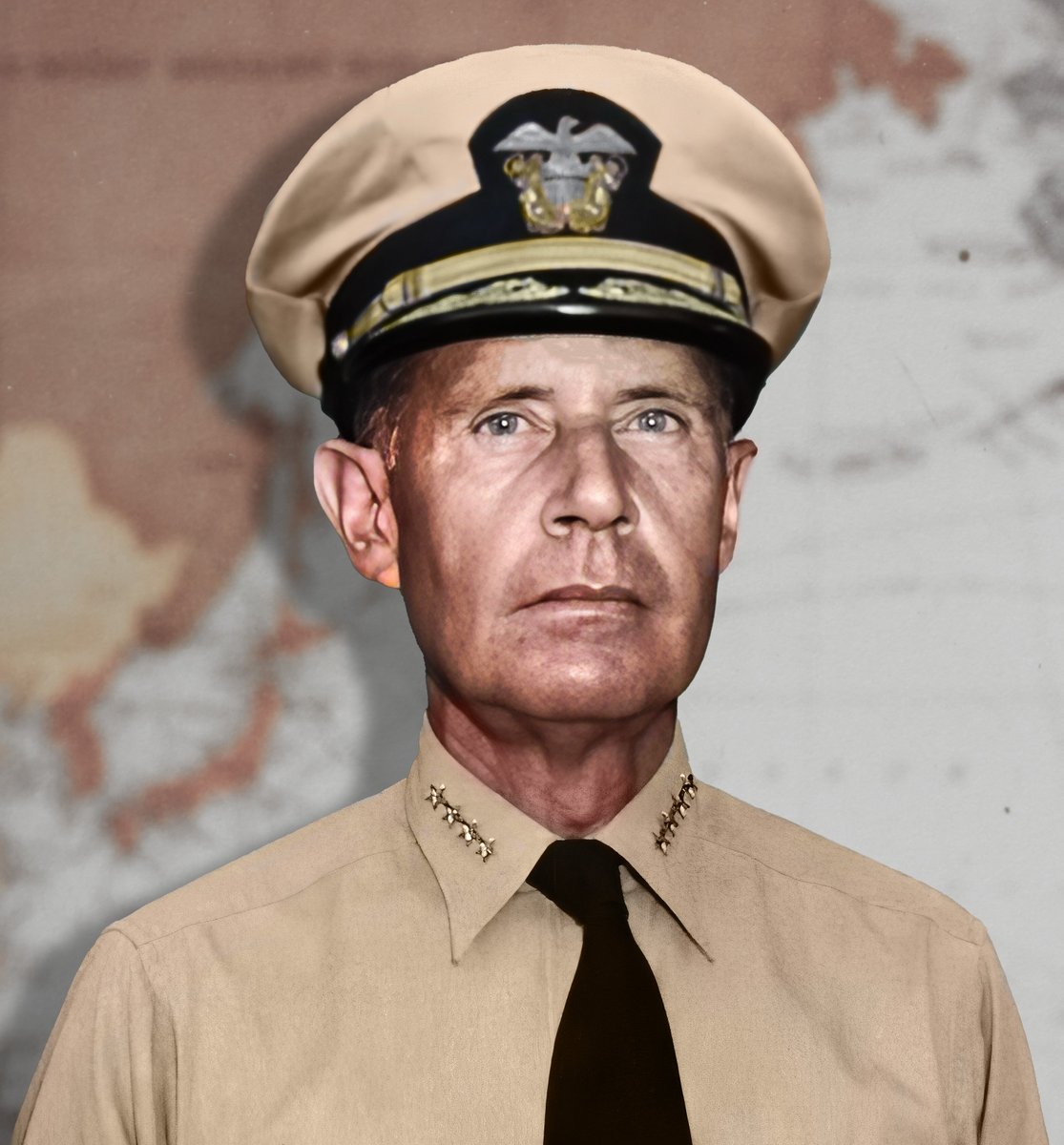
In June 1942, the most famous admiral in the US Navy was lying in a hospital bed in Pearl Harbor, covered in a skin disease so bad he couldn't sleep.
Bill Halsey was supposed to lead America's carriers into the biggest gamble of the Pacific War. Instead, he told Nimitz to give the job to Raymond Spruance.
Spruance was a cruiser admiral. Not a pilot. He had never commanded a carrier, never led an air battle, and now he was being handed two of the three flattops America had left in the Pacific, with Japan coming for Midway.
On the morning of June 4, he made the call that decided the war. Instead of waiting to close the distance, he launched nearly everything he had at long range, as early as he could, before the Japanese could hit him first. It was a huge risk. Planes would run low on fuel. Some never made it back.
By the end of the day, four Japanese carriers were burning. Akagi, Kaga, Soryu, Hiryu. Four of the six that attacked Pearl Harbor, gone in a single day.
Then came the part almost nobody talks about.
That night, every instinct said chase them. Finish it. But Spruance knew Yamamoto's battleships were out there, and in the dark his carriers would be sitting ducks against big guns. So he turned east and pulled back. Yamamoto was in fact steaming toward him hoping for a night fight. He never got it.
Spruance won the battle and then refused to lose it.
After Midway, Nimitz made him his chief of staff. The two men lived in the same quarters at Pearl and went on long walks together almost every day. Spruance was famous for those walks. Miles a day, rain or shine, thinking through the war.
Then Nimitz gave him the Fifth Fleet, and Spruance ran the Central Pacific drive. Tarawa. Kwajalein. Saipan. Iwo Jima. Okinawa.
Here's a detail most people don't know. The Navy used the same ships for two fleets. When Halsey was in command, it was Third Fleet. When Spruance took over, the exact same ships became Fifth Fleet. One admiral fought while the other planned the next campaign.
In June 1944 at the Philippine Sea, Japan threw its rebuilt carrier air force at him. American pilots shot down so many planes it got nicknamed the Great Marianas Turkey Shoot. Japanese naval aviation never recovered. Three more enemy carriers went to the bottom.
And he still got criticized. Aviators were furious he didn't charge west to chase the Japanese fleet. But his orders were to protect the Saipan landings, and he would not leave thousands of Marines exposed for a chance at glory.
Four months later at Leyte Gulf, Halsey did exactly what Spruance refused to do. He took the bait, chased a decoy force of Japanese carriers, and left an entire landing force nearly undefended. A handful of destroyers and escort carriers had to fight off Japanese battleships on their own.
Suddenly Spruance's caution didn't look so cautious anymore.
Off Okinawa in 1945, a kamikaze slammed into his flagship, USS Indianapolis. He moved to the battleship New Mexico. A few weeks later, kamikazes hit that one too. He kept commanding.
After the war, Congress had a limited number of five-star slots. Halsey got the fifth star. Spruance didn't. Congress later passed a law giving him full admiral's pay for life, which was basically an admission that he'd been shorted.
He never wrote a memoir. Never did the press tour. Never fought for his own legacy. He ran the Naval War College, served as ambassador to the Philippines, and went home.
When he died in 1969, he was buried at Golden Gate National Cemetery. Right next to him are Chester Nimitz, Kelly Turner, and Charles Lockwood. The four of them arranged it years earlier so they could rest together.
The quietest admiral of the war won its most important battle and then spent the rest of his life letting other people take the credit.
His name was Raymond Spruance. Remember it.
On January 8, 1888, 19-year-old Kate Kampen gave birth to her son, Henry Royal Kampen, alone in a freezing sod cabin on the Dakota prairie. Her husband, Wilhelm, had left the previous day to travel 23 miles to Parker for coal and food, unaware that their baby would arrive while he was gone. With their supplies nearly exhausted, the coal bin empty, and no doctor or midwife nearby, Kate faced an unimaginable situation. She wrapped her newborn in every scrap of cloth she could find, climbed into bed, and held him against her bare skin, using her own body heat to keep him alive. She had no way of knowing that an even greater danger was approaching.
On January 12, the devastating Children’s Blizzard swept across the Great Plains, bringing ferocious winds, blinding snow, and temperatures plunging far below zero. Hundreds of people were caught in the storm, and 235 lives were lost. Wilhelm was stranded in the open prairie when the blizzard struck. After his horses collapsed, he stumbled toward shelter and eventually crawled into a barn, where he survived for three days by huddling among pigs for warmth. Meanwhile, Kate remained in the cabin, holding Henry close through the freezing nights, with no fire, no help, and no certainty that her husband would ever return. For days, her own warmth and determination became her newborn’s only protection against the deadly cold.
When the storm finally passed, Wilhelm made his way home, frostbitten and barely able to stand, but alive. He built a fire, and the cabin slowly warmed again. Kate and Henry had survived against extraordinary odds. The couple went on to raise seven children, build a life on the prairie, and Kate lived into her nineties. Her story is a powerful reminder that courage does not always announce itself with grand gestures. Sometimes, it is a frightened young mother lying in the darkness, refusing to let go of her child. The world may never know the names of countless ordinary heroes, but their extraordinary acts of love and survival deserve to be remembered.
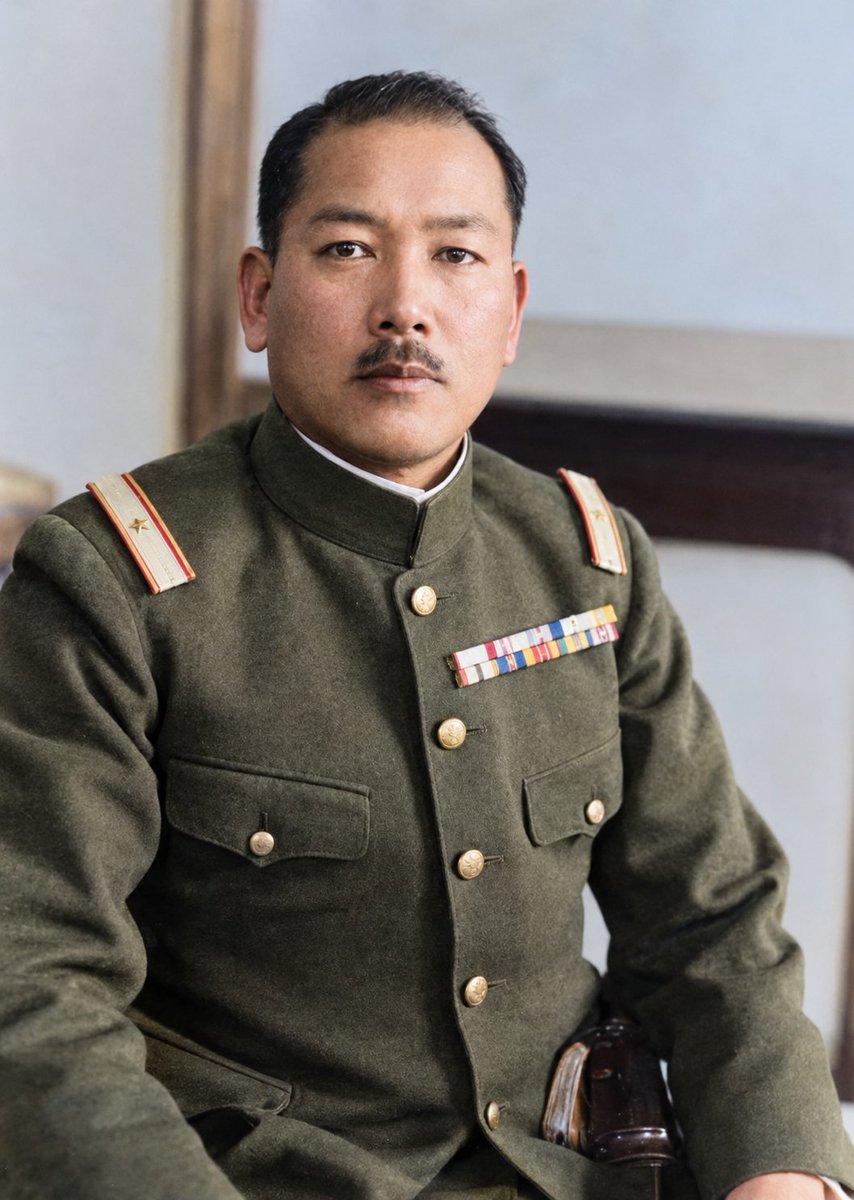
Kiichiro Higuchi might be the most underrated Japanese general of WW2, and almost nobody outside Japan knows his name.
March 1938. Jewish refugees fleeing Nazi Germany are stuck at Otpor, a Soviet railway station on the border with Manchuria. The Soviets won't let them back. Manchukuo won't let them in. They're camped out in brutal Siberian cold with almost no food.
Higuchi was the Japanese army's intelligence chief in Harbin. He arranged food, medical care, and visas, and worked with the South Manchuria Railway to get trains sent to the border to carry them out.
Japan had signed a pact with Hitler less than two years earlier. Berlin filed a formal protest. Higuchi was called before the Kwantung Army's chief of staff, Hideki Tojo, the future prime minister. As the story goes, Higuchi asked him whether Japan was supposed to be Germany's servant. Tojo let it drop.
Fast forward to 1943. Higuchi commands Japanese forces in the North Pacific when the Americans retake Attu. His garrison there fights almost to the last man. But on nearby Kiska, more than 5,000 Japanese troops are cut off. Under his command, a navy squadron slips in through the fog and evacuates the entire garrison in under an hour without losing a man.
Weeks later about 34,000 American and Canadian troops storm Kiska. The island is empty. They still take casualties from friendly fire, mines, and booby traps.
Then August 1945. Japan announces its surrender on the 15th. Three days later the Soviets invade Shumshu, the northernmost of the Kuril Islands. Higuchi, now commanding the Fifth Area Army, orders his men to fight. The battle costs the Soviets heavily and slows their timetable. Many historians believe that stand helped keep Stalin from grabbing Hokkaido and splitting Japan the way Germany and Korea were split.
After the war Moscow demanded Higuchi as a war criminal. MacArthur refused to hand him over.
He saved Jewish refugees from the Nazis, pulled off one of the cleanest evacuations of the war, and may have helped keep Japan in one piece. He died in 1970.
In 1936 the Coast Guard commissioned a 327 foot cutter named after Roger B. Taney. Most people know him as the Chief Justice who wrote the Dred Scott decision, but the ship got the name because he'd been Andrew Jackson's Treasury Secretary, and the Coast Guard fell under Treasury back then.
The ship ended up with a far better record than the man.
She was based in Honolulu before the war. In the late 1930s she ran supplies out to tiny, barren islands in the middle of the Pacific where young Hawaiian men were living as colonists so the US could claim the land.
On the morning of Dec 7, 1941, Taney was tied up at a pier in Honolulu Harbor when Japanese planes came over. Her crew manned their guns and fired back. After the attack she went out hunting for Japanese submarines and dropped depth charges on contacts off the coast.
Then she was sent to the other side of the world. She escorted convoys across the Atlantic and into the Mediterranean, and in 1944 her gunners helped fight off German torpedo bombers attacking the merchant ships she was guarding.
After that she was converted into a command ship and sent back to the Pacific. At Okinawa in 1945 she spent weeks at general quarters while kamikazes slammed into ships all around her. She came through it.
Most WWII ships were scrapped or mothballed within a few years. Taney kept working.
For decades she sat on ocean weather stations in the middle of the Pacific and Atlantic, holding one position for weeks at a time through every storm, sending back weather data, guiding aircraft, and standing by for rescues. She was one of the last cutters still doing that job when it ended in the 1970s.
In 1969 she went to Vietnam and spent months patrolling the coast, stopping supply boats and firing thousands of rounds in support of troops ashore.
In the 1980s, close to 50 years old, she was in the Caribbean chasing drug smugglers and made one of the largest marijuana seizures of her era.
She wasn't decommissioned until 1986. Pearl Harbor to the drug war, all on one hull.
Today she's the last warship from the Pearl Harbor attack still afloat. She's a museum ship in Baltimore's Inner Harbor, and you can walk the same decks her crew fought from in 1941.
Fifty years of service. Three wars. Every ocean. And most people have never heard of her.