7/7 — THE BIGGER SIGNAL
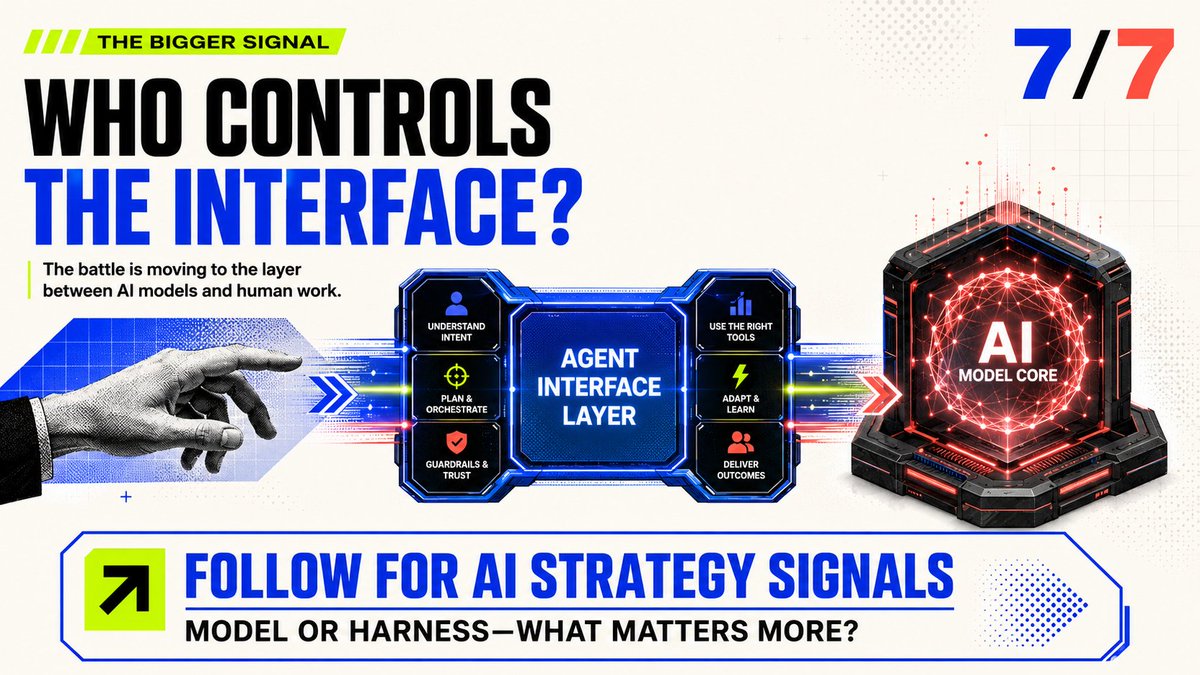
A temporary account suspension revealed a much larger battle:
Who will control the interface between AI models and human work?
Follow @jingerdman for more AI strategy signals across models, agents, semiconductors and robotics.
What matters more to you today—the model or the harness?
1/7 — WHAT HAPPENED
Developer #AlexGetman routed GPT-5.6 Sol through Claude Code using a local proxy—then his Anthropic account was suspended.
Anthropic’s #BorisCherny said the rival model was not the cause. A separate classifier likely misfired, and the account was restored.
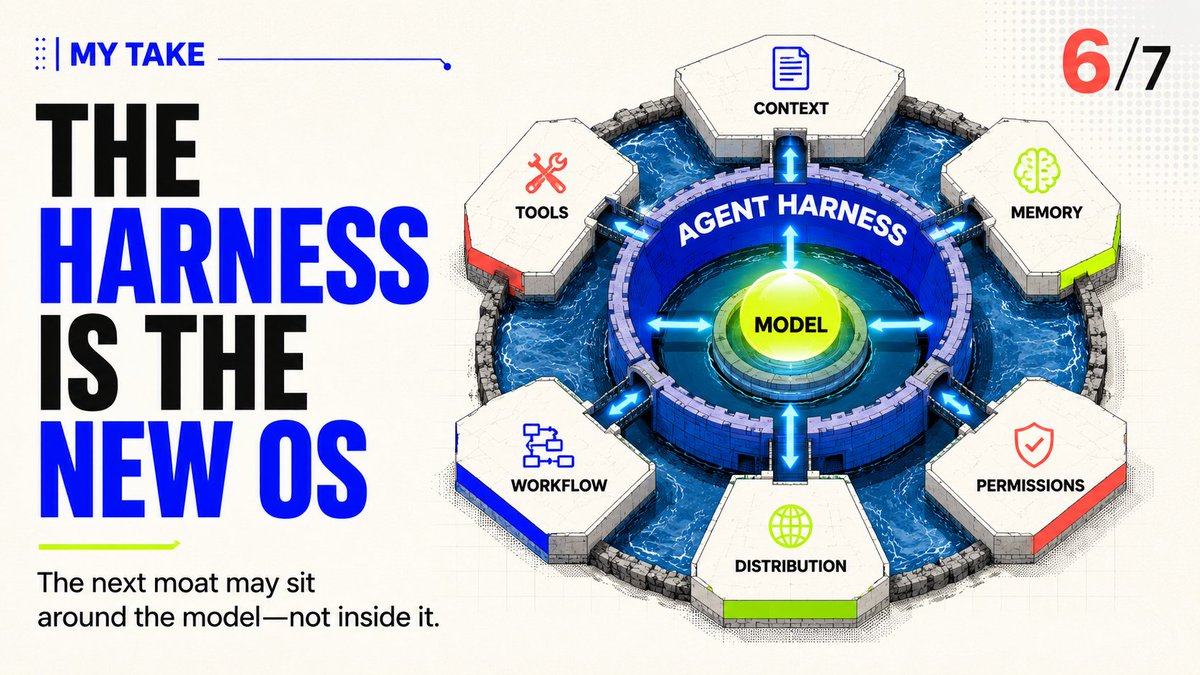
6/7 — MY TAKE
The agent harness is becoming the operating system of AI work.
As frontier models become more interchangeable, durable advantage may shift toward whoever controls:
Context + tools + memory + permissions + workflow + distribution.
The next AI moat may sit around the model—not inside it.
6/ Google still possesses one of the strongest AI stacks on Earth:
• World-class researchers
• Custom TPUs
• Global cloud infrastructure
• Massive distribution
• Deep capital reserves
The question is whether it can convert those assets into frontier intelligence without weakening the culture that created them.
1/ Google’s AI empire is entering a new era.
#DemisHassabis is stepping away from Google DeepMind’s daily operations to become its chair and Alphabet’s chief scientist.
#KorayKavukcuoglu will now oversee Gemini, frontier research and AI product execution.
This is more than a title change.
5/ Commercially, prioritizing cloud customers can make perfect sense.
Strategically, it may slow long-horizon research or push scientists toward safer, shorter-term projects.
Google must balance infrastructure revenue with the need to keep its own frontier AI teams adequately supplied.
6/ The deeper thesis:
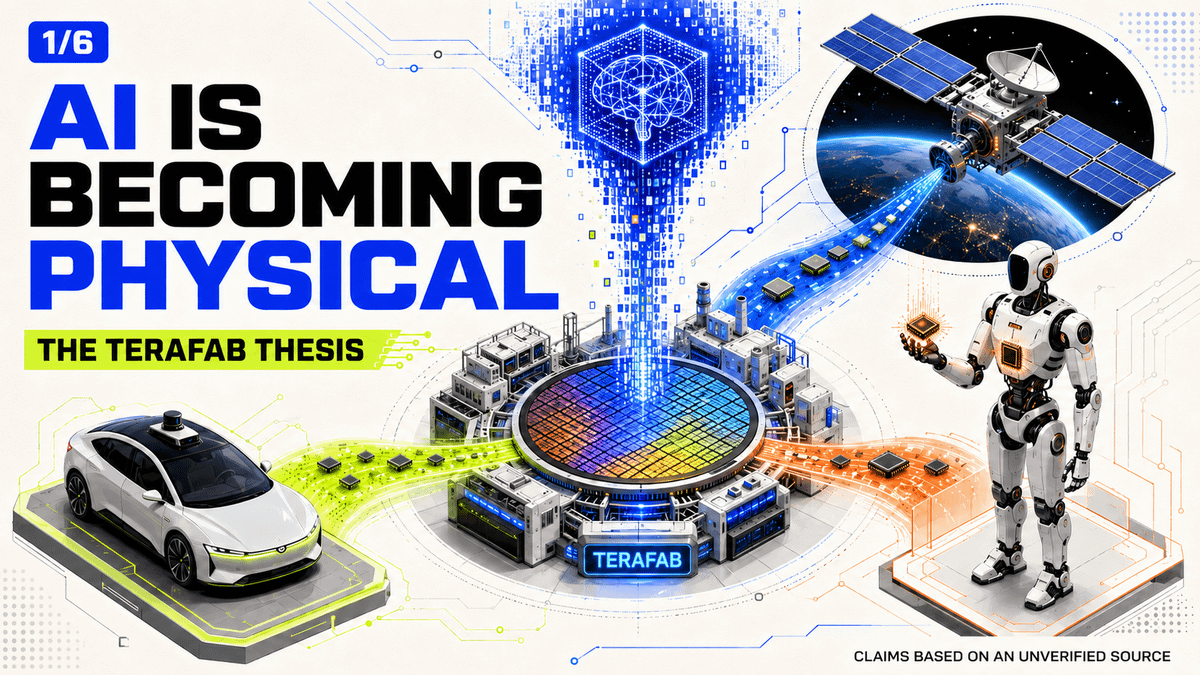
AI competition is expanding from models and software into chips, energy, factories, robots and orbital infrastructure.
The winners may not be those with the best model alone—but those capable of building the complete physical stack.
1/ AI competition may be entering a new phase.
Elon Musk’s Tesla and SpaceX could jointly develop “Terafab”—a semiconductor complex designed to support autonomous vehicles, humanoid robots and space-based AI.
5/ Yet building a fab is very different from announcing one.
The difficult parts are obtaining equipment, recruiting experienced engineers, stabilizing the supply chain and achieving acceptable yields. Capital alone cannot compress decades of semiconductor manufacturing expertise.