A seven-year-old girl was swept into a freezing river and carried toward a dam. A man jumped in to save her, but the water was so cold it took his breath away, forcing him back onto shore. Then the little girl disappeared beneath the surface.
It happened in Ontario, Canada. Emilia Fontana had fallen from a large rock into the fast-moving Blanche River. Alec Daviau, a 39-year-old university student, raced along the riverbank, desperately trying to keep up with her.
After losing sight of Emilia, Alec climbed a hill to search the water below. That’s when he spotted something beneath the surface that he thought might be her.
He slid down the bank and jumped back in. The water was too murky to see through, so Alec began reaching blindly beneath the surface. Suddenly, his fingers caught something. It was Emilia’s hair.
He grabbed her and fought his way back to shore, but the little girl wasn’t breathing. She had no pulse.
Alec and others immediately began CPR, desperately trying to bring her back. Their efforts worked, and Emilia was rushed to the hospital, where she recovered.
Alec had already been forced out of that river once, but when he saw another chance to save Emilia, he didn’t hesitate. A little girl is alive today because he refused to give up on her. He deserves recognition for this one.
@rishibagree To be fair, as a Modi ji's appreciater & from a general category most feel the same way towards BJP...
Ifnot for Rahul Gandhi as an opposing leader, BJP would face tough fights...
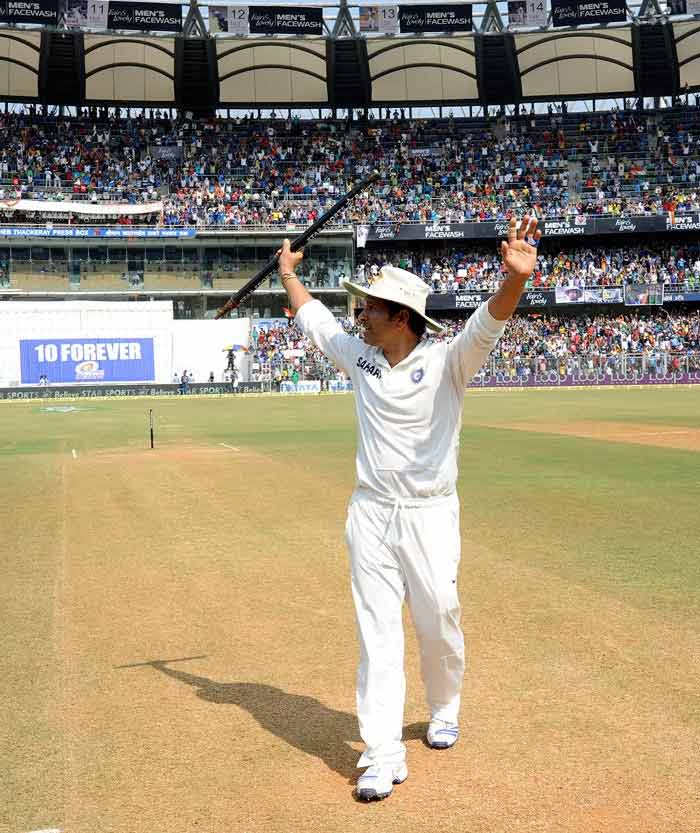
Thirteen years ago today ... Sachin Tendulkar prepares to walk out to resume his final Test innings, Mumbai, November 15th 2013 (Atul Kamble) MCC-Wisden Photograph of the Year 2013
Since today is the day that the God of Cricket - Sachin Ramesh Tendulkar retires from all forms of cricket, let it be knows that God himself through his foundation is the reason I could completely my Engineering Education.
I was on a scholarship through his NGO, for all 4 years of my Bachelor's degree. The eligibility was purely on merit, and for families that have an income below a certain threshold (I don't remember the exact number).
All I had to do was maintain a CGPA over 8, and prove myself as a competent engineer through awards won at technical competitions. And for the record - not getting approved for the scholarship in a year would have meant that I'll be packing my bags and going back home, because God knows that my family didn't have enough to pay for college and living expenses.
So - I've always wished a Happy retired life to the God of Cricket every time that I pray, and today is no different.
1,200 YEARS AGO, BUILDERS IN INDIA CARVED AN ENTIRE HINDU TEMPLE OUT OF A MOUNTAIN. THEY DIDN'T BUILD IT UP. THEY CUT IT DOWN.
I think Kailasa Temple at Ellora, India, is one of the greatest construction achievements in human history.
Built mainly during the 8th century CE, this enormous temple was carved directly from a solid basalt cliff.
he builders didn't stack stones to create the temple.
They started cutting into the mountain from above, removing enormous amounts of solid rock until the temple began taking shape.
Every pillar, doorway, staircase, balcony, and sculpture had to be planned around the rock that would remain.
Make a serious mistake and you couldn't simply replace the damaged section.
The temple includes multi-storey buildings, enormous elephants, carved columns, and detailed scenes from Hindu mythology.
One massive sculpture shows Ravana attempting to lift Mount Kailasa, the sacred home of Shiva.
And all of this was accomplished without modern cutting machines or heavy construction equipment.
The workers had to break away the basalt, remove the waste, shape the remaining surfaces, and then carve the extraordinary details.
The exact number of workers and the total construction time are not known.
But the amount of planning and physical labour involved is almost beyond belief.
I find this more impressive than many conventional temples because the builders were working with a single mountain.
A Pakistani Audience Member Tries To Pass Himself Off As Indian, Gets Caught On Stage
A stand-up comedian's simple question about his nationality turned into an awkward moment when the audience member initially appeared to claim he was Indian, only to eventually admit he was from Pakistan.
The comedian caught the hesitation almost instantly, leaving the audience in splits.
Rahul Gandhi: I rang Mummy and said I want Bhindi for dinner. BJP tapped my phone and conveyed it to Amit Shah who briefed Modi who told Adani who personally flew over and rushed to Azadpur Mandi and bought every last Bhindi he could lay his hands on.
I am having Kaddu tonight.
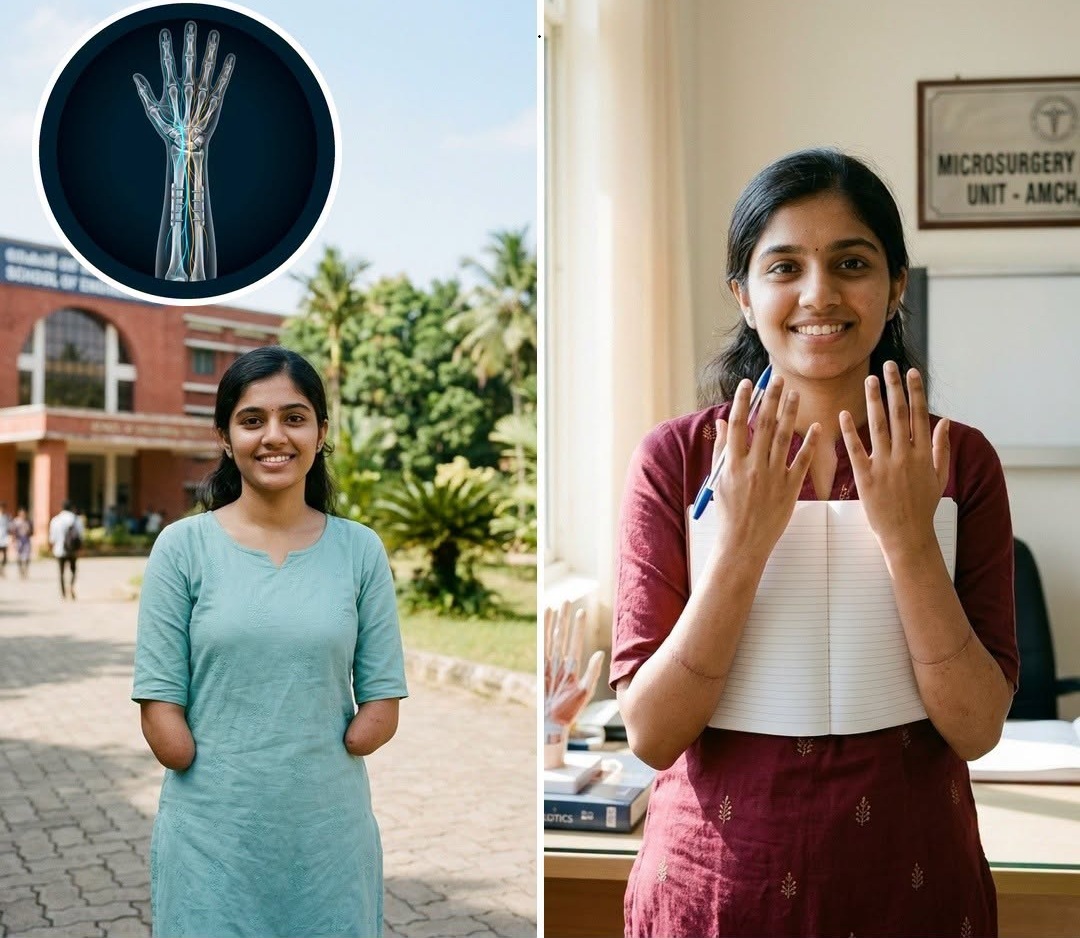
When 19-year-old chemical engineering student Shreya Siddanagowda lost both arms in a devastating bus crash on her way to college in 2016, doctors told her that upper-limb transplants in Asia were virtually unheard of.
One year later, at Amrita Hospital in Kochi, India, a team of 20 reconstructive surgeons and 16 anesthesiologists led by Dr. Subrahmania Iyer performed a grueling 13-hour operation — achieving Asia’s first upper-extremity double arm transplant and the world’s first male-to-female bilateral hand transplant, using limbs donated by Sachin, a 20-year-old male college student.
What happened over the next three years stunned reconstructive surgeons worldwide:
• Reconnecting Bones, Arteries, Tendons & Nerves: Surgeons plated both donor radius and ulna bones to Shreya’s residual arms, microscopically sutured arteries and veins to restore blood flow, and spliced dozens of flexor tendons and peripheral nerve trunks so her brain could learn to drive the new hands.
• Biological Remodeling of Male Limbs: Immediately after surgery, the male donor arms were bulkier, hairier, and noticeably darker in complexion than Shreya’s natural skin tone. Over three years of nerve reinnervation, hormonal circulation, and lymphatic remodeling, muscles subtly slenderized to match her frame — and her body gradually lightened the donor skin’s melanin pigment until the hands blended seamlessly with her own arms.
• Writing Her Own Exams Again: After nearly two years of intensive neuromuscular rehabilitation, Shreya regained fine finger dexterity — returning to university to hand-write her own engineering exams.
Source : @engineeringpost
Chinese Propaganda Bloggers in Bangladesh story continues.
Now they are arguing with the local Bangladeshi population in Dhaka after getting caught & exposed.
Most of these Chinese bloggers were making videos of Bangladesh Slums and showing it as India.