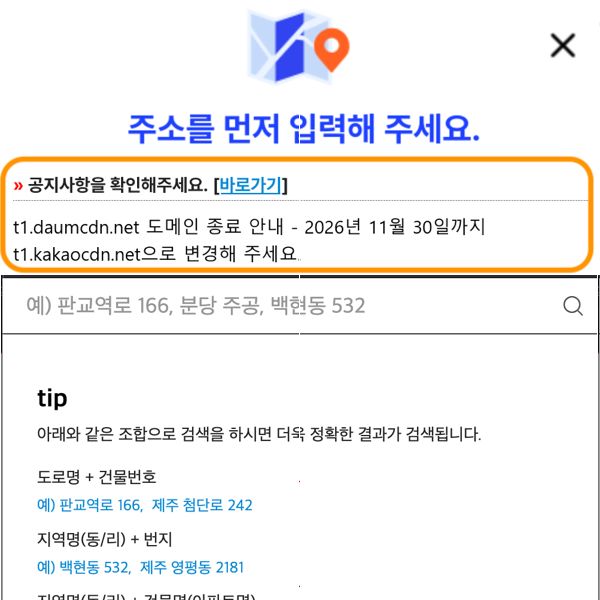
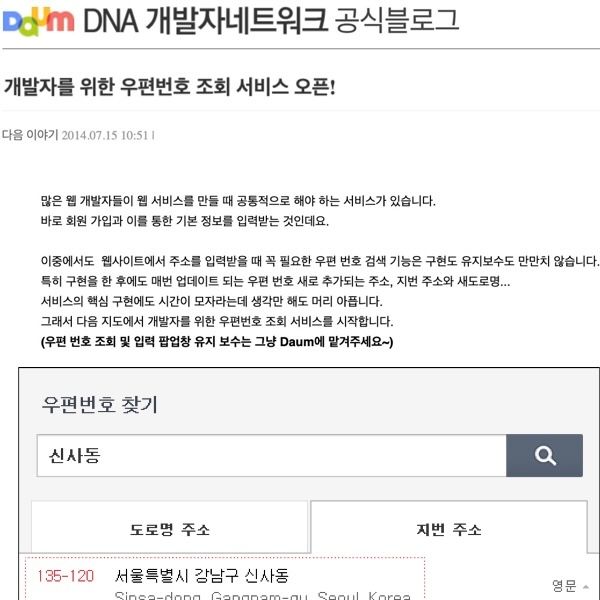
제가 Daum에서 오픈한 API 서비스 중, 가장 자랑스러운 것 중 하나가 '개발자를 위한 우편번호 조회 서비스'였는데요. 이제 12년이 흘러서, 라이브러리 호스팅 도메인을 교체해야 하나 보네요. Daum과 Kakao 도메인 분리 때문인것 같습니다. 오랜 기간 하위호환성을 유지해왔지만, 개발 유지 보수가 안되는 사이트를 위해서, 아예 일반 사용자에게 공지를 해야 하나 봅니다. 이 공지가 보이는 웹 사이트는 11월말까지 수정하시기 바랍니다. 🤣
구. Daum 우편번호 조회 서비스가 제공 되기 전까지는, 개별 웹 사이트 회원 가입 시, 우편 번호 검색 기능은 구현도 유지보수도 만만치 않았습니다. 매번 업데이트 되는 우편 번호, 새로 추가되는 주소, 지번 주소와 도로명 주소 등등... 그동안 개발자들의 수고를 많이 덜어주었을 뿐만 아니라 국민 편익에 상당히 영향을 주었습니다. 앞으로도 중단되지 않고 계속해서 서비스를 제공해 주었으면 하는 바램이네요.
🚨 FALLO CRÍTICO en Apache: un atacante puede ejecutar comandos en tu servidor, sin login, si tienes HTTP/2 activado.
CVE-2026-119618, CVSS 9.8.
La vulnerabilidad se encuentra en mod_http2, el módulo que sirve HTTP/2, y afecta a las versiones desde la 2.4.55 hasta la 2.4.70.
El fallo ya se encuentra corregido en la versión 2.4.71, que salió ayer.
Si tienes Apache, haz esto hoy:
➡️ Revisa la versión con `apache2 -v` o `httpd -v`.
➡️ Busca h2 en la directiva Protocols de toda la configuración, virtual hosts incluidos: `grep -ri protocols /etc/apache2` (o /etc/httpd).
➡️ Si sale y no puedes actualizar hoy, deja `Protocols http/1.1` (y reinicia) hasta que llegue el parche.
Exemple : "Injection de prompt basée sur l'image : Détournement des LLM multimodaux via des instructions adverses intégrées visuellement"
https://t.co/78ryy1yzC4
Here's another RCE that works on the "patched" Windows @telegram client.
Even if individual bugs get patched, allowing (unsandboxed!) QuickJS in messages massively opens up the attack surface.
AI has been the main driver of web3 security teams reinventing themselves this year and building many open source tools along the way
Many of them are listed in the repo below (accepting PRs as well) - make sure you take advantage🫡
https://t.co/3kHYw4ct3E
your HDMI cable can leak what’s on your screen
watch the laptop on the left. it reconstructs the video playing on the monitor beside it from radio signals leaking out of the HDMI connection
this is TempestSDR. an antenna picks up the leakage, a HackRF radio captures it, and software turns it back into an image
researchers took this further with Deep-TEMPEST, using AI to make recovered images and text easier to read. this clip shows the original technique
quality depends on shielding, distance and interference. the picture is imperfect, but recognizable content still gets through
a wired connection can still leave a wireless trace
some alpha drop for doing inexpensive vuln research.
instead of writing an article on the prompts/process behind this bounty (and more), I am dropping some prompts and the thought process I used as part of this research.
ik you might say prompts don't matter much, frontier models' baseline intelligence can rawdog vuln discovery (and it is true to a good extent), but there is a high chance that you either do not have access to cyber models, or even if you do, they are expensive (and with heavy guardrails). The idea is, these prompts work well with open-weight/less expensive models. Not saying these will outperform the raw intelligence and capabilities of frontier models, but open-weight models perform much better with a bounded/goal-specific approach (where the goal is set, and the search space is massive) rather than open-ended exploration (where the goal is vague, and the search space is massive).
anyway, here are some prompts. I don't need to share much, because you can just create variations of these and apply them wherever you wish.
- find places where the app is supposed to enforce something, but doesn't actually enforce it.
- find security rules that are enforced in one part of the app, but just assumed to be true in another.
- find security assumptions the app relies on, but never actually checks or enforces.
- find places where the app depends on undocumented behavior, and what happens if that behavior changes.
- find operations that are secure on their own, but become vulnerable when you combine or chain them together.
- find cases where the same object can be accessed in different ways, but each way ends up having different permissions.
- find objects whose identity can be changed or rebound to another user, without going through the right checks.
- find requests that get rejected or fail, but still end up changing something or triggering a side effect.
- find security checks that only work if certain events happen in a specific order, and what happens if that order changes.
- find operations where the transaction fails or rolls back, but some of the side effects still happen.
- find things you can still do with an object even after it has been deleted, or access to it has been revoked.
- find state changes that can be reversed or undone by someone who shouldn't have permission to do so.
- find objects that can end up in two contradictory states at the same time, and what operations become possible because of that.
I take such prompts, put it in a mutator (which has threat model of the project I am doing sec engagement), the mutator will mutate the prompts based on the threat model, and spawn swarm of agents, with different starting prompt and a bounded goal, the process repeats till all paths are exhauted, or some new signal is generated, which then feeds back to mutator.
Doing this using a cheap model is very effective and sometimes it might yield you something even expensive models miss, we are just trying to maxximise the search space, from as many angles as possible, and once this process generates enough signals, just use a frontier model to confirm/triage issues, or for finding similar variants of such issues, that's basically it. There is v less moat is making a custom harness (unless you are an elite vuln research who can codify their approach in it or a 100x agentic engineer, I am neither).
🚨Security Researchers: stop using chatgpt daybreak
>"from November 29 we may use your Daybreak Blue sessions to improve our models"
>"even when the 'improve the model for everyone' setting is off"
>personal accounts, no opt-out
>they made me turn the setting OFF
>then decided to train on it anyway
>"it's for safety :^)"
>tfw your 0days are now training data
CHAINALYSIS HACKED IN AI-POWERED CYBERATTACK
Blockchain analytics firm Chainalysis says hackers used “offensive agentic techniques” to gain unauthorized access to its internal systems and tools.
The breach exposed customer names, email addresses, user IDs, and organizational roles.
Chainalysis says it has found no evidence that passwords, MFA secrets, session tokens, or sensitive investigation data were compromised.
The company says the attack is unrelated to the recent $6 billion Binance hack.
Binance's initial investigation suggests that the security incident may involve a compromised DevOps engineer’s laptop, which allowed an attacker to gain access to a service container and submit unauthorized withdrawal transactions. We have found no evidence of any wallet private key leak. We will share a detailed technical post-mortem once the investigation is complete and the facts are fully verified.
The estimated total impact sits at around $6.3B. We have worked with blockchain partners to freeze affected assets, with ~$3 billion frozen on-chain so far.
Binance will cover all losses from the SAFU fund and the company’s funds. User funds are safe. We will also publish an updated Proof of Reserves once the remediation is complete.
As an immediate precaution, Binance has:
- temporarily suspended deposits and withdrawals while security checks are completed;
- revoked the affected address authorisation;
- engaged law enforcement and blockchain intelligence partners to trace and recover funds.
Our teams are working around the clock to resolve this issue safely and thoroughly. We are working closely with our law enforcement partners to confirm the identity of these criminals and bring them to justice.
Please rely only on official Binance channels for updates. Please feel free to contact Binance Customer Support if you have any further questions.
https://t.co/ywB2mKFy0p
🔴 CVE-2026-98432 | Linux Kernel – Critical UAF
Linux çekirdeğinde TCP/IPv4 bağlantı işleme sürecini etkileyen, uzaktan istismar potansiyeline sahip bir Use-After-Free (UAF) açığı tespit edildi.
● CVSS 3.1: 9.8 (Critical)
● Ağ üzerinden istismar
● Kimlik doğrulama gerektirmiyor
● Bellek güvenliği ve sistem kullanılabilirliği riski
Sistem yöneticileri, linux dağıtımlarının güvenlik duyurularını takip ederek yamalı sürümlere geçmelidir.
https://t.co/OumHFjqTXx