“Fellow Citizens, I am not wanting in respect for the fathers of this republic. The signers of the Declaration of Independence were brave men. They were great men too — great enough to give fame to a great age. It does not often happen to a nation to raise, at one time, such a number of truly great men. The point from which I am compelled to view them is not, certainly, the most favorable; and yet I cannot contemplate their great deeds with less than admiration. They were statesmen, patriots and heroes, and for the good they did, and the principles they contended for, I will unite with you to honor their memory.
“They loved their country better than their own private interests; and, though this is not the highest form of human excellence, all will concede that it is a rare virtue, and that when it is exhibited, it ought to command respect. He who will, intelligently, lay down his life for his country, is a man whom it is not in human nature to despise. Your fathers staked their lives, their fortunes, and their sacred honor, on the cause of their country. In their admiration of liberty, they lost sight of all other interests.
“They were peace men; but they preferred revolution to peaceful submission to bondage. They were quiet men; but they did not shrink from agitating against oppression. They showed forbearance; but that they knew its limits. They believed in order; but not in the order of tyranny. With them, nothing was “settled” that was not right. With them, justice, liberty and humanity were “final;” not slavery and oppression. You may well cherish the memory of such men. They were great in their day and generation. Their solid manhood stands out the more as we contrast it with these degenerate times.
“How circumspect, exact and proportionate were all their movements! How unlike the politicians of an hour! Their statesmanship looked beyond the passing moment, and stretched away in strength into the distant future. They seized upon eternal principles, and set a glorious example in their defense. Mark them!
“Fully appreciating the hardship to be encountered, firmly believing in the right of their cause, honorably inviting the scrutiny of an on-looking world, reverently appealing to heaven to attest their sincerity, soundly comprehending the solemn responsibility they were about to assume, wisely measuring the terrible odds against them, your fathers, the fathers of this republic, did, most deliberately, under the inspiration of a glorious patriotism, and with a sublime faith in the great principles of justice and freedom, lay deep the corner-stone of the national superstructure, which has risen and still rises in grandeur around you.
“Of this fundamental work, this day is the anniversary. Our eyes are met with demonstrations of joyous enthusiasm. Banners and pennants wave exultingly on the breeze. The din of business, too, is hushed. Even Mammon seems to have quitted his grasp on this day. The ear-piercing fife and the stirring drum unite their accents with the ascending peal of a thousand church bells. Prayers are made, hymns are sung, and sermons are preached in honor of this day; while the quick martial tramp of a great and multitudinous nation, echoed back by all the hills, valleys and mountains of a vast continent, bespeak the occasion one of thrilling and universal interest — a nation’s jubilee.”
- Frederick Douglass
Like many others, I have been alarmed by the success of certain politicians in our country who identify as extreme socialists or communists.
This is not a matter of classical liberals triumphing over standard-issue conservatives; this is the victory of people who stand athwart the fundamental principles that undergird our country.
There are many reasons why I detest Communism, but I want to draw attention to just one issue of supreme importance.
Karl Marx said that the first critique is the critique of religion. He meant that, before a complete re-working of the politics and economics of a society can take place, religion has to be taken down.
This is because religion, as he saw it, is the “opium of the masses,” a drug taken to dull our sensitivity to the suffering caused by economic exploitation. As long as the suffering populace is lured into complacency by fantasies about God's providence and the promise of eternal life, they will never rise up and throw off their chains.
But there is a second reason why the elimination of religion is of paramount significance for Marx.
Communism aspires to be a totalizing system, involving the government's control over education, entertainment, communication, politics, and especially economics.
What stands resolutely athwart this ambition is religion, which declares that all of these societal expressions are finally under the judgment of God. So, if you want Communism to succeed, religion has to be stamped out.
If you doubt me on any of this, I would encourage you to read the recent histories of China, Russia, Cuba, Nicaragua, Vietnam, Cambodia, and Venezuela. Revisit those histories and tell me I'm wrong about the attack on religion.
Might I encourage my fellow believers in God not to be complacent in the face of this very troubling development in the American body politic?
The Vice of Sloth can manifest in physical laziness — but it is more than that.
Sloth is a sadness of spirit — a reluctance to face reality and rise to be the man God created you to be.
So while Sloth can look like laziness, it can just as easily look like workaholism, never taking a sabbath, being on the phone instead of paying attention to wife and kids, feeling too busy to make time for prayer, and turning to things like social media/drugs/alcohol/noise as a way to cope with anxiety and not have to be alone with one's thoughts.
God's commandment to keep the Sabbath day holy is a direct attack on both Pride and Sloth. On Sundays we are called to put aside servile work as much as possible — but NOT to make room for doomscrolling, watching sports, drunkenness, and gluttony.
Rather, the Sunday space is made for true and holy LEISURE — the opposite of SLOTH: worship, rest, recreation, quality time with family and friends, etc.
Like Pride, Sloth is selfish, turned in on itself — it is fundamentally opposed to Charity.
“This sorrow (Sloth) is a lack of magnanimity; it lacks courage for the great things that are proper to the nature of the Christian. It is a kind of anxious vertigo that befalls the human individual when he becomes aware of the height to which God has raised him.
One who is trapped in acedia (Sloth) has neither the courage nor the will to be as great as he really is. He would prefer to be less great in order thus to avoid the obligation of greatness.
Acedia (Sloth) is a perverted humility; it will not accept supernatural goods because they are, by their very nature, linked to a claim on him who receives them. ”
— Josef Pieper
Every human being is worthy by the mere fact of having been willed, created, and loved by God. There is no situation that causes the Lord to turn His gaze away from us. It is a consoling truth that accompanies us at all times and reminds us that His merciful love always outweighs whatever good or evil we may have done. #ApostolicJourney
https://t.co/W0PUAtuB92
Charity admits no delay. Our responsibility before those in need makes every encounter with others a unique and unrepeatable moment of grace for love, not to be missed or postponed. The love of Christ impels us toward our brothers and sisters, and the charity and care with which we respond are the test of our faith. #ApostolicJourney #Spain
Deep inner suffering inevitably arises when the human person is reduced to performance, consumption, or a statistical datum. Many young people today live under the yoke of expectations to perform, immersed in an exasperated competitiveness that generates anxiety, fear of not measuring up, and disorientation.
One of the toughest jobs in education is being a principal.
Every day, principals are balancing mandates, district expectations, meetings, parent concerns, student needs, staffing issues, budgets, discipline, testing pressures, and a thousand other responsibilities most people never see.
And somehow in the middle of all that, the best principals still find ways to encourage their teachers.
They show up in classrooms. They check on people. They celebrate small wins. They protect staff when they can. They try to keep morale up even when they’re exhausted themselves.
Great principals live in the tension between leading systems and leading people.
And the ones who never lose sight of their staff in the middle of all the pressure deserve more appreciation than they often receive.
To the principals who continue fighting for kids while also trying to support, encourage, value, and appreciate their teachers:
Thank you.
Your staff may not always see everything you do behind the scenes, but your presence, support, and leadership matter more than you know.
Education is still a people business. And great principals never forget that. @NAESP @NASSP
When the 2026 World Cup was announced for the United States back in 2018, I told myself there was no way I’d miss it. I was going to be there in person, experiencing a World Cup on home soil and I know so many of you felt the exact same way.
Fast forward to now, and the ticket prices are completely astronomical. Outrageously unaffordable. What was supposed to be the dream of a lifetime has been priced out of reach for regular fans like me. I’m going to miss watching my country host the biggest event in sports… something I may never get to experience again in my lifetime.
Yes, they’re going to make money off this massive event on U.S. soil. But the greed has gone too far. It’s ruining the beautiful game and turning it into something only the wealthy can enjoy. A World Cup should be for everyone not just those who can drop thousands without blinking.
This is an absolute shame.
Even today there are tombs to be opened, and often the stones sealing them are so heavy and so closely guarded that they seem to be immovable. Some weigh heavily on the human heart, such as mistrust, fear, selfishness and resentment; others, stemming from these inner struggles, sever the bonds between us through war, injustice and the isolation of peoples and nations. Let us not allow ourselves to be paralyzed by them! #Easter
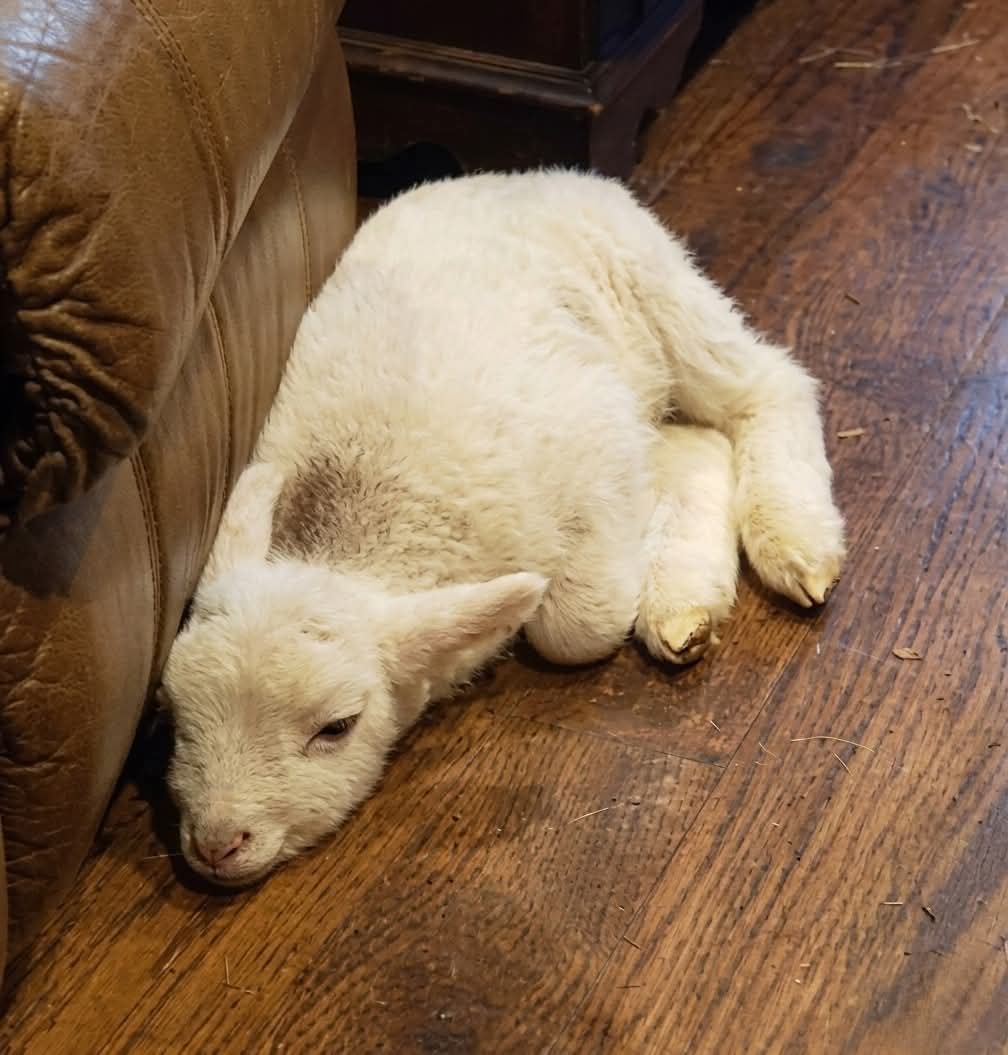
Every once in a while, a ewe will give birth to a lamb and reject it. There are many reasons she may do this. If the lamb is returned to the ewe, the mother may even kick the poor animal away. Once a ewe rejects one of her lambs, she will never change her mind. These little lambs will hang their heads so low that it looks like something is wrong with its neck. Their spirit is broken. These lambs are called “bummer lambs.” Unless the Shepherd intervenes, that lamb will die, rejected and alone. So, do you know what the Shepherd does? He takes that rejected little one into His home, hand-feeds it and keeps it warm by the fire. He will wrap it up with blankets and hold it to His chest so the bummer can hear His heartbeat. Once the lamb is strong enough, the Shepherd will place it back in the field with the rest of the flock. But that sheep never forgets how the Shepherd cared for him when his mother rejected him. When the Shepherd calls for the flock, guess who runs to Him first? That is right, the bummer sheep. He knows His voice intimately. It is not that the bummer lamb is loved more, it just knows intimately the One who loves it and has experienced that love one on one. So many of us are bummer lambs, rejected and broken. But He is the good Shepherd. He cares for our every need and holds us close to His heart so we can hear His heartbeat. I am a bummer lamb adopted and loved by The Good Shepherd!! Hallelujah!!
Frodo leaving the Shire is one of the most beautiful and heartbreaking endings in all of literature. He won. The Ring was destroyed. The Shire was saved. And he couldn't stay.
Not because he didn't want to. But because the journey cost him more than anyone around him could see. He carried the weight of the world's evil on his body and soul, and even though the Ring was gone, the scars weren't.
That's Tolkien writing the truest thing he ever wrote: some suffering in this life cannot be healed in this life. There are wounds - spiritual, physical, emotional - that only eternity can restore.
Frodo’s departure isn’t a sad ending, it’s the hope of heaven for someone who gave everything and was broken by it. It's about the promise that what was broken will be made whole. Just not here. And not yet.
I was watching Monsters Inc. with my kids the other night. It’s one of my all time favorite Pixar films.
But this time , I noticed a theme in the movie that was fascinating in connection with religion and Christianity specifically…
In the movie, the City of Monstropolis is literally running on fear. Screams power the city. And when supply runs short, the establishment’s answer is simple…
Scare harder.
And never question the system.
Mr. Waternoose and Randall threaten to silence anyone who threatens their system. But then Sully discovers something by accident. Boo’s laughter generates more energy than fear ever could. The very thing the system was suppressing (the joy of a child) was the most powerful force in the room.
This is a near-perfect picture of the difference between Christianity and every other religion on earth.
Every other religious system is fear-based.
Do enough.
Perform enough.
Earn your way past judgment.
The energy it produces is real, but it is exhausting and hollow.
Christianity runs on something entirely different. The Apostle John writes that “perfect love casts out fear, and that we have no fear of judgment because of what Christ has already done.” (1 John 4:18) It is the love of God that compels us to obey and serve Him, not the threat of wrath.
And just like Mr. Waternoose in Monsters Inc, there are those even within the church who would rather keep you afraid than let you discover how much more powerful grace and the love of God actually is.
The movie has a happy ending when the old system is destroyed and Sully leads the city into a new era of using love and joy as a new system to run the city on.
And so too has Christ done away with the fear of the law and judgment and given us hope in His righteousness that lets us come boldly to the Father as His forgiven children.
If Aristotle is right and happiness is the state of the soul in an activity of excellence, then off loading all our creative and intellectual work to AI will make us supremely miserable.
Each day, God has a special plan for us and specific work to do. He desires our generous availability and enthusiastic response: “Here am I, Lord; I come to do your will.” Let the Lord lead you where he needs you to be today. To love him means to do his holy will.