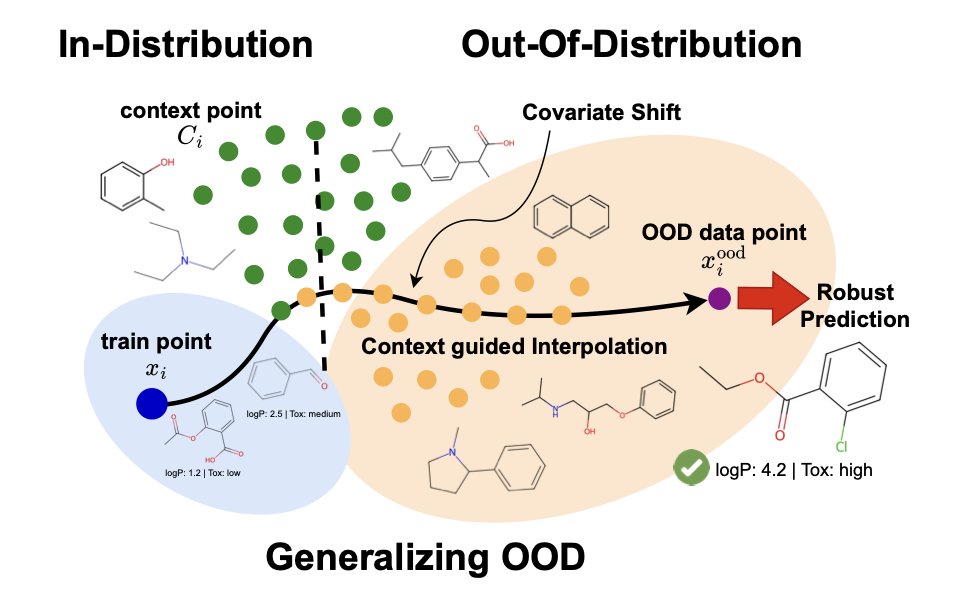
✨Excited to share our new work "Robust Molecular Property Prediction via Densifying Scarce Labeled Data", accepted by GenBio ICML Workshop 2025!
arxiv : https://t.co/YM1d9n0TBu
Special thanks to all the collaborators @TheOneJeffrey@andreisbru and our advisor, @SungJuHwang1
The Department of AI Computing at KAIST is hiring new faculty members!
If you are interested in faculty positions at KAIST AI Computing, feel free to reach out by filling out this short interest form:
https://t.co/DxD02XvOJW
Heading to #ICML in Seoul! 🇰🇷
I’m currently exploring how to improve small coding agents and train models with feedback. If you're working on this too, let's grab coffee! ☕️
⚡️ Bonus: My quick Korea travel guide: https://t.co/LsvypXpqFA
Feel free to share the link 🙌🏻
Personalization assumes you need history with a user. What if you don't?
Cold-start is hard: each task&user has many preference dimensions, but each user only cares about a few.
A few strategic questions is all you need, if u know how preferences correlate across population👉🏻🧵
Introducing ⚓ 𝗔𝗻𝗰𝗵𝗼𝗿𝗲𝗱 𝗗𝗲𝗰𝗼𝗱𝗶𝗻𝗴: a copyright mitigation strategy for any language model! With @uwnlp
LMs today reproduce copyrighted text—raising concerns for creator consent and potential legal (and 💸 💸) liabilities for AI developers. 🫠
𝗔𝗻𝗰𝗵𝗼𝗿𝗲𝗱 𝗗𝗲𝗰𝗼𝗱𝗶𝗻𝗴 relies on two off-the-shelf LMs:
🧼A 𝘀𝗮𝗳𝗲 𝗟𝗠 trained only on permissively licensed text,
⚠️A higher-utility 𝗿𝗶𝘀𝗸𝘆 𝗟𝗠 trained on any data.
The 𝗿𝗶𝘀𝗸𝘆 𝗟𝗠 drives generation, but the 𝘀𝗮𝗳𝗲 𝗟𝗠 acts as an anchor. If the 𝗿𝗶𝘀𝗸𝘆 𝗟𝗠 drifts into memorization, the 𝘀𝗮𝗳𝗲 𝗟𝗠 pulls it back ↩️.
🤝We provide a formal guarantee: outputs stays within a user-set budget of the 𝘀𝗮𝗳𝗲 𝗟𝗠.
Details below! 👇
[1/⚓]
RL is bounded by finite data😣?
Introducing RLVE: RL with Adaptive Verifiable Environments
We scale RL with data procedurally generated from 400 envs dynamically adapting to the trained model
💡find supervision signals right at the LM capability frontier + scale them
🔗in🧵
[1/n]
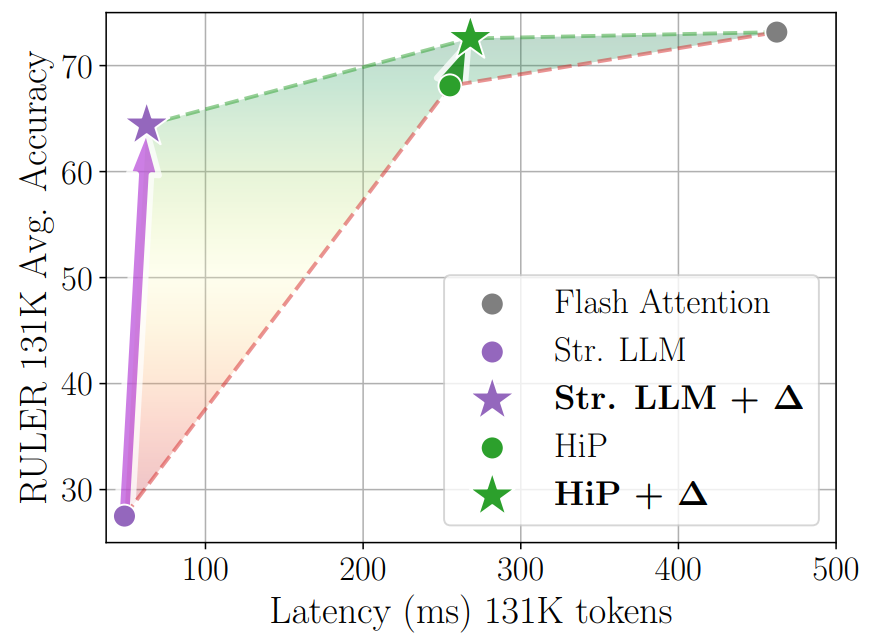
Noice! Our paper "Delta Attention: Fast and Accurate Sparse Attention Inference by Delta Correction" has been accepted to NeurIPS 2025! See you in San Diego (See part 2 of post for breakdown of our work)
https://t.co/Xjv8Uqvpsk
RFDiffusion3 generates all atom bound conformation, making it significant for flexible targets like DNA.
An excellent teamwork to achieve something impossible by any one of us in just few months.
@butcher_jasper@r_krishna3
https://t.co/i60oujJS1L
Robust Molecular Property Prediction via Densifying Scarce Labeled Data
1.A key challenge in drug discovery is predicting properties of out-of-distribution (OOD) molecules using models trained on limited, in-distribution (ID) labeled data. This paper proposes a meta-learning approach to address that.
2.The method densifies the sparse labeled training set using abundant unlabeled molecules, guiding the model to better generalize under covariate shift. This is crucial because many real-world drug candidates lie outside the training distribution.
3.Central to their framework is a permutation-invariant learnable set function that interpolates labeled training examples with domain-informed context points drawn from the unlabeled pool. This mixing is learned during training.
4.Unlike standard Mixup or Manifold Mixup, their approach performs interpolation in feature space using a learnable set encoder, and trains it with bilevel optimization—a critical step that substantially improves robustness.
5.The inner loop updates the prediction model using densified inputs, while the outer loop updates the interpolation function to minimize meta-validation loss on randomly labeled data, simulating label noise and improving generalization.
6.Empirical results on the Merck Molecular Activity Challenge show significant improvements over strong baselines, especially under heavy covariate shifts (e.g., HIVPROT), with their method outperforming Mixup and Manifold Mixup variants.
7.t-SNE visualizations reveal that their model learns clearly separated latent representations for ID, OOD, and interpolated inputs, unlike Mixup-based baselines which show significant overlap—highlighting better structure in latent space.
8.Ablation studies confirm that both the use of domain-informed context points and bilevel optimization are necessary for strong OOD performance. Interestingly, training with pseudo-labels from a standard normal distribution works well.
9.The proposed approach is generic and can be used with different mixers, like DeepSets or Set Transformers. Both variants outperform other interpolation strategies on diverse molecular descriptors (bit vectors and count vectors).
10.Overall, this work presents a robust and practical method for property prediction in low-label, high-shift molecular discovery scenarios, and offers a promising direction for leveraging unlabeled data via meta-learned interpolation.
📜Paper: https://t.co/KCyrE3oYIN
#MachineLearning #DrugDiscovery #MetaLearning #MolecularPropertyPrediction #OODGeneralization #DeepLearning
Do you want to do RL for coding and agentic workflows?
Do you want to do science, and figure out when RL kicks in? What is the right algorithm (it's not GRPO)?
how much reasoning you need in your base (you def need some! but is it a lot or A LOT)?
Do you want to figure out how to build an RL Academy for reasoning?
Come work with us!!
We'll do the science, we'll write the papers, release the models, help the community build, and have FUN!
https://t.co/bormf6R1nV
Meet the recipients of the 2024 ACM A.M. Turing Award, Andrew G. Barto and Richard S. Sutton! They are recognized for developing the conceptual and algorithmic foundations of reinforcement learning. Please join us in congratulating the two recipients! https://t.co/GrDfgzW1fL
My new paper "Deep Learning is Not So Mysterious or Different": https://t.co/AgHdSQkals. Generalization behaviours in deep learning can be intuitively understood through a notion of soft inductive biases, and formally characterized with countable hypothesis bounds! 1/12
This is a great high-level introduction to Hamiltonian Monte Carlo methods that I found very accessible.
It has great visual explanations of a variety of relevant concepts.
Mol-LLaMA: Towards General Understanding of Molecules in Large Molecular Language Model
1. Mol-LLaMA is a large molecular language model designed to enhance the understanding of molecules by integrating structural, chemical, and biological knowledge. It addresses the limitations of previous models that focus primarily on task-specific datasets.
2. The model uses a novel multi-modal instruction tuning approach, incorporating three data types: detailed structural descriptions, structure-to-feature relationship explanations, and comprehensive conversations to facilitate general understanding.
3. One of Mol-LLaMA’s key innovations is its blending module, which combines information from both 2D and 3D molecular encoders using cross-attention. This allows the model to better capture the molecular structure and reduce issues like hallucination during prediction.
4. Mol-LLaMA outperforms traditional LLMs, including GPT-4o and other molecular-specific models, in both qualitative and quantitative evaluations. It provides more accurate and detailed responses about the molecular features, such as biological functionalities and chemical properties.
5. A standout feature of the model is its ability to handle zero-shot molecular property prediction tasks. It not only predicts properties but also provides relevant explanations, making it a versatile tool for molecular analysis in drug discovery and beyond.
6. The model excels in molecular property prediction, achieving high accuracy and providing helpful explanations. This makes Mol-LLaMA useful for various applications, including drug design, molecular biology research, and understanding molecular interactions.
7. Mol-LLaMA's performance is significantly enhanced by its instruction dataset and blending module, which collectively improve its ability to understand and explain molecular properties across different levels of molecular knowledge.
📜Paper: https://t.co/JcnrrtMuvl
#MolecularAI #Bioinformatics #DeepLearning #DrugDiscovery #MachineLearning #AIinPharma #ProteinDesign #ComputationalChemistry #BioTech #ArtificialIntelligence
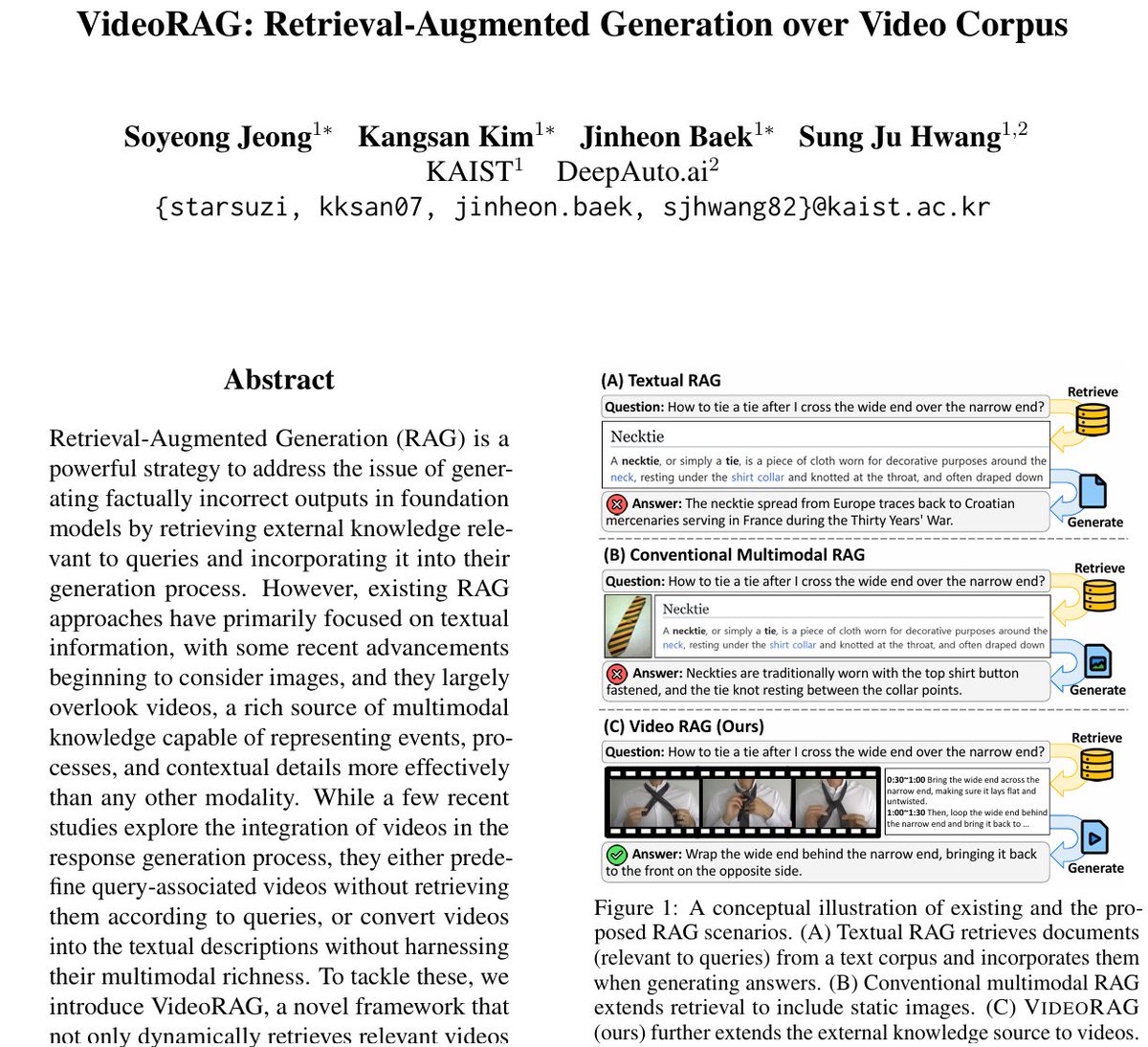
Excited to introduce VideoRAG📽️, which extends the current landscape of RAG systems (that largely focus on text) by holistically leveraging the video corpus, utilizing both textual and visual features.
Paper: https://t.co/5PDMGHYrMJ
@SoyeongJeong97@kangsan_kim_@SungJuHwang1





![jcqln_h's tweet photo. Introducing ⚓ 𝗔𝗻𝗰𝗵𝗼𝗿𝗲𝗱 𝗗𝗲𝗰𝗼𝗱𝗶𝗻𝗴: a copyright mitigation strategy for any language model! With @uwnlp
LMs today reproduce copyrighted text—raising concerns for creator consent and potential legal (and 💸 💸) liabilities for AI developers. 🫠
𝗔𝗻𝗰𝗵𝗼𝗿𝗲𝗱 𝗗𝗲𝗰𝗼𝗱𝗶𝗻𝗴 relies on two off-the-shelf LMs:
🧼A 𝘀𝗮𝗳𝗲 𝗟𝗠 trained only on permissively licensed text,
⚠️A higher-utility 𝗿𝗶𝘀𝗸𝘆 𝗟𝗠 trained on any data.
The 𝗿𝗶𝘀𝗸𝘆 𝗟𝗠 drives generation, but the 𝘀𝗮𝗳𝗲 𝗟𝗠 acts as an anchor. If the 𝗿𝗶𝘀𝗸𝘆 𝗟𝗠 drifts into memorization, the 𝘀𝗮𝗳𝗲 𝗟𝗠 pulls it back ↩️.
🤝We provide a formal guarantee: outputs stays within a user-set budget of the 𝘀𝗮𝗳𝗲 𝗟𝗠.
Details below! 👇
[1/⚓]](https://pbs.twimg.com/media/HA5rifTbYAAtDpP.jpg)
![ZhiyuanZeng_'s tweet photo. RL is bounded by finite data😣?
Introducing RLVE: RL with Adaptive Verifiable Environments
We scale RL with data procedurally generated from 400 envs dynamically adapting to the trained model
💡find supervision signals right at the LM capability frontier + scale them
🔗in🧵
[1/n]](https://pbs.twimg.com/media/G5eZxuYbwAAd70i.jpg)
![mathladyhazel's tweet photo. The Fourier Transform, explained in one sentence by Stuart Riffle. [https://t.co/qxTOx44EfS] https://t.co/ObmlCvx0tD](https://pbs.twimg.com/media/GlVE479WgAAGAeT.png)