If bank loans are your only financing option, you may be missing a cheaper one. Join us at the Fidelity Bank Debt Capital Markets Conference and discover how businesses are raising capital through the debt markets.
Reduce, Reuse, Recycle!💸♻️
Our Waste to Cash movement has become a powerful sustainable initiative across the bank.
Because here, even waste has a purpose.
As part of Sustainability Month this August, we have lined up a range of exciting initiatives designed with you in mind and aligned with our broader commitment to building a greener, more sustainable future. From a beach clean-up with the Bus Stop Boyz, to community sanitation exercises, free EV rides for the public, insightful webinars, and more; there’s something for everyone.
Watch as our Head of Partnerships, Sustainability, and CSR, shares more about what to expect and how you can be part of the journey.
Advancing Climate Adaptation Finance.-IMANI Brief.
In recent years, climate change has become an urgent priority, especially for Africa, where communities and economies are particularly vulnerable to its impacts. From erratic rainfall patterns to more frequent floods and droughts, the economic and social consequences of climate change are already being felt across key sectors like agriculture and energy. As the need for sustainable pathways to growth, the role of the financial sector in supporting green businesses and climate adaptation initiatives has never been more critical.
IMANI’s paper, “Does Ghana’s business environment support green businesses? A governance and market readiness assessment ”, highlighted key constraints in Ghana’s macroeconomic environment that hinder green business growth.
Chief among these is the limited pipeline of bankable, investment-ready green projects, which makes it difficult to attract private capital.
This is compounded by widespread capacity gaps, both in public institutions and among SMEs, in structuring commercially viable proposals aligned with climate goals. There is also a weak linkage between Ghana’s climate commitments under its Nationally Determined Contributions (NDCs) and actual financing strategies embedded in national development plans like the Post-COVID Programme for Economic Growth (PC-PEG). Also, there have been persistently high lending rates, averaging around 25% over the last decade, which make adaptation investments unaffordable, especially for SMEs. Real credit to the private sector remains weak, growing at just 1.4% over the past decade, while high non-performing loan (NPL) ratios have discouraged long-term lending. More critically, most financial institutions lack the expertise and understanding needed to navigate the climate finance space effectively.
In this challenging context, Fidelity Bank Ghana has integrated climate adaptation into its core lending strategy, signaling a positive shift toward financing climate-resilient solutions. During the Africa Adaptation Acceleration Program Partnership Forum, Atta Yeboah Gyan, Deputy Managing Director of Operations and Support Functions at Fidelity Bank, outlined the bank’s comprehensive and data-driven approach.
Fidelity Bank has identified climate risk as a critical Environmental, Social, and Governance (ESG) issue through a double materiality assessment, embedding it into their environmental and social governance processes.
The bank has developed robust internal tools, including a portfolio-level climate scenario analysis across retail and corporate banking segments, and created detailed climate risk heatmaps to better understand exposure and enhance resilience. Their three-year Climate Implementation Plan aligns with Ghana’s Nationally Determined Contributions (NDCs), ensuring that financing supports national climate priorities. Climate risk screening is now an integral part of Fidelity’s credit assessment process, particularly focusing on sectors most vulnerable to climate change, such as agriculture, infrastructure, and SMEs. The bank is piloting innovative tools to assess drought and flood vulnerabilities, enabling it to better anticipate and manage climate-related risks and opportunities for clients. Furthermore, Fidelity is investing in capacity building by training frontline staff to recognize adaptation indicators, which is crucial in markets where adaptation solutions are still emerging. Beyond managing risks internally, Fidelity Bank is actively mobilizing private finance for climate adaptation.
However, Mr. Gyan’s remarks also underscore significant ecosystem-level gaps within Ghana’s financial system that limit the scale-up of climate finance. He pointed to the lack of localized climate risk data and standardized risk maps, which hinder banks’ ability to make precise lending decisions. There is a critical need for technical capacity building across commercial banks to incorporate climate risk into...
🇺🇳 Protocol is the cornerstone of high-level interactions at the United Nations. Our UN Protocol course will provide you with the knowledge you need to navigate the nuances of diplomacy and be well-prepared for any diplomatic interaction: https://t.co/vPOrdxuDWm
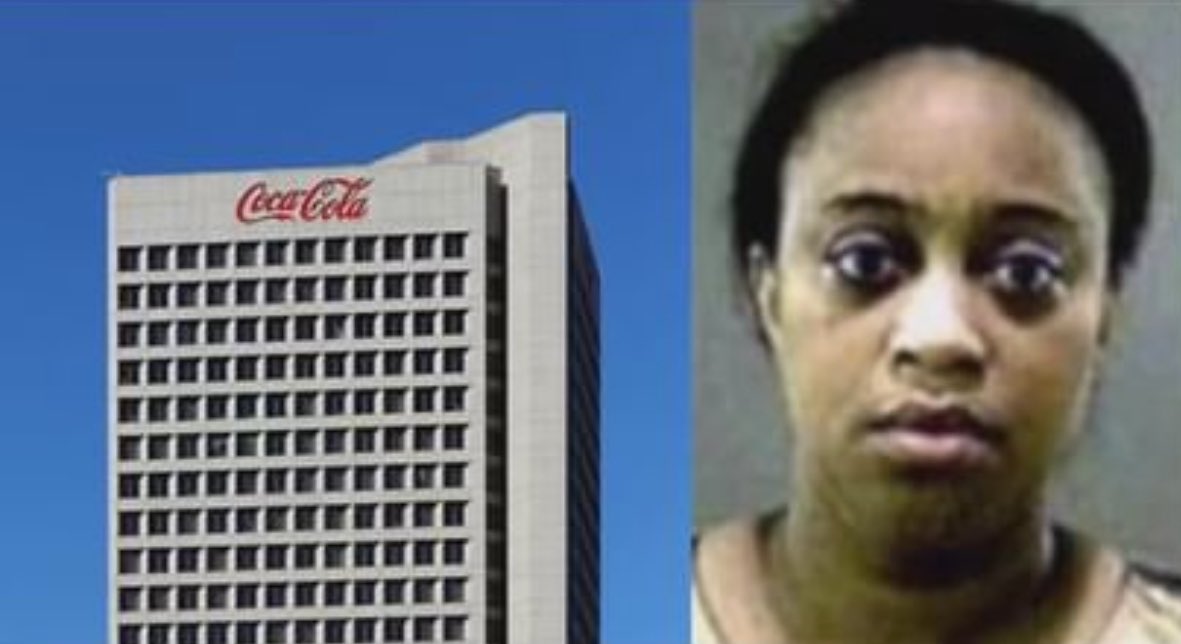
A Coca-Cola employee offered to sell company secrets to Pepsi for 1.5 million dollars. Pepsi responded by notifying Coca-Cola.
As high-ranking Coca-Cola employees, Joya Williams and her accomplice Ibrahim Dimson had access to many documents about Coca-Cola drinks and future projects. Williams and Dimson so called Pepsi and offered to sell all the executive secrets for $1.5 million.
Unfortunately for Williams and Dimson, Pepsi executives reported them to Coca-Cola and the FBI. The FBI then sent undercover agents posing as Pepsi executives. Those FBI undercover agents lured Williams and Dimson with a portion of the $1.5 million demanded and forced them to hand over the documents and the vial containing the chemical. Williams and Dimson were caught red-handed.
The FBI presented the proof of payment and the secrets to the court as irrefutable evidence. In 2007, Williams was sentenced to eight years in prison and Dimson to five years in prison.
A Pepsi spokesperson said, "We did what any responsible company would do. Competition can be fierce, but it also has to be fair and legal," according to CNN.
Eight years in prison is the sentence given to Joya Williams, the former Coca-Cola employee and five years to his accomplice, Ibrahim Dimson, who had attempted to sell the secret formula of the famous drink to competitor Pepsi without taking into account that, in addition to patents, the law also protects business secrets.
This link has CV templates, SOP, Research proposals, Visa Interviews, Reference letters, IELTS, TOEFL, GMAT, GRE, and Emails to Profs:
https://t.co/KtaRBMY6fV
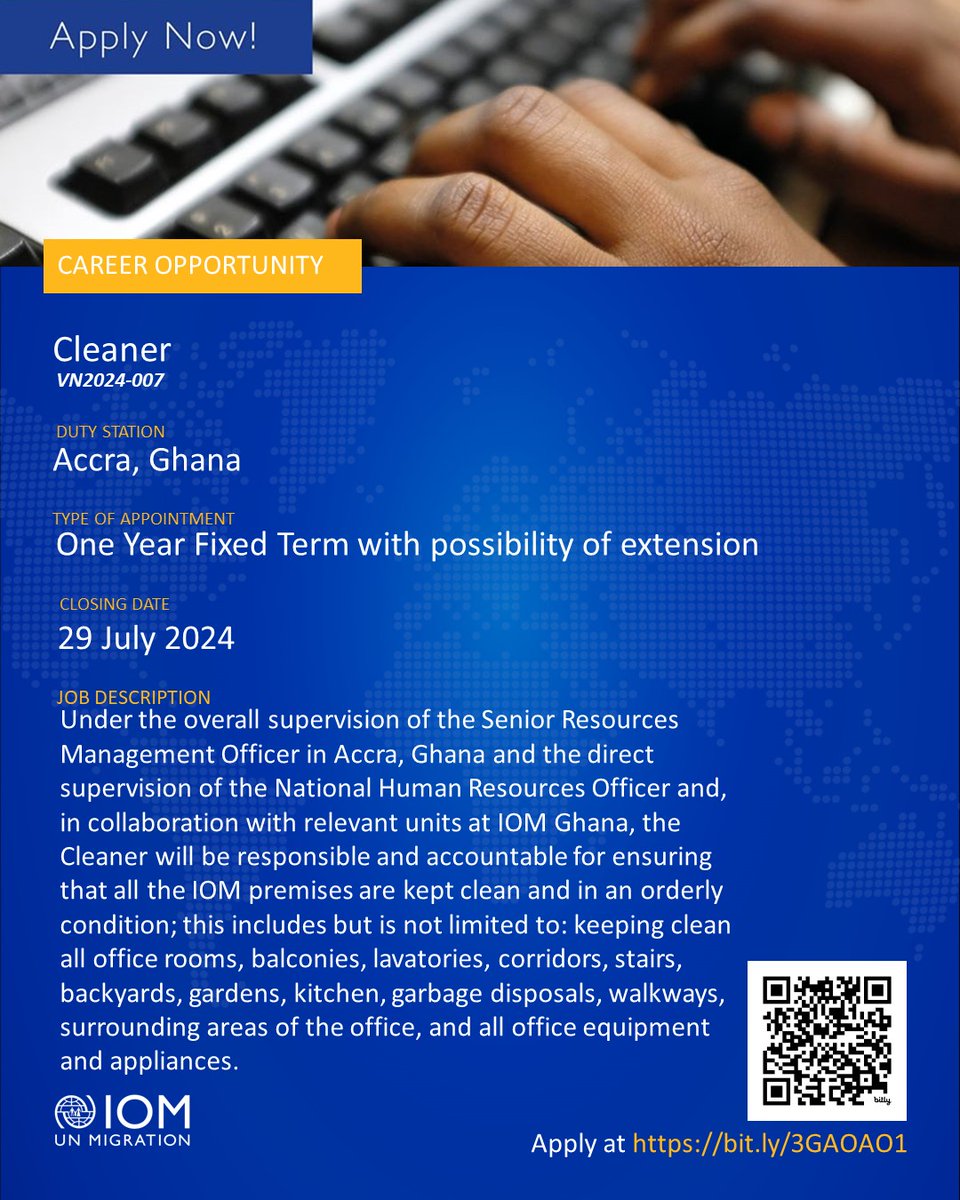
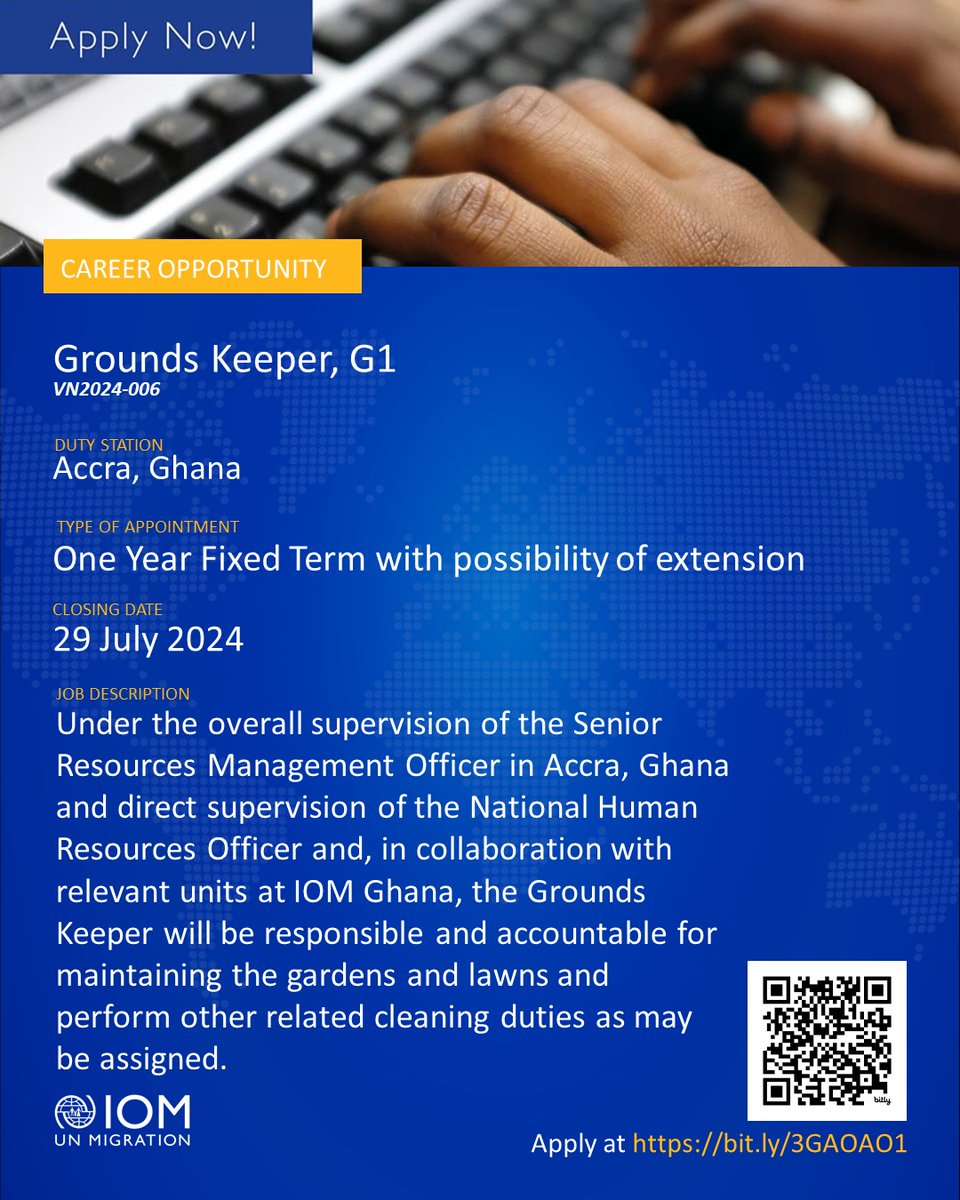
Job Vacancy!!!
IOM Ghana is hiring a Cleaner and Grounds keeper.
Interested candidates should apply by 29 July 2024.
You can find all information and how to apply on our website here: https://t.co/1rPl7yGjzD
Hon. Ophelia Mensah Hayford launches Ghana’s Nationally Determined Contributions (NDCs) Revision process in Accra. Present were representatives of the stakeholder ministries, UNDP, CSOs, the Government of Germany and Switzerland, and the African Development Bank.
With just 6 years until the 2030 Agenda, accelerating action on the #SDGs is crucial.
We need all hands on deck across every sector to collaboratively achieve it.
🗓️Save the date for #SDGsActionSummit2024 on 2-3 July, focusing on recommitting, scaling up & accelerating action.
UNITAR's #MOOCs are free short online courses that are the most accessible and convenient entry point into the thematic field of your interest.
Self-paced, accessible in one click, learn about key concepts in peace, conflict, and much more 👉 https://t.co/WiBtuPiF3m
"Plastic is fantastic" is a fairy tale gone wrong.
Facing a pollution nightmare that threatens people’s health and ecosystems, it's time to eliminate unnecessary plastic products.
Join us in rewriting this story as negotiators craft a #PlasticsTreaty: https://t.co/trymKl974s