yall im ngl its way harder to get joy and satisfaction out of building with ai than it was before
constantly straddling burn out, being far less immersed in hard problems, constant context switching
i’m tired of the uncertainty of where this is going and how to do it well
Mind boggling to me that I can make a thing faster and there's always people that ask "but why?" What kind of mentality is that? The pursuit of excellence does not need justification. Also, I find in so many cases, we can't know the impact of an improvement until we do it.
For example, one I've talked about before: Ghostty's high IO throughput has enabled terminal program (emulator and TUI) fuzzing at a speed thats incomparably fast to prior solutions. This has resulted in upstream patches to resolve issues in popular projects like btop, tmux, and more.
Speed enabled that anecdotally example that lifted the tides of adjacent communities that don't rely on Ghostty technology at all. I didn't predict this.
Make things better because they can be better and let the results naturally play out.
day 608: ! built a fake real-time GI system for my game and it cost almost nothing to run! The warm sunset light wrapping under the car is not baked, not a probe volume, not a reflection capture. here is how it works 🧵 #buildinpublic#indiegamedev#unity3d
23 years ago, we set out to prove that electric cars could be great – not just great electric cars, but the best cars overall.
We’ve gone from one electric sports car to
– Over 9 million vehicles on the road
– Model Y becoming the world’s best-selling car of any kind only 3 years after first deliveries
– 5 Gigafactories & other manufacturing sites across 3 continents
– The largest & most reliable fast charging network w/ over 80,000 Superchargers globally
– Energy generation & storage systems helping power homes & grids (over 1 million Powerwalls installed, 70+ GWh of industrial energy storage operating globally across 2,200+ projects)
Today, we’re bringing AI into the real world with autonomy @Tesla_AI and robotics @Tesla_Optimus.
Tesla is only getting started – a world of amazing abundance awaits
Box3D is now public & open-source. 🎉
We've used it as our 3D physics engine for the past year, for a Sandbox game where players can build whatever they imagine, or developers can build any game - Box3D handles anything thrown at it.
Open development like this makes games better for everyone. Congrats to @erin_catto on the release.
https://t.co/nfFPYHPL8M
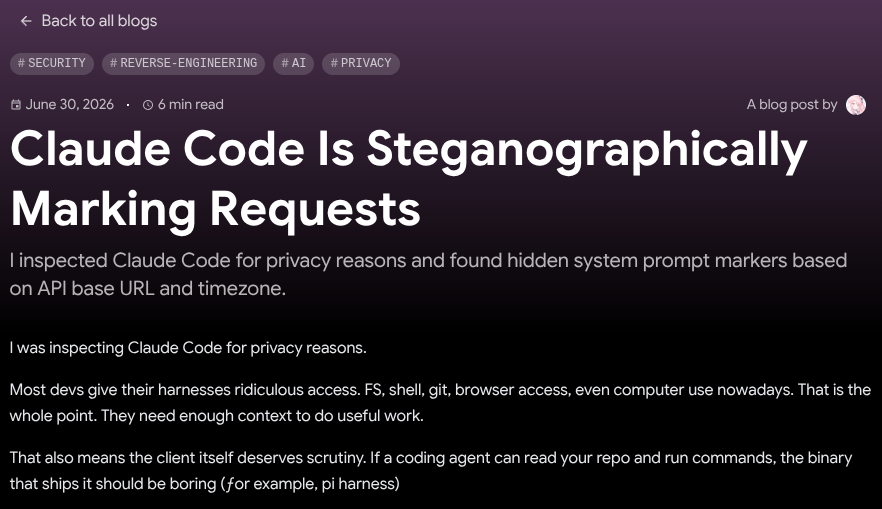
Claude Code is vibecoded and full of spyware, it's possible Anthropic doesn't even know what's in there. After reading this report, we are banning it from our systems and strongly encourage other enterprises to do the same. It is an unacceptable security risk.
as good as LLMs have become at understanding instructions and solving the task, they still don't produce the code i would
their solutions are always the 2nd or 3rd best way of doing something
you think this doesn't matter because so are yours
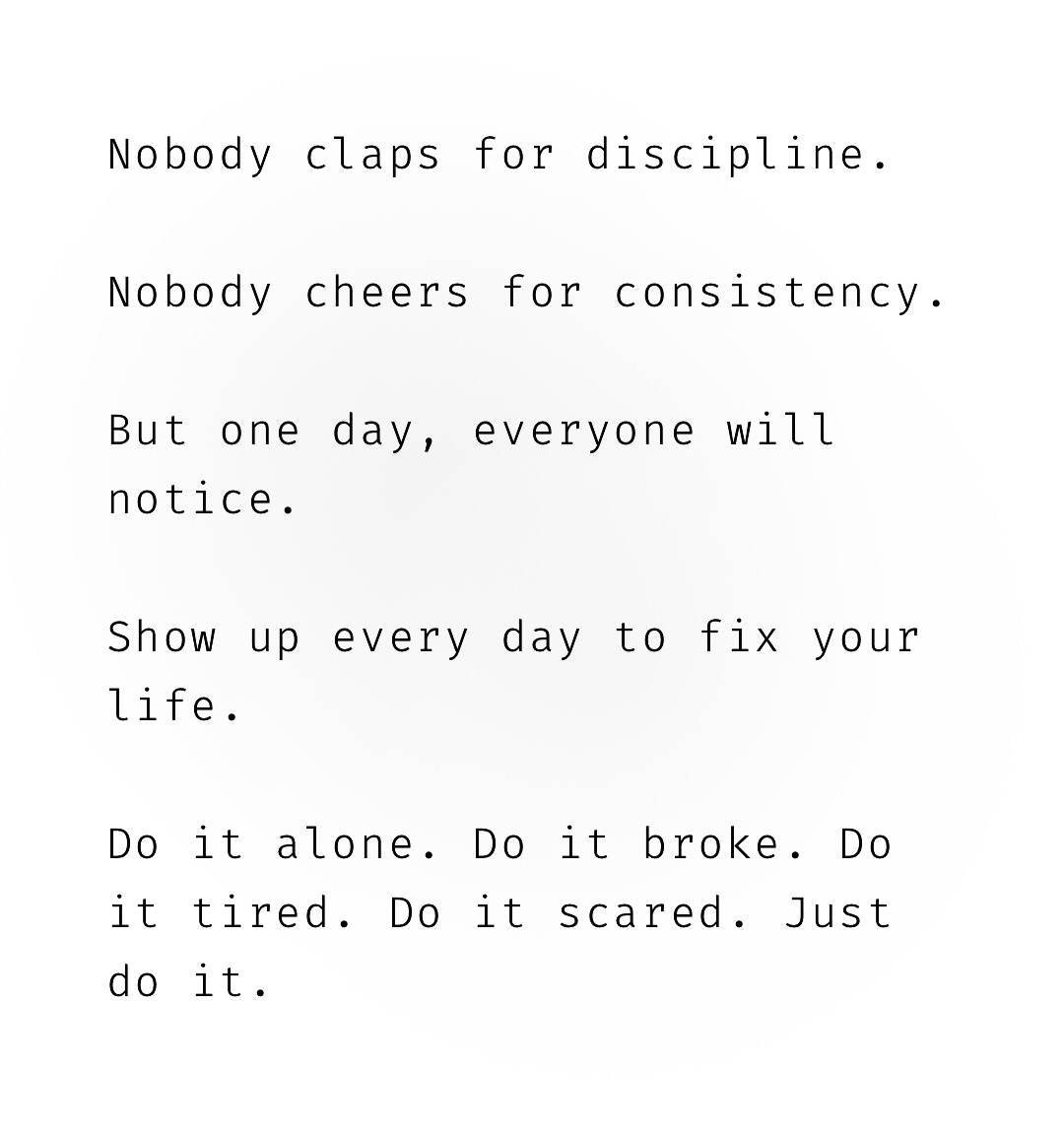
If you don't wake up excited and go to bed tired, drop everything and think of what your future will look like if you keep repeating the same day for the rest of your life. Sit with that discomfort until a new direction appears.
What Makes a Great Streaming Chat Experience
Start here: Never move the reader against their intent.
1. Move only when the reader asked to move.
If someone is reading, don’t pull them somewhere else. Auto-scroll should never be the default.
2. Follow only while they’re following.
If they’re at the live edge, keep the stream in view. If they scroll away, leave them there.
3. Every interaction is intent.
Scrolling is not the only signal. Selecting text, using the keyboard, opening a link, searching should all stop the interface from moving.
4. Start a new turn near the top of the viewport.
This gives the new turn somewhere it can be read from the beginning.
5. Then stream in the answer.
The streaming answer can then grow into the available space.
6. Keep part of the previous conversation in context.
Enough of the previous turn should remain visible so the reader knows where they are. Context.
7. Let new content arrive offscreen.
The conversation can keep streaming without changing what the reader is looking at.
8. Show what’s happening out of view.
Make it clear when a response is still streaming or when new messages have arrived.
9. Make it easy to return to the latest reply.
A "Jump to latest" action should bring the reader back and resume following.
10. Let people jump anywhere in the conversation.
Long threads need message links, search, unread markers, and direct navigation.
11. Reopen where the reader left off.
A saved conversation should open at the last meaningful turn. This is usually the last user message. Not the absolute bottom.
12. Keep the reader’s place when layout changes.
Images load. Markdown expands. Code blocks render. Older messages appear above. None of that should make the reader lose their place.
13. Handle interruptions without stealing position.
Stopping, retrying, regenerating, branching, or errors should not unexpectedly move the conversation.
14. Stay responsive in long threads.
Streaming text, markdown, code, images, and long history should still feel responsive.
15. Be accessible without the noise.
Keep the transcript navigable, preserve keyboard focus, and announce important events at a comfortable pace.
It’s all about the scroll. Scroll Engineering.