A man spent years searching for the nanny who raised him. When he finally found her, he gave her $16,000 and arranged a monthly allowance to ensure she could enjoy the same comfort and care she had once provided him.
A French man captured the hearts of millions online after spending 38 years searching for the nanny who cared for him as an infant in Ivory Coast. His father had been stationed there for work, but when the family eventually returned to France, they lost all contact with the woman who had played such an important role in his early life.
Despite the decades and distance between them, he never forgot her kindness and maternal affection, considering her a “second mother” and promising himself that he would one day find her and express his gratitude.
After finally locating her living a modest life, he traveled back to West Africa for an emotional reunion filled with tears and joy. Wanting to repay the care she had given him, he gifted her 10 million CFA francs (about $16,000 USD), a new car, and arranged a lifelong monthly allowance to support her retirement. The story became a powerful reminder of the lasting impact of compassion and the bonds formed through childhood care.
Congratulations to Bartłomiej Kubkowski who just became the first person ever to swim across the Baltic Sea between Sweden and Poland.
He spent 56 hours in the water without sleeping and swam 160 km (100 miles).
The prime minister threatens his political opponents with prison, then doesn’t give them a chance to defend themselves.
This has always ended badly in Hungarian history…
Politically motivated proceedings are underway; accusations are flying, and everyone who dares to oppose Péter Magyar is threatened with prison.
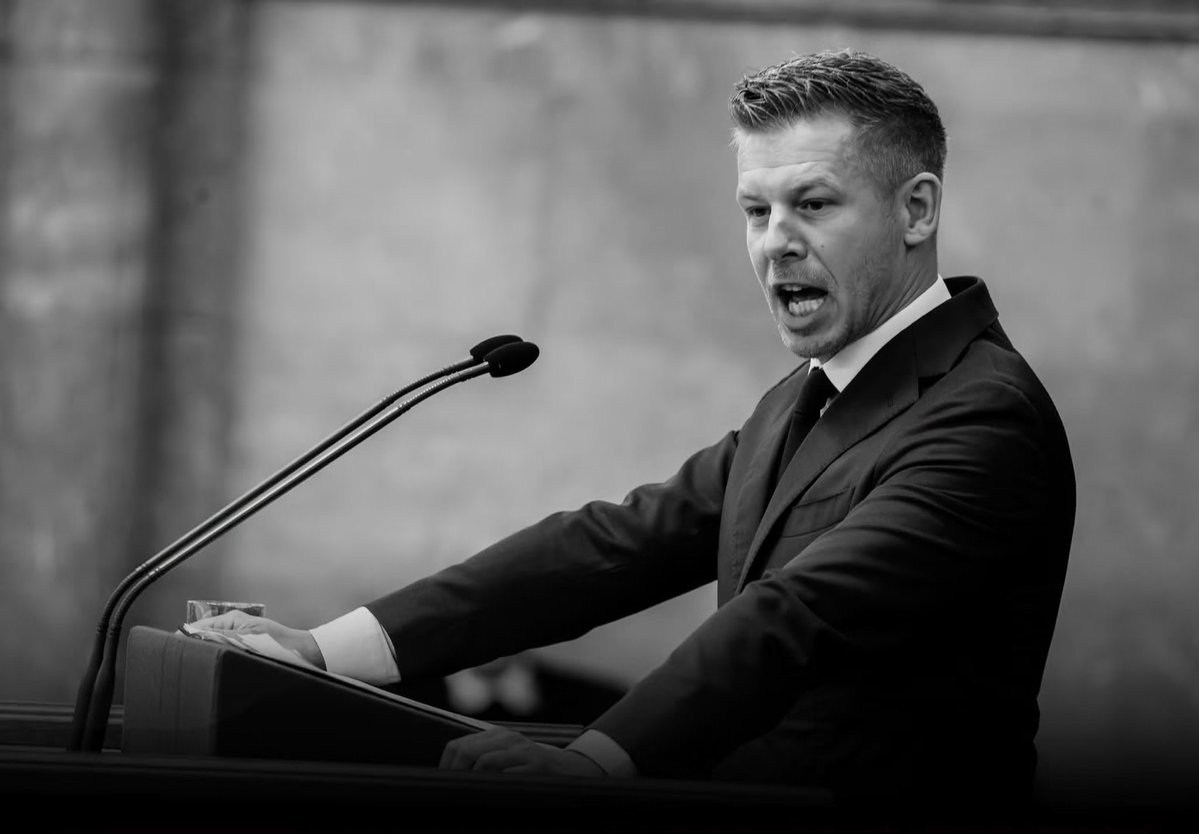
The July 27 parliamentary session was shameful. Balázs Hankó was cut off, so he could not defend himself after Péter Magyar threatened him with prison. The accusation was made, but there was no opportunity for a defense. The prime minister can slander and accuse people for an unlimited period of time, and then the accused cannot even defend himself.
Meanwhile, the government’s parliamentary caucus drowned him out with loud applause, and the presiding chair silenced Balázs Hankó’s microphone.
The prime minister, presiding chair Anikó Hallerné Nagy, and the ruling party’s parliamentary caucus have dragged the Hungarian parliament to unprecedented depths. Communism 2.0
By using retroactive legislation to prevent us from standing in future elections, the government has crossed a line no democracy should ever cross. If it is not the people who decide who they vote for, but those in power who decide who the people are allowed to vote for, then democracy is finished.
Quanto sta accadendo in Ungheria è grave e rappresenta un brutto precedente. Se la democrazia viene piegata per colpire l’opposizione, non è più democrazia. E colpisce l’assordante silenzio da parte di Bruxelles e di chi da anni parla - spesso a sproposito - di “Stato di diritto”.
Nyugati agresszor 👉 fasiszták, angolszász megbízással, ostoba gallokksl kiegészítve... ezeknek nem volt elég 2 WW, kell egy atomháború is! 😡
Aztán most ettől jól megilyedt a föld legnagyobb országa, és legnagyobb atomhatalma! Ilyen barmok irányítják a világot! 😡😡😡👇
Friedrich Merz had called Marius Dick’s parents to give his condolences on their son’s random murder by an Afghan asylum seeker.
22-year-old Marius Dick was just about to start a Master’s Degree program in military history when he was stabbed in the heart by Sajad M.
Marius was in the process of writing his own book before his life was cut short by the violent migrant who attacked unprovoked on a street without any words having been exchanged by the two before the attack.
He leaves behind his 17-year-old brother Johannes and his parents.
🇭🇺 DECLARATION OF RESISTANCE
After decades of dictatorships imposed upon Hungary through the German and Soviet occupations, the Hungarian people regained their freedom in 1990 and established a democratic state governed by the rule of law.
In 2011, Hungary’s sixth freely elected National Assembly adopted the Fundamental Law of Hungary, bringing the transitional period following the regime change to an end. It established the constitutional guarantees of national sovereignty, laid the foundations of a democratic state governed by the rule of law, and set Hungary on the path of national renewal.
Following the 2026 elections, the Tisza Party undermined Hungary’s constitutional order. With the adoption of the 17th Amendment to the Fundamental Law, Hungary ceased to be a democratic state governed by the rule of law. The era of arbitrary rule has returned.
By restricting the electoral rights, political competition has been eliminated, and democracy has come to an end. The President of the Republic and the President of the Constitutional Court were removed from office, thereby dismantling the separation of powers, abolishing constitutional checks and balances, and destroying the rule of law.
The political system established in this manner is illegitimate because it was created in blatant violation of the Fundamental Law and because its purpose is to secure the exclusive possession of political power. Fidesz rejects this new authoritarian regime. We will not participate in the appointment or election of individuals installed to replace the unlawfully removed officeholders. Once the democratic state governed by the rule of law has been restored, their decisions will be subject to review.
Every citizen has the right to resist arbitrary power. Accordingly, Fidesz will oppose not only the government but the new political regime itself. We will use every peaceful means available, both inside and outside Parliament, to resist authoritarian rule.
From this day forward, our mission is to restore the democratic state governed by the rule of law. We will help the victims of authoritarian rule. We will record every unlawful act committed by the Tisza government. Once the democratic state governed by the rule of law has been restored, those who have suffered injustice will receive the restitution to which they are entitled.
In order to restore a secure and peaceful civic life, we stand with everyone who raises their voice against authoritarian rule, joins with others in peaceful resistance, and works for the restoration of Hungary’s democratic constitutional order. No one has the right to deprive the Hungarian people of their freedom, security, peace and the opportunity to prosper.
The more people who speak out—and the greater their courage—the sooner this destructive course will come to an end, and the sooner Hungary can return to the peaceful, secure and free life that has been interrupted under the rule of the Tisza Party.
So be it.
#BREAKING 🛑 🇺🇸 🚀
THE US RAPTOR STRIKES! 🦅💥
The US Air Force F-22 Raptors just delivered a devastating blow to Iran’s largest missile base. Complete destruction reported. The IRGC leadership is in total chaos as their primary strategic assets turn to dust. Global power on
The last time a president of the republic was removed from office in Hungary was in 1948—by a stroke of the pen, through legislation tailored to a specific individual, and thus without a standard procedure for deprivation of rights, without impeachment.
Now Tisza has done just that.
Brussels is rewarding this with 16 billion euros because, in their view, this restores democracy. It’s like an Orwellian nightmare —but it isn’t.
Today, the final barrier fell. Arbitrary rule is no longer a looming threat; it is a reality. If they can do this to the President of the Republic, they can do it to anyone. God protect Hungary!
A globalista tiszás ügynökpárt nemzeti szuverenitásunkat felszámolni törekvő, egészpályás letámadással megvalósított hatalmi önkénye miatt nemzetünk számára súlyos kihívásokkal teli időben élünk.
Az önkény egyik legsötétebb és legaljasabb lenyomata az Alaptörvénynek a tiszás kétharmad által átnyomott 17. módosítása.
Ez minden civilizált jogelvvel, de különösen történeti alkotmányunk vívmányaival ellenkezik.
Ezzel jelentős szintet lépett a nemzeti erők és a nemzeti önrendelkezésünk elleni globalista érdekű offenzíva.
Ez a gyalázatos jogi fércmű nyilvánvalóan a hatalom kizárólagos gyakorlására irányuló tevékenységnek minősül, amellyel szemben mindenki jogosult és köteles törvényes úton ellenállni! ( Alaptörvény C. cikkének (2) bekezdése)
Jogos elvárás, hogy az államfő tagadja meg a kihirdetését és az Alkotmánybírósághoz forduljon!
A nemzeti ellenállásra most ismét hatalmas szükség van!
Nemzeti ellenállási ihletforrásként ajánlom megtekintésre és megfontolásra a Magyarok Országos Gyűlésén szabadságharcos bajtársaimmal Budaházy Edda, Budaházy György, Gőbl György) tartott alábbi témájú fórumot!
Nemzeti jogvédő kerekasztal-beszélgetés a Magyarok Országos Gyűlésén a 2002-2010 közötti balliberális hatalmi önkényről, a 2006 őszi felkelésről és azt leverő állami terrorról, a rendőrállami idők újraéledéséről (2026.07.03.)
A 2002-2010 közötti balliberális hatalomgyakorlás és a 20 évvel ezelőtti 2006 őszi népfelkelést verbe fojtó állami terror felidézése mellett rámutattunk a globalista érdekeket szolgáló tiszás projekt hatalmi önkényére, alkotmánypuccsára, az újraéledt rendőrállami módszerekre és a nemzeti ellenállás fontosságára. Megállapítottuk: hátborzongatóan sok a közös vonás a szemkilövető Gyurcsány és a nárcisztikus-agresszív EU lakáj jelenlegi kormányfő között.
Ajánlom különösen a fiatalok figyelmébe a választás előtt megjelent videós elemzésemet (https://t.co/3ktCz9Nncq) a terrorista Gyurcsány rendszer és a globalista ügynökpárt, a Tisza és vezérének módszerei közötti aggasztó párhuzamokról.
https://t.co/87bAEym30Q
Am I dreaming, or did Hungary’s Prime Minister really defend a constitutional amendment that bars his political opponents from Parliament and unlawfully removes the President of the Republic by arguing that it enjoys the unanimous support of a foreign government?
So which is it? Does Hungary still have a sovereign government, or is it simply taking orders from abroad?
Fantastic news!
We won our battle in court against the Mayor of Brussels! The @SaveEuropeAct event is now officially allowed!
A huge thank you to everyone who supported us.
We won and we will keep winning!
We delivered the first half a million signatures of the @SaveEuropeAct to the European Parliament today.
We came to Brussels and made sure their voices were heard.
Whether the European Commission likes it or not.
The people want Remigration!
A dark day for Hungary.
Today, Parliament is adopting constitutional amendments that unlawfully remove the sitting President of the Republic and ban sitting opposition MPs from running for re-election. The former Prime Minister had already been banned from running again.
This marks the beginning of a constitutional crisis that could last for years. Ironically, it is being created by the party with the largest parliamentary majority in Hungary’s democratic history.
Why? Because, like their liberal authoritarian allies in Brussels, they may have won the election, but they know they deceived their voters. And they fear that, in a free and fair democratic contest, they would be voted out.
A government that fears the voters will always end up fearing democracy itself.
A dark day for Hungarian democracy.
Today, the Hungarian Parliament adopted the 17th amendment to the Fundamental Law. It is the most serious attack on democracy and the rule of law since Hungary’s democratic transition, and one that is unprecedented in Europe.
The Tisza government is removing the President of the Republic before the end of his constitutional mandate through a constitutional coup, removing senior members of the Constitutional Court, and retroactively excluding a significant part of the parliamentary opposition from democratic competition.
Today they are targeting the President and opposition MPs. Tomorrow, it could be anyone. This is a blatant abuse of a two-thirds parliamentary majority. The Hungarian people did not give the government a mandate to dismantle democracy.
While democracy and the rule of law are being dismantled in Hungary, EU institutions remain silent. That silence exposes its double standards more clearly than anything else.
For years, Hungary was widely regarded as the flagship of Europe’s sovereigntist movement. Whether one admired or opposed Viktor Orbán’s governments, few disputed that they represented a coherent political project built upon national sovereignty, constitutional self-government, cultural continuity, and resistance to external interference by Brussels.
Today, many observers abroad assume that little has changed. Hungary’s new Prime Minister, Péter Magyar, continues to speak the language of patriotism. To many outside Hungary, this appears to be little more than a change of leadership within the same political tradition. That conclusion is profoundly mistaken.
The Hungarian case illustrates a broader European phenomenon. Across the continent, parties have discovered that sovereigntism has become electorally attractive. Rather than confronting its arguments directly, many have adopted its vocabulary while pursuing an entirely different political project once in government. They speak the language of sovereignty while dismantling the constitutional and political structures that make independence and national self-determination actually possible. They praise national and cultural identity while allowing progressive forces to reshape the country’s cultural and educational institutions, and gradually weaken law and order.
Across the continent, parties have discovered that sovereigntism has become electorally attractive. Rather than confronting its arguments directly, many have adopted its vocabulary while pursuing an entirely different political project once in government.
Political labels have, therefore, become increasingly unreliable. The central question is no longer what the parties call themselves, but how they govern.
Sovereigntism is ultimately defined not by rhetoric, but by a small number of governing principles: constitutional continuity, democratic self-government, national sovereignty, respect for the nation as the primary political community, and the conviction that political authority derives from citizens rather than supranational bureaucracies.
Measured against these standards, Hungary’s new government is neither sovereigntist nor conservative. Rather, it is acutely neoliberal and globalist. Its record during its first months in office already demonstrates why.