Dear Investors,
We are NISM & SEBI-qualified and AMFI-registered Mutual Fund distributors, focused on ethical investing.
If you're new to mutual funds or need help with your existing portfolio or goal planning, we are here to assist you.
If you’re looking for reliable, honest, and personalized investment guidance, feel free to connect 🤝
📩 DM us or visit: https:// www.jkfinserv.vom
Let’s grow your wealth the right way 🚀
#MutualFunds #SIP #Investing
Your Mutual Fund Portfolio Will Forgive You For:
• Not picking last year’s No. 1 fund
• Starting with a regular plan when you were new
• Paying a little extra for a good active fund
• Missing one sector that suddenly became the market favourite
But your portfolio will definitely not accept these mistakes:
1. Owning seven funds and calling it diversification
Four flexi-cap funds. Two large-cap funds. One focused fund.
It looks like a diversified portfolio until you open their portfolios and find the same familiar companies everywhere. Owning more funds does not always mean owning more ideas. Sometimes, it simply means paying different fund managers to buy largely the same stocks.
2. Buying the fund that gave 60% last year
This happens in every bull market, Always ! A sector does extremely well. Its funds reach the top of every return chart. Investors notice them only after the big returns have already come and then money starts pouring in. Unfortunately, the market does not care about last year’s rankings. The sector can remain quiet for the next two or three years while the investor keeps waiting for another 60%.
Check past performance, but do not invest only because of it.
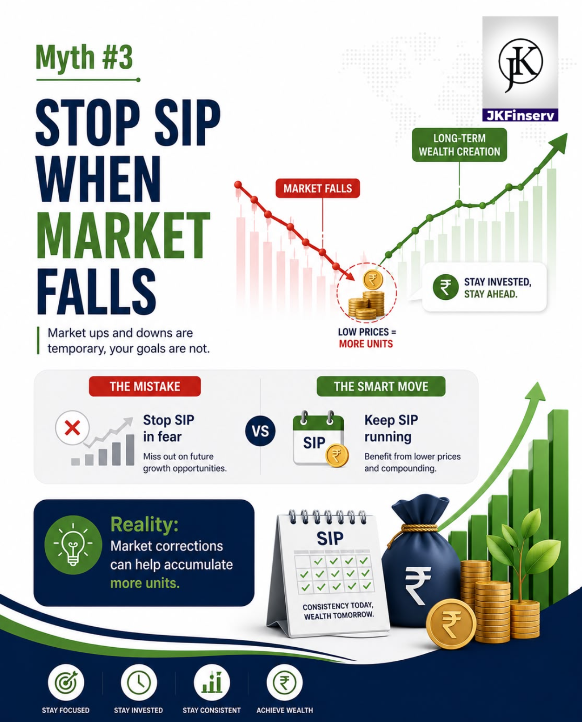
3. Stopping your SIP when the market falls
This is where many investors defeat the purpose of an SIP. When the market is rising, everyone wants to invest. When it falls and the same amount can buy more units, fear takes over and the SIP gets stopped.
Of course, stop or reduce it if your income situation demands it. But stopping only because the market is down usually means missing the very phase your SIP was designed for.
4. Changing funds every few months
One fund underperforms for say 5-6 months, so you replace it. Then the new fund slows down, and you start searching again. Soon, the portfolio looks active, but the returns do not.
Exit loads and taxes are part of the damage. The bigger problem is timing: you often leave a fund after a weak phase and enter another after its best phase. Review your funds, certainly. But they do not need a quarterly reshuffle.
5. Choosing a fund only because it has the biggest AUM
A large AUM can show investor trust, but it does not automatically make a fund better. This matters more in mid-cap and small-cap funds. As the fund becomes very large, buying and selling meaningful positions can become harder. The fund manager may have fewer practical choices than before.
👉You do not need to find the best mutual fund every year & honestly nobody can do that consistently. A few good funds serving different purposes, regular investing and an occasional review are usually enough. After that, give them time. "Thoda sabr rakho"
It is a fact that in mutual fund investing, a lot of investors lose more by constantly disturbing a decent portfolio than by choosing a slightly imperfect fund.
Wishing you and your family a very Happy Onam filled with joy, prosperity, and togetherness! 🌸🌺🌼⛵✨
May the festive spirit of Onam bring endless happiness and success to your home. 🎊🎉
#HappyOnam#Onam2026#JKFinserv#FestivalVibes#Prosperity#Joy
Let's talk about India's first REIT fund.
Edelweiss Nifty REITs & Realty Index Fund's NFO is underway and will go on until Aug 19.
It is a passive fund & will track Nifty REITs & Realty TRI, which comprises 15 securities, allocating 60% to REITs and 40% to realty stocks.