It's fascinating that urban density and communal childcare are so interlinked.
In mobile hunter-gatherer societies, a limiting factor for population growth was that the mother, who was responsible for much - if not most - of food procurement, had to carry their child on their back. The more you move for food, the more difficult it is to bear multiple children.
The ability to preserve food - through fermentation, drying, etc. - which enables sedentarism, also enables urbanism.
Those are great, though granted I haven't tried them all, so I'll have to go do that. Though I think a lot can be done to mimic the sensory and social qualities of alcohol without needing to mimic specific drinks like beer, wine, cider, spirits, and so on or de-alcoholized versions of those drinks.
That 'sippability' of alcoholic drinks that forces you to savor them and punctuates longer conversations I think is an important aspect. Definitely something that can be achieved through bitterness, acidity, smokiness, etc.
And there's also a reverence for both the long amount of time spent to ferment and age alcoholic drinks as well as their terroir that I think has unfortunately gotten lost in many non-alcoholic alternatives. All to say, for the amount of people that no longer drink, I'm surprised that same amount of care and regionality hasn't been extended to NA offerings! Especially in restaurants/bars.
Just one of the experiments we've done with them. We've also used solid state fermentation with fungi and mold (mycelium) to turn these into alternative proteins, used them to stabilize ice creams, among a lot more.
Truly a lot of untapped potential.
This dry stuff could feed 1/8th of the world.
Over 80 million tonnes of oil presscakes are produced annually. The crude protein from these alone is enough to meet the yearly needs of over a billion people.
And you can make delicious things out of them, like shoyu!
What makes mochi sticky?
All starchy foods are composed of a balance of amylose and amylopectin. The more amylopectin, the more 'bouncy' the starch is, as a general rule. 'Waxy' varieties (cf. waxy potatoes) are higher in amylopectins, and therefore bouncier. Sticky rice is about 100% amylopectin.
Some researchers have developed waxy varieties of non-rice grains, like sorghum, barley, and wheat. Waxy corn has existed for quite a while. So we should be able to make some mochi out of them! While rice presents difficulties growing in large quantities in the Northeast, waxy corn should do just fine. Maybe the 'mochi of the Northeast' shouldn't be made from rice.
Also, corn mochi sounds delicious.
@Alvarus_lat Spoken (listened to) and written (read) language are sufficiently different that I don't think it's a given those skills transfer well. If you want to read a lot of Latin or Greek, read a lot. For beginners, maybe a different question.
It's shocking that there were no chili peppers in Asia before the 16th century. And they didn't even become popular until the 18th. No chili oil, no gochujang, no chili paste.
We're starting to put short writing on The Larder. Some thoughts on cuisine. Longer blogs to come.
Some other great examples: there was no sugar in any of these cuisines until around the same time. Europe didn't have potatoes until the discovery of the New World. Italy didn't have tomatoes. Truly fascinating to think of how different these cuisines were, and how quickly our food has changed.
Jupiter is from from Proto-Italic *djous (day) and *patēr (father).
And Zeus is from the same PIE root as *djous. So Jupiter is really just 'daddy Zeus'. Sound out 'Zeus father' fast enough and you can embody (enmouth) the etymology.
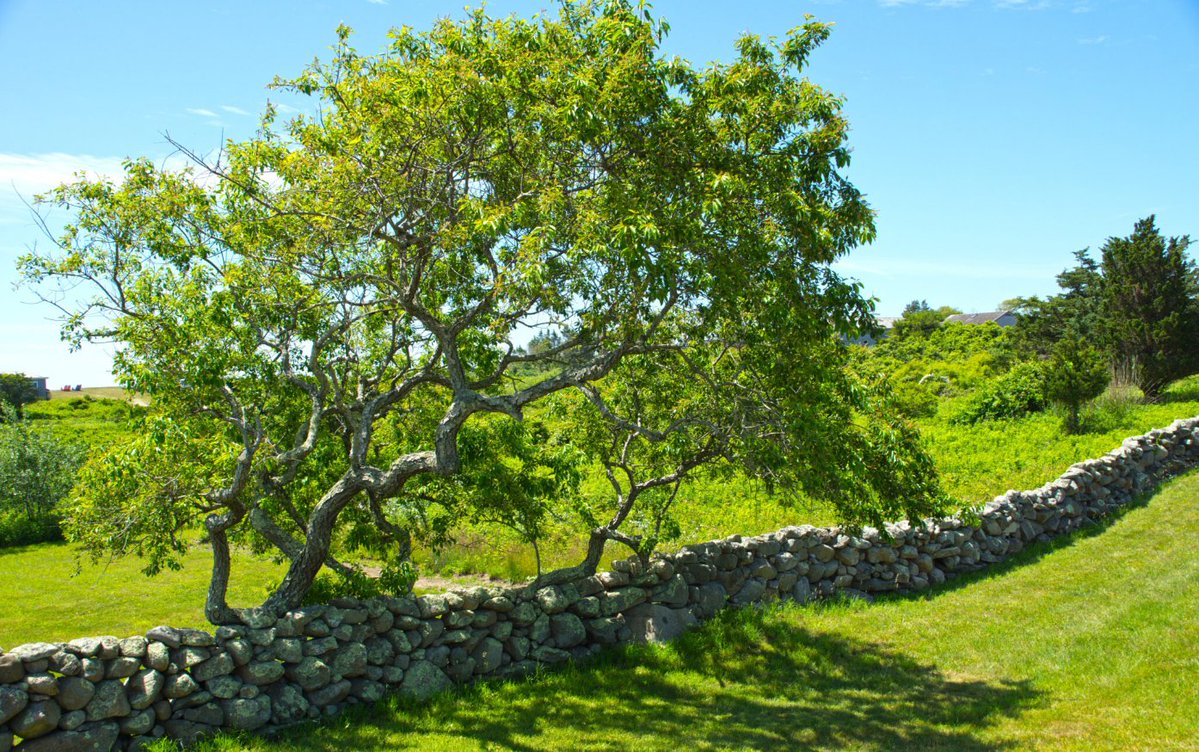
The abandoned stone walls of New England should be one of the world's wonders.
By length, they could circle the earth 10 times. By volume, they're larger than the Great Wall of China, Hadrian's Wall, and the pyramids of Giza combined.
All because of sheep.
Went to a pre-revolutionary war tavern in Philly serving phenomenal local beer all made from ingredients in the region.
It reopened 20 months ago for the first time in over a century (with the original name).