Come and visit London’s Home of Trophies. 🏆
Book your Stadium Tour at Stamford Bridge now. ⭐️⭐Come and visit London’s Home of Trophies. 🏆
Book your Stadium Tour at Stamford Bridge now. ⭐️⭐Come and visit London’s Home of Trophies. 🏆
Book your Stadium Tour at Stamford Bridge now. ⭐️⭐Come and visit London’s Home of Trophies. 🏆
Book your Stadium Tour at Stamford Bridge now. ⭐️⭐Come and visit London’s Home of Trophies. 🏆
Book your Stadium Tour at Stamford Bridge now. ⭐️⭐Come and visit London’s Home of Trophies. 🏆
Book your Stadium Tour at Stamford Bridge now. ⭐️⭐️
My new single ‘Ebenezer’ is out on all streaming platforms…
It’s our song of the year 🪨🪨
Tag someone who should listen 🤍
#NewMusic#Ebenezer#EbenezerSZN
CCI has come to Kitchener!! 🚨🔔
A billion souls in ten thousand cities. We’re so excited to announce that the CCI Kitchener Cell Church is officially here! 🥳 We’re inviting you to join us as we partner with you for your progress and joy in the faith.
We are ready for all that God will do in this city.
Invite a friend. Tell everyone you know.
#cciglobal
#ccicellchurch
Today, at Build we showed you how we are building the open agentic web. It is reshaping every layer of the stack, and our goal is to help every dev build apps and agents that empower people and orgs everywhere. Here are 5 big things we announced today:
TL;DR: We built a transformer-based payments foundation model. It works.
For years, Stripe has been using machine learning models trained on discrete features (BIN, zip, payment method, etc.) to improve our products for users. And these feature-by-feature efforts have worked well: +15% conversion, -30% fraud.
But these models have limitations. We have to select (and therefore constrain) the features considered by the model. And each model requires task-specific training: for authorization, for fraud, for disputes, and so on.
Given the learning power of generalized transformer architectures, we wondered whether an LLM-style approach could work here. It wasn’t obvious that it would—payments is like language in some ways (structural patterns similar to syntax and semantics, temporally sequential) and extremely unlike language in others (fewer distinct ‘tokens’, contextual sparsity, fewer organizing principles akin to grammatical rules).
So we built a payments foundation model—a self-supervised network that learns dense, general-purpose vectors for every transaction, much like a language model embeds words. Trained on tens of billions of transactions, it distills each charge’s key signals into a single, versatile embedding.
You can think of the result as a vast distribution of payments in a high-dimensional vector space. The location of each embedding captures rich data, including how different elements relate to each other. Payments that share similarities naturally cluster together: transactions from the same card issuer are positioned closer together, those from the same bank even closer, and those sharing the same email address are nearly identical.
These rich embeddings make it significantly easier to spot nuanced, adversarial patterns of transactions; and to build more accurate classifiers based on both the features of an individual payment and its relationship to other payments in the sequence.
Take card-testing. Over the past couple of years traditional ML approaches (engineering new features, labeling emerging attack patterns, rapidly retraining our models) have reduced card testing for users on Stripe by 80%. But the most sophisticated card testers hide novel attack patterns in the volumes of the largest companies, so they’re hard to spot with these methods.
We built a classifier that ingests sequences of embeddings from the foundation model, and predicts if the traffic slice is under an attack. It leverages transformer architecture to detect subtle patterns across transaction sequences. And it does this all in real time so we can block attacks before they hit businesses.
This approach improved our detection rate for card-testing attacks on large users from 59% to 97% overnight.
This has an instant impact for our large users. But the real power of the foundation model is that these same embeddings can be applied across other tasks, like disputes or authorizations.
Perhaps even more fundamentally, it suggests that payments have semantic meaning. Just like words in a sentence, transactions possess complex sequential dependencies and latent feature interactions that simply can’t be captured by manual feature engineering.
Turns out attention was all payments needed!
“And whoever desires to be first among you, let him be your slave— just as the Son of Man did not come to be served, but to serve, and to give His life a ransom for many.””
Matthew 20:27-28 NKJV
The Believer has a consistent example of humility in the life of Christ and how He lived on earth. This is why we are called to live like Christ 24/7, 365 days every year!
To love God and His people, to live beyond ourselves and our needs, to live for someone more, to live FOR God.
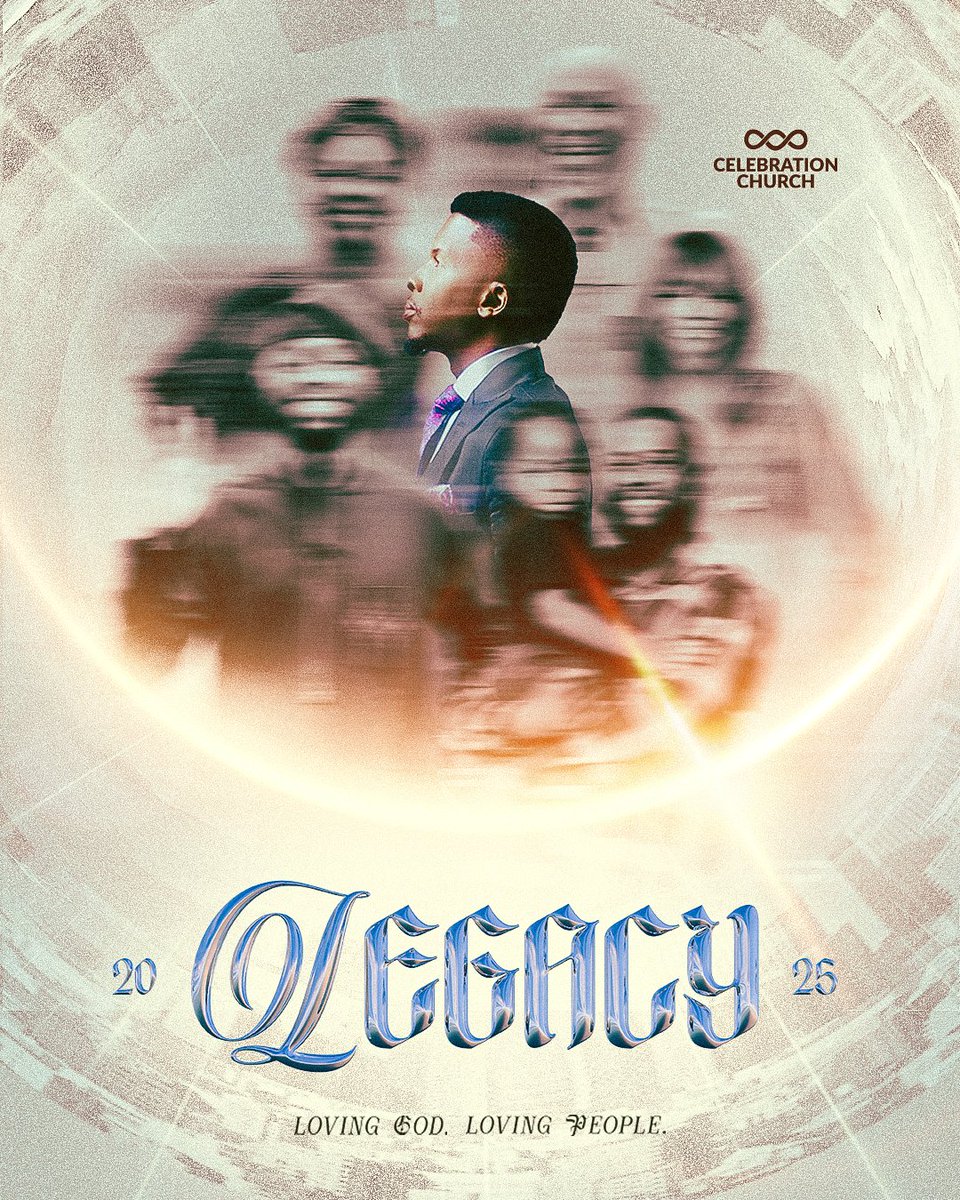
2025 is a year where we set and show a legacy of love for God and His people, a year where we imbibe the humility of Christ and understand that greatness in the Kingdom lies in service.
Ladies and Gentlemen, welcome to 2025 - our year of LEGACY! 💃🏾💃🏾💃🏾
Join us every service day this year as we dissect this theme and grow into Gods intended version of ourselves.
#Legacy
#LovingGod
#LovingPeople
#CCIGlobal
6 Things About the Year of Legacy:
1. A year of worship
2. A year of thanksgiving.
3. A year of service.
4. A year of corporate fellowship.
5. A year of model living.
6. A year of generosity.
#PstIrenSaid#Overture