Przeciążeni obowiązkami, niedoceniani, rozczarowani, słabo zarabiający, narażeni na wypalenie zawodowe, mobbing i wystąpienie zaburzeń psychicznych...
Taki obraz wyłania się z analizy kondycji psychicznej młodych naukowców w Polsce⤵️
#doktorat#akademia
https://t.co/qOVrAzjq5h
Main postulates from the discussions during @KRASP_pl 25th jubilee:a) ensuring the autonomy of university and research institutions b) advocating for increasing funds c) integrate the sci and res community d) speak up on public issues (it is not politics, it is social engagement)
Podczas jubileuszu @KRASP_pl Min. Czarnek dziękuje Min. Skuzie za dodatkowe 100 mln dla szkół doktorskich, Min. Skuza podkreśla rolę algorytmu w zwiększeniu środków o wskaźnik inflacji…na szkolnictwo wyższe.Pyt czy wzrost obejmie też naukę/badania? @MF_GOV_PL@MEIN_GOV_PL
At @KRASP_pl anniversary meeting had a great chat with Carle Bonafous-Murat from @FranceUniv about the concept of Young Academies, their activities, challenges and…reward and recognition systems in academia:) looking forward to continue conversations in the near future!@PAN_AMU
And Today at KRASP 25th anniversary we move to an amazing location of the Royal Castle’s interiors in Warsaw @PAN_AMU@KRASP_pl @Zamek_Krolewski - excited to meet people I know kartelu from the zoom meetings:) And some new faces as well!:)
Exited to begin a celebration of the 25th anniversary of the Conference of Rectors of Academic Schools of Poland with a concert in the characteristic Library of the University of Warsaw @PAN_AMU@KRASP_pl
Just participating in the 50th anniversary of Poznan’s Unit of Polish Academy of Sciences in a beautiful Dzialynski’s Pałace at Poznań Old Square - happy to meet with colleagues from many institutions in Poznan @PAN_akademia@PAN_AMU
Starting a 2-day meeting of Visegard 4 National Academies Meeting (Czechia, Hungary, Poland, Slovakia) in a beautiful building of Hungarian Academy of Sciences in Budapest with address from Eva Kondorosi and Philippe Cupers in ERC session @ERC_Research@PAN_akademia@PAN_AMU
The first round is open to institutions hosting researchers displaced from Ukraine in countries within Council of Europe.
Institutions can receive up to €25,000 per researcher for up to 12 months, with no limit on how many researchers they can host.
https://t.co/FkFMKYEI7d
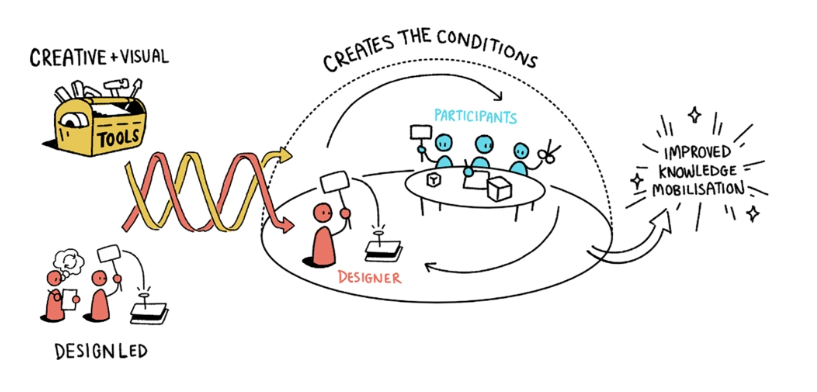
This is an interesting blog post @EvidencePolicy!
The authors evaluated creative methods that help get evidence & policy into practice and identified 3 🔑themes: creative & visual, design led, &creating the right conditions.
https://t.co/90TUnrbCtv
#science4policy#sciadvice
wrapping up 2nd day of V4 Academies Meeting in Budapest - with @KatalinSolymosi and Eva Dekany from @HungarianYA we presented young academies' concept and talked about science advice by ECRs for European Commission @PAN_AMU @SAPEAnews - hope soon all V4 countries will have YAs.
Great V4 Young Researcher Award on COVID-19 research lecture in Budapest from our own Paweł Zmora from Institute of Bioorganic Chemistry, Polish Academy of Sciences in Poznań @PAN_akademia nominated by @PAN_AMU. Congrats Paweł!
@EverFurther@PAN_AMU@ERC_Research You are right - excellence of proposal is by far most important (that was also a clear position ands criticism of all V4 academies to the ERCEA representative, with a return to the idea of blind review being proposed too). Who implements it is also a factor to be considered
My take-home list from ERC panel a) align national sci. excel. eval. strategy with European level b) V4 countries fail mainly on B1 step of assessment by panel of generalists! c) Acknowledge the importance of proposal writing (with financial compensation) @PAN_AMU@ERC_Research
@EverFurther@PAN_AMU@ERC_Research Agreed, including multiple types / manifestations of scientific excellence beyond traditional ones in the evaluation process is a key. At the same time scientific excellence should not be the only aspect in evaluations for every purpose, but it might be for ERC.
@EverFurther@PAN_AMU@ERC_Research I think we will always need some way of evaluating scientific excellence and whether we want it or not, it is also a way of enforcing / promoting certain activities of scientists. Which parameters do we use to do that should, however, be changed from traditional approach
I deeply believe we need to a) open up to, and reward variable manifestations of scientific excellence (also beyond traditional bibliometrics parameters and b) promote synergy in evaluation methods on European and national levels to avoid discrepancy in what is rewarded
Philippe Cupers from @ERC_Research "A task force of on re-eval. of sci. excel. assessmnt. will provide conclusions hopefully by the end of the year" - very much looking forward to the report esp. as ERC is a trend setter for national organisations @PAN_AMU@JongeAcademie