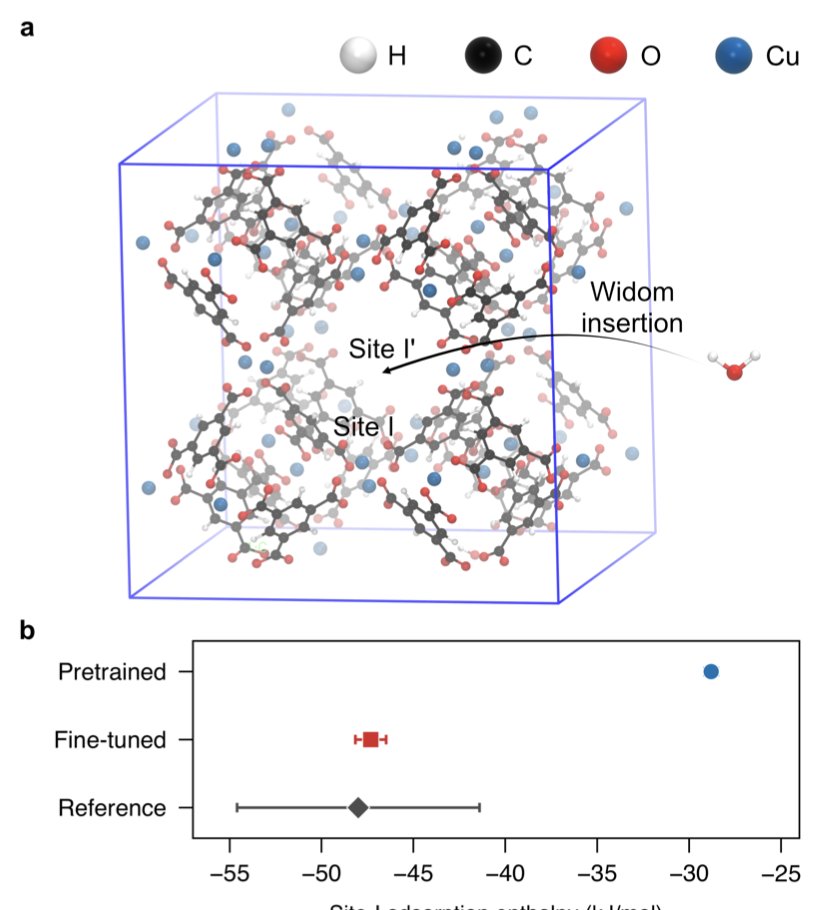
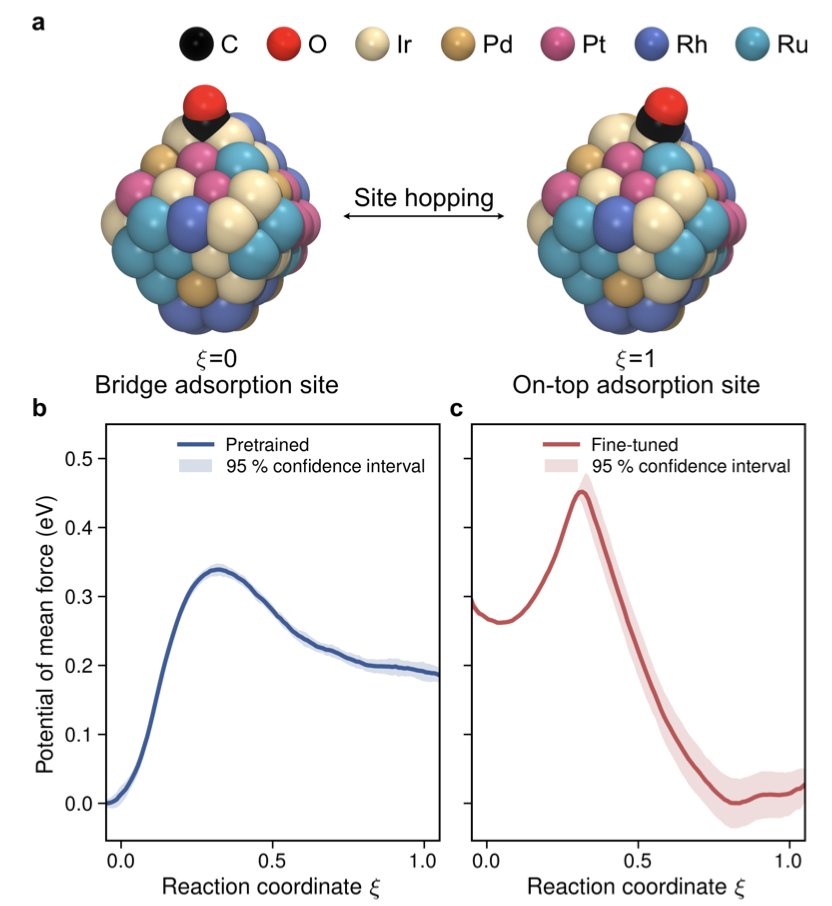
4/ Forces are analytical. They are computed with e3nn-core-rs, our Rust implementation of E(3)-equivariant operations, using hand-derived derivatives instead of a general-purpose autodiff framework.
[https://t.co/aqd5Kfx2u2](https://t.co/heMIp3J6zj)
Thrilled to announce that last week we released llmlip-rs, an MLIP inference engine written in Rust. No PyTorch or JAX at runtime.
6,000-atom H₂O, 16-thread Apple Silicon CPU:
PyTorch MACE FP64: 13.09 s
llmlip-rs FP32: 0.74 s
Give it a try on your own machine and let us know how it goes!
https://t.co/oNLOp737vS
3/ It supports MACE, NequIP, PET, UMA and more. It also offers Apple Silicon GPU acceleration via Metal, and it can be built as a standalone executable or native library with interfaces for LAMMPS and OpenMM.
The goal of n-representability is to characterize when a 2-particle reduced density matrix (2-RDM) comes from a valid n-fermion quantum state -- usually by finding 2-body "witnesses" that are non-negative. After working on this a long time I am excited to share our solution!