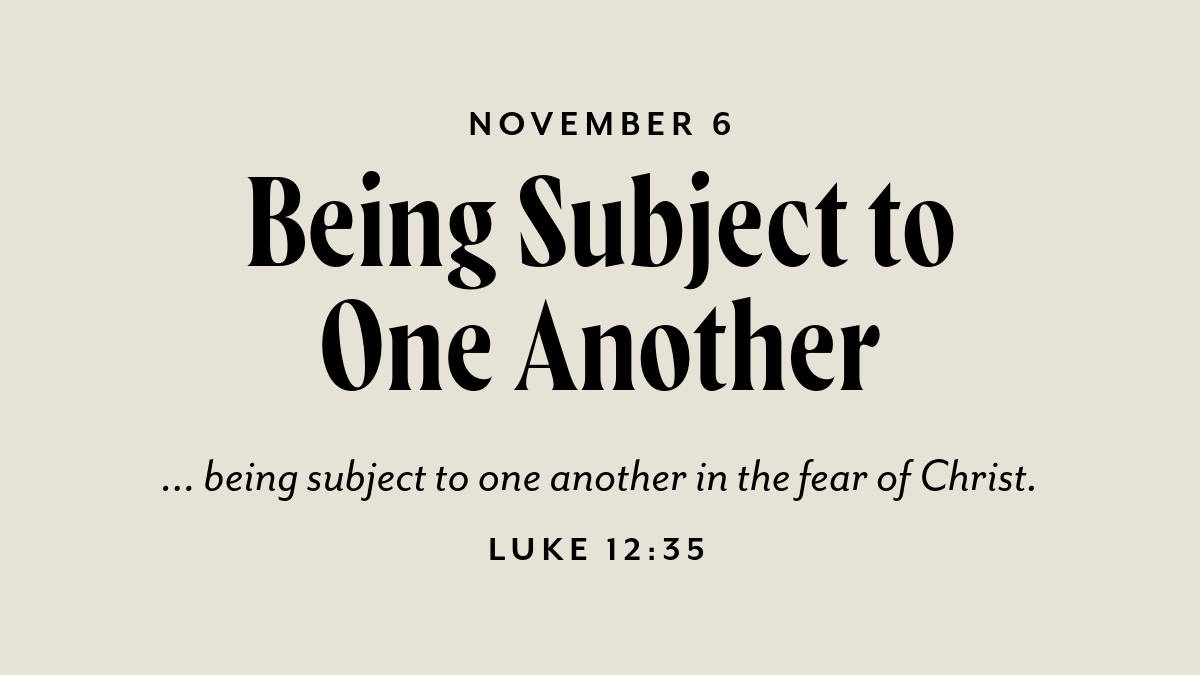
Today’s Devotional: “Being Subject to One Another”
When Paul commands us to be filled with the Spirit in Ephesians 5:18, the subsequent clauses in 5:19–20 further explain what we should be doing as a result of the Spirit’s filling: “speaking,” “singing,” and “giving thanks” (Eph 5:19–20). The clause that comes after these instructions is sometimes translated as another command: “𝗯𝗲 𝘀𝘂𝗯𝗷𝗲𝗰𝘁 to one another” (5:21). But the Greek is clear that this clause is of the same pattern as the previous three and should be rendered as “𝗯𝗲𝗶𝗻𝗴 𝘀𝘂𝗯𝗷𝗲𝗰𝘁 to one another.” Like “speaking,” “singing,” and “giving thanks,” so also “𝗯𝗲𝗶𝗻𝗴 𝘀𝘂𝗯𝗷𝗲𝗰𝘁 to one other” is an outworking of the initial command to be filled with the Spirit.
The famous instruction to women in Ephesians 5:22—“Wives, 𝙗𝙚 𝙨𝙪𝙗𝙟𝙚𝙘𝙩 to your own husbands, as to the Lord”—does not actually contain the words “𝗯𝗲 𝘀𝘂𝗯𝗷𝗲𝗰𝘁.” However, the words are clearly implied (as indicated by the italics) and are also an evidence of the fruit of the Spirit in their attitude to their husbands. The attitude of wives toward their husbands is an extension of the attitude that we all should demonstrate—a mutual submission to one another.
We can learn from this that a major problem in marriages is not always that of rebellious wives, but that we all have sinfully proud attitudes that do not exhibit the filling of the Holy Spirit. Later in the passage, husbands are told to love their wives as Christ loved the church (5:25). Husbands who obey this command make it much easier for wives to 𝗯𝗲 𝘀𝘂𝗯𝗷𝗲𝗰𝘁 to them. Ultimately, the godly behavior of the husbands and the wives is the response to the initial command to be filled with the Holy Spirit. Godly living between husbands and wives is the result of being filled with the Spirit.
”The stricken Israelites were cured by obediently looking apart from any works or righteousness of their own in hope and dependence on God’s word at the elevated bronze serpent. In the same way whoever looks in faith alone to the crucified Christ will be cured from sin’s deadly bite and will in Him have eternal life.”
— John MacArthur, 𝘉𝘰𝘳𝘯 𝘈𝘨𝘢𝘪𝘯
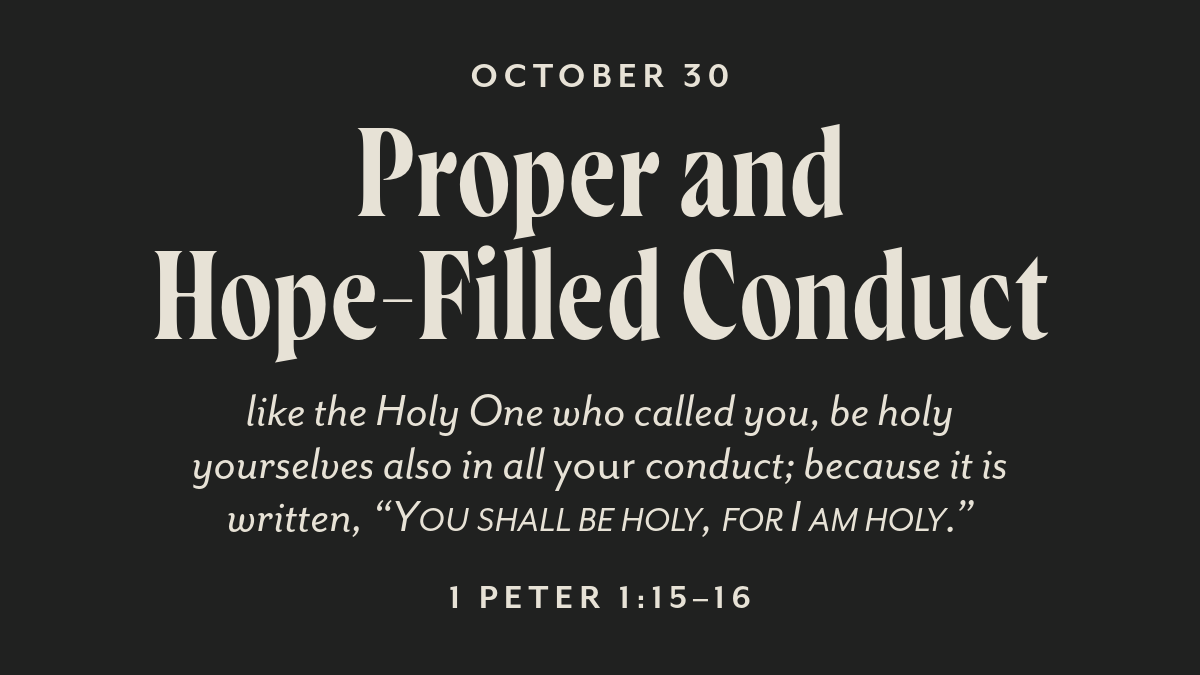
Today’s Devotional: “Proper and Hope-Filled Conduct”
Peter has laid out for us a powerful description of our living hope—it is a hope that has transformed our lives, that anticipates an incorruptible inheritance, and that provides joy in trials. Because of the nature of this hope, we are to fix our hope on the grace that comes at Christ’s return (1 Pet 1:13).
But what does fixing our hope on future grace look like? Tracing this out through the word 𝗰𝗼𝗻𝗱𝘂𝗰𝘁, Peter declared that we are to be holy “in all [our] 𝗰𝗼𝗻𝗱𝘂𝗰𝘁” (1:15). Since our hope reminds us that there is more than this world, we ought to be holy as God is holy (1:16). Our lives should be characterized by utmost purity. Peter furthermore urged us to “𝗰𝗼𝗻𝗱𝘂𝗰𝘁 [ourselves] in fear during the time of [our] sojourn” (1:17). Holy 𝗰𝗼𝗻𝗱𝘂𝗰𝘁 leads to worshiping God with a reverent fear of Him.
But the foundation of our holy 𝗰𝗼𝗻𝗱𝘂𝗰𝘁 is the fact that we were redeemed from our “futile 𝗰𝗼𝗻𝗱𝘂𝗰𝘁” with the precious blood of Christ (1:18–19). Because our old 𝗰𝗼𝗻𝗱𝘂𝗰𝘁 was wicked, we were delivered from our former way of life. Since we have undergone this transformation, our everyday 𝗰𝗼𝗻𝗱𝘂𝗰𝘁 must correspond to this spiritual reality. Our external 𝗰𝗼𝗻𝗱𝘂𝗰𝘁 must reflect our transformed internal state.
He is also head of the body, the church; and He is the beginning, the firstborn from the dead, so that He Himself will come to have first place in everything. For it was the Father’s good pleasure for all the fullness to dwell in Him.
— Colossians 1:18–19
“In the end, the book of Jonah displays God’s desire to save sinners who have egregiously transgressed His law. In His grace, He will forgive all who turn from sin and turn to Him.”
— John MacArthur, Jonah & Nahum (MOTC)
Do you understand Daniel’s 70-weeks prophecy?
“Seventy weeks have been determined for your people and for your holy city, to finish the transgression, to make an end of sin, to make atonement for iniquity, to bring in everlasting righteousness, to seal up vision and prophecy, and to anoint the Holy of Holies.” (Daniel 9:24)
Learn every detail of this amazing prophecy about Christ—“Messiah the Prince” (Dan 9:25)—with John MacArthur’s book 𝘊𝘩𝘳𝘪𝘴𝘵 𝘛𝘳𝘪𝘶𝘮𝘱𝘩𝘴 𝘖𝘷𝘦𝘳 𝘚𝘪𝘯 𝘢𝘯𝘥 𝘋𝘦𝘢𝘵𝘩 (link below).
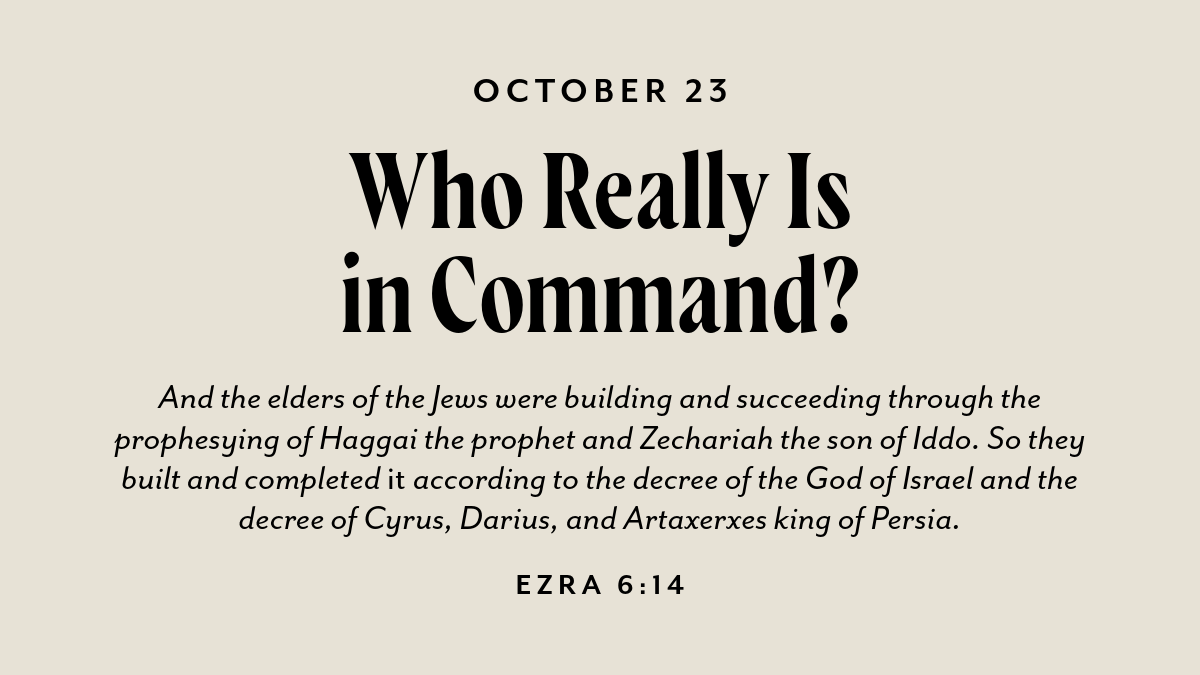
Today’s Devotional: “Who Really Is in Command?”
After seventy years of Babylonian exile, God brought Israel back to their land. As they settled in Judah and strived to rebuild the temple, they faced fierce opposition. But despite their enemies’ attempts to thwart their progress, God continued to provide for them so that they could complete the temple.
As Ezra recounted their work, he explained that the Israelites succeeded “according to the 𝗱𝗲𝗰𝗿𝗲𝗲 of the God of Israel and the 𝗱𝗲𝗰𝗿𝗲𝗲 of Cyrus, Darius, and Artaxerxes king of Persia” (Ezra 6:14). From a human perspective, the rebuilding of the temple and the city of Jerusalem involved the authority of multiple kings and their legal edicts. However, in reality, the reason Israel succeeded was on account of the 𝗱𝗲𝗰𝗿𝗲𝗲 of the God of Israel. The 𝗱𝗲𝗰𝗿𝗲𝗲𝘀 of these kings were subordinate to the sovereign 𝗱𝗲𝗰𝗿𝗲𝗲 of the one true God.
Ezra revealed, in effect, that kings do not make 𝗱𝗲𝗰𝗿𝗲𝗲𝘀 apart from God. God commands, and the kings follow suit (Prov 21:1). God is the ultimate decision maker and ruler. The reason anyone succeeds or fails in life is ultimately not due to worldly circumstances but due to the sovereign will of God. On account of this glorious truth, we need to worship God for every blessing we enjoy and appeal to Him for every trial we endure.
“There is no voice which has ever been heard, neither in heaven or in earth, more exalted, more holy, more fruitful, more sublime than the prayer offered up by the Son of God Himself.”
— Philipp Melanchthon
“The attack on women is a particularly devastating feature of the war on children, because it creates an unfillable void when it pulls a mother away from what should be her first priority and highest calling. ... Every church needs strong men. But the heart and soul of a good church are the precious, godly women who live their lives in faith, love, sanctity, and self-restraint, raising godly children and supporting the work of the Word throughout the church.”
— John MacArthur, The War on Children
Link for 10% off: https://t.co/x1rLTGr8BC
Book Description:
Amid the busyness that accompanies the Christmas season, what we need all the more is to behold the Son.
Christmas commemorates one of the greatest events in human history―when the Word became flesh, when the birth all history had been preparing for came to pass, when God in His glory announced the advent of His Son.
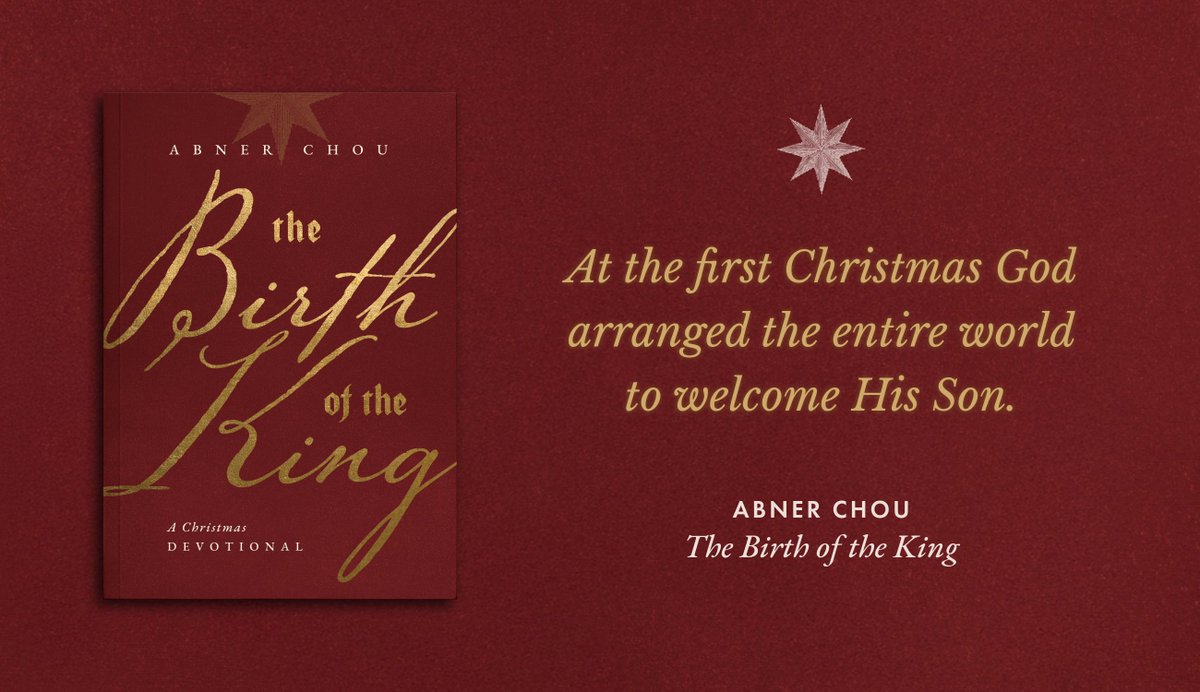
At the first Christmas God arranged the entire world to welcome His Son, yet we still find ourselves needing to arrange our own Christmas to welcome the Lord Jesus. The Birth of the King is designed to help us in that very task. Day by day, this devotional walks you through the entire Christmas story, starting in the Old Testament and culminating in the New, so that you can see the full weight of Christmas from anticipation to fulfillment.
Each devotion reflects on a passage of Scripture, expounding the unique facets of one of the most glorious moments of history. In these pages you will discover:
✵ The wonder of Old Testament prophecies and promises
✵ The true meaning of Matthew’s genealogy of the Messiah
✵ The rich theology in the songs of Mary, Simeon, and Anna
✵ The significance of Christ’s description as the Word made flesh
✵ A glimpse from the book of Revelation of Christ’s return as King of kings
Each devotional reading concludes with study questions to help you meditate on these rich truths or discuss them with family and friends.
Make much of Christ this season as you meditate on what Scripture reveals about Him.
Now Available! Make much of Christ this coming Christmas season as you meditate on what Scripture reveals about Him. This new Christmas devotional from Abner Chou includes 25 daily readings for December that expound the wonder of messianic prophecies and the Gospel accounts of Christ’s birth. Each devotion closes with discussion questions to guide personal or family worship this coming Christmas season.
Link and book description below.