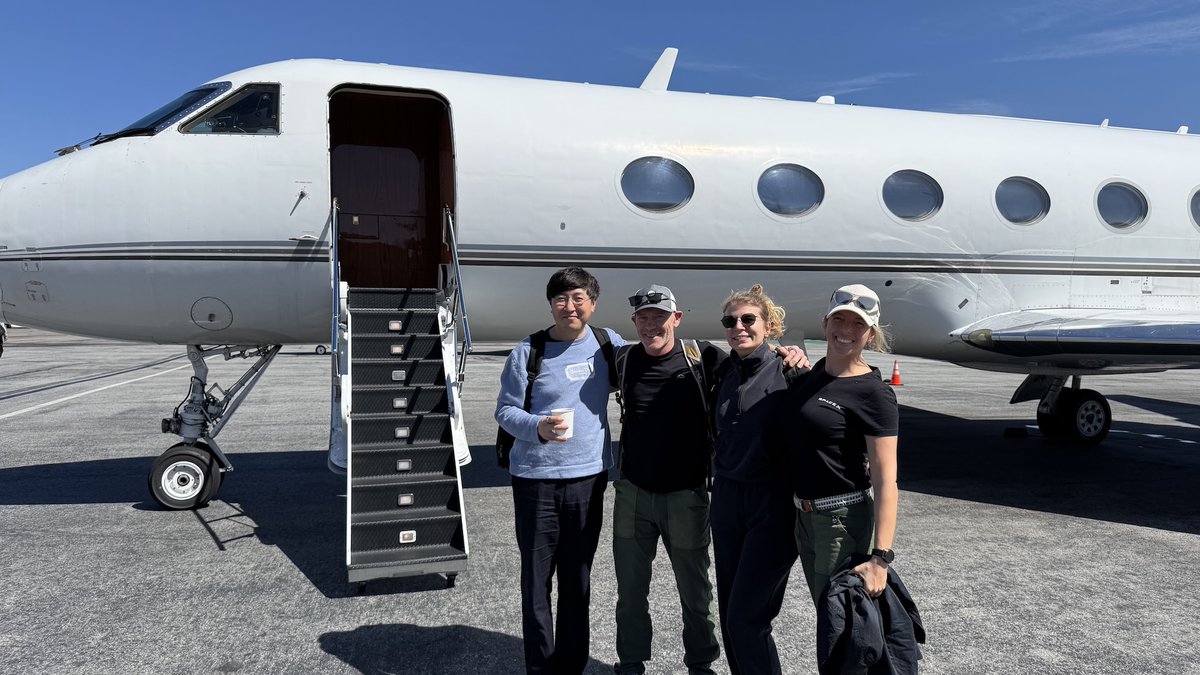
Looking at Earth being the perfect wonder among the stars, I really do think humanity belongs out there and needs to explore. Because who knows what else we will find? To a future where we become an interstellar civilization. I am so grateful to this killer crew:
@satofishi Being an excellent mission commander and extraordinary space visionary, looking after us as a crew and caring for us. I will be forever grateful for letting us share this dream and challenging everyone around to think big and go forward in the very true spirit of the original Fram.
@astro_jannicke Rocking it as a badass vehicle commander and filming star - always approachable.
@Icetrek Space bestie and impressive human all around - the best person to teach one about pioneering, exploring and navigating unknowns.
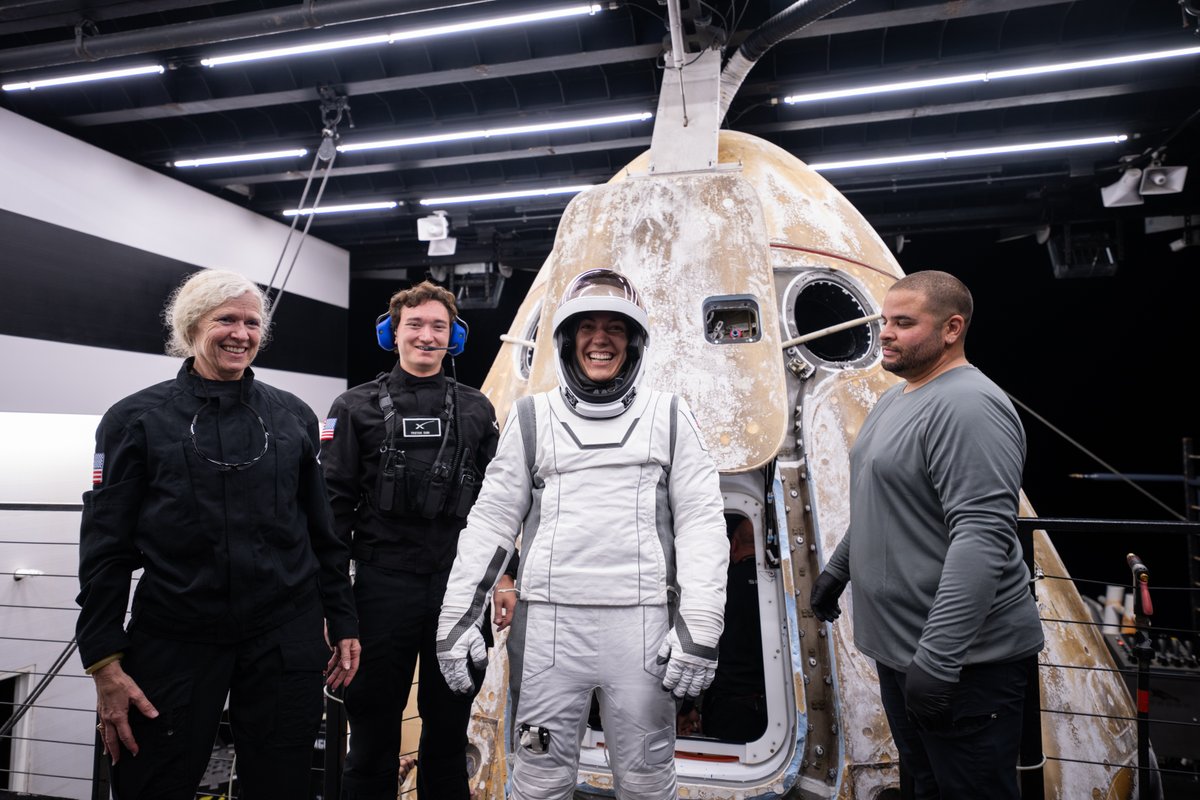
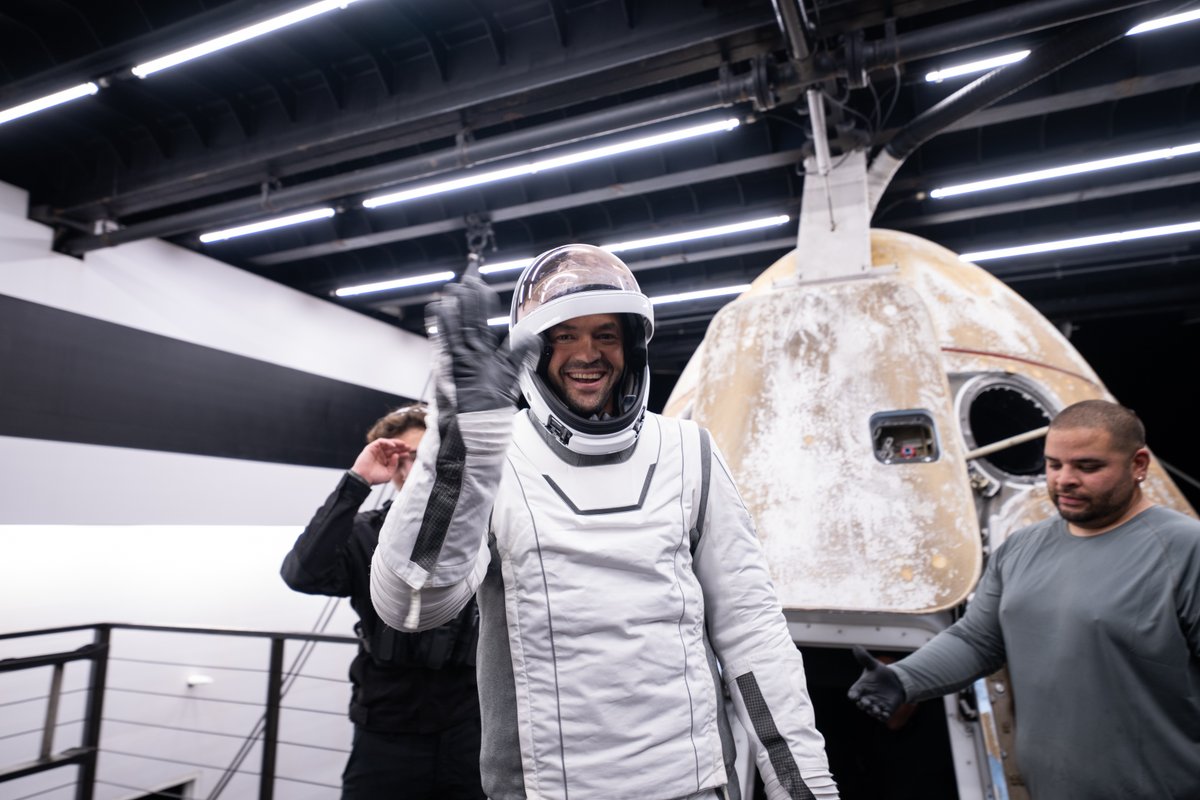
It impressed me how many people at @SpaceX have put their hearts and souls into making a powerful rocket launch a small metal tin out of this world, have it resist the vacuum of space and fall back through the atmosphere. If this isn't hardcore engineering, then what is?
Also thank you to our trainers, medical team and support team, who transformed us from insecure novices to laid-back spacefarers. We owe our perceived coolness to you. And a special thanks to both the research and ham radio team at SpaceX for sharing all the nerdy joy. In general it was so inspiring to feel that everyone was living the attitude of: How does one make the impossible possible?
Keep pushing boundaries, people!
It was inspiring to learn from so many great minds in Houston as researchers shared their initial findings from all of the experiments that flew on Polaris Dawn.
With five days on orbit, nearly every free minute was dedicated to completing these ~40 experiments!
Throughout their first two full days on-orbit, the crew took the first-ever X-ray in space, 130 years after the first X-ray was captured.
The @framonauts did a brain mapping EEG experiment and contributed to a continuous glucose monitor study examining how fluid shifts in space affect the accuracy of glucose monitors for diabetics.
Chun, Jannicke, Rabea, and Eric also transferred images for Fram2Ham, took conference calls in space, and were able to chat with their families thanks to @Starlink
April 1, 2025 - first medical x-ray in space! In this technology demonstration the @framonauts have taken an important step in expanding medical capabilities for long duration space exploration
The ride to orbit was much smoother than I had anticipated. Apart from the final minute before SECO, I barely felt any G-forces—it honestly felt like just another flight.
I had imagined it would feel like being in an elevator that suddenly drops, but that sensation never came. If I hadn’t set free Tyler, the polar bear zero-gravity indicator, I might not have realized we were already weightless. I think being tightly strapped into our seat buckets made the transition less noticeable.
The first few hours in microgravity weren’t exactly comfortable. Space motion sickness hit all of us—we felt nauseous and ended up vomiting a couple of times. It felt different from motion sickness in a car or at sea. You could still read on your iPad without making it worse. But even a small sip of water could upset your stomach and trigger vomiting.
Rabea spent some time on the ham radio, making contact with Berlin. No one asked opening the cupola on the first day—we were all focused on managing the motion sickness. We had a movie night watching our own launch and went to sleep a bit earlier than scheduled. We all slept really well.
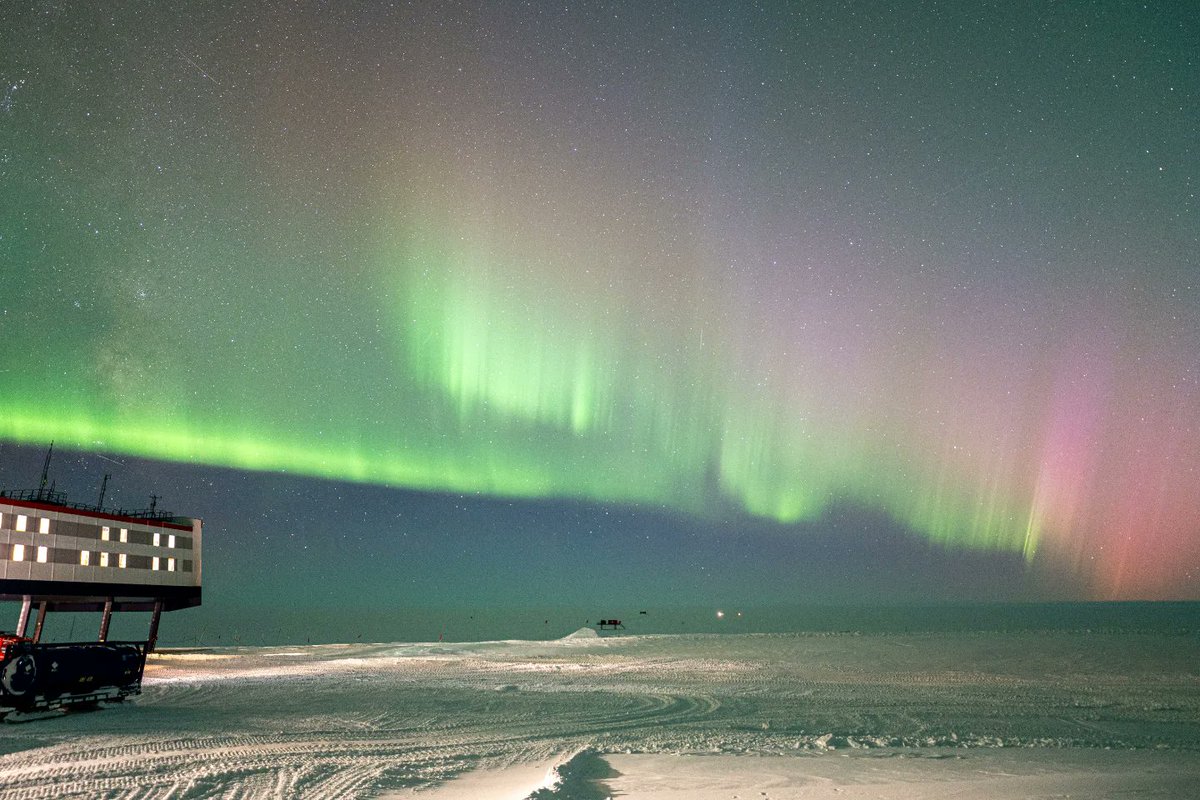
By the second morning, I felt completely refreshed. The trace of motion sickness is all gone. We had breakfast, took a few X-ray images, and opened the cupola three minutes after midnight UTC—right above the South Pole.
Stay tuned.
The ride to orbit was much smoother than I had anticipated. Apart from the final minute before SECO, I barely felt any G-forces—it honestly felt like just another flight.
I had imagined it would feel like being in an elevator that suddenly drops, but that sensation never came. If I hadn’t set free Tyler, the polar bear zero-gravity indicator, I might not have realized we were already weightless. I think being tightly strapped into our seat buckets made the transition less noticeable.
The first few hours in microgravity weren’t exactly comfortable. Space motion sickness hit all of us—we felt nauseous and ended up vomiting a couple of times. It felt different from motion sickness in a car or at sea. You could still read on your iPad without making it worse. But even a small sip of water could upset your stomach and trigger vomiting.
Rabea spent some time on the ham radio, making contact with Berlin. No one asked opening the cupola on the first day—we were all focused on managing the motion sickness. We had a movie night watching our own launch and went to sleep a bit earlier than scheduled. We all slept really well.
By the second morning, I felt completely refreshed. The trace of motion sickness is all gone. We had breakfast, took a few X-ray images, and opened the cupola three minutes after midnight UTC—right above the South Pole.
Stay tuned.
36th flight of 2025: SpaceX Fram2 from LC-39A, Kennedy Space Center, via the South Pole and the North Pole, to Pacific Ocean near Los Angeles or Oceanside. Crew Dragon C207 “Resilience”. This is my 1000th flight of all time.
Dragon missions enable critical science and research to fly to orbit frequently, helping advance life on Earth and in space. If you’re interested in working with SpaceX and @Vast to develop the future of on-orbit research, check out https://t.co/p56RYQIN25
Ausführliches Interview mit Rabea Rogge @rprogge, der voraussichtlich ersten deutschen Astronautin - mit einem Vorwort von Walther Pelzer, Generaldirektor der @DLR_SpaceAgency.
#Fram2
🎦👉 https://t.co/7aK5Hi6CrU
HARMONY OF RESILIENCE: Recorded in space and sent to Earth via @SpaceX’s @Starlink constellation, Polaris Dawn crewmember and violinist @Gillis_SarahE invites you to enjoy this music moment in support of @StJude & @ElSistemaUSA → https://t.co/My8cUwAWzg
Fram2 will become the first human spaceflight mission to fly over and explore the Earth’s polar regions from orbit. Learn more about the @framonauts mission here → https://t.co/3InB5ybsIx
Really great to see so much of the @inspiration4x research be published in @NaturePortfolio congrats to all who worked hard to make this happen, and thanks to a fantastic crew for pioneering research in commercial spaceflight
The Space Omics and Medical Atlas (SOMA) package, published across Nature Portfolio journals, provides insights into how spaceflight affects human biology. It represents the largest compendium of data for aerospace medicine and space biology to date. https://t.co/CEGiszNJuw