Dear Readers,
we are pleased to announce the release of the Journal of Tropical Forest Management, Volume 32, Issue 2. This is the second edition in 2026
We encourage you to explore the published articles, which may serve as valuable references for you
https://t.co/5qDtyhYfrr
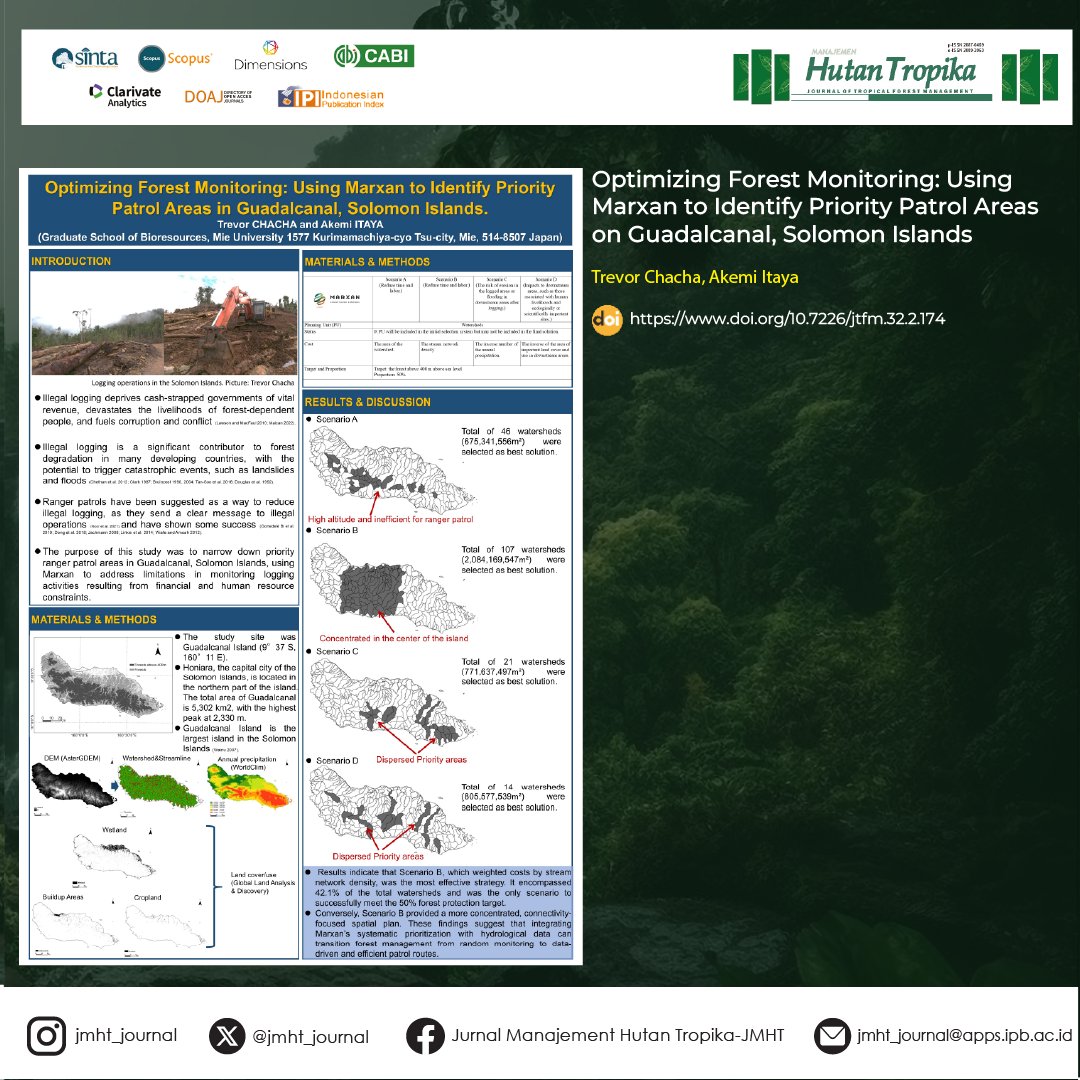
Rising wildfire risks under climate change demand more adaptive forest management strategies.
This study shows that prescribed burning and fuel reduction can enhance forest regeneration, support species diversity, and maintain biomass.
Visit https://t.co/NhrraKeha0
Dear Readers, we are pleased to announce the release of the Journal of Tropical Forest Management, Vol 32, Issue 1.
We encourage you to explore the published articles, which may serve as valuable references for your current or upcoming research.
https://t.co/6YjWP9pKbC
#JMHT
The Sougb Tribe of Teluk Bintuni, West Papua, has long maintained a deep relationship with the forest. This study explored the tribe’s forest utilization practices through interviews across five subdistricts.
Scan QR or visit https://t.co/ZFnLriEVeT to read more
#jmht#journal
From birds to mammals, wildlife trade continues to thrive online. This research documents 107 species traded through Facebook, urging greater vigilance and collaboration to safeguard Indonesia’s biodiversity.
Scan our QR Code or visit https://t.co/o9GHPkXnV5
to read more
#jmht
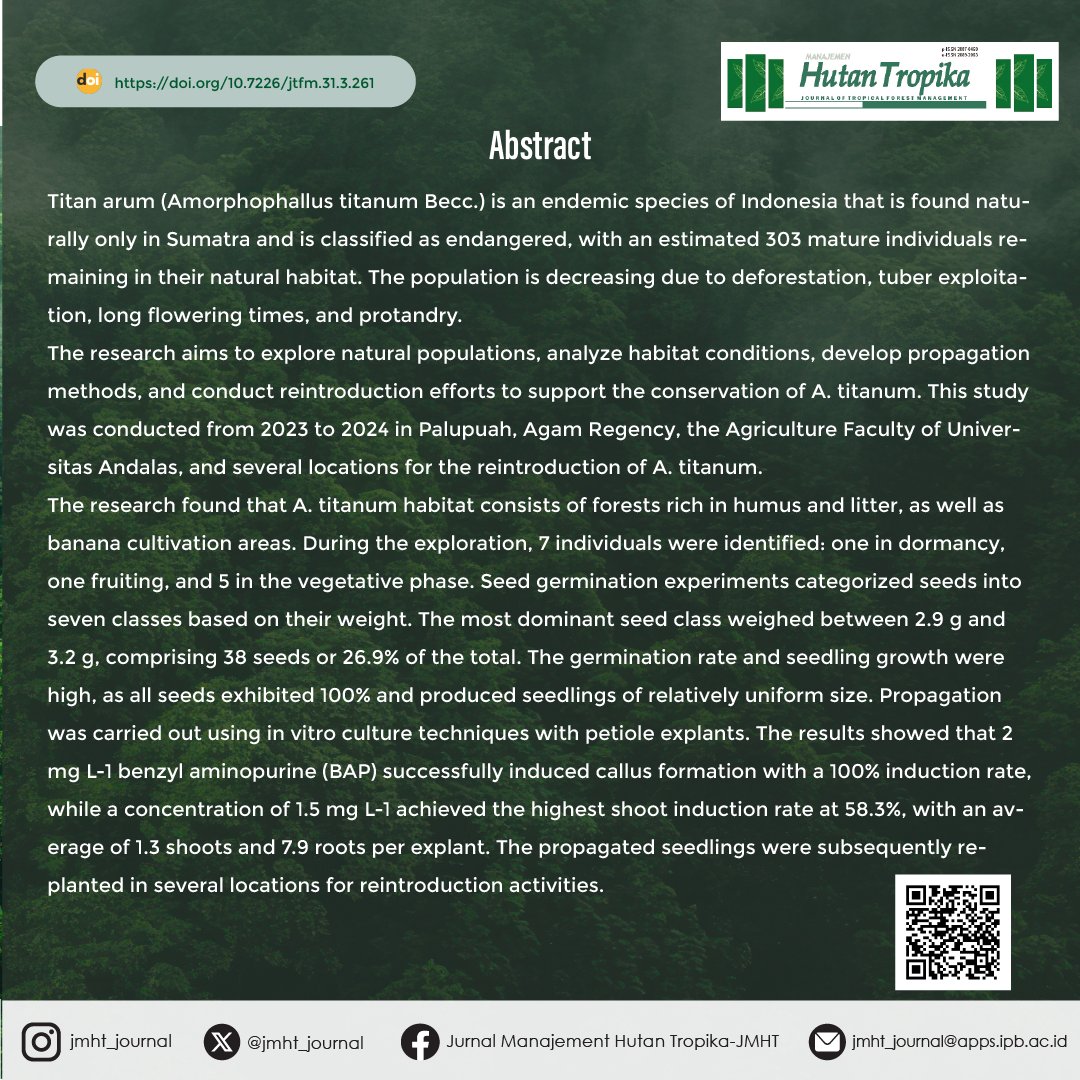
Saving the world’s largest flower, Amorphophallus titanum, begins with science and care. This research explores its natural habitat, develops propagation techniques, and reintroduces this endangered Sumatran giant back into the wild. 🌿
Visit https://t.co/GcPjnKPRpP to read more
Healthy peat swamp forests with dense canopy cover play a key role in stabilizing groundwater levels. This study in the Resak Tambahan Forest Reserve reveals how canopy density directly influences water retention and hydrological balance.
Visit https://t.co/UCnoKINOf1
🌳 Tropical forests in South Sorong, Southwest Papua, play a vital role in the global carbon cycle, yet their total carbon stocks were previously under-documented. This study quantified carbon across six forest ecosystems
visit https://t.co/HzEf11PXP1
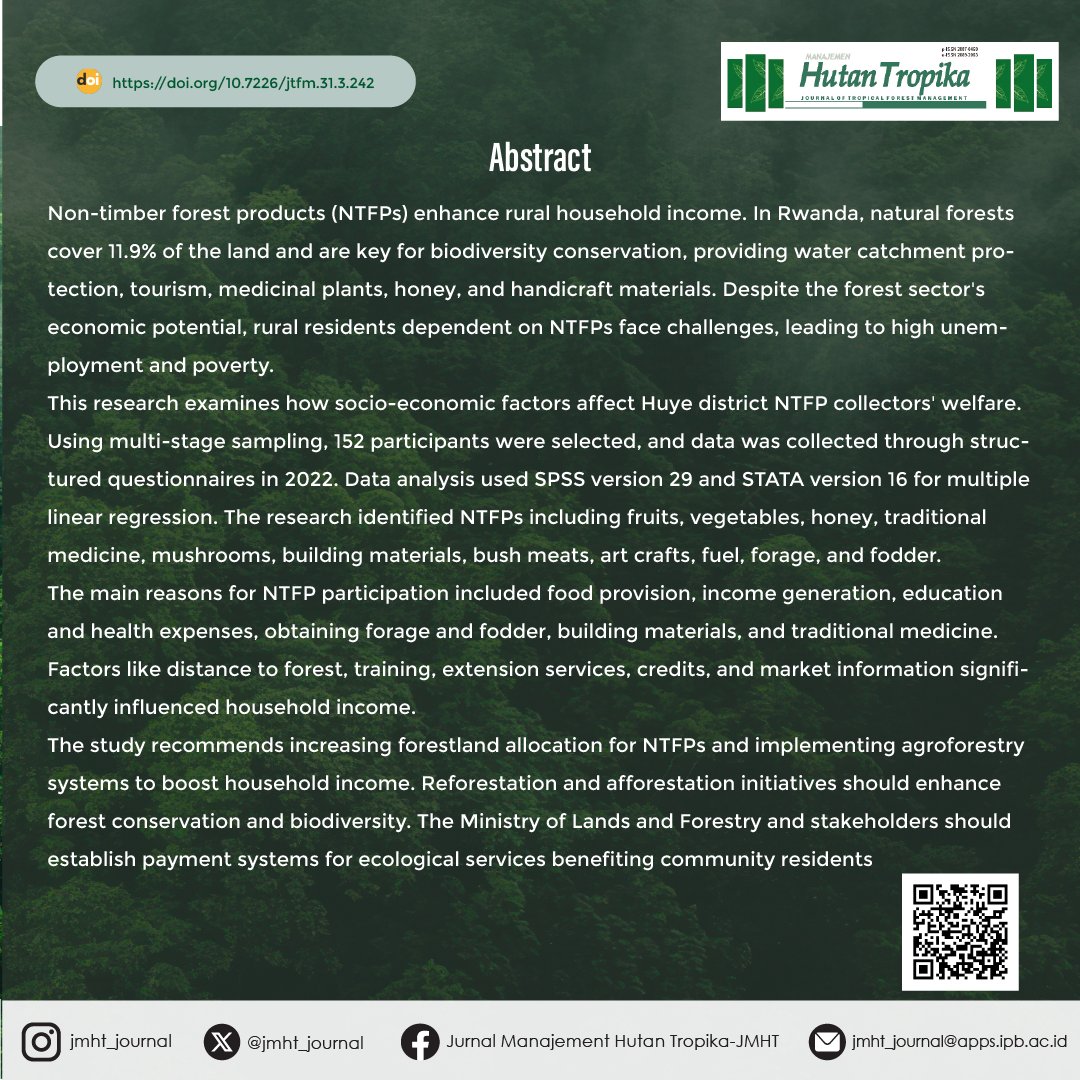
This Study reveals how NTFPs support rural livelihoods in Rwanda. Key socio-economic factors such as forest access and training highlighting the importance of integrating NTFPs into sustainable forest management
Visit https://t.co/Yp7LJekWqF to read more
Agroforestry enhance livelihoods, yet its adoption among cashew farmers in The Gambia remains limited. This study identifies the key socioeconomic and environmental factors influencing adoption to support more effective policy and program
Visit https://t.co/3Z7aNKjxrW
🌳 Tropical forests in South Sorong, Southwest Papua, play a vital role in the global carbon cycle, yet their total carbon stocks were previously under-documented. This study quantified carbon across six forest ecosystems.
visit https://t.co/emaFRQE53l
#forestry#scopus#jmht
🦌 Communities in Bintulu, Sarawak, hold diverse values toward wildlife hunting, shaped by culture, tradition, and conservation concerns. A survey revealed that while traditional values remain strong, Conservation values were also highly expressed.
visit: https://t.co/emaFRQE53l
A study in Komodo District examined the factors shaping community support for forest conservation policies using logistic regression analysis.
Scan our QR Code or visit https://t.co/WlavjfS8S8 or https://t.co/DhfyFAbc1g
to read more about this article
We encourage you to explore the published articles, which may serve as valuable references for your current or upcoming research. We trust that these contributions will significantly enhance your studies and further the field of tropical forest management 📚🌿
Dear Readers, we are pleased to announce the release of the Journal of Tropical Forest Management, Volume 31, Issue 3
We encourage you to explore the published articles, which may serve as valuable references for your current or upcoming research.
https://t.co/zGqW1Lp078
This study reveals a paradox: better accessibility and amenities reduce perceived risk, potentially lowering readiness. Meanwhile, disaster knowledge raises awareness and improves preparedness.
Scan our QR Code or visit https://t.co/GcPjnKPRpP
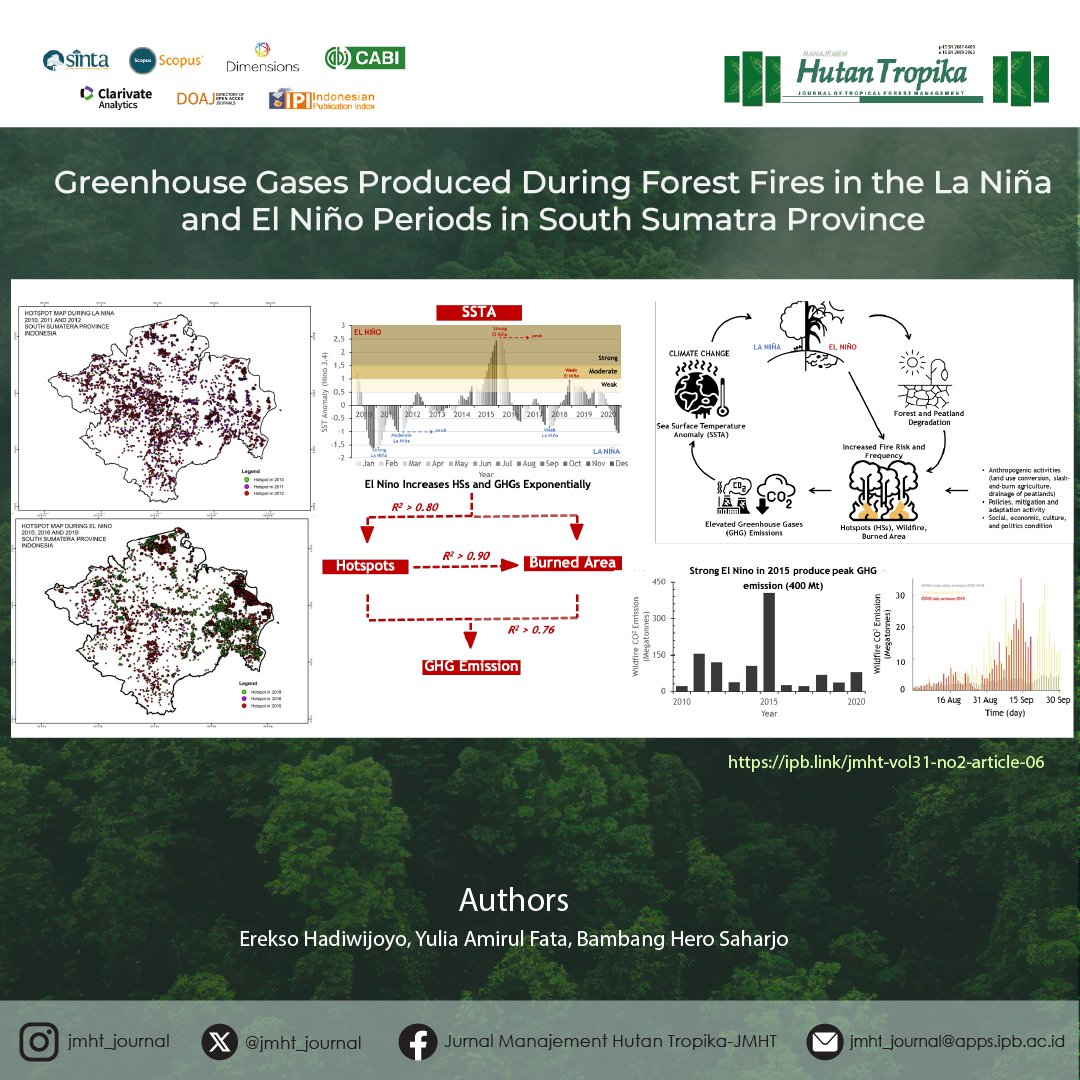
This study reveals that fire hotspots and emissions rise sharply during dry seasons and El Niño years, with a peak in 2015 exceeding 400 Mton CO₂. These findings highlight the urgent need for climate-adaptive fire mitigation.
Scan our QR Code or visit https://t.co/UCnoKINOf1