Our paper on sex-differential selection in humans is now out in PNAS! Check it out: https://t.co/Fi8QZ8Ij2s See the thread below on the original pre-print for more! 👇
Very excited to share our new preprint from the Kirkpatrick and @arbelharpak labs!
Natural selection can act differently on females and males. How frequently does this happen in the human genome?
https://t.co/cRUyi28Tgy
1/n
How well does TWAS estimate a gene’s direction of effect on a trait? We think of this as an important stress-test for the accuracy of TWAS.
In a new pre-print with @PGerlach98341, Jeff Spence, and @jkpritch, we find that TWAS gets the sign wrong around 20-30% of the time!
1/n
Excited to share my 1st-author work from the @arbelharpak Lab!
We examine the accuracy of polygenic score (PGS) predictions across individuals in the UK Biobank. We make 3 observations that expose gaps in our understanding of PGS “portability”.
https://t.co/XEzFAKSb2p
(1/28)
Evolutionary theory predicts the difference in gamete size b/w females and males explains the direction of sexual selection. Two studies seem to provide contradictory evidence, but a study in @EvolLetters shows that both studies support the prediction:
https://t.co/uXFPpGxrcC
I am excited to share my first first-author preprint of my PhD describing work with Changde Cheng, Mark Kirkpatrick and @arbelharpak! We ask if sex-differential gene expression drives sex-differential expression in humans. (1/15)
https://t.co/pboYJVcJ9O
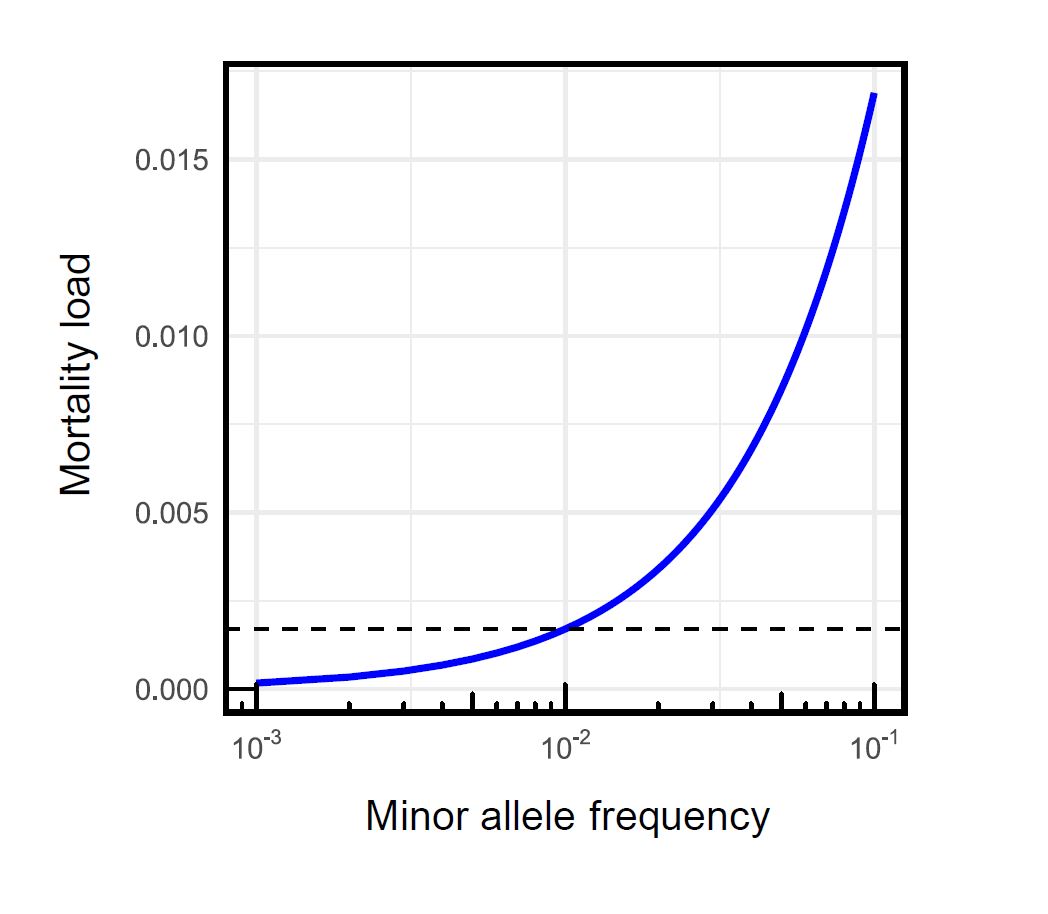
With our estimates of selection parameters, and with some conservative assumptions, we estimate the mortality load due to SDS to only be 0.2%. We conclude genetic variation under SDS may be pervasive in the genome but still demographically sustainable. 17/n
Viability SDS is hypothesized to lead to the maintenance of alleles that are deleterious for half the population. Previous work quantifying SDS in the human genome was criticized for implying this load is unbearably high.
https://t.co/5VxpZwEYmV
https://t.co/PPh9v1fK4b
16/n
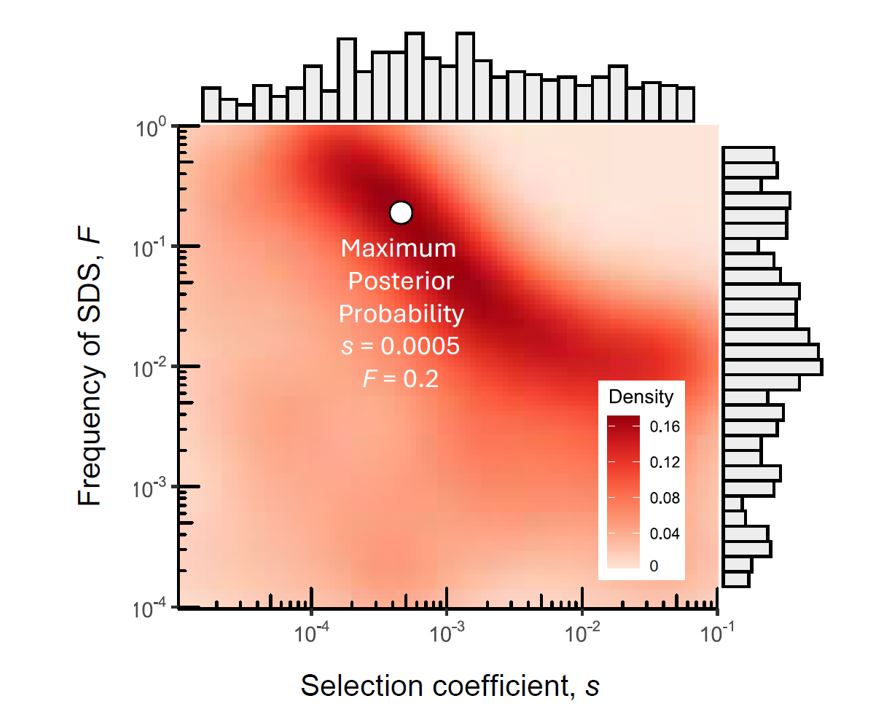
We use Approximate Bayesian Computation to estimate the strength of SDS on viability and its frequency in the genome. We estimate an average selection coefficient around s=0.001, with roughly 20% of the autosomal sequence linked to a site under SDS. 15/n
Relatedly, in another preprint hot out of the oven, lab mate @MatthewJMing and colleagues investigate the link between sex-differential gene expression and SDS.
https://t.co/8LeaxtFCNk
14/n
Among the traits we considered, we only find marginal evidence for fecundity SDS favoring large effects in males on arm fat-free mass. We are currently trying to understand this signal better—stay tuned!
13/n
We extended a model we had previously developed (Zhu et al, 2023) linking sex-differential allelic effects on traits to sex-differential fitness effects.
https://t.co/NZWJwwLIVE
12/n
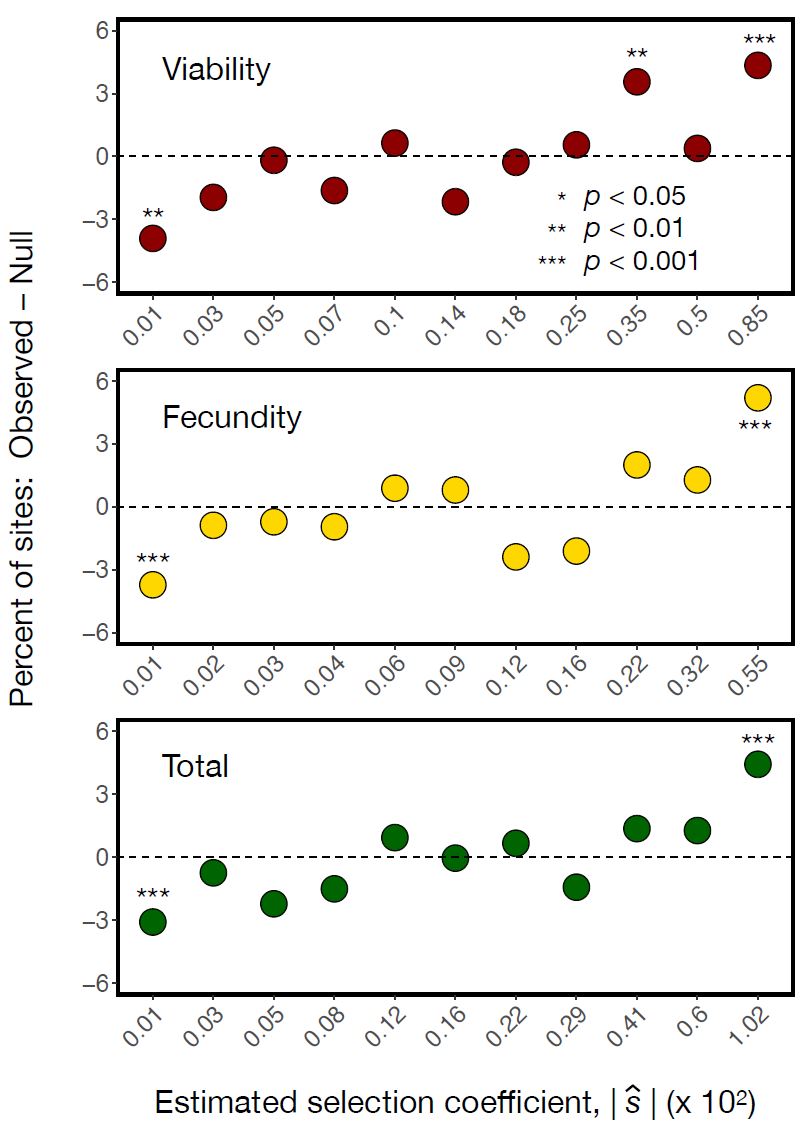
We find significant and highly polygenic signals of SDS on both viability and fecundity, in agreement with recent work by Ruzicka et al, 2022.
https://t.co/qQvfE0Lw7q
10/n
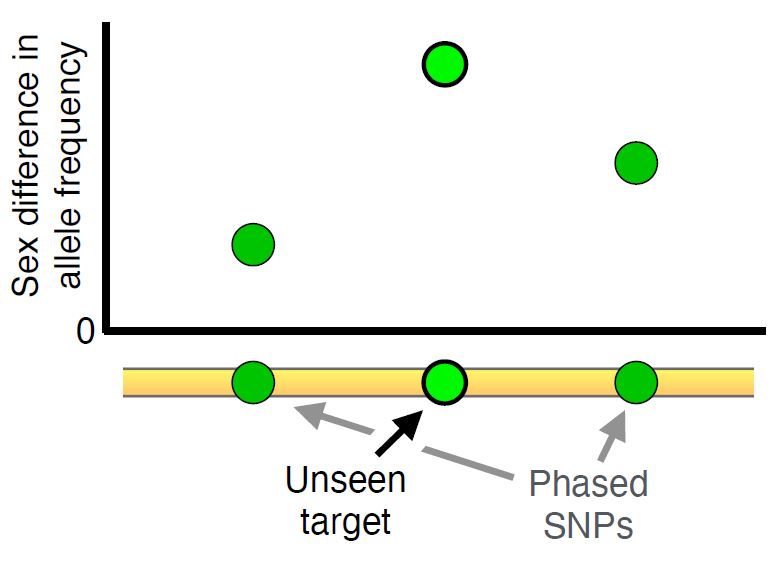
Simulations show that this haplotype-based method outperforms methods that independently consider single sites. Our estimates of the selection coefficients using haplotypes are downwardly-biased and are robust to assumptions about the location of target of selection. 8/n
Very excited to share our new preprint from the Kirkpatrick and @arbelharpak labs!
Natural selection can act differently on females and males. How frequently does this happen in the human genome?
https://t.co/cRUyi28Tgy
1/n