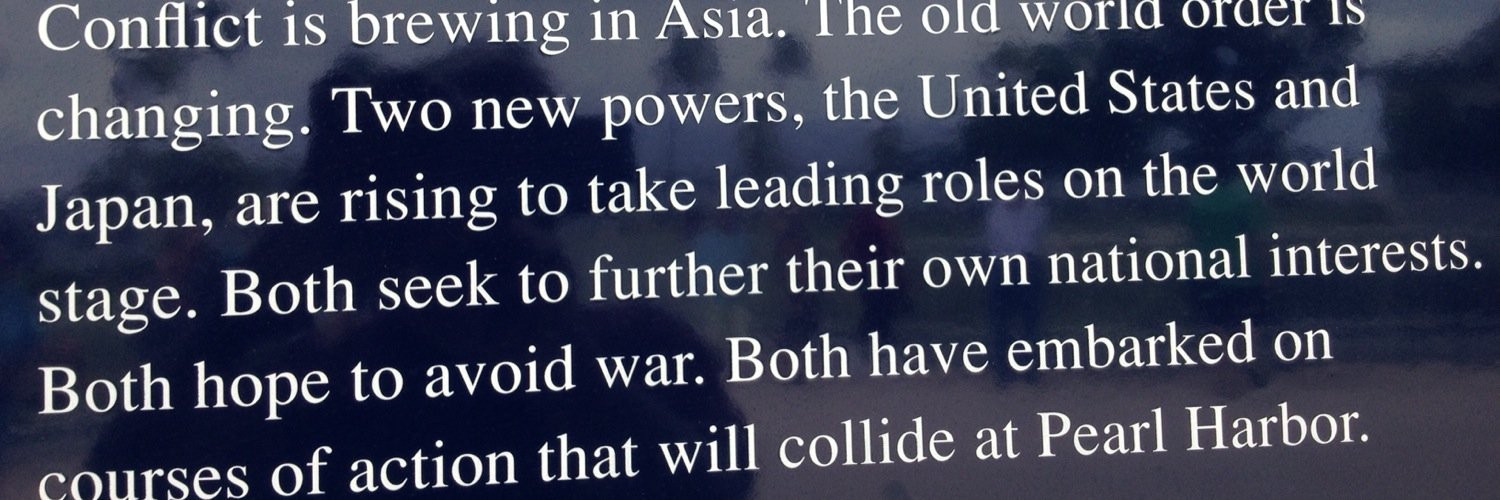
“The world is on the edge of a gathering storm of military crises.History shows that regional crises often simmer slowly before erupting suddenly into wars..The decline of old and the rise of new powers is often accompanied by lawlessness, disorder, chaos” https://t.co/atiLWfWPlJ
Historically, China and India were distant neighbors separated by Tibet. China’s invasion and occupation of Tibet in 1950 transformed the traditional Indo-Tibetan frontier into a Sino-Indian border. In a similar way, China’s 9-Dash Line and militarized artificial islands have now made China next-door neighbor of Southeast Asian countries like Malaysia and Indonesia. As long as Tibet remains Beijing-occupied-territory and the artificial SCS islands under Beijing’s control, the fundamental source of Sino-Indian and Sino-ASEAN tensions will persist, making durable peace and tranquillity elusive in Asia. https://t.co/8mymYTt7Xq pp.125-164
A common thread running thru David Kang’s works is the simplistic portrayal of the Chinese tributary system as a legitimate and beneficial regional order, effectively advocating its restoration as a framework for East and Southeast Asian relations, notwithstanding considerable evidence to the contrary.
China’s internal surveillance apparatus creates opportunities for China’s rivals to peek efficiently inside its borders. One “Five Eyes” official says: “They’re the ones putting the cameras up—all we have to do is find a way in… there is always a way in.” https://t.co/mgLU50YofU
Xi Jinping’s running of China as a government-subsidized, export-driven manufacturing juggernaut “is not just bad for whole industries around the world; it’s also distorting China’s economy and alienating trading partners,” @MichaelSchuman argues: https://t.co/C4DWfb1ZvQ
This is the age of disinformation, AI-generated deepfakes, psychological operations, influence ops to shape domestic politics, unrestricted warfare to subdue the enemy w/o fighting
This is the age of disinformation, AI-generated deepfakes, psychological operations, influence ops to shape domestic politics, unrestricted warfare to subdue the enemy w/o fighting
This week, Singapore exposed and blocked a foreign influence campaign by China that was pushing anti-Indian narratives through social media.
Not in India.
Not in Pakistan.
Singapore.
Let that sink in.
For years, people have assumed that every anti-Indian trend online was simply the result of millions of ordinary people independently reaching the same conclusion.
But governments, intelligence services, and influence networks spend enormous resources making sure you think exactly that.
The goal is never to convince you directly.
The goal is to convince you that "everyone else already agrees."
A fake account posts it.
A network amplifies it.
Algorithms reward it.
Real people repeat it.
And suddenly propaganda becomes public opinion.
The most effective disinformation campaign is not the one that fools your enemies.
It's the one that convinces you to spread it yourself.
So the next time you see a viral anti-Indian narrative exploding across your feed, ask yourself:
Are you witnessing a genuine consensus?
Or are you watching a perception being manufactured in real time?
Counterpoint:
Xi Jinping (2012): “We differ completely from Western countries in social system, ideology & other aspects. This determines that our struggle and contest with Western countries is irreconcilable and therefore inevitably long-term, complex, and sometimes very acute”
So why not reclaim/reconquer Korea, Mongolia, Vietnam and parts of Russian Far East?
FYI: Mongol and Qing were not Chinese dynasties. They conquered and colonized Han China just as they conquered parts of central and Inner Asia.
Read the works of Chinese nationalists in the 1920s who blamed the alien Manchus for all the ills of the country.
Han, Tang, Song and Ming were Chinese dynasties.
Historically, China and India were distant neighbors separated by Tibet. China’s invasion and occupation of Tibet in 1950 transformed the traditional Indo-Tibetan frontier into a Sino-Indian border. In a similar way, China’s 9-Dash Line and militarized artificial islands have now made China next-door neighbor of Southeast Asian countries like Malaysia and Indonesia. As long as Tibet remains Beijing-occupied-territory and the artificial SCS islands under Beijing’s control, the fundamental source of Sino-Indian and Sino-ASEAN tensions will persist, making durable peace and tranquillity elusive in Asia. https://t.co/8mymYTt7Xq pp.125-164
The boundary question between China and India is a complex sensitive question left over from history. It concerns the sentiment of our peoples, and requires dialogue and consultation to seek a fair, reasonable and mutually acceptable solution.
In recent years, China and India have maintained regular communication on boundary questions through mechanisms such as the Special Representatives (SR) and the Working Mechanism for Consultation and Coordination on India-China Border Affairs (WMCC). Currently, the border situation is generally stable and peaceful.
The two countries should put the boundary question at an appropriate position in bilateral relations, not allow the boundary question to define the overall China-India relations, still less let specific differences affect bilateral cooperation.
The Singapore government is trying to block access to social media posts (some featuring videos, many in Chinese) warning citizens that their nation is being overrun by ethnic Indians.
The content originated on China-based platforms such as Douyin, Rednote and TikTok.
Singapore handles foreign information operations with unusual clarity and decisiveness. It identifies them early, then compels platforms to block the content so it never reaches Singaporean eyes.
I remain skeptical that this game of censorship whack-a-mole can ever be fully won, but there is real value in ministers publicly naming the source and explaining exactly why these narratives are subversive.
The narratives being peddled claim that Singapore’s multiracial model is just a “facade” to placate Western sensibilities, and that the country has really always been anchored by its Chinese-majority demographics.
They assert that “Singapore’s culture is fundamentally Chinese,” and that the government’s decision to distance itself from Beijing while ignoring the “threat” of a growing Indian community will end in disaster.
The videos portray the Chinese majority as under siege by an increasingly powerful Indian minority, including politicians. They single out President Tharman Shanmugaratnam, of Indian heritage, and warn that “curry concentration” (yes, really) is eroding Chinese cultural dominance.
This coordinated push arrived immediately after Senior Minister Lee Hsien Loong’s recent viral remarks in China where he reminded Beijing that Singapore-China ties are based on “mutual benefit and shared interests, not ethnicity.”
He drew a clear red line saying that Singapore is sovereign and not an overseas extension of the PRC. Chinese netizens and state-aligned voices reacted with indignation, framing it as ingratitude from “ethnic kin” who should show deference to the motherland. The subtext was clear: how dare Singapore prioritize its Indian, Malay, and other communities over blood-and-soil solidarity with the CCP?
Connect the dots to Beijing’s broader information warfare against Israel, the United States, and others, and the pattern becomes clearer. Especially since Oct 7th, Beijing has weaponized antisemitism as a wedge issue.
On its tightly censored platforms, state media and influencers have let Hitler memes, "Jews control America" conspiracies, and Nazi comparisons proliferate unchecked. This all has spilled out into global social media.
What is the goal? Fracture the West, erode US-Israel ties, poison diaspora debates, sow domestic discord, and paint America's alliances as puppets of a shadowy cabal. It's created and amplified because it distracts, divides, and weakens the very coalition (MAGA) containing Chinese expansion.
Now, apply this same lens to the sudden surge of anti-Indian content in Singapore and even in the US, particularly targeting tech circles. While organic frustrations (H-1B abuse, cultural friction) exist, the volume, timing, and precision point to deliberate seeding.
Amplify resentment against Indian professionals and you damage the American-India tech alliance, the most credible long-term hedge against China dependence. It disrupts supply-chain diversification and poison talent pipelines in Silicon Valley.
In Singapore, the same operation pits the Chinese majority against the Indian community, weakening society from within. This should be recognized for what it is: classic United Front work in the digital world. It's low-cost, high-impact subversion with plausible deniability.
China doesn’t need naval fleets in the Strait of Malacca when it can export ethnic poison to fracture societies from within. A divided Singapore becomes a less reliable financial and technological anchor for US interests in Southeast Asia. A majority-Chinese Singapore riled up by Indian invasion narratives becomes more inclined to embrace the ethnic ties to the motherland and advocate for deepening Singapore's ties to the CCP.
Likewise, a fractured US-India partnership keeps supply chains tethered to the PRC. Stoked antisemitism keeps the West chasing ghosts instead of confronting the primary challenge of our era.
Western democracies cannot and should not copy Singapore’s blunt censorship model. But we must learn from its vigilance.
We are all being targeted by sophisticated, state-driven influence campaigns designed to exploit our existing fault lines.
Recognizing the playbook is the first step toward resisting it. The price of complacency is a more divided, weaker, and more easily manipulated world.
A common thread running thru David Kang’s works is the simplistic portrayal of the Chinese tributary system as a legitimate and beneficial regional order, effectively advocating its restoration as a framework for East and Southeast Asian relations, notwithstanding considerable evidence to the contrary.
🇬🇷🇮🇳🇹🇷 Turkish media are losing it over Greece potentially getting India's LR-LACM - why?
- Range between 1,000-1,500 km.
- Low-altitude flight capability to reduce radar detection.
- Precision navigation systems to hit high-value strategic targets.
https://t.co/8JKyfEpVCz
Control and security of chokepoint and sea-lanes of communication has become increasingly debated in light of the war in the Gulf.
This research paper analyses why and how maritime Southeast Asian states are seeking to develop and implement anti-access/area-denial strategies and capabilities to respond to major conflicts.
Find out more I Dr @EvanLaksmana I https://t.co/0A9nBxd8AY
IISS Shangri-La Dialogue
29–31 May 2026
#IISS_SLD26
https://t.co/aj642880tE
Historically, China and India were distant neighbors separated by Tibet. China’s invasion and occupation of Tibet in 1950 transformed the traditional Indo-Tibetan frontier into a Sino-Indian border. In a similar way, China’s 9-Dash Line and militarized artificial islands have now made China next-door neighbor of Southeast Asian countries like Malaysia and Indonesia. As long as Tibet remains Beijing-occupied-territory and the artificial SCS islands under Beijing’s control, the fundamental source of Sino-Indian and Sino-ASEAN tensions will persist, making durable peace and tranquillity elusive in Asia. https://t.co/8mymYTtFMY pp.125-164
👇There hasn't been nearly enough attention to the comprehensive plan Beijing has to remake in the international system normatively rather than institutionally.
Historically, China and India were distant neighbors separated by Tibet. China’s invasion and occupation of Tibet in 1950 transformed the traditional Indo-Tibetan frontier into a Sino-Indian border. In a similar way, China’s 9-Dash Line and militarized artificial islands have now made China next-door neighbor of Southeast Asian countries like Malaysia and Indonesia. As long as Tibet remains Beijing-occupied-territory and the artificial SCS islands under Beijing’s control, the fundamental source of Sino-Indian and Sino-ASEAN tensions will persist, making durable peace and tranquillity elusive in Asia. https://t.co/8mymYTtFMY pp.125-164
The boundary question between China and India is a complex sensitive question left over from history. It concerns the sentiment of our peoples, and requires dialogue and consultation to seek a fair, reasonable and mutually acceptable solution.
In recent years, China and India have maintained regular communication on boundary questions through mechanisms such as the Special Representatives (SR) and the Working Mechanism for Consultation and Coordination on India-China Border Affairs (WMCC). Currently, the border situation is generally stable and peaceful.
The two countries should put the boundary question at an appropriate position in bilateral relations, not allow the boundary question to define the overall China-India relations, still less let specific differences affect bilateral cooperation.
Remember that "What Does China Want" paper by David Kang et al in International Security last year? https://t.co/YnGzC5uF0i It was a lame paper, now it turns out Kang, the lead author, is no longer at USC after multiple sexual harassment allegations, and a last-minute settlement of one: "USC settled a lawsuit by a former student who accused David Kang, an international relations professor, of sexually harassing her, according to Los Angeles Superior Court records. The last-minute agreement, reached Monday morning, allowed USC to dodge a potentially embarrassing jury trial...a USC spokesperson told Morning, Trojan on Monday that Kang’s employment at the university ended March 19. It’s unclear whether he resigned or was terminated...Kang, 61, is still facing two ongoing lawsuits accusing him of sexual harassment and assault....a woman who played on a high school soccer team coached by Kang accused him of groping her when she was 15." A child... https://t.co/Hlylsn7paR will we hear anything from the people who platformed and amplified him?