@NieveJuancito Y para terminar, Par y Cuap nunca fueron buena referencia de tasa. Lo más largo que tiene sentido mirar el el Disco (que hoy se volvió tan corto que ya el TZXM9 se le empieza a arrimar en duration por la amortización y los cupones del disco)
@NieveJuancito Igual la realidad es que hoy son mercados segmentados con inversores totalmente diferentes. Y creo que viene más de ahí el "no arbitraje" más que otra cosa. Nunca corri una regresión del spread USD-CER vs la evolución del TCR para ver si había algún poder predictivo ahi
The Gear Guide is live.
Golf equipment sorted by brand, year & performance. Because keeping track of the Max's, K's, and D's isn't easy for anyone.
Built to assist our DM conversations as you navigate a purchase or fitting.
Drivers for now. More to come.
Link here 👇
Recordamos. Hoy vamos a estar en Gamba Cantina de @SoyMatiR 🧑🍳🍗(Buena Vista, Beccar).
Menú de pasos y maridaje seleccionado con vinos de Piloto de Prueba, El Viticultor y Mellecey (ver flyer).
Reserva tu lugar!!!
Paladar Noir 🐶🍷
Degrees don't matter much anymore. I went to NYU and Columbia. Those credentials opened doors for me in the 1990s when I started fundraising for my first start up. For decades the education system has worked the same way: institutions give you a blessing, and employers or investors use that blessing as a proxy for competence. The university stands between you and knowledge, and charges you for the privilege of certifying that you acquired it. That model is breaking down.
As an employer and investor today, I rarely look at the first four years of someone's education. I look at the last four years of building. What problems did they solve? What can they demonstrate? The signaling value of a prestigious degree is fading because employers are learning that credentials and capability are increasingly different things.
These three projects accelerate that shift dramatically.
The first is DeepTutor, from the University of Hong Kong. You upload your textbooks, notes, or PDFs and it becomes a personal tutor that works exclusively with your material, cites directly from your documents, and generates practice exams calibrated to your level. Everything runs locally. Your data never leaves your machine. Over 10,000 stars on GitHub. For any student paying a fortune for private tutoring, this changes the math entirely. Link: https://t.co/vjcyqluUAK
The second is ScienceClaw × Infinite, from MIT's LAMM Lab (Markus Buehler and team). A platform where autonomous AI agents conduct scientific research without central coordination. Each agent selects tools from a catalog of over 300, runs computational experiments, publishes results with full provenance, and other agents critique and build on top. It is already producing real results: peptide design for cancer receptors, ultralight ceramics, formal connections between fields that had never shared a single citation. Code: https://t.co/iy0gw8abtz
The third is Andrej Karpathy's AutoResearch. 630 lines of Python. You point an agent at a training setup, go to sleep, and wake up to a log of autonomous experiments and a better model than the one you left running. It modifies code, trains for five minutes, evaluates whether the result improved, keeps or discards, and repeats. 8,000 stars on GitHub in days.
What connects all three is the same principle: AI is a system that investigates, learns, teaches, and discovers while you sleep. DeepTutor democratizes education. ScienceClaw democratizes research. AutoResearch democratizes experimentation. All three are open source. All three run on your own hardware.
The world is moving from one where others give you credentials to one where you give yourself knowledge. The gatekeepers are losing their monopoly. The tools are here, free, and getting better every week. The only barrier left is awareness.
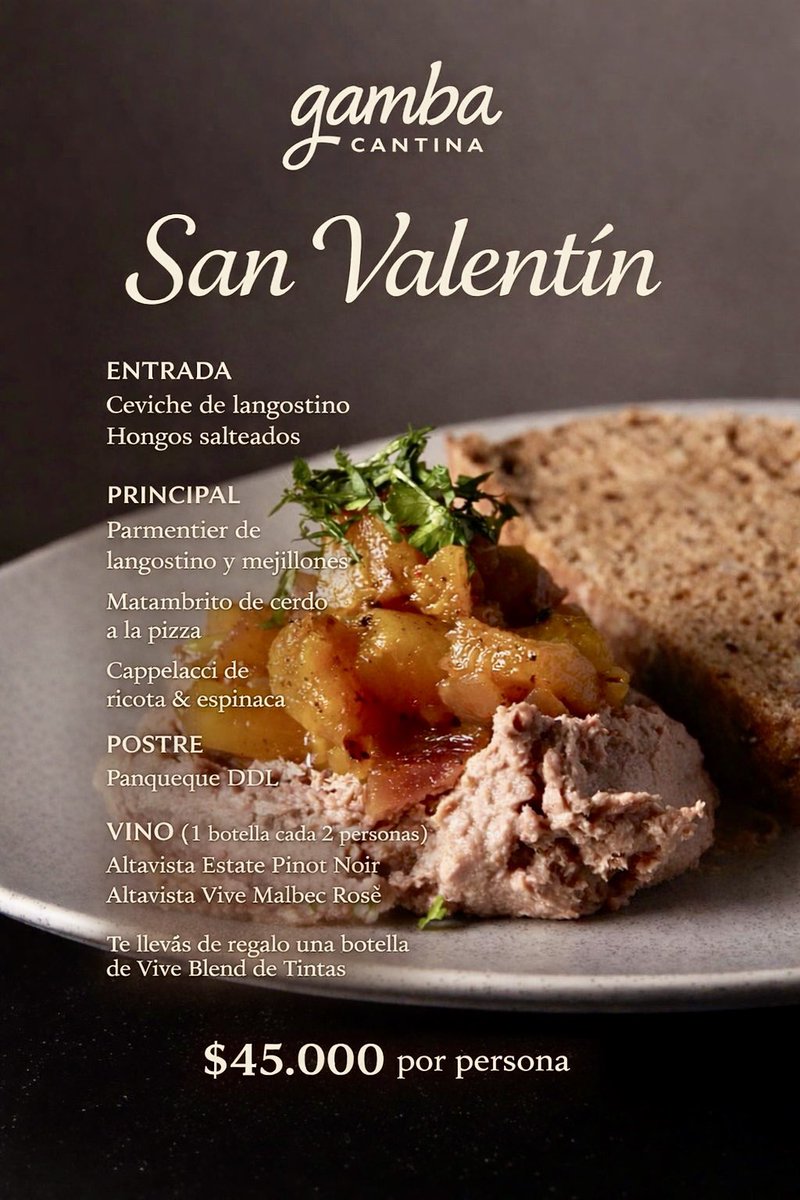
Mañana sábado 14 en Gamba Cantina tenemos un menú para dos personas buenísimo y los chicos de @bodegaaltavista te regalan una botella de vino para llevar a tu casa
IG gamba.cantina
📄New paper with Eduardo Fernández‑Arias in @EconomiaJournal: "How vulnerable is Latin America & the Caribbean to external crises today?"
📈Good news: vulnerability is near a historic low.
📉Bad news: LAC is still riskier than peers