Planning a cohort starting mid-June. DM if interested.
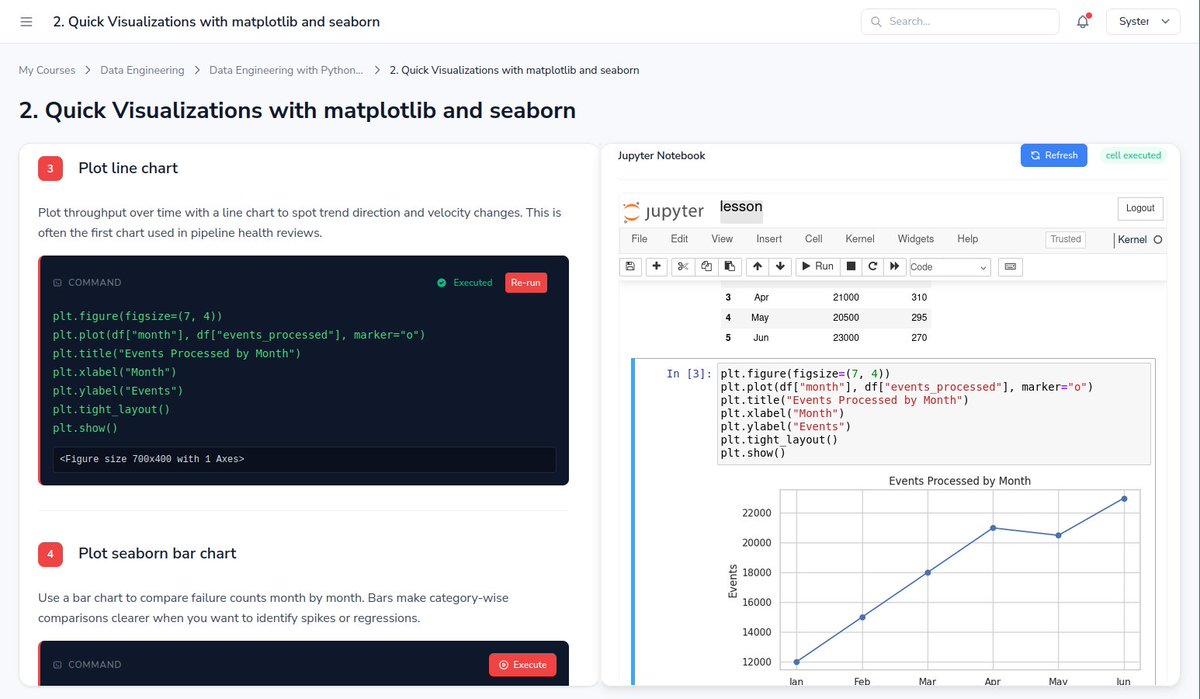
Course:
Agentic Engineering: Rethinking Knowledge Work
From ad-hoc AI usage to structured agentic workflows
Course timing will be favorable for people between GMT to IST timezones.
Has anyone noticed this behavior where if you continue a conversation for a very long time Codex starts getting lazy and when debugging issues says things like "the likely cause is ..." without investigating it.
The big issue I have with AI Coding agents is exactly this. The longer the code generated by AI, the more time it takes to fix the "last mile" issues.
And yeah, AI can game tests so that doesn't help.
Before the advent of LLMs, machine learning had already made significant progress. We had summarizers, classification/clustering algorithms, and other solutions that were about 80% effective. However, the lack of final-mile refinement often kept them from being production-ready. With LLMs now in the picture, many of these use cases are resurfacing.
However, instead of leveraging traditional ML approaches where they still work well, many have jumped straight to LLMs for everything. In reality, traditional ML solutions can serve as an effective first-level filter - delivering solid results while keeping time and costs under control. I've found this approach to be incredibly practical, yet seems overlooked. Why aren’t more people talking about this?
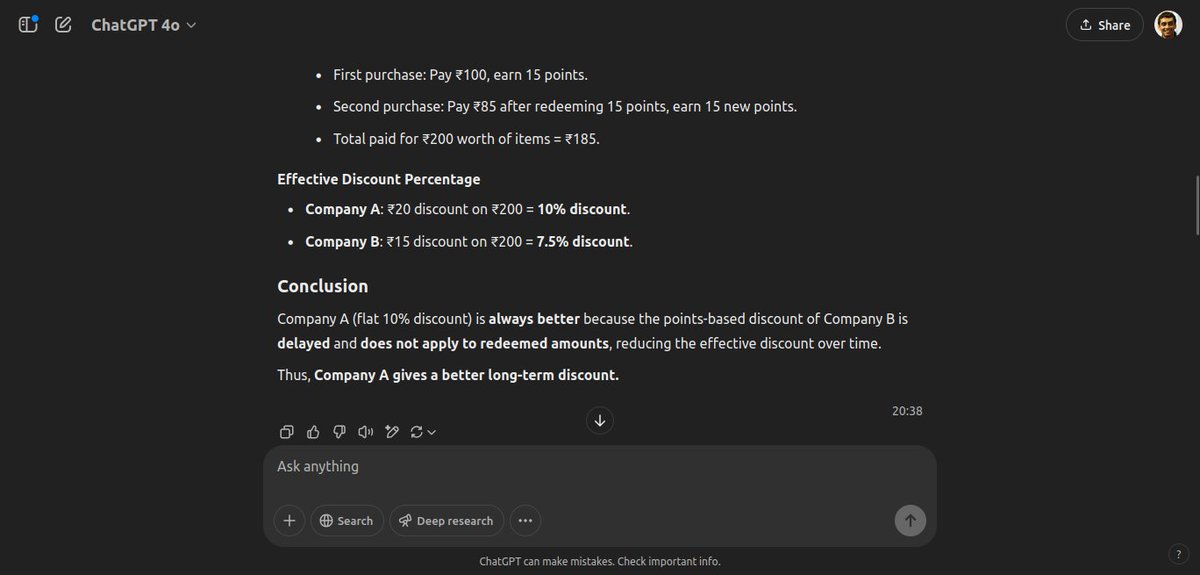
Here is a "Deep Thinking" question:
There are 2 companies. One offers a 10% flat discount on my purchases. If I buy ₹100/- worth of items, they will charge me ₹90/-. Another offers a 15% discount but they give the discount as 15 points for every ₹100/- spent. I can then redeem these at the rate of ₹1 per point. However, when I redeem, they don't offer discount on the redeemed points. Which one offers a better discount over time?
Let me know how different AI models answer it.