Li o texto do acordo que Trump, Mette Frederiksen e Jens-Frederik Nielsen assinaram sobre a Groenlândia, e a conclusão desagrada a Europa inteira: Trump descreveu o pacto com muito mais honestidade do que o governo dinamarquês. Ele disse que os EUA ganharam controle permanente sobre a segurança da ilha. Frederiksen disse que o acordo reconhece a soberania da Dinamarca e a autodeterminação dos groenlandeses, mas comparando com o tratado de 1951, só uma das duas versões resiste à leitura dos artigos.
O acordo de 1951 existia em benefício da OTAN e durava enquanto a aliança existisse enquanto o novo não tem data de término, só muda com o consentimento de Washington e sobrevive até a uma eventual independência: se a Groenlândia virar Estado soberano, herda todas as obrigações assumidas pela Dinamarca. Os groenlandeses conquistaram em 2009 o direito de decidir sobre a independência, e agora descobrem que o futuro país já nasceria com bases estrangeiras perpétuas.
Sobre as bases, os EUA ampliam Pituffik e ganham áreas de defesa em Narsarsuaq e Mestersvig. O texto afirma ainda que Washington pode estabelecer áreas adicionais, com consultas sobre localização e detalhes. Em 1951, uma base nova precisava de acordo sobre sua existência; em 2026, a existência vira direito americano e o que se negocia é o endereço. Os EUA também ganham voz sobre construções civis perto das bases, o que coloca um ator estrangeiro dentro do planejamento urbano groenlandês. A mudança mais reveladora cabe num verbo. Em 1951, os EUA "poderiam" circular pela ilha seguindo regras emitidas pela autoridade dinamarquesa na Groenlândia. Em 2026, "terão" livre acesso por terra, mar e ar, e a exigência de seguir regras dinamarquesas sumiu do texto, que ainda acrescentou trânsito submarino nas águas territoriais.
Há também o veto. Nenhum país fora da OTAN pode ter base ou presença militar persistente na ilha sem aval das três partes, e investidores de fora da OTAN e da União Europeia ficam barrados de setores estratégicos salvo acordo. Na prática, China, Rússia, Índia, Golfo e todo o Sul Global dependem de Washington para investir em minerais, portos ou comunicações groenlandesas. A ironia é que Nuuk vinha acelerando sua lei de triagem de investimentos justamente para se proteger de compradores americanos.
E a justificativa mudou de endereço, o objetivo deixou de ser apenas a OTAN e passou a incluir a defesa do "continente americano" e o Domo Dourado de Trump, vocabulário que repete o acordo de 1941, assinado quando a Dinamarca estava ocupada pelos nazistas. É a Doutrina Monroe esticada até o Círculo Polar, agora com assinatura voluntária de um governo europeu.
Depois de dois anos de ameaças de anexação e pressão tarifária sobre aliados, os EUA obtiveram por contrato o que diziam poder tomar à força. Bases perpétuas, tropas livres das regras locais e veto sobre quem entra e quem investe definem um protetorado, ainda que a bandeira no mastro continue dinamarquesa. Para o Brasil e a América Latina, que já veem essa mesma lógica em portos, minerais críticos e até no Pix, o caso groenlandês deveria ser lido como aviso. O acordo ainda precisa passar pelos parlamentos da Dinamarca e da Groenlândia, e é ali que essa conta deveria ser cobrada.
Destrinchei cláusula por cláusula, com a história de Thule e o paralelo com 1941, na newsletter desta semana: https://t.co/60KEQQpSMu
Felizmente, existe a Alessandra Orofino para botar os pingos nos ii. Ouçam com atenção o corte. É do programa Calma Urgente. Faz a conexão necessária; joga luz onde era preciso iluminar.
La primera edición de la Escuela de Gobierno y Desarrollo Maria da Conceição Tavares tiene un mensaje para ti.
Estos testimonios reflejan el rigor teórico, el diálogo regional y el compromiso con las políticas públicas de desarrollo para América Latina que sustentan esta formación.
Esta es tu oportunidad de formar parte de la 2.ª edición de la Escuela.
🎓 Formación gratuita dirigida a profesionales del sector público de América Latina
📅 Inscripciones hasta el 28 de febrero
🔗 Más información en https://t.co/17matFoeve
📢 ¡Inscripciones abiertas! 🌍✨
La 2.ª edición de la 𝐄𝐬𝐜𝐮𝐞𝐥𝐚 𝐝𝐞 𝐆𝐨𝐛𝐢𝐞𝐫𝐧𝐨 𝐲 𝐃𝐞𝐬𝐚𝐫𝐫𝐨𝐥𝐥𝐨 𝐌𝐚𝐫𝐢𝐚 𝐝𝐚 𝐂𝐨𝐧𝐜𝐞𝐢𝐜̧𝐚̃𝐨 𝐓𝐚𝐯𝐚𝐫𝐞𝐬 es una oportunidad única de formación para profesionales que trabajan en políticas públicas y en el financiamiento del desarrollo.
Con una metodología innovadora y un cuerpo docente de excelencia, la Escuela contribuye a fortalecer las capacidades estatales de gestoras y gestores públicos, con foco en los desafíos y oportunidades del desarrollo en América Latina en el siglo XXI.
📅 Inscripciones hasta el 28 de febrero. ¡Cupos limitados!
🔗 Accede a https://t.co/17matFnGFG y conoce más.
📢 Inscripciones abiertas | 2.ª edición
🌎En un contexto de profundas transformaciones económicas, sociales e institucionales en la región, invertir en formación estratégica para el desarrollo es más urgente que nunca.
🎓La 𝐄𝐬𝐜𝐮𝐞𝐥𝐚 𝐝𝐞 𝐆𝐨𝐛𝐢𝐞𝐫𝐧𝐨 𝐲 𝐃𝐞𝐬𝐚𝐫𝐫𝐨𝐥𝐥𝐨 𝐌𝐚𝐫𝐢𝐚 𝐝𝐚 𝐂𝐨𝐧𝐜𝐞𝐢𝐜̧𝐚̃𝐨 𝐓𝐚𝐯𝐚𝐫𝐞𝐬 es una iniciativa de la #CEPAL y el @bndes que ofrece una formación teórica e instrumental de excelencia, diseñada a partir de las realidades, desafíos y oportunidades compartidas por los países de América Latina.
👥 Público: funcionarias/os, o exfuncionarias/os de bancos públicos de desarrollo u organismos públicos afines (ministerios, secretarías, agencias reguladoras, agencias de fomento, entre otros), con actuación o interés en políticas y financiamiento para el desarrollo.
🔗 Inscríbete hasta el 28/2 en: https://t.co/17matFoeve
🗞️Lee más aquí: https://t.co/bHACpfioj1
Te esperamos para transformar conocimiento en desarrollo. 🖊️
@pnbarbosa13@DePaulaAllyson As evidências mostram o contrário. Crianças de até 5 anos com exposição a tela tem atraso no desenvolvimento da linguagem, déficit de atenção, hiperatividade, dificuldade de aprendizado e problemas cognitivos.
A OMS e sociedade brasileira de pediatria recomendam limitar telas.
On 19 May the Israeli Defense Forces announced that they had struck '160 terror targets" across Gaza over the period of one day, which in the context of the existing destruction of infrastructure in Gaza, raises grave concerns that not all strikes were targeted at military objectives. ON the same day, Israel issued more displacement orders impacting large areas of Khan Younis and Deir El Balah, which will result in further massive displacement, death and destruction.
The Israeli military’s escalation of attacks in Gaza, which are forcing people to move while they are being bombed, the methodical destruction of entire neighborhoods, and the denial of humanitarian assistance underline an apparent push for a permanent demographic shift in Gaza that is in defiance of international law and tantamount to ethnic cleansing.
Read the full statement ⤵️
https://t.co/ygaI9Nl5jR
@dgomezco Usted cree que estas inversiones van de la mano con un buen ambiente económico o seria un cambio en la estrategia en el mercado local/regional? Porque en Brasil ya han anunciado casi USD 18 Billones, y es un gobierno abiertamente de izquierda...
https://t.co/jKGrrw4PUD
You think housing prices will keep going up because you've seen it all your life. But this is a historic anomaly that is likely to reverse soon: Prices might start shrinking in many places.
This thread is the case against investing in housing:
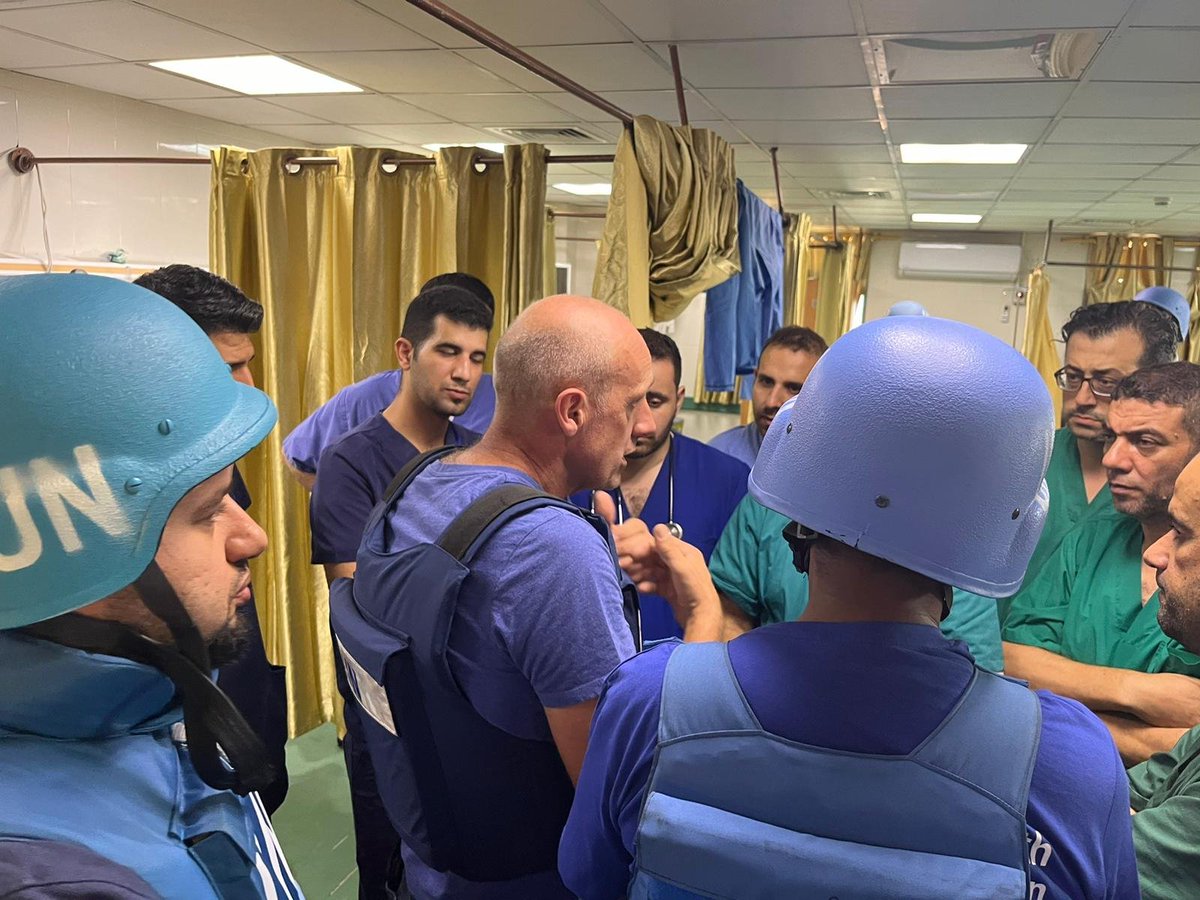
WHO leads very high-risk joint humanitarian mission to Al-Shifa Hospital in Gaza
18 November 2023 - Earlier today, a joint UN humanitarian assessment team, led by WHO accessed Al-Shifa Hospital in northern Gaza to assess the situation on the ground and conduct a rapid situational analysis, assess medical priorities, and establish logistics options for further missions. The team included public health experts, logistics officers, and security staff from OCHA, UNDSS, UNMAS/UNOPS, UNRWA and WHO.
The mission was deconflicted with the Israel Defense Forces (IDF) to ensure safe passage along the agreed route. However, this was a high-risk operation in an active conflict zone, with heavy fighting ongoing in close proximity to the hospital.
Earlier in the day, the IDF had issued evacuation orders to the remaining 2,500 internally displaced people who had been seeking refuge on the hospital grounds. They, along with a number of mobile patients and hospital staff, had already vacated the facility by the time of the team's arrival.
Due to time limits associated with the security situation, the team was able to spend only one hour inside the hospital, which they described as a “death zone,” and the situation as “desperate.” Signs of shelling and gunfire were evident. The team saw a mass grave at the entrance of the hospital and were told more than 80 people were buried there.
Lack of clean water, fuel, medicines, food and other essential aid over the last six weeks have caused Al-Shifa Hospital—once the largest, most advanced, and best equipped referral hospital in Gaza—to essentially stop functioning as a medical facility. The team observed that due to the security situation, it has been impossible for the staff to carry out effective of waste management in the hospital. Corridors and the hospital grounds were filled with medical and solid waste, increasing the risk of infection. Patients and health staff with whom they spoke were terrified for their safety and health, and pleaded for evacuation. Al-Shifa Hospital can no longer admit patients, with the injured and sick now being directed to the seriously overwhelmed and barely functioning Indonesian Hospital.
There are 25 health workers and 291 patients remaining in Al-Shifa, with several patient deaths having occurred over the previous 2 to 3 days due to the shutting down of medical services. Patients include 32 babies in extremely critical condition, two people in intensive care without ventilation, and 22 dialysis patients whose access to life-saving treatment has been severely compromised. The vast majority of patients are victims of war trauma, including many with complex fractures and amputations, head injuries, burns, chest and abdominal trauma, and 29 patients with serious spinal injuries who are unable to move without medical assistance. Many trauma patients have severely infected wounds due to lack of infection control measures in the hospital and unavailability of antibiotics.
Given the current state of the hospital, which is no longer operational or admitting new patients, the team was requested to evacuate health workers and patients to other facilities. WHO and partners are urgently developing plans for the immediate evacuation of the remaining patients, staff and their families. Over the next 24–72 hours, pending guarantees of safe passage by parties to the conflict, additional missions are being arranged to urgently transport patients from Al-Shifa to Nasser Medical Complex and European Gaza Hospital in the south of Gaza. However, these hospitals are already working beyond capacity, and new referrals from Al-Shifa Hospital will further strain overburdened health staff and resources.
WHO is deeply concerned about the safety and health needs of patients, health workers and internally displaced people sheltering at the few remaining partially functional hospitals in the north, which are facing risk of closure due lack of fuel, water, medical supplies, food, and the intense hostilities. Immediate efforts must be made to restore the functionality of Al-Shifa and all other hospitals to provide urgently needed health services in Gaza.
WHO reiterates its plea for collective efforts to bring an end to the hostilities and humanitarian catastrophe in Gaza. We call for an immediate ceasefire, the sustained flow of humanitarian assistance at scale, unhindered humanitarian access to all of those in need, the unconditional release of all hostages, and the cessation of attacks on health care and other vital infrastructure. The extreme suffering of the people of Gaza demands that we respond immediately and concretely with humanity and compassion.