Social media companies TikTok and YouTube have deactivated a total of around 4.7 million accounts belonging to children under the age of 16 in Indonesia, the country's communications minister said, as its social media curbs began to take effect. https://t.co/lFtJdbnlWh
Einige Konzernchefs negieren mit Absicht, dass das Ende der Freiheit der Anfang von Chinas weltpolitischem Anspruch ist. Nein, hier geht es nicht einfach um einen Buchladen. https://t.co/GNqEBnV50G
China debate reaches fever pitch in Brussels as EU’s crunch fortnight kicks off
A frenzied burst of EU policymaking on China has begun, amid signs that big EU members may be shifting on policy front
My report
https://t.co/ydVI5yqIAT
„Ich glaube nicht, dass (Xis) Reise auf ein Konkurrenzverhältnis zwischen China und Russland in der Nordkorea-Frage deutet“, sagt Yun Sun von @Stimson_EAsia . „Ihre Ziele stimmen eher überein, als dass sie im Widerspruch zueinander stehen.“ https://t.co/4n8I0BTG3o
Angela #Merkel in der @faznet: "Man kann sich auch nicht mehr wie früher auf eine gemeinsame Wertebasis verlassen. Das schwächt erheblich die Einheit, die wir früher den Westen genannt haben. China beobachtet das sicher mit Interesse." https://t.co/ze7ZMYan6Z
"In China bauen wir eher ab." "Neue Projekte sind da keine mehr zu bekommen. Da werden wir ausgesperrt, oder wir bekommen mitgeteilt, dass es um ein Militärprojekt geht". Die EU "muss verhindern, dass die Chinesen mit Dumpingpreisen den Markt kaputtmachen"https://t.co/RFfo8mo51I
Pragmatische Politik wirkt: Deutlicher Sieg für die DP von @Jaemyung_Lee bei den Kommunalwahlen, damit kann er noch stärker durch regieren. Nur Seoul ging knapp an die Konservativen, die sich nach dem Kriegsrechts-Debakel noch nicht gefunden haben. https://t.co/xAnlrQh2Kf
Over the past two decades, Chinese businesses have received three to eight times more support than their competitors, according to the Paris-based research body. https://t.co/3pkBjH8WI3
Der Abschwung der Immobilienwirtschaft und die schwache Konjunktur lassen Möglichkeiten für Arbeitsmigranten schrumpfen. Sie werden wieder zu Bauern. Frau Liu pflanzt jetzt Melonen und sagt: am Ende habe sie hier auch nicht weniger übrig als zuvor in der Metropole Suzhou 5 / 5
Eine weitere Entwicklung offenbarte sich bei einem Besuch im Hinterland: Jüngere Landbewohner kehren zurück in die alte Heimat, seltener finden sie den alten Aufstiegspfad über Arbeit in den Städten. 4 /
Eine strukturelle Schieflage in Pekings Wachstumsmodell. Oder Funktionsbedingung des Modells? China investiert in Militär, Hightech, strategische Industrien und Exportfähigkeit. Ein Sozialstaat bleibt politisch unerwünscht und wäre auch fiskalisch immer schwerer finanzierbar. 3/
Chinas ganz eigene Rentendebatte: In den Weizenfeldern von Henan offenbart sich eine der großen sozialen Fragen der Volksrepublik. Ein Bauer wie Herr Kong steht auch mit Ende sechzig noch zehn Stunden am Tag auf dem Acker. Seine Rente: gut 20 Euro im Monat. 1 /
22 Euro für ein Leben auf dem Acker: Chinesische Bauern bekommen kaum Rente, Peking hat andere Prioritäten. Ein Besuch in Henan. https://t.co/lpjQCGZthv
So geht es vielen der 180 Millionen Menschen, die Chinas ländliche Basisrente beziehen. Während pensionierte Beamte nicht selten das Vierzigfache erhalten, müssen viele ältere Bauern weiterarbeiten – oft, bis sie körperlich nicht mehr können. 2 /
22 Euro für ein Leben auf dem Acker: Chinesische Bauern bekommen kaum Rente, Peking hat andere Prioritäten. Ein Besuch in Henan. https://t.co/lpjQCGZthv
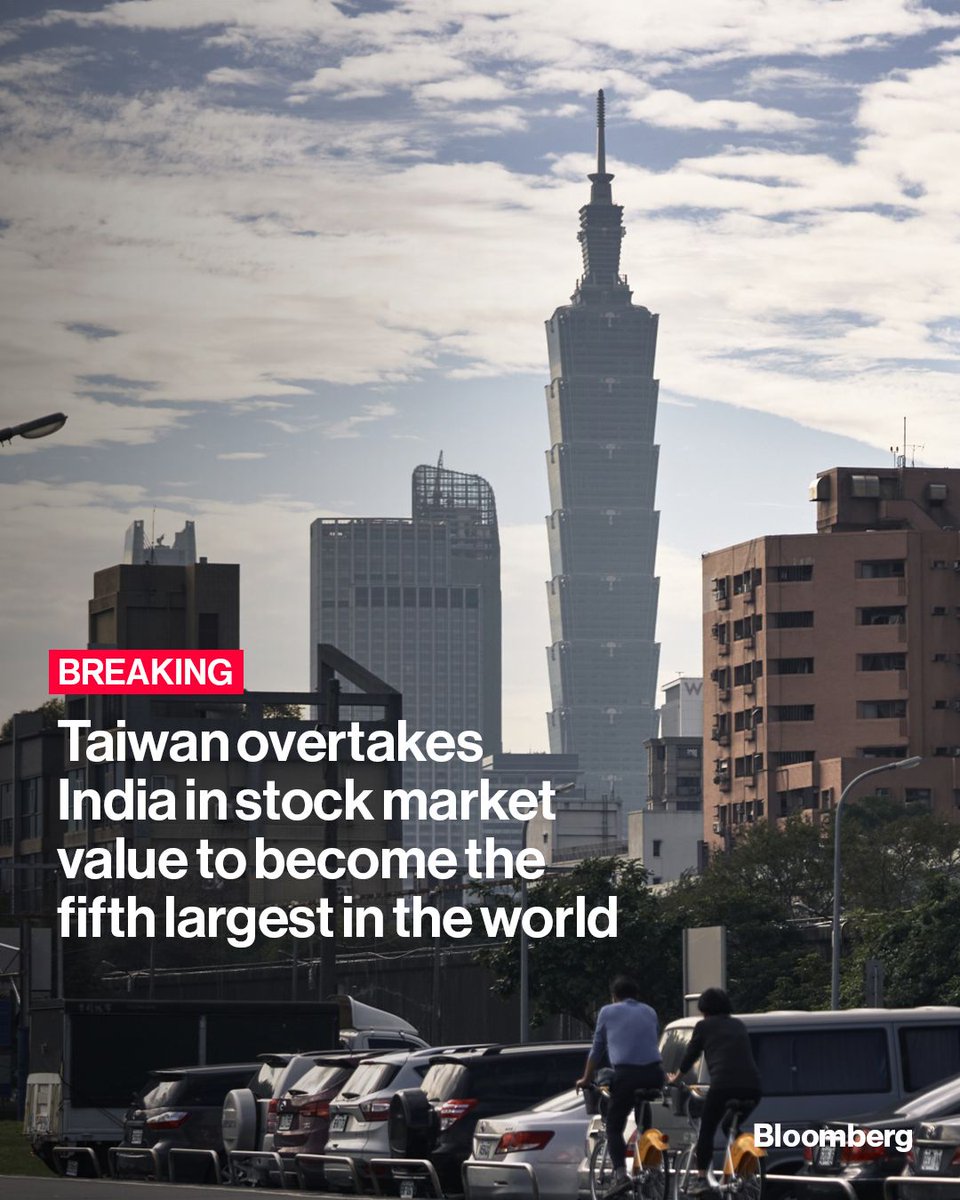
Taiwan overtakes India in stock market value, powered mainly by a breakneck rally in the world’s largest chipmaker TSMC. Read more: https://t.co/lf3GxFOQa5
📷️: An Rong Xu/Bloomberg
It’s hard to overstate how deeply Netanyahu views this moment as a possible personal and political defeat. A U.S.–Iran agreement under Trump would be a major blow to him mainly diplomatically, but above all politically.
For years, Netanyahu built his political identity around being “Mr. Iran,” the leader who insisted that only pressure, deterrence, and force could stop the Iranian regime. And now, after multiple rounds of operational successes but one resounding strategic failure, and after finally succeeding in drawing the United States into direct confrontation with Iran, he may be forced to accept an agreement that not only legitimizes the very regime he sought to weaken, but also exposes the collapse of his long-standing Iran doctrine.
His approach was based on the belief that more pressure, more military power, and tighter coordination between Israel and the United States would eventually either force Iran into submission or destabilize the regime itself. Instead, the result has been a more radicalized, more resilient, and more dangerous Iran, one that even Washington now hesitates to confront militarily again.
If this confrontation ends with an agreement, an even bigger strategic question emerges: what future American president would be willing to commit U.S. forces to another major Middle Eastern conflict after seeing the political and military costs of this one?
Netanyahu had what may have been his greatest opportunity to prove his central strategic theory: that a close Israeli-American military partnership could fundamentally reshape Iran and perhaps even threaten the regime’s survival. By every indication, that assumption failed.
Against this backdrop, reports of a tense conversation between Trump and Netanyahu become much easier to understand. They also help explain the extraordinary level of pressure now coming from Jerusalem, and the extent to which Netanyahu is trying to persuade, or pressure, the administration not to move toward a deal with Tehran.
The bottom line is that a U.S.–Iran agreement would not only signal the failure of the military confrontation Netanyahu pushed for, but also the collapse of the broader strategic doctrine he has championed since entering Israeli politics, all on the eve of what could be the most critical election of his career.
In that sense, the next Israel’s leadership need to learn the fundamental lessons of this war. More than ever, this conflict demonstrates the urgent need for Israel to develop a different long-term strategy for dealing with Iran and especially to understand the following:
Israel’s confrontation with Iran will not bring normalization with the Arab world, nor will it resolve Israel’s most fundamental security challenges, first and foremost, the Palestinian issue.
The belief that regime change in Iran would transform Israel’s position in the Middle East was always detached from reality. In fact, the consistent opposition of Gulf leaders and major Arab states to further escalation against Iran has demonstrated this repeatedly throughout the conflict.
Israel will not be able to use the “Iran card” as a substitute for addressing the core political issues shaping the region. Anyone arguing that military confrontation with Iran alone can unlock normalization is mistaken and, more importantly, misleading others about the strategic reality of the Middle East.
Because despite the undeniable tactical and operational achievements of the campaign, this failure may ultimately leave Israel facing a more dangerous strategic reality, one that has not fundamentally improved its position in the Middle East.
#IranWar