PhD Public Admin @uOttawa l Affiliated Researcher @ceg_cog l Public Servant In Residence @CUPoliSci | public policy & public mgmt | intelligence studies
For those interested in how best to manage the intelligence function, see Joe Faragone's PhD dissertation titled: "A Contingency Approach to Public Sector Performance Management: The Case of the Canadian Intelligence Community" available here: https://t.co/ubuONTmUQa
New open access article published in the journal Intelligence and National Security titled "Promoting and evaluating Intelligence assessment quality: examining the problem through an accountability lens" by David R. Mandel, available here:
https://t.co/P0D6Ki0He0
New article published titled "Comparing the evolution and governance of intelligence in East Africa: Kenya and Tanzania from the second half of the twentieth century onwards" by Eduardo E. Estévez in the journal Intelligence and National Security, here:
https://t.co/2U9xgR9hLh
The most effective expert comments aren't the loudest. They're the ones agencies can't ignore on the merits.
Proud to share two new Expert Engagement Guides from @data_foundation's Center for Evidence Capacity, on commenting on rulemakings and information collections --> https://t.co/tWDpKk4Iui
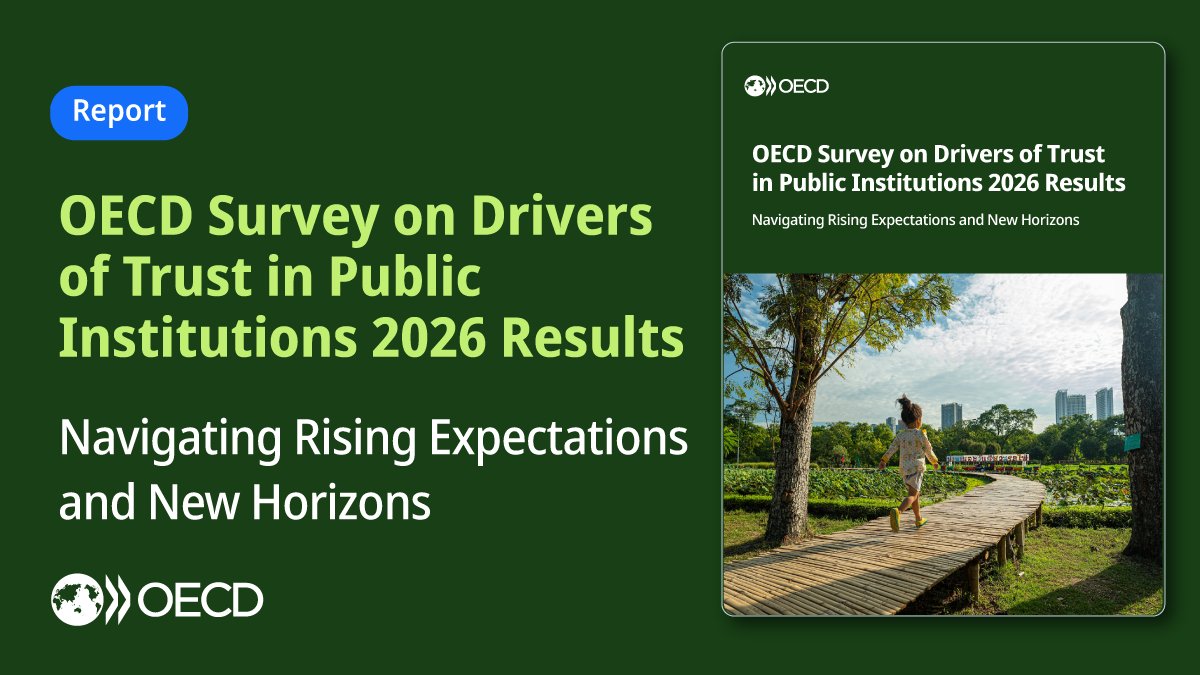
#OECDTrustSurvey: Trust has steadied, but significant gaps remain.
40% report trust in government (vs 43% low trust).
68% believe voting matters, only 31% feel they have a say.
New report outlines the data and policy actions to build trust: https://t.co/qTuWtgPAiP
#ComplexSocietalProblems are persistent and feature contested goals, incomplete knowledge & uncertain, path‑dependent effects
Claudio Lazo, Andrea Kerstens & Angela Greco synthesize a hierarchical structure of problem complexity dimensions👇
https://t.co/UWM3uqx7Cz
Pragmatism Revisited edited by Robert Lane
An exploration of pragmatism's continuing vitality and relevance to epistemology, social and political philosophy, applied ethics, metaphysics, and more.
📘 https://t.co/AHq9mLXQvS
𝗖𝗮𝗻𝗮𝗱𝗮 𝗮𝘁 𝟭𝟱𝟵: 𝗵𝗼𝘄 𝗮𝗿𝗲 𝘄𝗲 𝗱𝗼𝗶𝗻𝗴? 🇨🇦
As 𝗖𝗮𝗻𝗮𝗱𝗮 𝗗𝗮𝘆 approaches, it’s worth taking stock of where we stand as a country.
As you can see in @IFSD_IFPD's new infographic, Canada continues to perform well on many measures—income, education, employment, and health. But the picture is complex:
👉 Growth is slowing and key pressures are building.
We believe that looking at economic policy isn’t just an accounting exercise—It's a discussion about 𝗼𝘂𝗿 𝘃𝗮𝗹𝘂𝗲𝘀, 𝘁𝗵𝗲 𝗰𝗵𝗼𝗶𝗰𝗲𝘀 we make, and our 𝗳𝗶𝘀𝗰𝗮𝗹 𝘀𝘂𝘀𝘁𝗮𝗶𝗻𝗮𝗯𝗶𝗹𝗶𝘁𝘆.
Most importantly, it’s about the outcomes that shape Canadians’ lives.
The takeaway is not optimism or pessimism—it’s that 𝘰𝘶𝘵𝘤𝘰𝘮𝘦𝘴 𝘮𝘢𝘵𝘵𝘦𝘳.
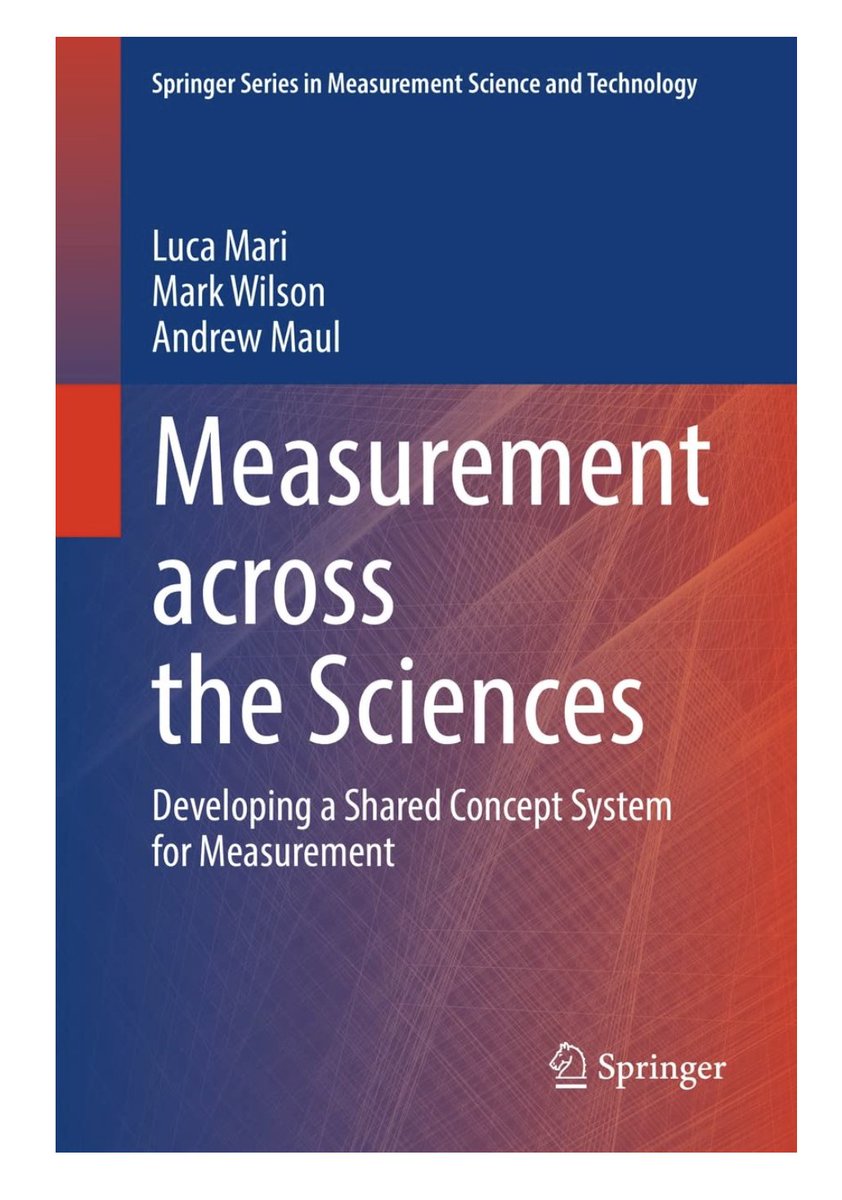
Medición en las Ciencias Sociales
Este es un buen libro de Mari, Wilson y Maul que elabora una serie de conceptos aplicables al trabajo de medición en las Ciencias Sociales. Como plus, incluye una perspectiva filosófica sobre la medición
Acceso abierto: https://t.co/htTVjlQ8lP
Don’t miss your chance to read the new Cambridge element, Perceptions of Danger by Helen Rabello Kras! Free access available until 29 June at
https://t.co/2YDQHV790z
#cambridgeelements#politics
Developing Theories in the Social Sciences by Jane Sell and Murray Webster Jr.
The book provides guidance on theory development from concept formation to logical elaborations to theoretical extensions.
📚 https://t.co/b0RIsmJj4x
The Myth of Authoritarian Efficiency
Political scientists Jørgen Møller and @seskaaning argue that democracies – with all their problems – outperform autocracies.
Let's not fool ourselves about the possibility of a benevolent and efficient dictatorship.
https://t.co/lRJAlRCci1
"The Disconnection of Advocacy and Analysis in Public Administration: A Critique of Robust Governance" by Gerry Stoker, Brenton Prosser, and B. Guy Peters finds that robust governance may underestimate politics and overstate reform potential. https://t.co/k9c56F2RVC @politicsANU
NEW: 2025 Federal CDO Survey snapshot (Data Foundation x Deloitte)
Federal data leadership is at a pivotal moment as AI adoption rises and capacity pressures intensify.
📈 AI is now central to the CDO mission, with use increasing from 67% in 2024 to 78% in 2025. 96% of CDOs collaborate with AI leadership at least monthly, and 30% also serve as Chief AI Officers.
⚖️ 57% of CDOs operate with five or fewer staff, highlighting persistent capacity constraints.
🌐 External engagement with the private sector and public has declined, raising concerns about open data implementation and visibility into emerging tech trends.
🏛️ The CDO Council is playing a growing support role, with 56% of CDOs rating its resources as highly valuable.
As 2026 deadlines approach, capacity, clarity of roles, and governance will be critical to CDO mission success.
Snapshot: https://t.co/B2N23dFbLl
#AI #CDO #DataGovernance #OpenData #PublicSector
👤 Meet the Author: Pavel Horák
Pavel Horák (Masaryk University) studies social policy and public services.
His recent APJPA article examines the resilience of public sector organisations and the factors that strengthen it.
📖 https://t.co/VJ8izjMpkK
#PublicPolicySchoolsoftheFuture brings together 54 essays from 58 leading thinkers to explore how our world is changing and what that means for the leaders of tomorrow.
📚 Download your free copy: https://t.co/s9qmWZ1vPA
#LKYSPP#PublicPolicyEducation