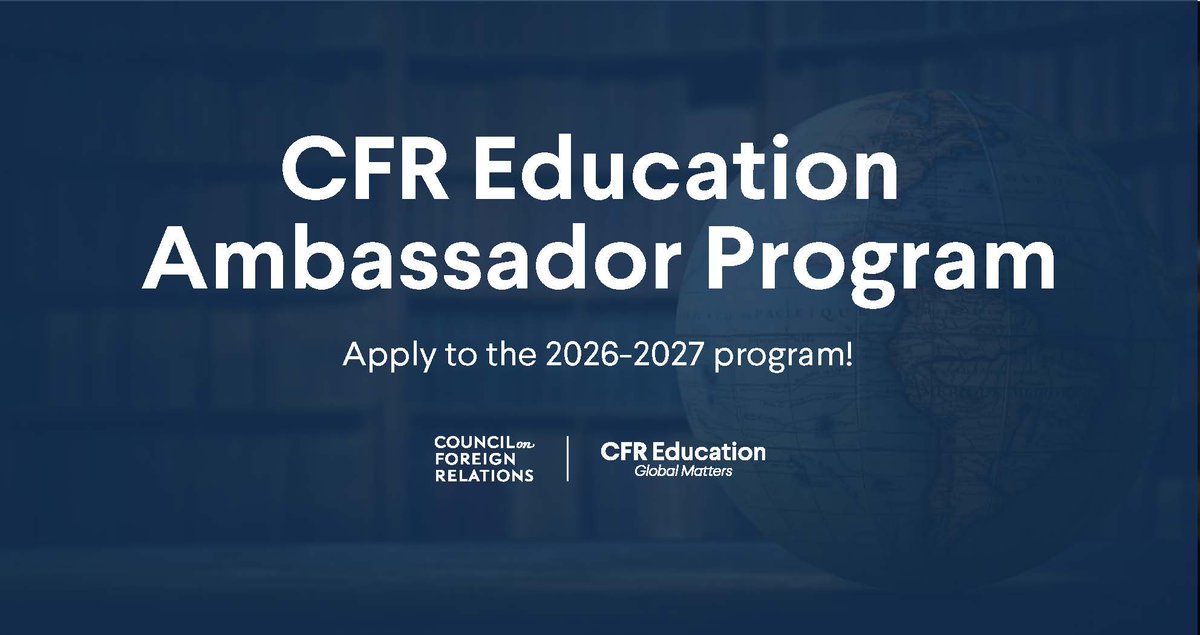
Attention all high school teachers and higher ed faculty!
Applications for the 2026-2027 CFR Education Ambassador Program are open! Join a cohort of like-minded educators from around the country who are committed to teaching global affairs.
Apply here: https://t.co/o78dfr5xkv
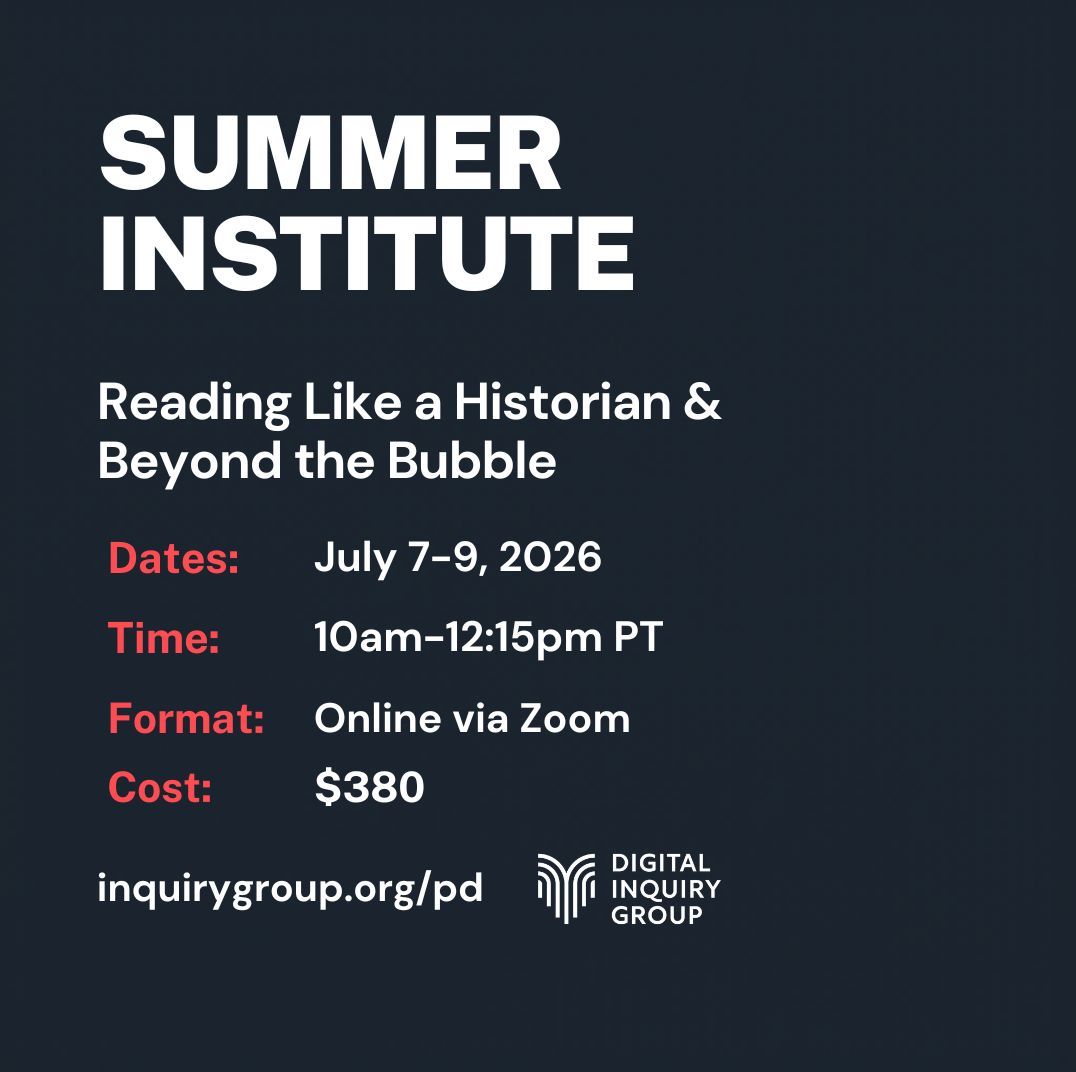
Join DIG for three sessions of interactive, online professional development. Explore Reading Like a Historian lessons and Beyond the Bubble assessments alongside fellow grades 5–12 educators.
Register: https://t.co/WP57Z8bCx9
Very good professional learning session with Reading like a Historian this evening by @joelbreakstone with @InquiryGroup! The materials are wonderful for the classroom and appreciate deepening my pedagogy as a teacher with the webinar!
In Igarassu, Brazil, Ezequiel David do Amaral Canario used our Battle of the Somme lesson to explore World War I with his students. We’re thrilled to see educators around the world adapt and incorporate our free, evidence-based materials!
How can students learn what to trust if schools don't show them the kinds of information they see on their phones? @samwineburg joined @thesquiz to talk about the shift from an analog to a digital age, and how schools need to respond.
Full episode: https://t.co/qbYbuFNYvF
Did the term “grandfather clause” originate from a voter suppression scheme in Southern states during the Jim Crow era? Our new assessment asks students to verify a TikTok claim using credible sources. https://t.co/ZFUoNWEK70
Everyone needs help sorting fact from fiction online. In a recent @politico article, DIG’s Executive Director @joelbreakstone makes the case that all of us, including young people, need better tools to navigate the internet. https://t.co/gkvbHmOVgY
Enjoyed this afternoon's @InquiryGroup webinar led by @joelbreakstone on "Reading like a Historian with Digital Literacy"! Good opportunity to learn how to build a social studies curriculum for the 21st century!
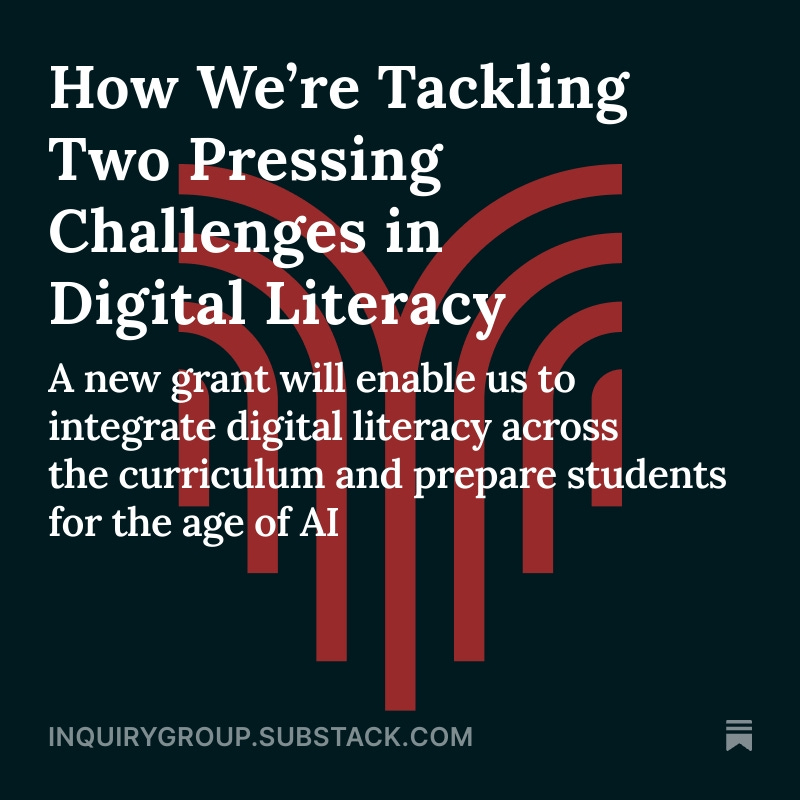
We’re thrilled to share that we've been awarded a new grant from @CarnegieCorp, focused on integrating digital literacy instruction across the curriculum and preparing students for the age of AI. Read more in this post by @joelbreakstone and @samwineburg: https://t.co/NPWP6b8fLH
The first question you should ask on the internet: Is this worth my time? At the 87th annual Cubberley Lecture at @StanfordEd, DIG Co-Founder @samwineburg explained why critical thinking starts with choosing what deserves our attention.
We should all be concerned that young people can be so easily misled online, says DIG Executive Director @joelbreakstone. Tackling this challenge requires supporting educators with ready-to-use curriculum and professional learning opportunities that are all evidence-based.
Would you believe a video that claims to show U.S. voter fraud but was actually shot in Russia? @POLITICO spotlighted our 2021 national study, in which only 3 of 3,446 students identified the video’s origins, and insights from DIG's @joelbreakstone. https://t.co/gkvbHmOVgY
Our new assessment asks students to determine whether an article on https://t.co/oP27uGDhEk is a reliable source of information about Reconstruction:
https://t.co/xoURUh9KoA
“There is this myth of the digital native, that because some people have grown up with digital devices, they are well equipped to make sense of the information that those devices provide,” says @joelbreakstone. “The results were sobering.” https://t.co/sz9A0pRBWe
In a new tip-sheet from @childrenscreens, DIG Executive Director @joelbreakstone emphasizes why it’s so important to see what other sources have to say:
We often worry about what happens if we end up believing online content that isn’t true. But there’s another danger: not believing anything at all. DIG Executive Director @joelbreakstone shares his thoughts in a new @childrenscreens tip sheet: