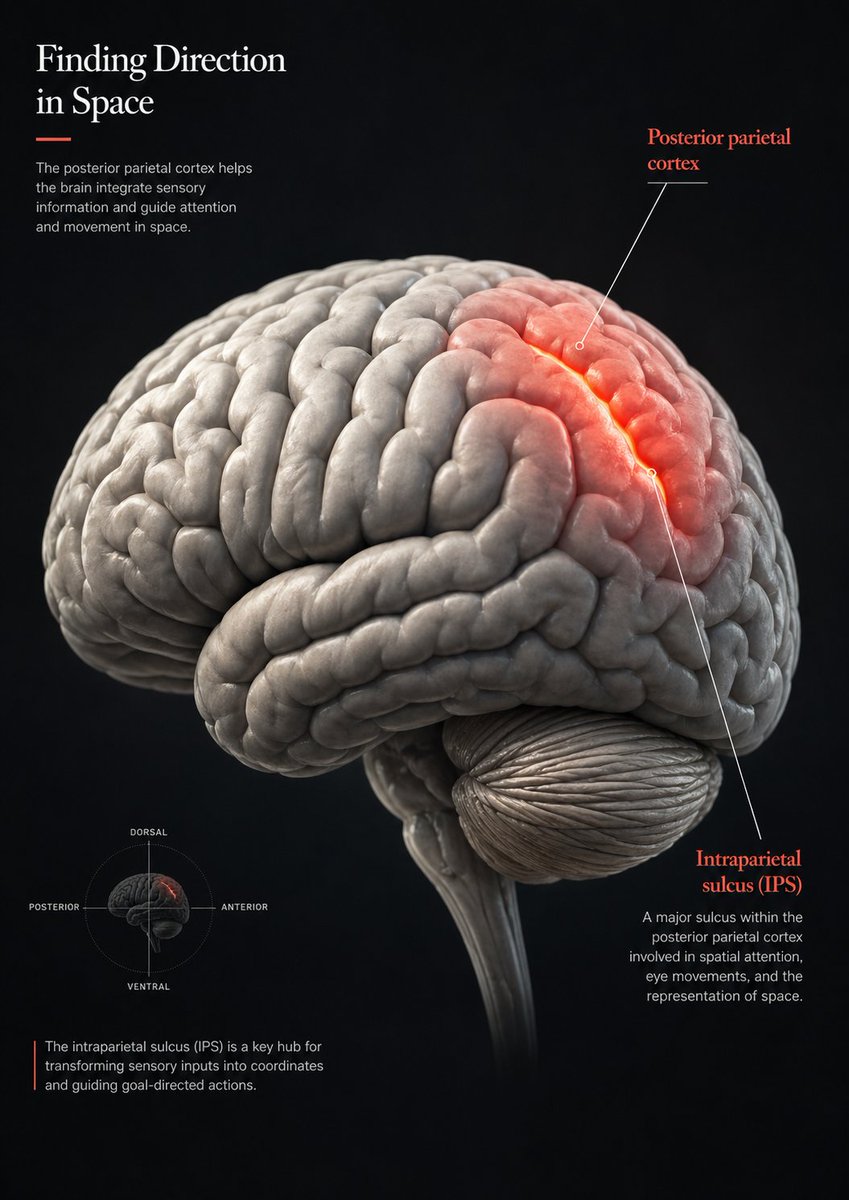
68 college students played video games an hour a day for 30 weeks. They got measurably smarter. EEG brain scans confirmed it.
The setup was simple. Half the group played League of Legends, an action game. The other half played Legends of the Three Kingdoms, a strategy card game. Same hours, same schedule, no gaming experience for anyone going in. Both groups improved on attention, working memory, and executive function. The League group's gains were significantly larger in spatial attention and spatial working memory. The benefits were still measurable 10 weeks after the gaming stopped.
None of this is new.
Daphne Bavelier's lab at the University of Geneva has been replicating this finding since the early 2000s. Her 2018 meta-analysis in Psychological Bulletin pulled data from 8,970 participants across 15 years and found the same thing. Action games train attentional control, a brain skill that transfers to other tasks. Strategy games train deliberation, which mostly stays inside the strategy game.
The mechanism is the counterintuitive part. Action games train your brain by giving you no time to think. The brain can't deliberate. League of Legends throws 9 champions, hundreds of minions, dozens of abilities, mana, cooldowns, and map state at you, all updating in milliseconds. The brain learns to perceive faster instead. That perceptual speed transfers to anything else that demands the same skill.
Including surgery.
The 2007 Rosser study in Archives of Surgery found that laparoscopic surgeons who played video games more than 3 hours a week made 37% fewer errors, completed procedures 27% faster, and scored 42% higher on overall performance. The top third of gamers made 47% fewer errors. Laparoscopic surgery is a 2D screen with distorted depth perception, remote-controlled instruments, and multiple data streams updating in real time. The cognitive profile is almost identical to an action video game.
The 10-week persistence is the part that should change how this gets discussed. If the gains were just from practicing the game, they would have disappeared the moment the students stopped playing. They didn't. The 30 weeks rewired the perceptual system, and the rewiring stayed.
@rodrigtassinari They lose money on $20 plans. They're selling compute, not just software. You can't just 'lower the price' when your margins are tied to infrastructure and electricity.
Inception Labs has launched Mercury 2, their next generation production-ready Diffusion LLM. Mercury 2 achieves >1,000 output tokens/s with significant gains in intelligence
@_inception_ai's Diffusion LLMs (“dLLMs”) use a different architecture compared to autoregressive based LLMs. The Diffusion LLM generation process starts with noise and iteratively refines the output using a transformer model that can modify multiple tokens in parallel. This allows parallelization of output token generation, allowing faster output speeds because many output tokens are generated at the same time.
Key takeaways:
➤ Amongst comparable size/price-class models, Mercury 2 performs competitively in intelligence vs. output speed. While it does not have leading intelligence, it’s output speed is more than 3X the next fastest model in this class (benchmarks based on first party endpoints or the median of providers serving the model where a first party endpoint is not available)
➤ Key strengths include agentic coding & terminal use and instruction following. Mercury 2 performs at similar level to Claude 4.5 Haiku on Terminal-Bench Hard and scores 70% on IFBench (Instruction Following), outperforming gpt-oss-120B, GPT-5.1 Codex mini, and GPT-5 nano
Inception Labs background:
This is the second release from Inception Labs. The founders were previously professors from Stanford, UCLA, and Cornell and have contributed to AI research & technologies including Flash Attention, Decision Transformers, and Direct Preference Optimization (DPO).
See below for further analysis.
@AryamanIyer3 Man, going to prod with that data back then would’ve been a nightmare😂. Its awesome that you can solved these problems. That was four years ago, and I remember laughing at the attributes being detected as outliers.
My final grade project was about retrieving SEC data for long term predictions... Insane. The bad quality of these DATA. For the attribute mapping, I created an auxiliary file of hyerarchies for the attribute naming and the relations between all of them, creating DAGs
BREAKING: Anthropic has rejected the US Pentagon’s “final offer” just 24 hours before Defense Secretary Hegseth’s deadline, per Axios.
Anthropic remains adamant on their AI platform not being used for surveillance of Americans or lethal military missions.
We expect a response from the Pentagon soon.