“Kelly Clarkson has put us all in danger” is the exact same cadence as the opening line from a text I’d get from a congressional candidate asking me for money
Galera, não me levem a mal, mas se vocês pegaram um livro emprestado com alguém há muito tempo e acham que a pessoa esqueceu, deixa eu te falar: ELAS NÃO ESQUECERAM.
Joseph Pfeifer was the first NYC fire chief on scene at the World Trade Centers on 9/11.
On CNN two days ago, he made a point I'd never heard or read anyone make about 9/11:
The Towers had ~20,000 people in them when the planes hit.
'We lost 3,000 people at Ground Zero that day,' Pfeifer said.
'But we rescued something like 17,000 people before the Towers came down,' he said.
That's so amazing. Amid the confusion, the chaos, first responders and workers inside the World Trade Center got 85% of people to safety.
That's a fact worth knowing, too.
Twenty five years ago today, one of the men who fought back on Flight 93 had put the steel in the towers that were burning behind him.
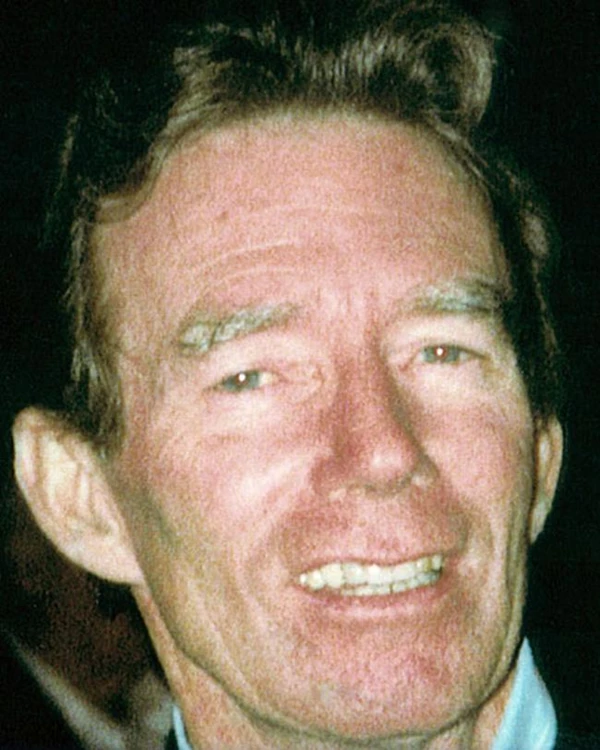
William Joseph Cashman. Billy. Sixty years old, West New York, New Jersey.
He was a paratrooper in the 101st Airborne. When he got out he went into the ironworkers, Metallic Lathers and Ironworkers Local 46, and he stayed there for forty years. Forty years of walking beams. And somewhere in the middle of that career he worked on the construction of the World Trade Center, which his family says he was quietly proud of for the rest of his life.
He never stopped training. He studied martial arts into his sixties. He hiked constantly, the parks near home in New Jersey and the big country out west. At night he taught welding to union apprentices, which is what a certain kind of tradesman does when he is past sixty and has decided that what he knows should not die with him.
He had been married 31 years. His wife described him as soft spoken, principled and strong, in that order.
On the morning of September 11 he was not on a job. He was on vacation. He and his friend Patrick Driscoll, 70 years old, were flying to San Francisco to go hiking in Yosemite. Two older men with boots in their bags, going to look at some mountains.
They boarded United 93 in Newark. The flight sat on the taxiway for forty two minutes.
At 9:28 the hijackers took the cockpit. By then the airphone calls were coming back with the news that two airliners had already been flown into the World Trade Center.
So Bill Cashman, sixty years old, sitting in an airline seat with a backpack in the overhead, learned that the buildings he had helped raise were on fire, that the airplane he was strapped into was the next weapon, and that everyone around him was going to die either way.
The passengers took a vote. Then at 9:57 they went up the aisle with a galley cart and pots of boiling water against four men with knives.
We do not have a seat by seat account of that fight and we never will. What we know is who was on board. A judo champion. A rugby player. A former quarterback. A federal law enforcement officer. A pilot. Flight attendants filling coffee pots in the galley. And a sixty year old paratrooper turned ironworker who had spent four decades doing dangerous physical work a thousand feet in the air and who had kept up his martial arts training for no particular reason except that it was who he was.
At 10:03 the plane went into a field near Shanksville, 130 miles short of the Capitol.
The men who planned that attack thought America was soft. They picked the World Trade Center partly because of what it symbolized. They did not consider that the country that built it also builds the men who build it, and that one of those men would be sitting in coach when they came through the curtain.
Bill Cashman helped put up the towers, and when the same people came back for a third target, he was one of the forty who made sure they did not get it.
Twenty five years ago today, a man on the 81st floor of the South Tower looked out his window and watched the second plane come straight at him at eye level.
Stanley Praimnath worked for Fuji Bank. Born in Trinidad, immigrant, family man, a loan officer with an office on 81.
When the North Tower was hit at 8:46, he and about twenty coworkers got out and went down to the lobby. There they were told the South Tower was fine, that it was the other building, and that they should go back to work. So Stanley got in an express elevator and rode all the way back up to the 81st floor.
At 9:03 he was at his desk on the phone with a colleague in Chicago who was telling him to get out of the building. He looked up toward the harbor and saw an airliner coming at him. Not above him. At him, level with his window, big enough that he could see the markings.
He got under his desk and prayed.
Flight 175 hit the South Tower between the 77th and 85th floors. The wing came through his office and the tip of it stopped in his doorway, about twenty feet from where he was crouched. The floor above collapsed down onto his desk. He was buried, deafened, and pinned in the dark with fire around him.
He got himself out from under the desk and started yelling.
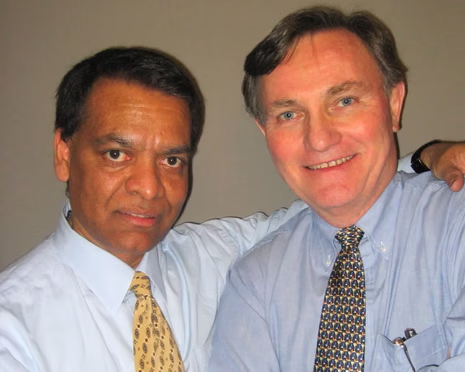
Brian Clark worked for Euro Brokers three floors up on 84. He was one of the company's fire wardens, which meant he had a flashlight and a whistle and the job of getting people to the stairs. He had a group with him in Stairway A heading down.
Around the 81st floor they ran into people coming up who told them the stairs below were impassable, full of smoke and flame, and that the only way out was the roof. Most of Clark's group turned around and climbed.
They died. There was no roof rescue. The roof doors were locked and no helicopter could have landed in that smoke.
Clark did not go up, because while everyone was arguing he heard a voice through the wall yelling for help.
He left the group and went toward the sound with his flashlight. He found a gap in the shattered drywall and a man on the other side of it. Praimnath asked him whether he was a Christian and asked him to pray.
Then Stanley punched and clawed at the broken wall from his side while Brian tore at it from the other, and Clark reached through and got hold of him and hauled him over the debris.
Praimnath came through and grabbed him and would not let go, and called him brother.
Then the two of them went down Stairway A together, past fire, past water pouring down the steps, through 81 floors, stopping to check on people along the way. They got out of the South Tower and kept moving and were near Trinity Church when the building came down behind them at 9:59.
Almost everyone at or above the impact zone in that tower died. A very small number got out, and they got out through that one stairway, and Brian Clark and Stanley Praimnath were two of them.
If Clark had gone up with his group, he dies. If he ignores the shouting, he probably still lives, and Stanley Praimnath does not.
They are still friends twenty five years later. Praimnath became a pastor. Clark retired to New Jersey and has grandchildren. They still talk about it, and they still call each other brother, because a man who owed nothing to a stranger stopped in a collapsing building to find out who was yelling.