Climeworks is a DAC provider and a marketplace for buying other forms of carbon removal. That's new!
In this article I cover:
- Why this pivot is happening in 2024
- The promise (and perils) of starting new business lines
- Climeworks' new competitors
https://t.co/69HhMUXkfX
Amped to see 4 wells in California approved for 38 million tons of CO2 storage!
Kern County, which started the Oil Revolution in California, will be at the center of putting emissions back underground. The subterranean workforce in Kern County will have a big role to play
Great start to 2025
https://t.co/1vJlDSKWol
I would suggest checking the website before asking/insinuating if a company is scamming you
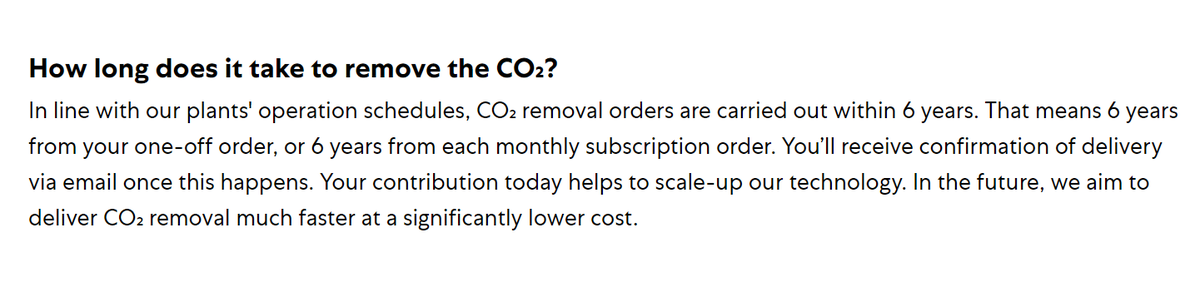
@Climeworks is up front about deliveries, DAC, broadly, is supply constrained and purchases are for future deliveries
https://t.co/6sAnyQmsZy
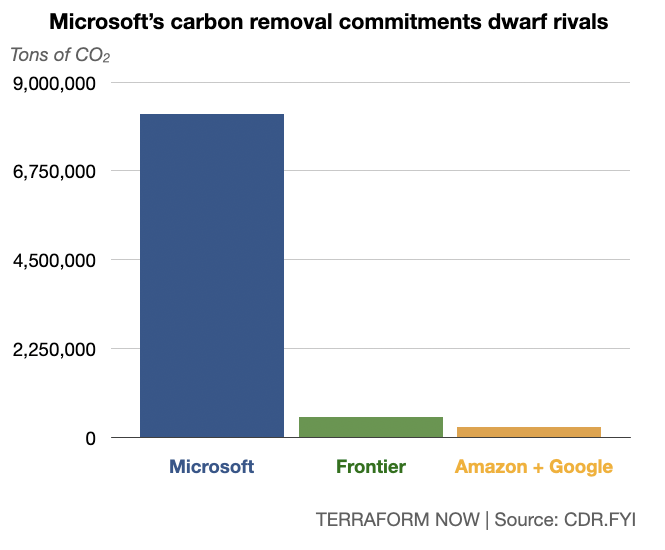
You're right, they're not 1:1 comparable. I kept a broad definition of 'high quality offsets' since I think that's how the market ultimately views "leadership", knowing that Biochar may not hold up in the long term
Even if you strip out Biochar and NBS, Microsoft is still the biggest player by a quite a lot
@ReissEarth @geoengineering1 Perhaps. But doesn't seem to be what Microsoft is expecting! And prices are up, especially where Microsoft has been very active (Biochar)
Carbon Capture, Inc. should pivot to become the leading Direct Air Capture contract manufacturer
DAC needs a TSCM-type player if it's going to grow fast. Carbon Capture, Inc. is best positioned to make this happen
https://t.co/ghRjAcrD7c
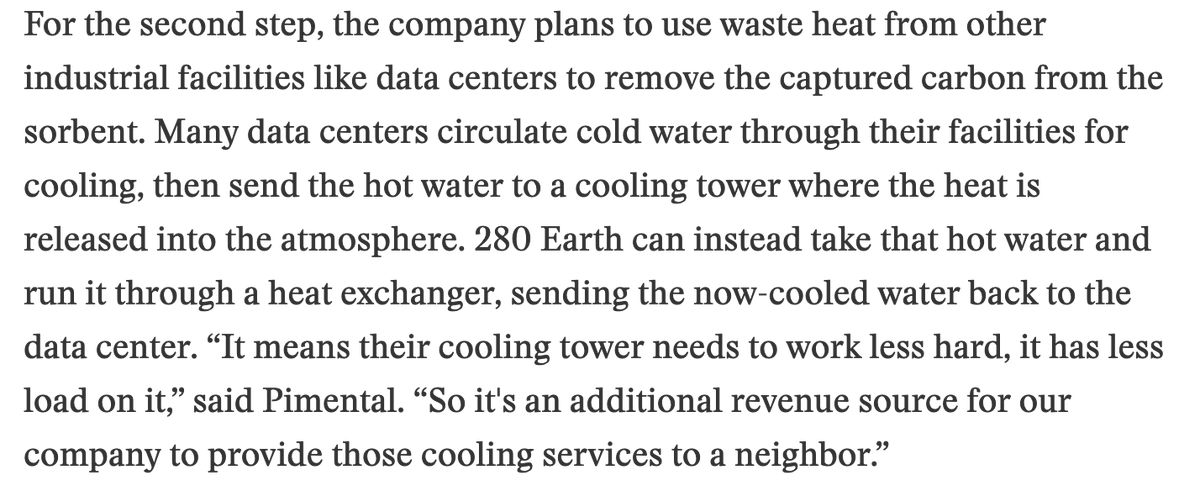
DAC from @280earth could provide cooling services for nearby data centers. I like the idea, but imagine real-world implementation is hard
h/t @emilypont
We might not disagree. I think Biochar will be one of the biggest (or biggest) forms of CDR for 10-20 years. And I'm open to the idea that creative business models will make it scale.
Question for you, just to understand your mental model: what is the cap for how much CO2 Biochar will remove each year? I'd put it at ~500M (I wrote why in the linked article)
Btw really admire what you're working on
@PeterOlivier@geoengineering1 I think we actually agree on this. Biochar will be the the biggest (or one of the biggest) forms of CDR for a while - maybe 10-20 years? But there's a clear cap on how big it can actually become. If it ever removes 100M tons of CO2 in a year I'd be shocked
Carbon intensity matters, not just absolute emissions.
Microsoft is one of the world's most ambitious companies regarding climate action. They have started to require suppliers to source 100% clean energy, they do A LOT on clean energy for themselves, including signing the world's largest renewable power purchase agreement, investing in fusion and nuclear, and they are by far the biggest buyer of durable carbon removal.
Yet their emissions increase. However, one needs to look at the carbon intensity of growing companies, not just absolute emissions. Microsoft’s revenue jumped from $143 billion in 2020 to $211 billion in 2023—a 47% growth—while their emissions grew at a lower rate (up 29% compared to 2020), meaning their carbon intensity shrank.
Think of it like acquisitions: buying another company doesn’t increase carbon in the atmosphere. Similarly, when you grow your market share, it’s the same principle as long as your carbon intensity shrinks faster than the economy grows.
Bloomberg article: https://t.co/xWmd0A0RJU