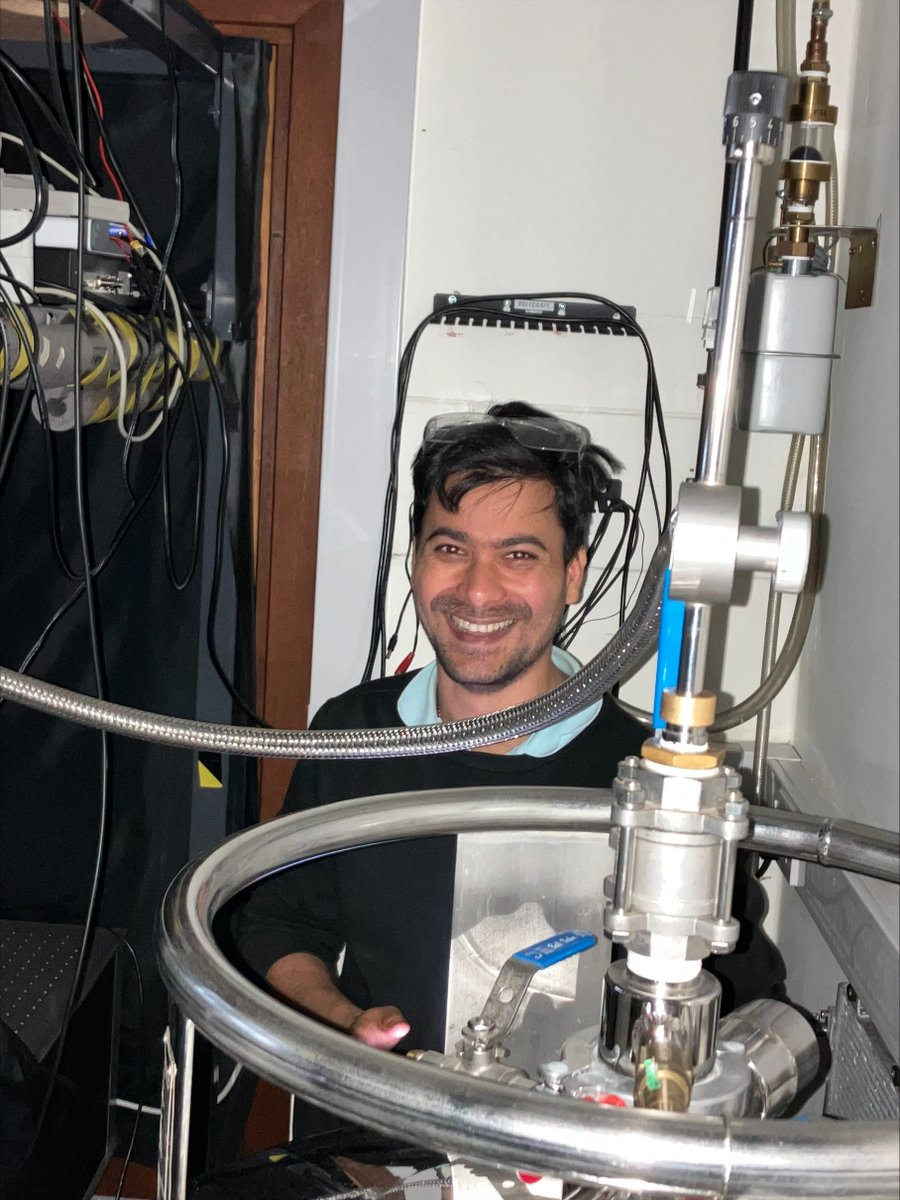
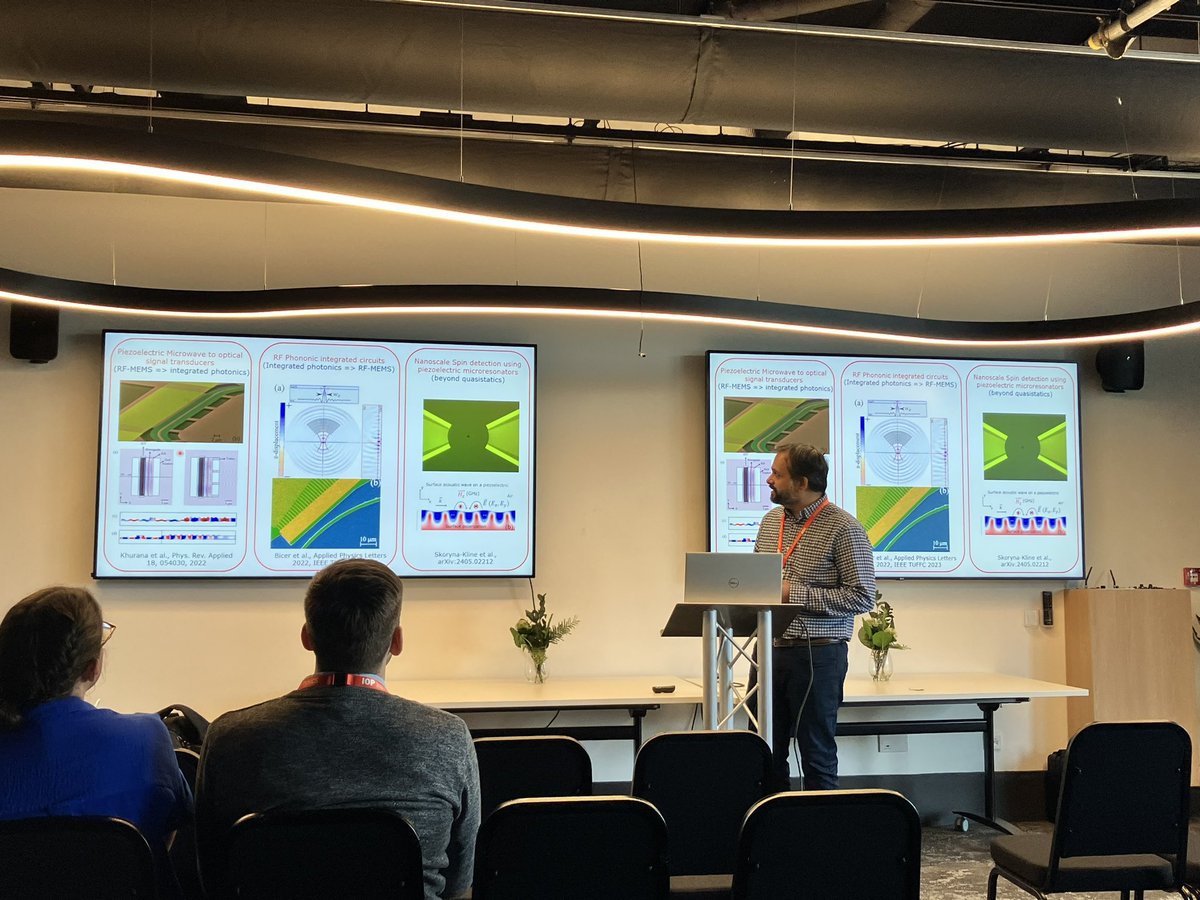
@QETLabsBristol crew at #Photon2024 in Swansea last week! Awesome meeting with great talks and posters in a nice setting. Looking forward to Photon 2026 in Newcastle! @qqq_iop @IOPOpticalGroup
If we're going to exploit the atom-like nature of solid state defects, we need to be able to address them at scale in small volumes (micron-spacing). Spins typically need lots of microwave power, which means crosstalk from one control signal would affect neighbouring spins.
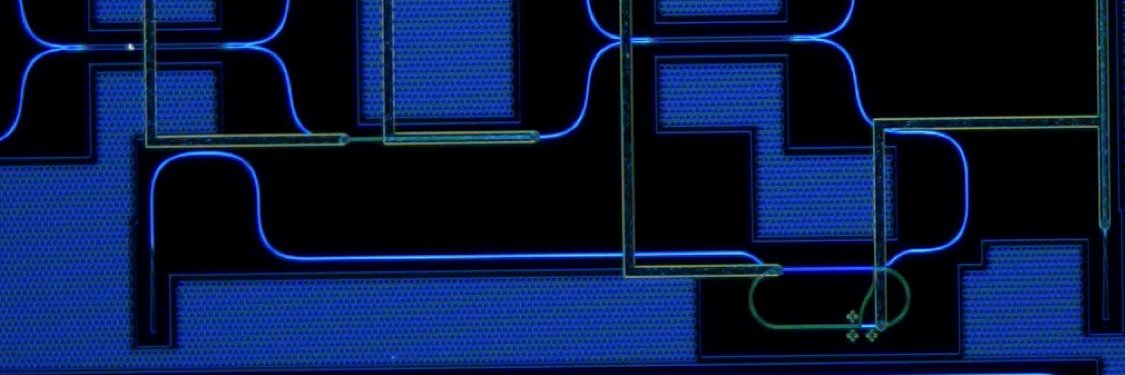
The dual-loop microelectronics presented here is compatible with photonics (both waveguides into the loop gap and bullseye-type structures in its centre) and is hopefully useful for all types of optically-active spins.
Scientists carrying out quantum research will be able to do so faster and more adaptably, thanks to a new robotic arm which could hold the key to major breakthroughs 🧠
Dr Joe Smith explains 👇
Read more ➡️ https://t.co/d0BKq9N36G
@QETLabsBristol@BristolRobotLab
Really enjoyed this workshop. Stimulating discussions on Materials for Quantum, the national quantum strategy, UK fab facilities, startups, career development. A great network to be part of!
And that's a wrap! 🙌
Thank you to everyone who joined us at the #M4QN Early Career Researcher Meeting 2023!
Held at Sedgebrook Hall, the event featured talks by industry and academic leaders, workshops, and networking opportunities
#ECR#Quantumtalks#EarlyCareer#Postdoc
Celebrating our @BristolQE 10th annual Cross cohort conference in Vale Resort, Wales. Students interact and learn about science outside of their own research field. Joined by previous staff and alumni from Industry and academia for this special event!
After some trepidation, we let the robot loose on our confocal microscope, to find out the orientation of an NV centre spin! It works in this vibration-critical environment and is accurate to 1-deg accuracy, 0.1 mT error.
Quantum experiments are challenging. For me one of the difficult things has been to align vector fields when complicated optics and stages get in the way. We had an idea, use a robot!
https://t.co/Y6Kj40E6K4
One cool thing: a magnetic field vector can be generated from several points in space (non-invertible). If something like a lens or the stage is in the way, we give an algorithm to move the robot to a safe location and produce the same magnetic field.